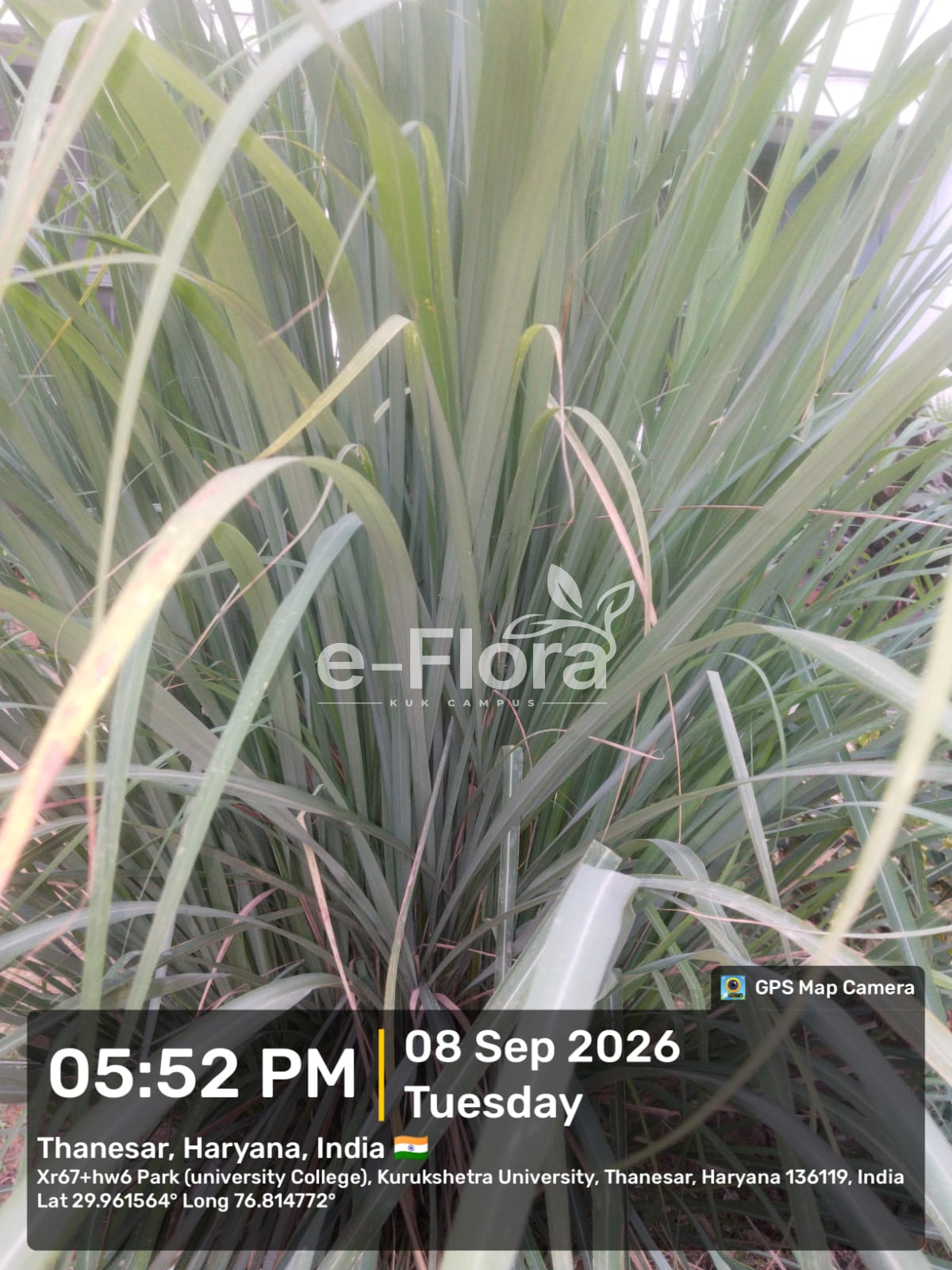
Cymbopogon citratus (DC.) Stapf
Vernacular name: Lemon grass, Lemongrass, Nimbu ghas (Hindi: नींबू घास)
Species Name: Cymbopogon citratus (DC.) Stapf (syn. Andropogon citratus DC.)
Family: Poaceae
Habit: Perennial, aromatic, densely tufted grass.
Stem: Culms erect, slender, up to 1–2 m tall; arising from short rhizomes.
Leaf: Linear, long, tapering, 45–90 × 1–2 cm, aromatic, rough towards margins.
Flowering: Mainly in the rainy/warmer season.
Flowers: Inflorescence a loose, terminal panicle up to 30–60 cm; paired racemes with sessile and pedicelled spikelets, often reddish-purple tinged.
Fruit: Caryopsis, small, enclosed within the spikelet.
Uses:
- Lemon grass is widely brewed into teas to ease stomach pains, indigestion, nausea and bloating.
- Folk medicines used topical application of juice or pastes of lemon grass to manage joint swellings and muscle aches.
- Traditional remedies uses lemon grass for its antifungal and antibacterial activities.
- The aromatic leaves and culms are widely used for flavouring food like Southeast Asian dishes like Thai tom yam and tom kha kai where as in Indonesia and Philippines it used to flavor traditional pork dishes or roasted chicken.
- Dried or fresh leaves are brewed to prepare a citrus flavoured tea and other beverages that have mild sweetness.
- Lemon grass yields essential oils that is used in perfumes, soaps, lotions, deodorants and traditional medicine.
- Cosmetic industry uses lemon grass in various formulations for its antioxidant properties.
- The plant is also used as an insect repellent and for soil conservation and mulching.