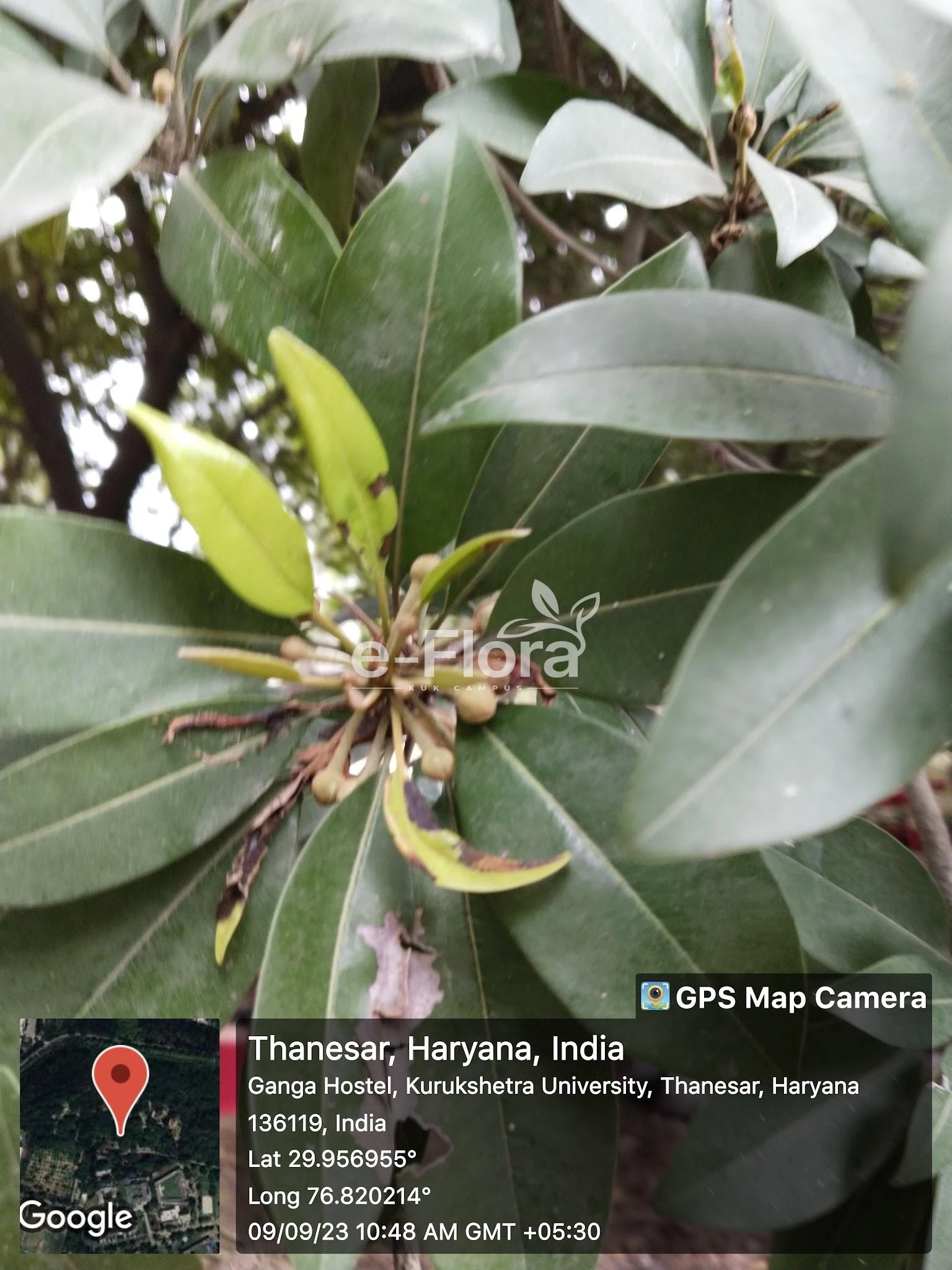
Manilkara zapota (L.) P. Royen
Vernacular name: Sapodilla, Chikoo, Naseberry (Hindi: चीकू)
Species Name: Manilkara zapota (L.) P. Royen
Family: Sapotaceae
Habit: Evergreen tree
Stem: Erect trunk 20–30 m tall, dark grey scaly bark with horizontal lenticels, copious white latex.
Leaf: Spiral, crowded at branch tips, oblong-elliptic 5–10 × 2.5–5 cm, entire, glossy green above, yellowish below.
Flowering: Irregular throughout year.
Flowers: Axillary cymes; calyx with 6 sepals in 2 whorls (outer ovate 3–4 mm, inner larger), 6 greenish-white corolla lobes 4–5 mm, ovate, 12–16 stamens in 2 whorls (anthers sessile, sagittate), conical ovary with 12–16 locules.
Fruit: Globose-ovoid berry 4–8 × 3–5 cm, rusty-brown scurfy skin, sweet gritty brown pulp, 0–12 hard black seeds (hooked tip)
Uses:
- Fruit eaten fresh
- Bark/leaves medicinal: astringent, antidiabetic, wound healing.
- Chicle gum from latex
- Durable timber for construction/furniture.
- Aztec/Maya sacred tree; chicle chewing gum origin; “sapote” = soft fruit.