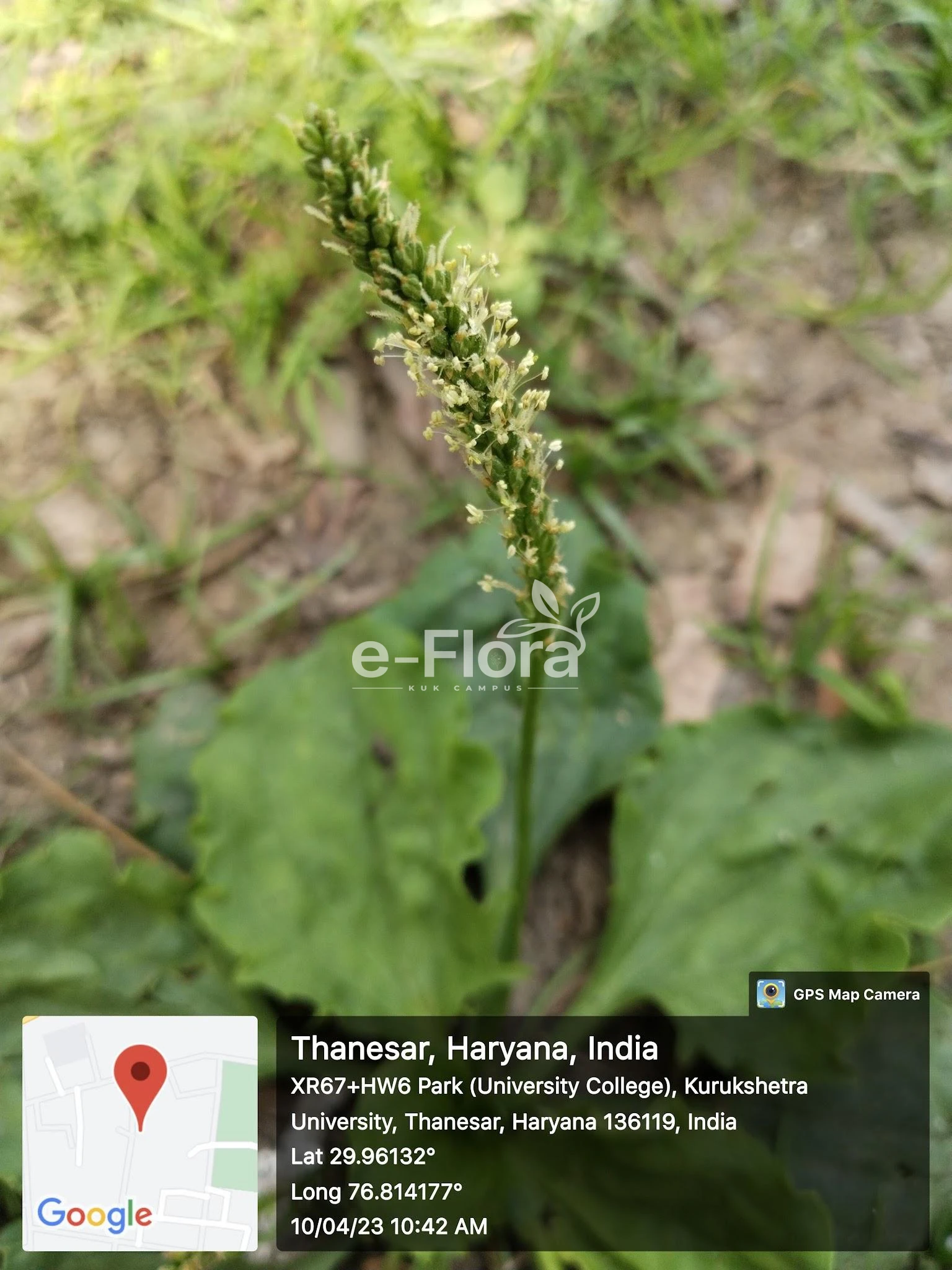
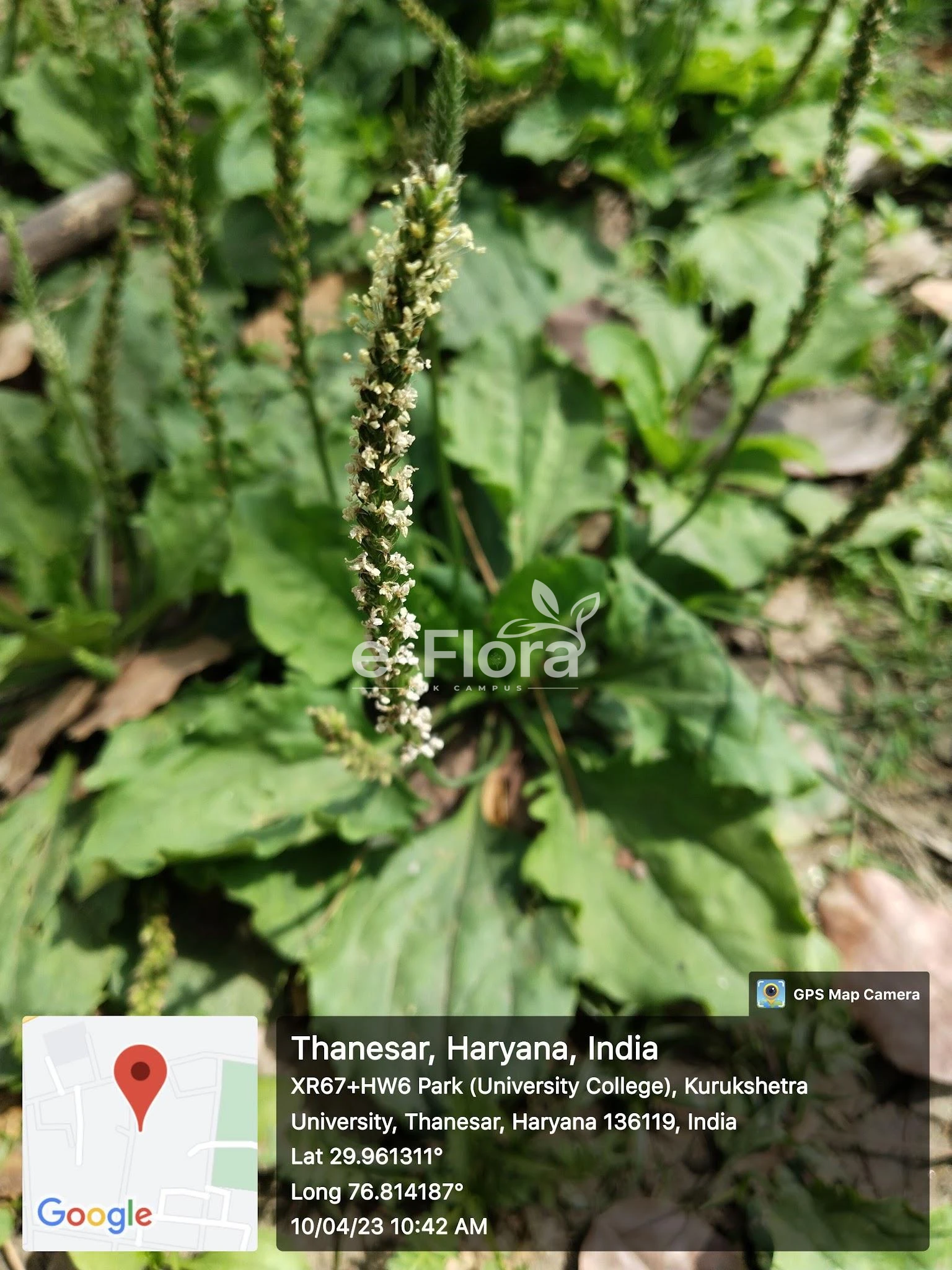
Plantago major L.
Vernacular name: Common Plantain, Greater Plantain (Hindi: इसबगोल पत्ता, प्लैन्टेन)
Species Name: Plantago major L.
Family: Plantaginaceae
Habit: Perennial herb
Stem: Stem very short or absent; flowering scapes erect, leafless, 10–50 cm tall.
Leaf: Radical rosette; broadly ovate to elliptic, 5–20 × 3–9 cm, petiolate, entire or slightly toothed, with 5–9 prominent parallel veins.
Flowering: Spring–autumn.
Flowers: Small, greenish-brown, sessile, densely arranged in long terminal spikes; 4 sepals, 4 scarious petals, 4 exserted stamens; ovary superior, bicarpellary.
Fruit: Ovoid pyxis (capsule), circumscissile, containing numerous small brown-black seeds
Uses:
- Poultice of crushed leaves are externally applied to burns, cuts, wounds, eczema and insect bites to help reduce inflammation and enhance tissue repair.
- Homeopathic remedies uses tincture to relieve toothaches, earaches, gum boils and create a natural aversion to tobacco.
- Herb is found to be useful in treating cough, colds, bronchial irritations and reduce mucus secretion.
- Plant has laxative properties that helps with constipation and promote gastrointestinal comfort.
- Plant has antibacterial, analgesic and anti-inflammation properties.
- Young leaves are edible and may be consumed as a potherb or salad green