Ficus carica L.
Vernacular name: Fig, Anjeer (Hindi: अंजीर)
Species Name: Ficus carica L.
Family: Moraceae
Habit: Deciduous shrub or small tree.
Stem: Much-branched, 3–10 m tall; bark smooth, grey; branches and other parts exude milky latex.
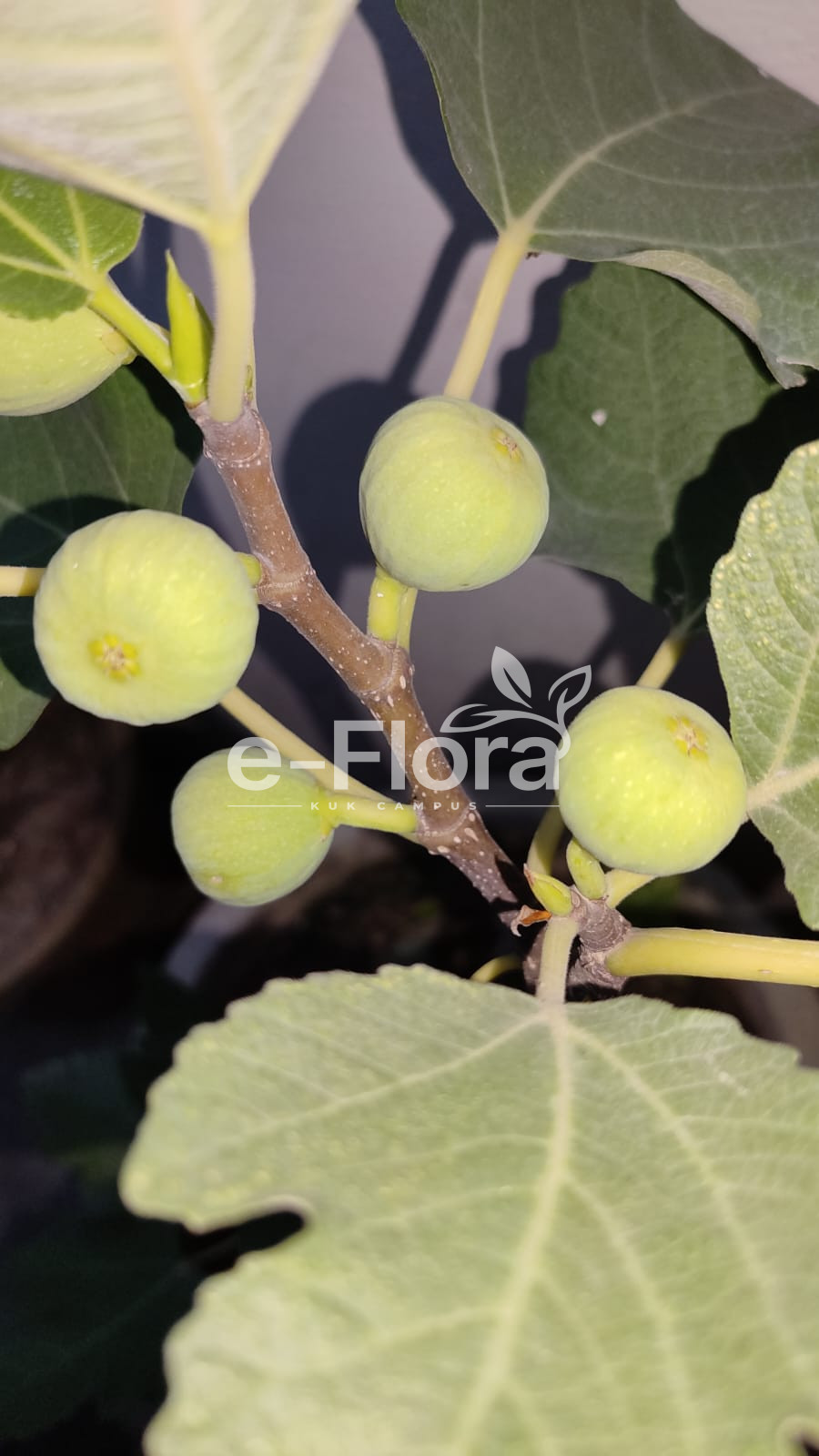
Leaf: Alternate, broadly ovate to orbicular, 10–25 cm long, palmately 3–5(7)-lobed, rough above, softly hairy beneath, long-petiolate.
Flowering: Mainly spring–summer; flowers are enclosed within the syconium.
Flowers: Minute, unisexual, borne on the inner wall of a hollow, fleshy syconium with a small apical ostiole; male flowers occur near the ostiole and female flowers inside the receptacle.
Fruit: A fleshy multiple fruit (syconium), globose to pyriform, green to purple or black at maturity, containing numerous small one-seeded achenes.
Uses:
- Leaves and latex have mild laxative properties and used traditionally for digestive and skin-related preparations. It is used to relieve constipation and support gastrointestinal functions.
- Traditional practices uses the plant extracts or fruit to manage and regulate blood glucose levels.
- Extracts or pastes of fruits have anti-inflammatory and antioxidant properties and used to soothe skin irritations, reduce swellings and prevent oxidative stress.
- Herbal remedies uses the plant to ease cough, support respiratory health and promote heart functions.
- Fruits are eaten fresh or dried and are rich in dietary fiber, sugars, minerals, potassium, calcium, magnesium, essential amino acids and antioxidants. Dried figs are widely used in confectionery and traditional foods.
- Fruits are processed into pastes, jams, natural sweeteners and beverages.