Cynodon dactylon (L.) Pers.
Vernacular name: Bermuda grass, Durva grass (Hindi: दूर्वा)
Species Name: Cynodon dactylon (L.) Pers.
Family: Poaceae
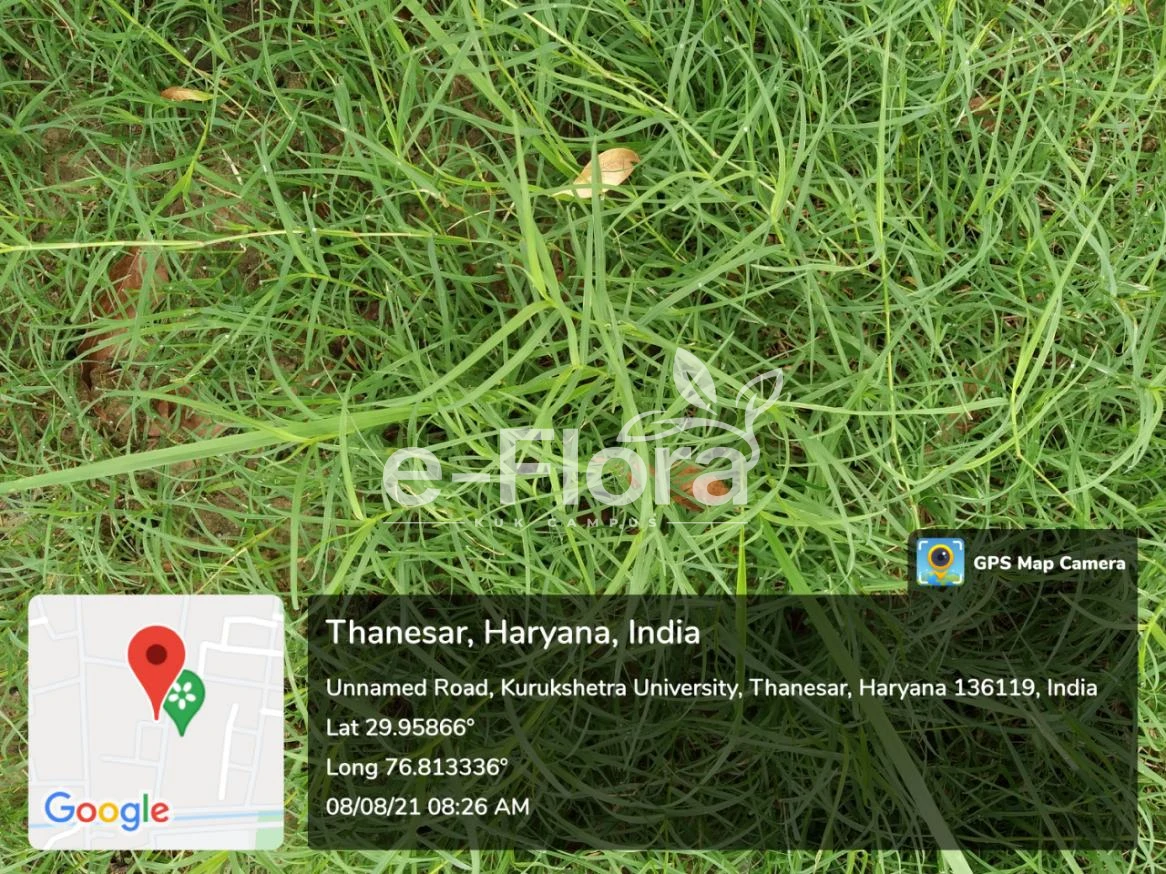
Habit: Perennial creeping grass
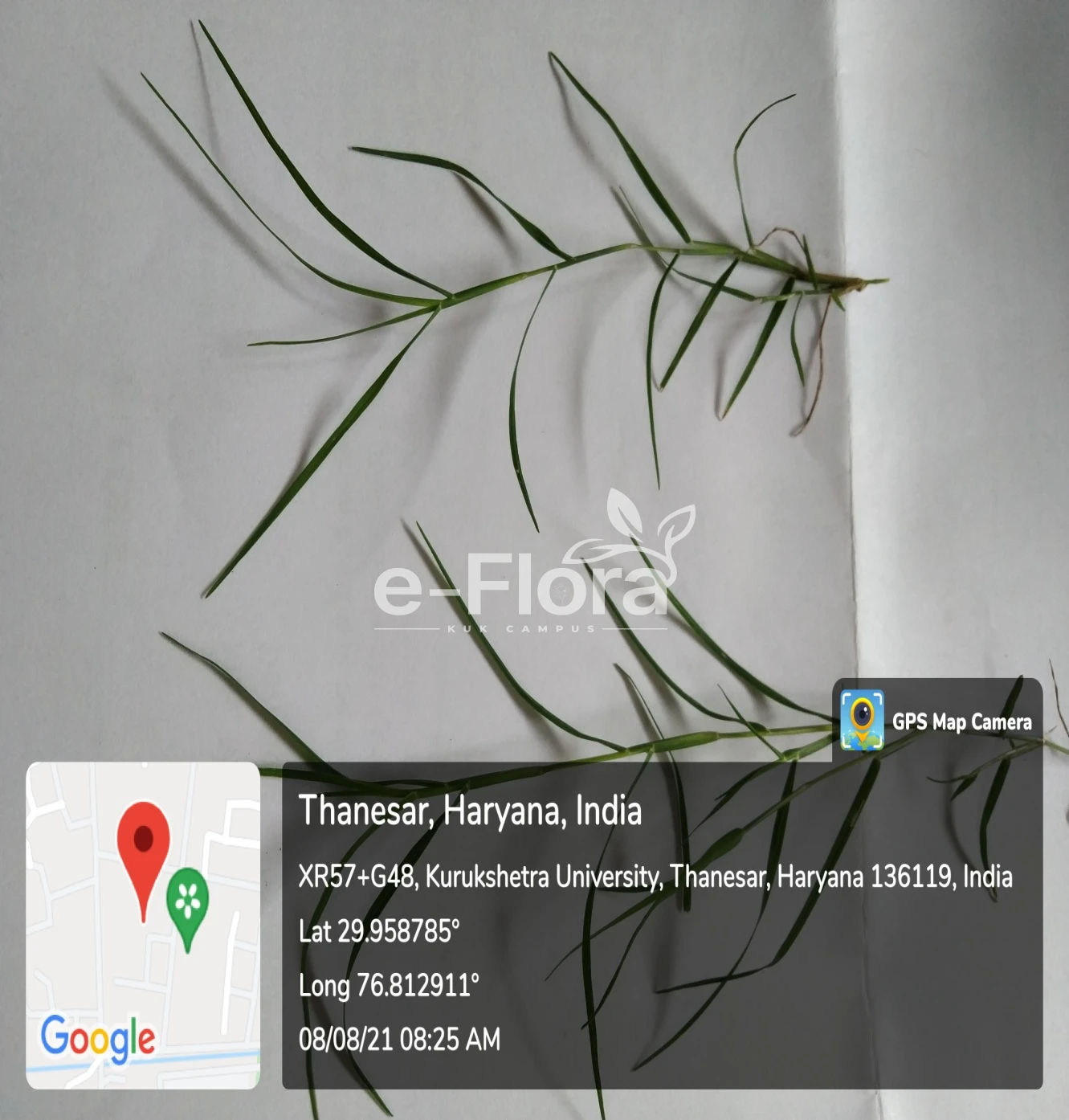
Stem: Rhizomatous and stoloniferous, prostrate runners 1-10 m, erect culms 10-40 cm.
Leaf: Alternate, linear-lanceolate 3-10×0.3-0.6 cm, folded sheath, hairy ligule fringe.
Flowering: Summer-autumn
Flowers: Bracteate digitate racemes (4-8 spikes 3-8 cm from central axis); spikelets elliptic 2-3 mm, 1-floret, 1-nerved lemma (awnless), 2 lodicules (petaloid), 3 stamens (anthers pale yellow), superior ovary.
Fruit: Caryopsis 1.5 mm, tightly enclosed in lemma/palea
Uses:
- Plant juice mixed with honey is given in diabetes.
- Fresh plant juice/paste is good for local application on fresh cuts and injuries to stop bleeding.
- Root decoction is given in dropsy and secondary syphilis.
- Rhizome is used in urinary disorder.
- Leaves has mild laxative and detoxification properties.
- In traditional practices, it is used to alleviate menstrual pain and mange various respiratory aliments due to its anti-inflammatory property.
- Its believed to be Lord Ganesha’s favourite grass; and is used to form victory garlands and is known as demon-subduer in mythology.
- It is planted in football and baseball fields and golf courses as grass is drought tolerant and resilient for heavy foot fall.
- Its protein and fiber content makes it a good source of food for cattle and horses.
- It prevents soil and water erosion.