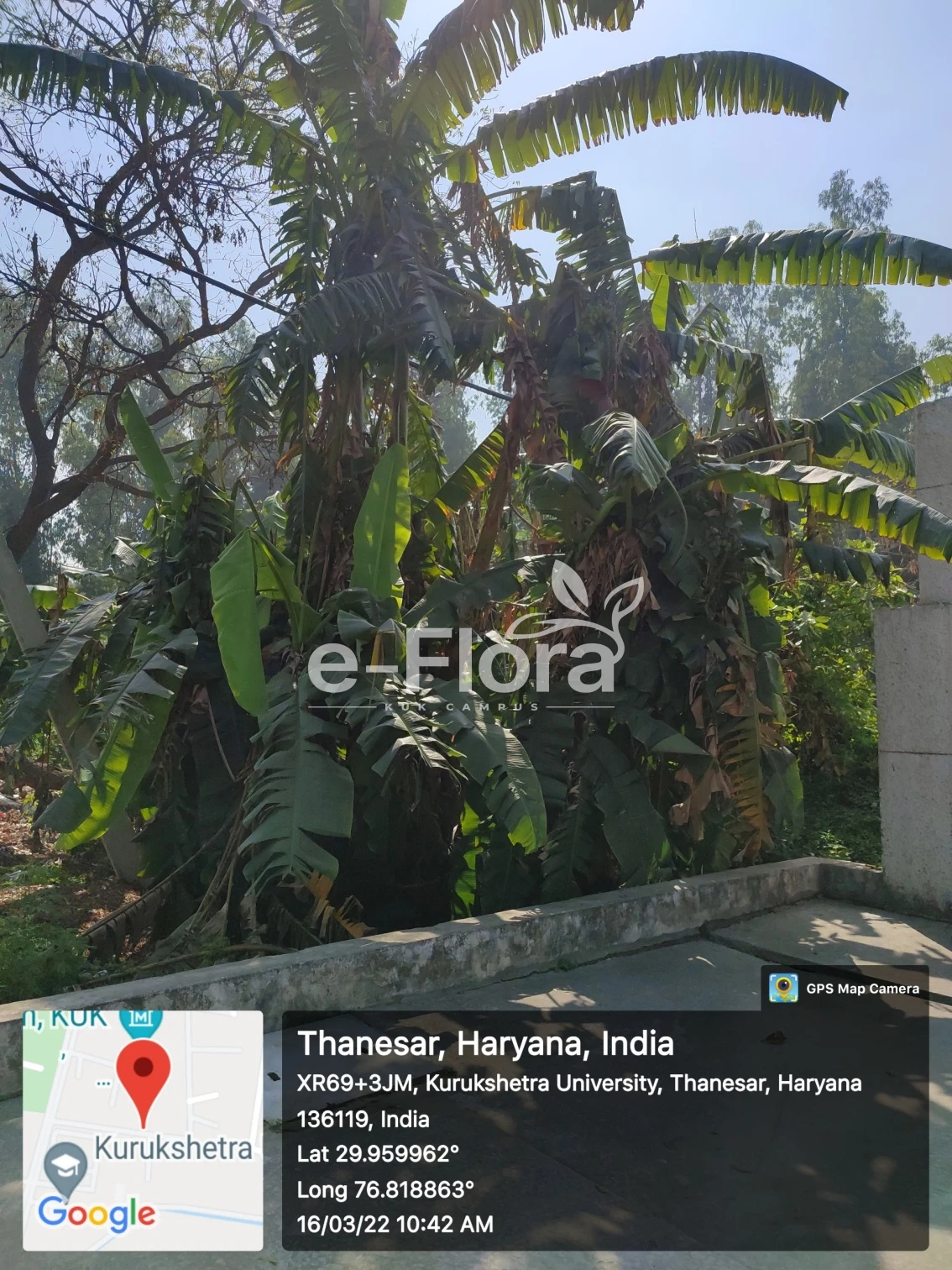
Musa × paradisiaca L.
Vernacular name: Banana (Hindi: केला)
Species Name: Musa paradisiaca L.
Family: Musaceae
Habit: Herb, resembling a tree.
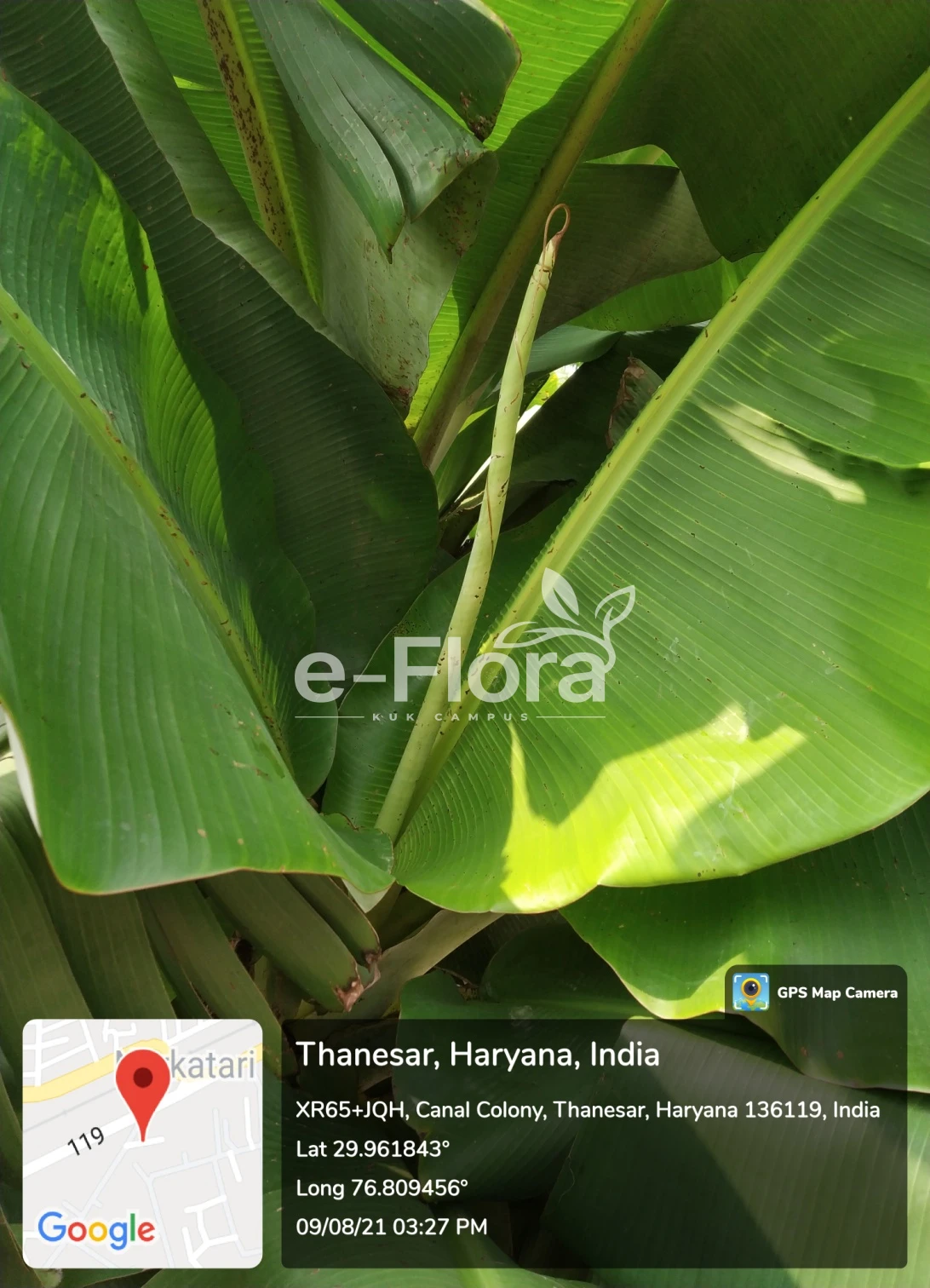
Stem: Pseudostem, fleshy and succulent, formed by the imbricate leaf sheaths.
Leaf: Large, oblong, with long channelled petioles; bright, glossy green.
Flowering: Throughout the year.
Flowers: Spadix inflorescence; bisexual flowers; spadix drooping, with the lower flowers all female and the upper flowers all male, clustered and enclosed in the axils of large, reddish-purple, caducous, boat-shaped spathes (bracts).
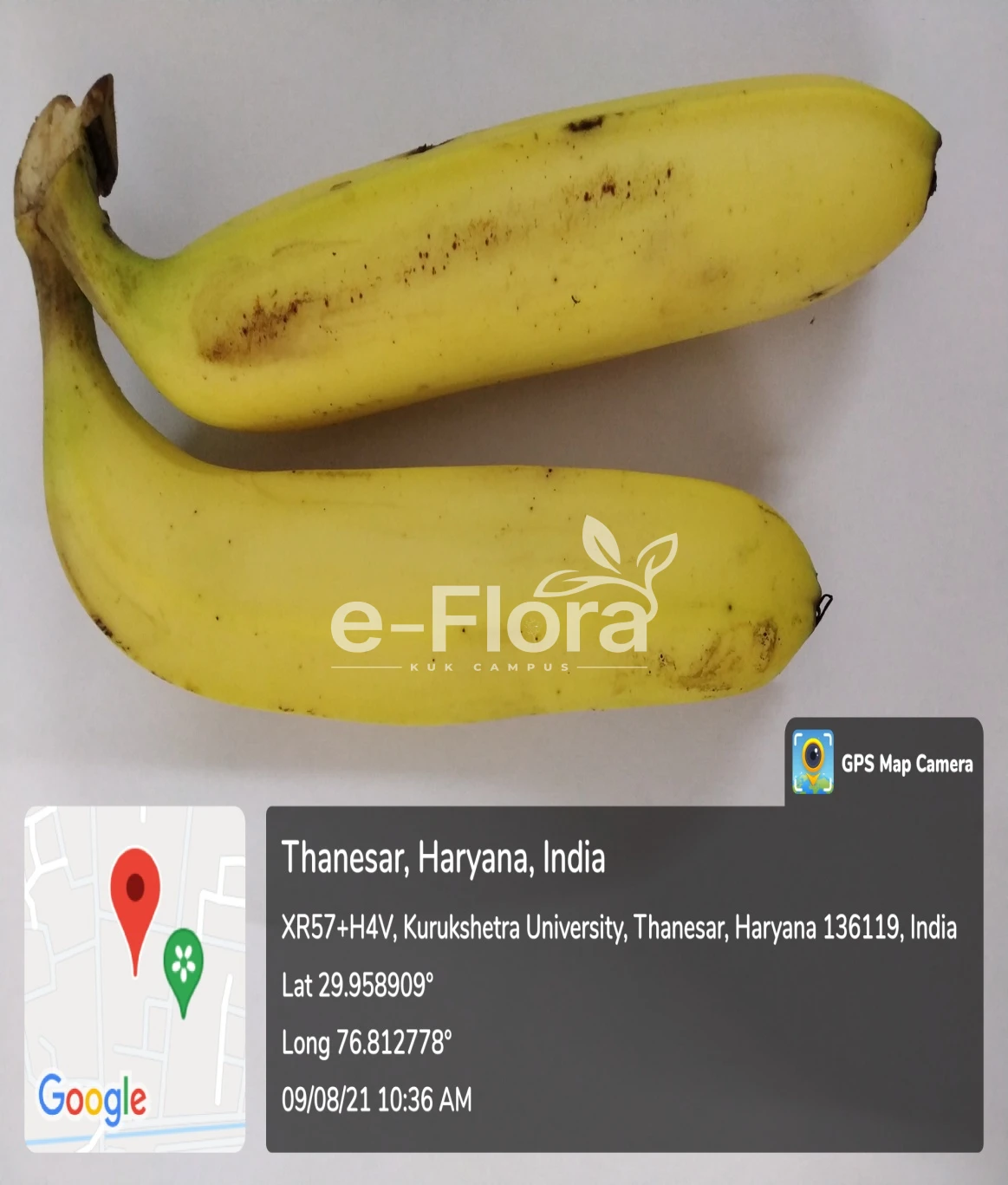
Fruit: Fleshy berry.
Uses:
- The juice of stem is given in leprosy, hysteria, the young leaves are applied as dressing to burns and blisters.
- The fruit is tonic and laxative.
- Besides the fruits, every part of banana is useful for medicinal uses.
- Plant is used extensively in pharmaceutical industry, as its used to treat diabetes, diarrhea, dysentery, ulcerative colitis.
- Plant has antioxidant and anti-inflammation properties.
- All Hindus, keep several plants at the gates of the marriage mandap as an auspicious sign of fertility and prosperity as so many suckers are produced round about the parent plant so will be the prolific fertility of the married couple.
- The fruits are edible uncooked when riped and green fruits are fried.
- Fruit in rich in potassium, iron, vitamin A and C and dietary fiber.
- Fruit is also used as vegetable to cook curries and soups.
- In south India, leaf is used as plates to serve food during marriages and festivals.