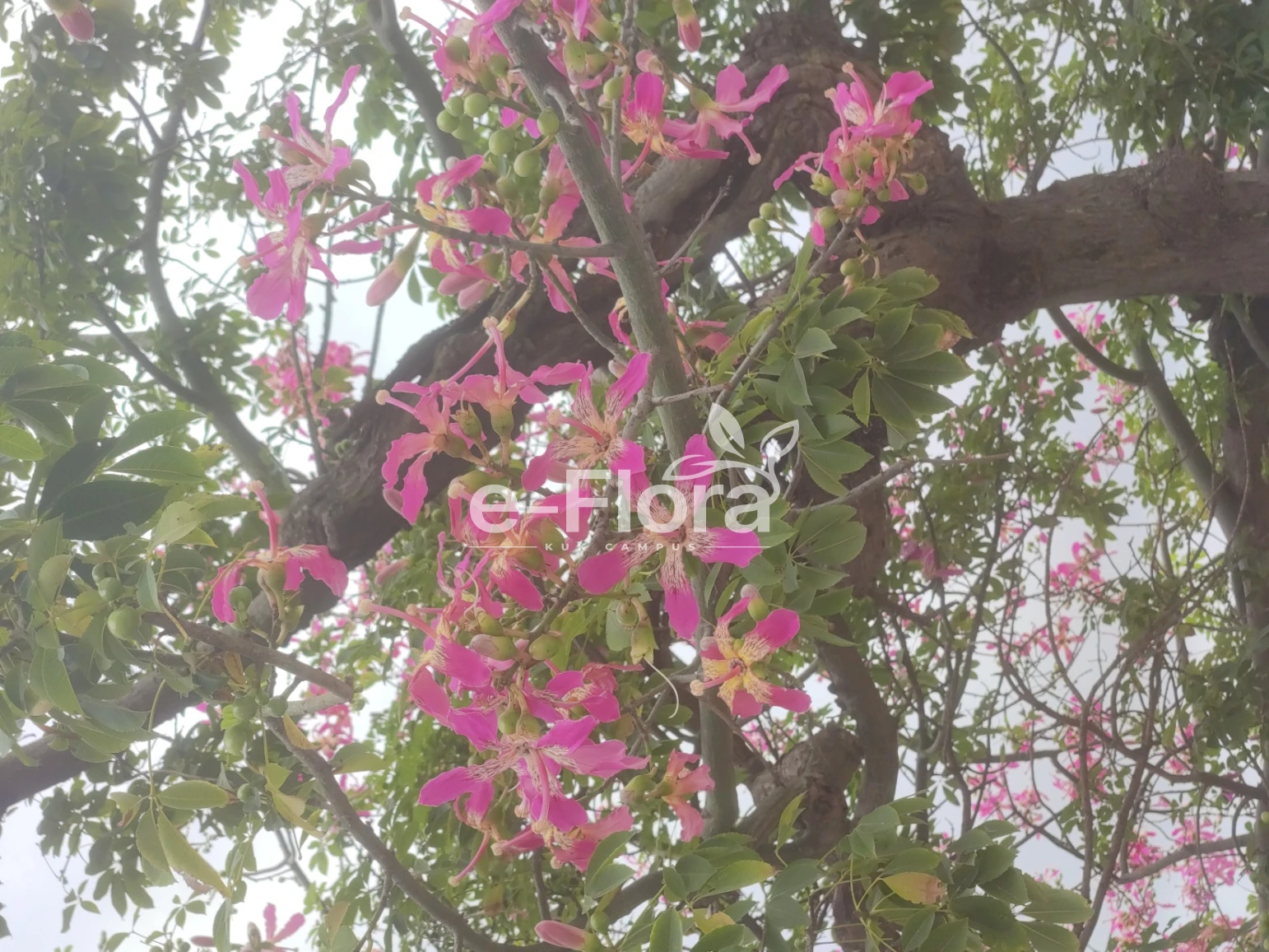
Ceiba speciosa (A.St.-Hil.) Ravenna
Vernacular name: Silk floss tree, Kapok tree (Hindi: सेमल)
Species Name: Ceiba speciosa (A.St.-Hil., A.Juss. & Cambess.) Ravenna
Family: Malvaceae (Bombacoideae)
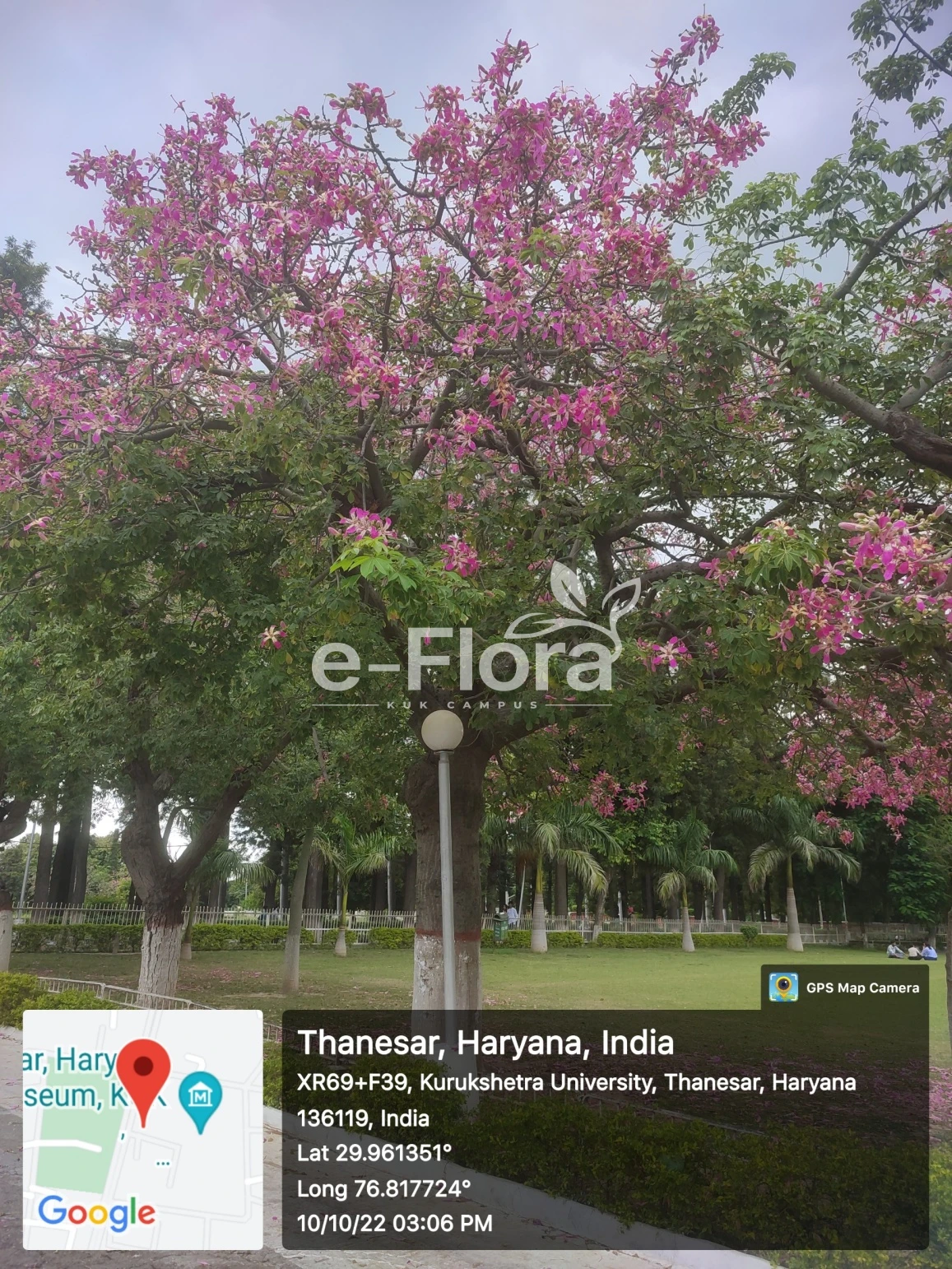
Habit: Large deciduous tree
Stem: Buttressed trunk 15-30 m, bottle-shaped, spiny green bark (photosynthetic).
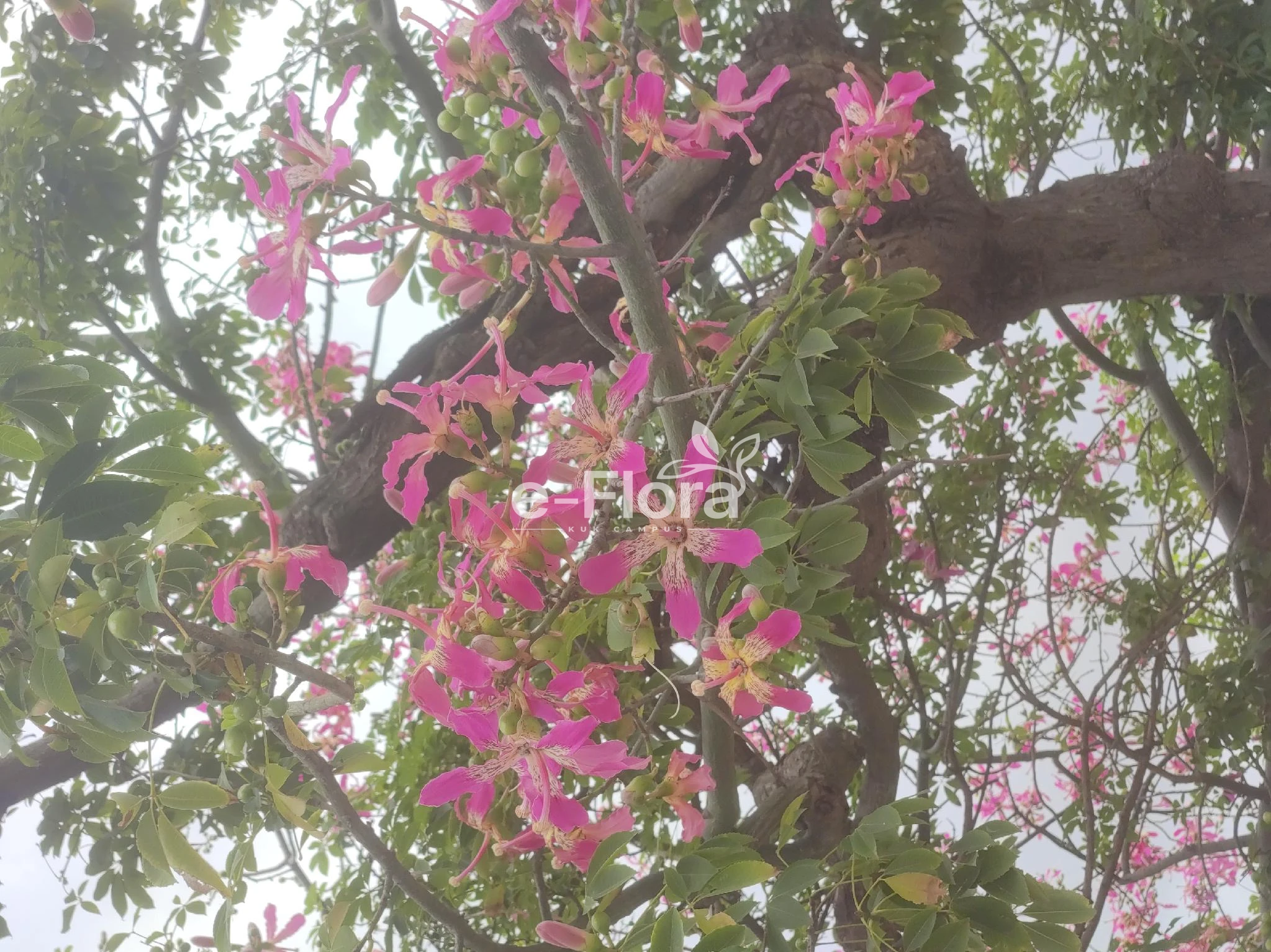
Leaf: Alternate, palmately compound 5-7 obovate leaflets 10-15 cm long.
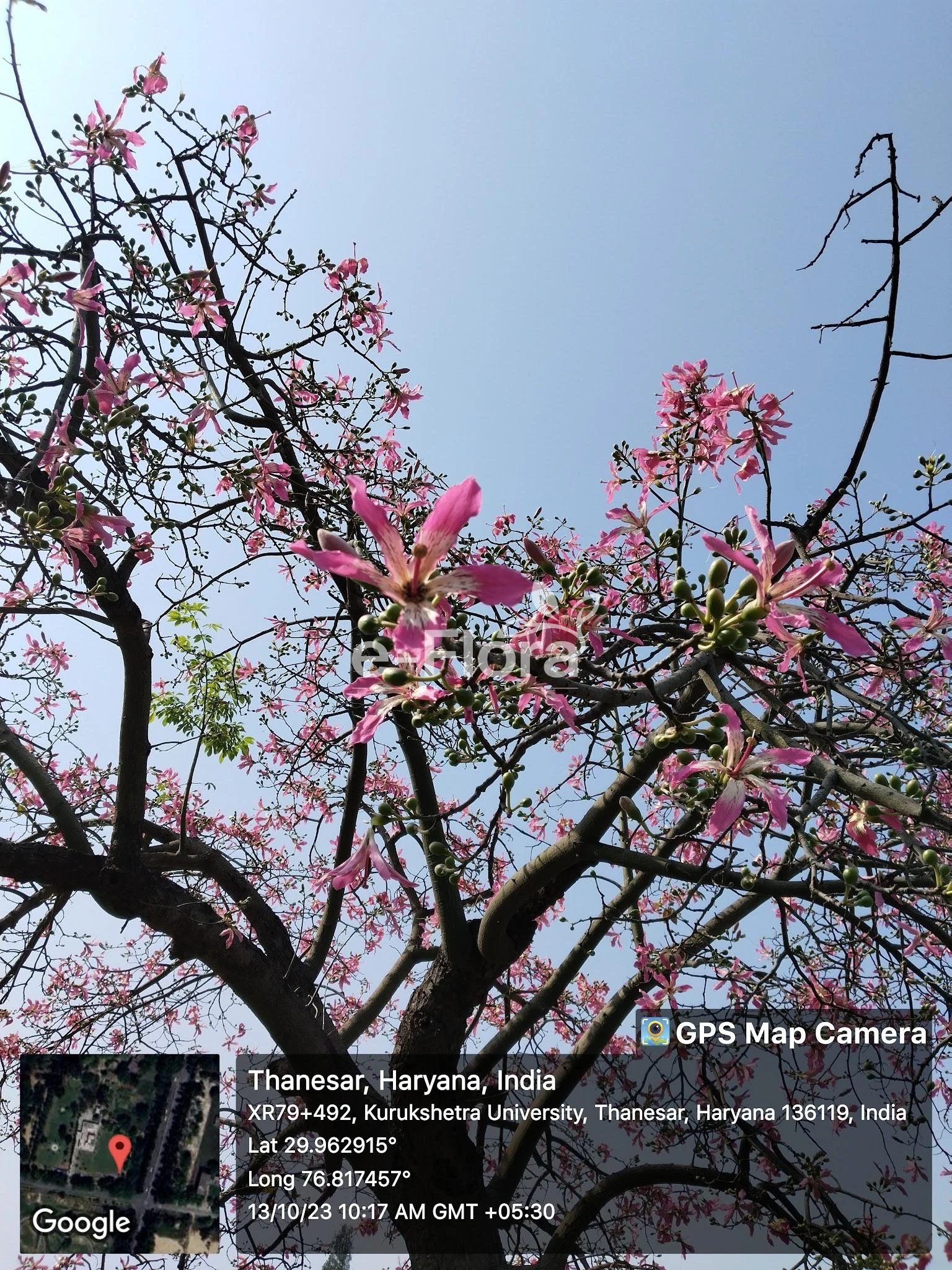
Flowering: Late autumn-winter (leafless)
Flowers: Bracteate fascicles; 5 large petals (obovate, pink/white, 8-12 cm), numerous stamens (anthers in collar around central column), superior ovary (5-carpellate syncarpous).
Fruit: Ellipsoid capsules 15 cm, splitting to release kapok-like floss with seeds.
The Silk floss trees typically drop their leaves just before they put on their spectacular autumn display of large five-petaled flowers.
Uses:
- Bark is used to make tea that is useful in managing cholesterol.
- Leaves are used in folk medicines for the treatment of fever, diarrhea and headaches.
- Extracts of leaves and bark exhibits antioxidant, anti-diabetic and anti-ulcer activities.
- Oil extracted from seeds is used in making of soaps and as natural fertilizers.
- It is an ornamental plant planted in streets.
- Its wood has property of buoyancy, and used in making clogs and canoes.
- Pulp of bark is used in paper making.
- Pods gives fibers that are used for stuffing of life jackets, mattresses and pillows.
- Sacred Mayan “World Tree”; connects underworld, earth, sky.