Tecoma stans (L.) Juss. ex Kunth
Vernacular name: Yellow Bells, Yellow Trumpetbush (Hindi: पीली टेकोमा)
Species Name: Tecoma stans (L.) Juss. ex Kunth
Family: Bignoniaceae
Habit: Evergreen shrub or small tree.
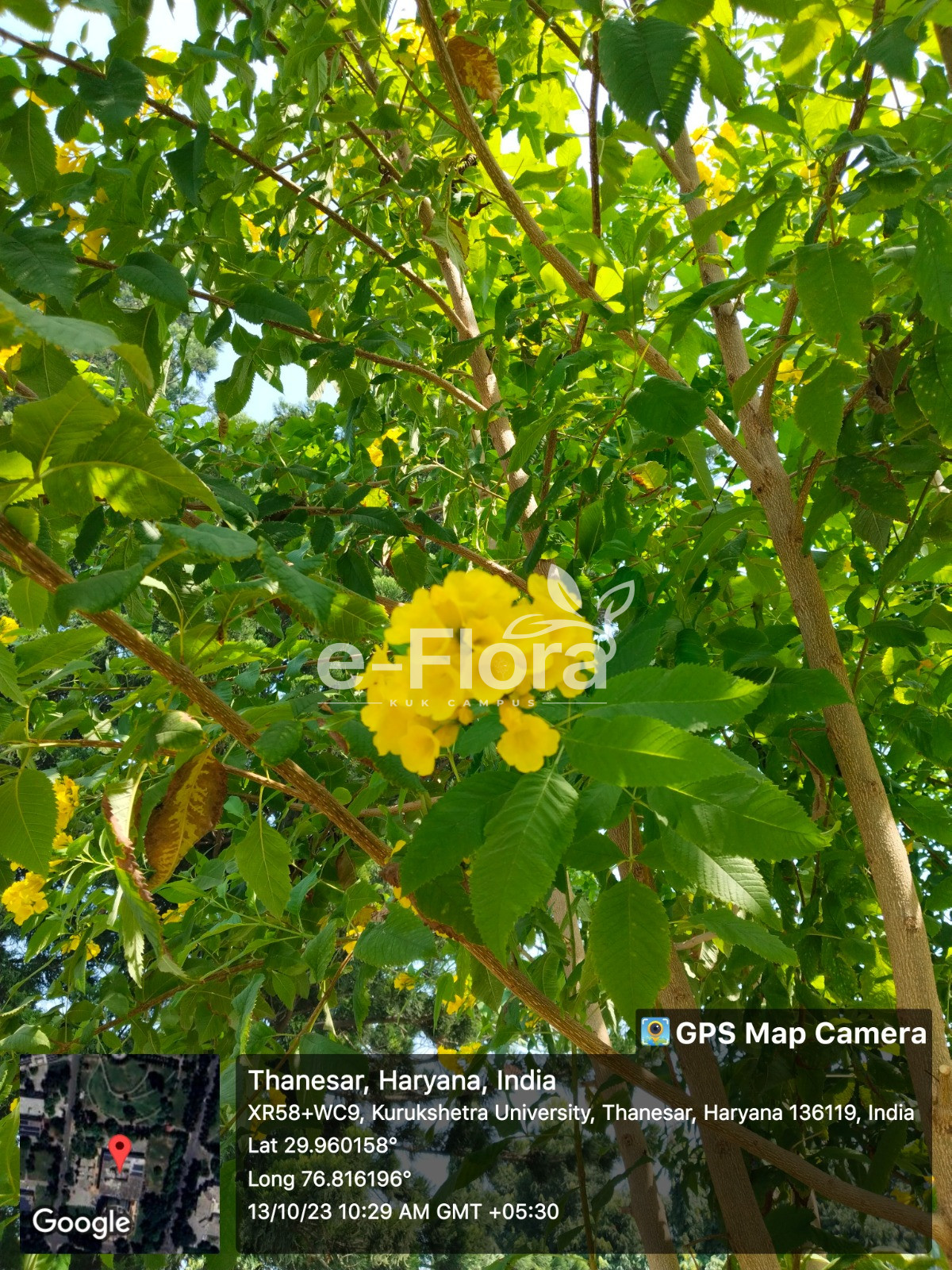
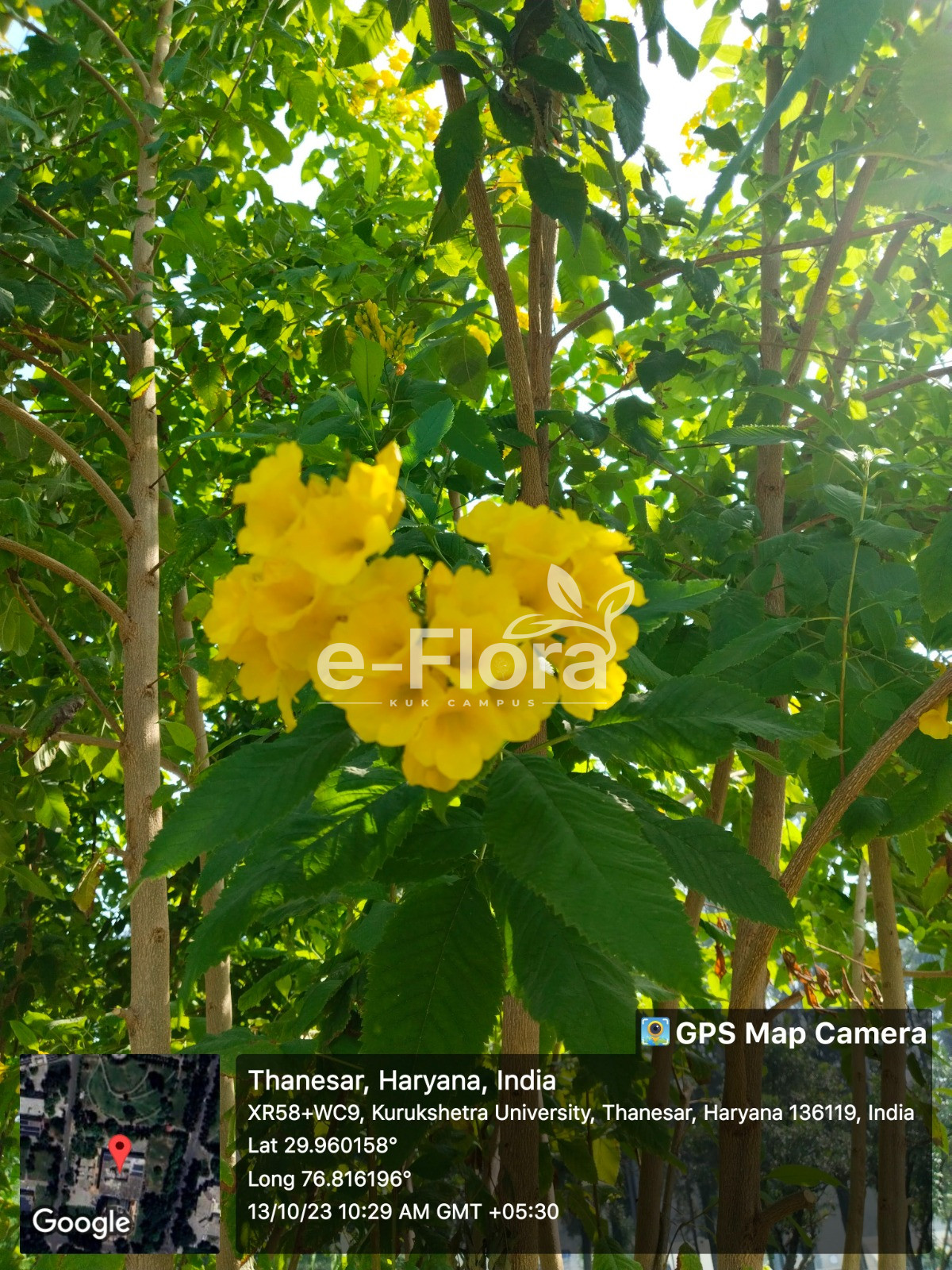
Stem: Much-branched, 3–8 m tall; bark grey-brown, slightly fissured; young branchlets green and glabrous.
Leaf: Opposite, imparipinnate, 10–25 cm long; leaflets 5–13, lanceolate to ovate-lanceolate, 3–10 × 1–3 cm, serrate, glabrous.
Flowering: Throughout the year, profusely during summer–autumn.
Flowers: Large, bright yellow, trumpet-shaped, borne in terminal racemes or panicles; corolla 5-lobed; stamens 4, didynamous; ovary superior, bicarpellary.
Fruit: Long, slender, linear capsule, 10–25 cm long, dehiscent; seeds numerous, flat, broadly winged.
Uses:
- In traditional and indigenous medicines of Mexico, leaves are brewed into teas or extracts are prepared that helps to regulate blood sugar levels.
- Decoctions of plant parts has diuretic property and helps to treat stomach aches, digestive tract ailments, syphilis and intestinal worms.
- Poultices and infusions of plant are used in folk medicines to relieve toothaches, headaches and speed up wound healing.
- Flowers promote blood circulation and treat hepatitis, inflammations and yellow fever.
- It is an ornamental plant due to its bright, trumpet shaped yellow and scented flowers.
- It is also valued for attracting bees, butterflies, and hummingbirds in its native range.
- It also serves as fodder for livestock.
- It is also planted in warm tropical areas as has ability of drought tolerance as hedges and shade plant.
- Wood is durable and flexible used by locals to craft bows and rustic furniture.
- Roots can help in fermentation processes to brew traditional drinks.