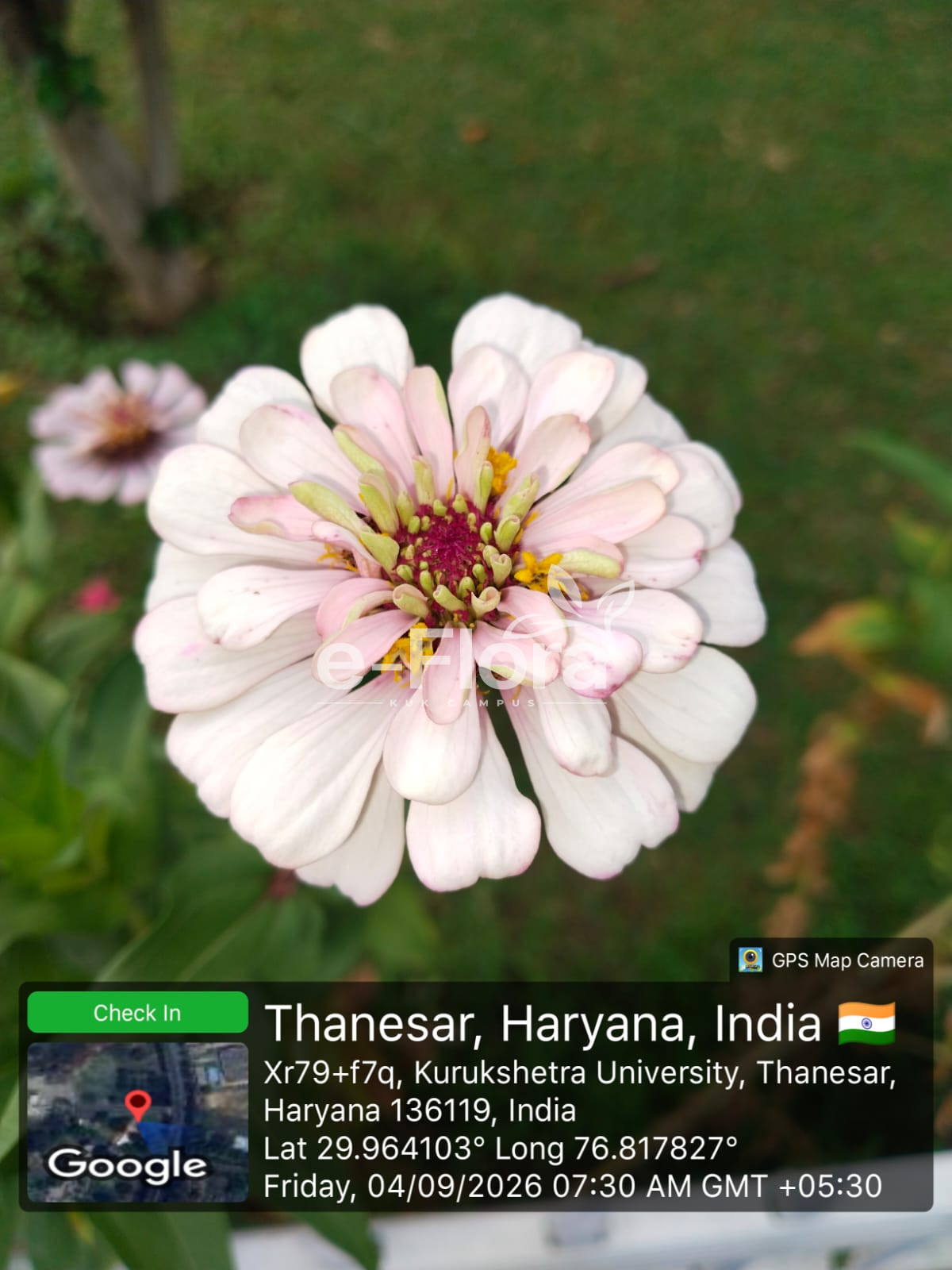
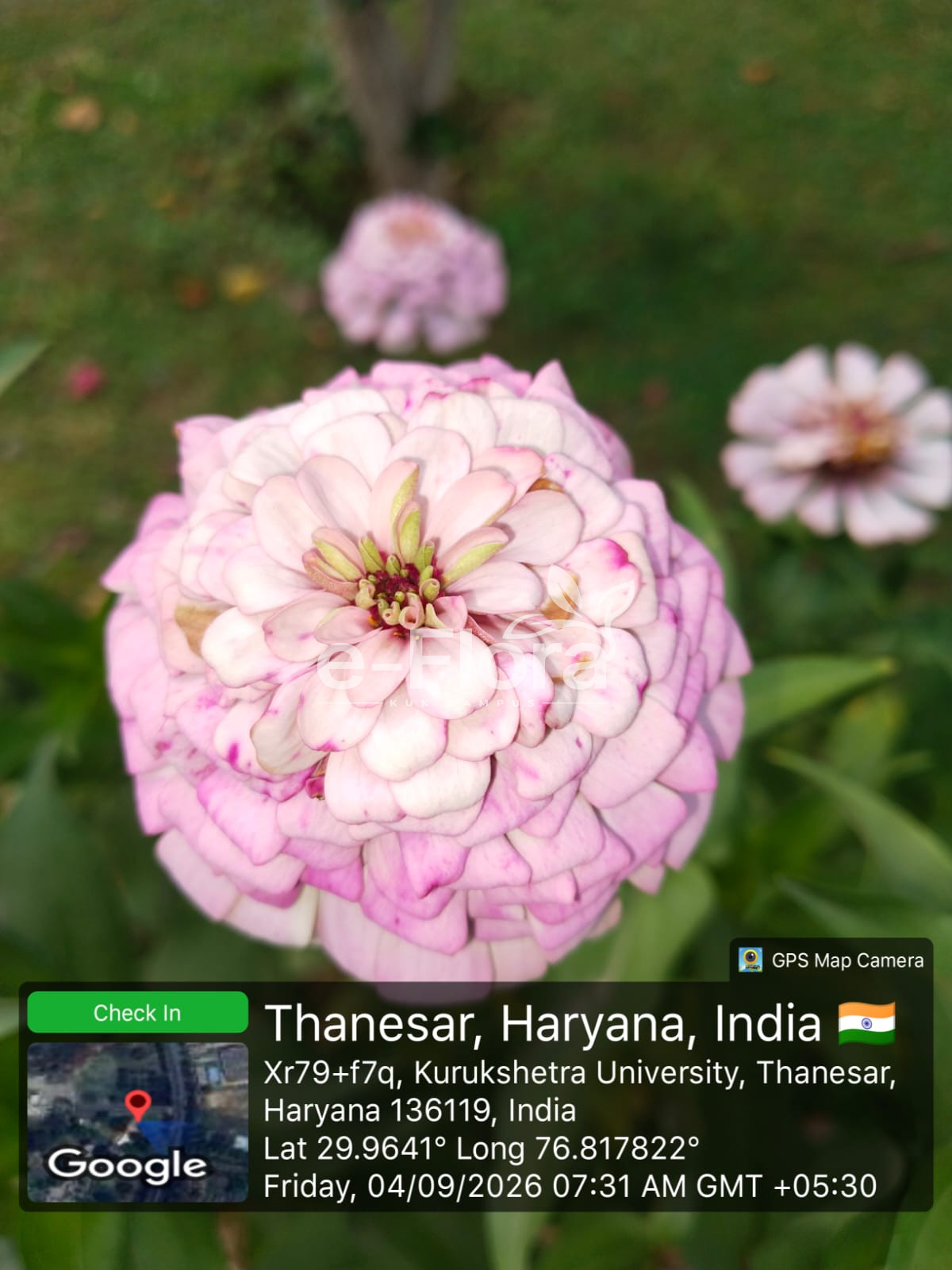
Zinnia elegans Jacq.
Vernacular name: Zinnia, Common Zinnia, Youth-and-Old-Age, Garden Zinnia
Species Name: Zinnia elegans Jacq.
Family: Asteraceae (Compositae)
Habit: Annual, erect, branched herb, widely cultivated as an ornamental garden plant.
Stem: Erect, branched, herbaceous, somewhat rough and hairy; stems become more robust as the plant matures.
Leaf: Opposite, simple, sessile or shortly petiolate, ovate to lanceolate, entire, with a rough or slightly hairy surface; upper leaves often clasp the stem.
Flowering: Mainly during the warm growing season.
Flowers: Large, showy flower heads in numerous colours including pink, red, orange, yellow, purple and white; ray florets are showy and ligulate, while disc florets are small and tubular; flowers are borne singly on long stalks. Inflorescence capitulum (flower head), solitary and terminal; surrounded by several rows of overlapping involucral bracts.
Fruit: Dry achene, generally without a conspicuous pappus; ray and disc florets can produce somewhat differently shaped achenes.
Uses:
- Extracts from inflorescences contains bioactive compounds like polyphenols, caffeic acid and flavonoids. Inflorescences are brewed into a herbal tea that exhibits strong antioxidant, antifungal, antimalarial and hepatoprotective properties.
- It is an ornamental plant, planted in gardening beds, borders, cottage gardens, pots, window boxes and patio containers. Long lasting, vibrant blooms are used in floral vases and arrangements.
- Flowers attracts beneficial pollinators like bees, butterflies and hummingbirds.
- It is also used as intercropping and used as natural pesticides.
- Plant is able to thrive in arsenic-contaminated soils and absorbs and reduce certain heavy metal contamination.