
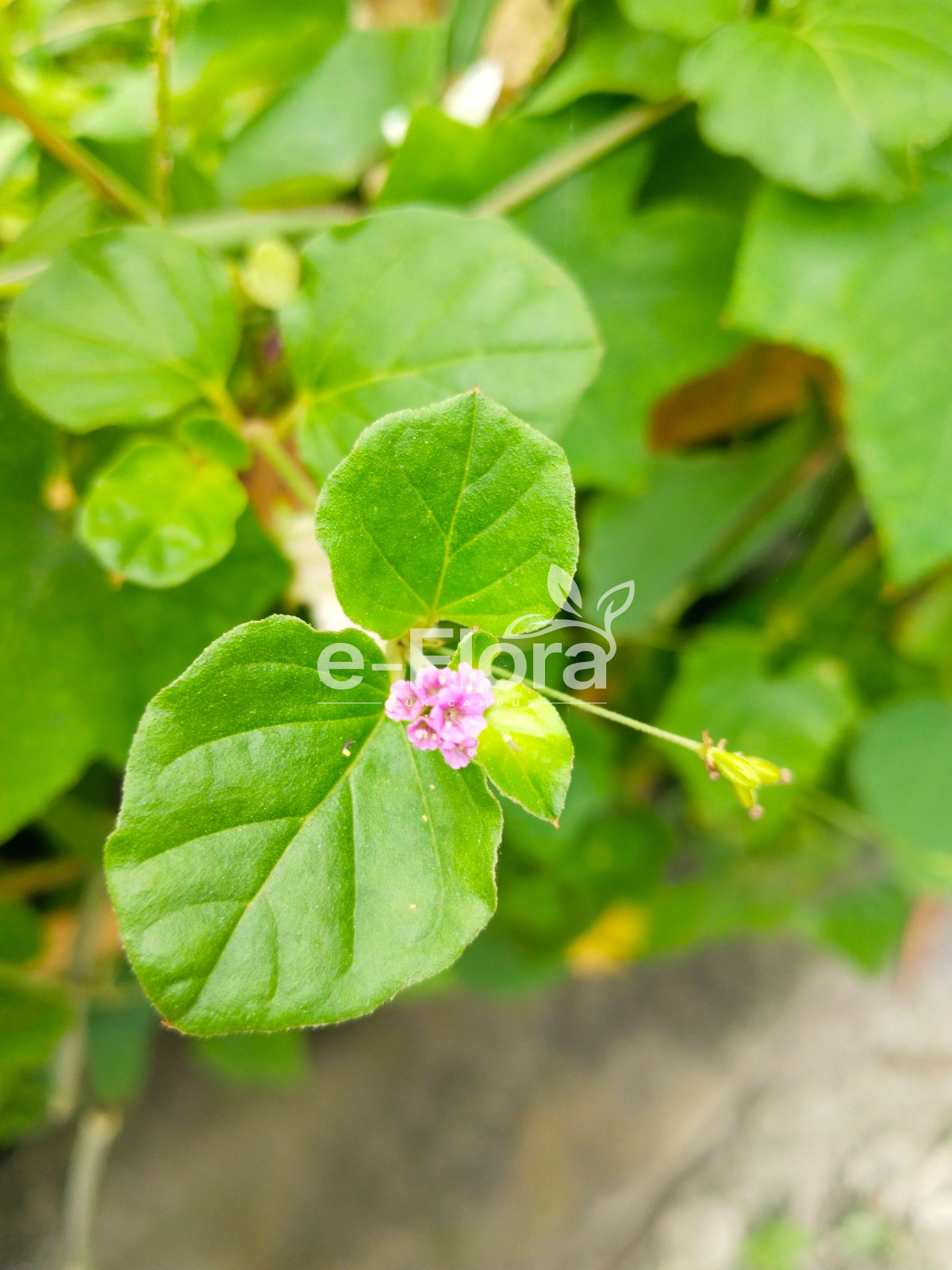
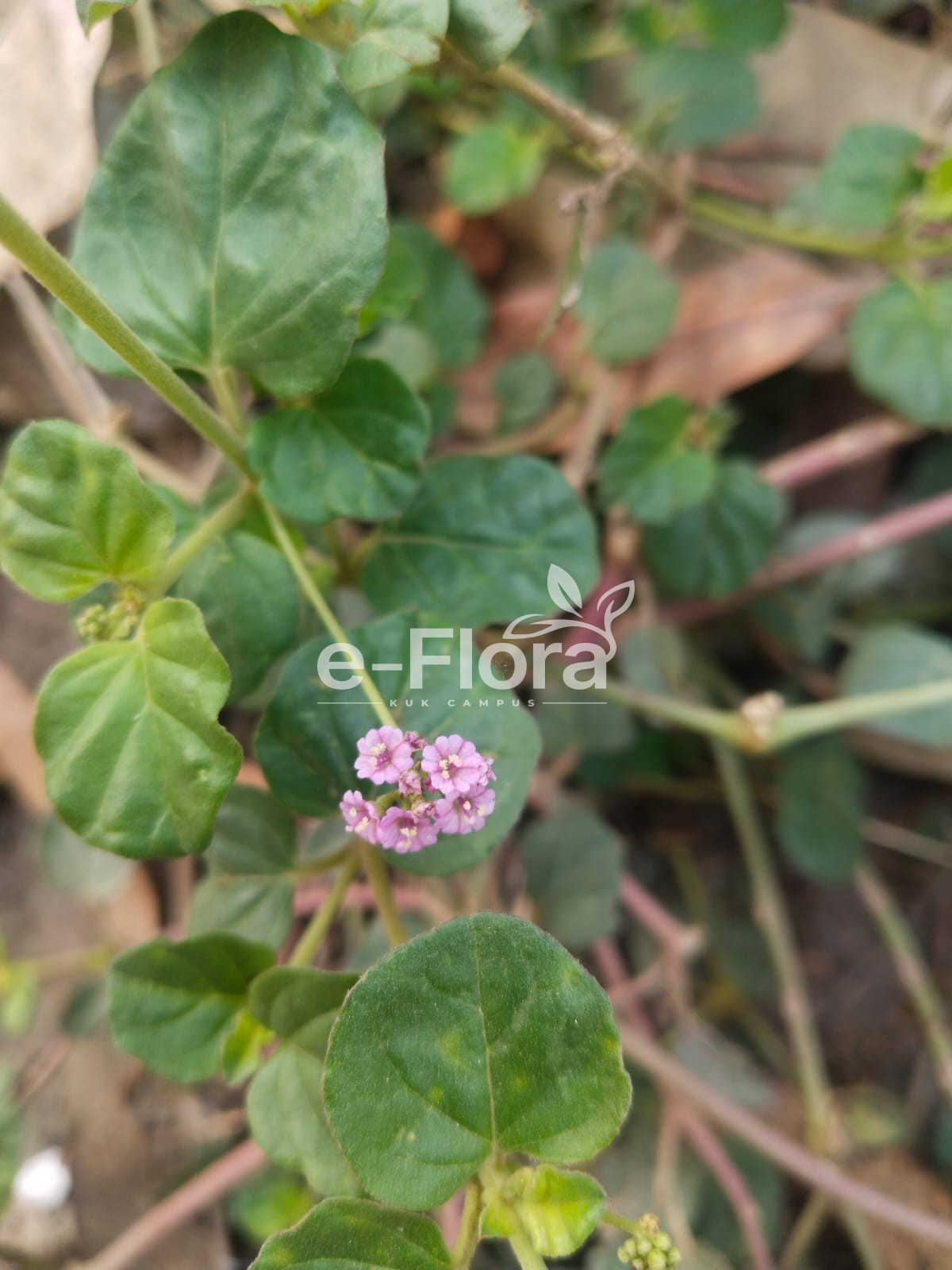
Commicarpus chinensis (L.) Heim.
Vernacular name: Pointed-leaved Hogweed, Diffuse Hogweed (Hindi: पुनर्नवा)
Species Name: Commicarpus chinensis (L.) Heim. (syn. Boerhavia chinensis (L.) Rottb.; Boerhavia repanda Willd.)
Family: Nyctaginaceae
Habit: Perennial, diffuse to scandent herb.
Stem: Spreading or climbing, up to about 1 m long, thick, branched, glabrous to sparsely pubescent.
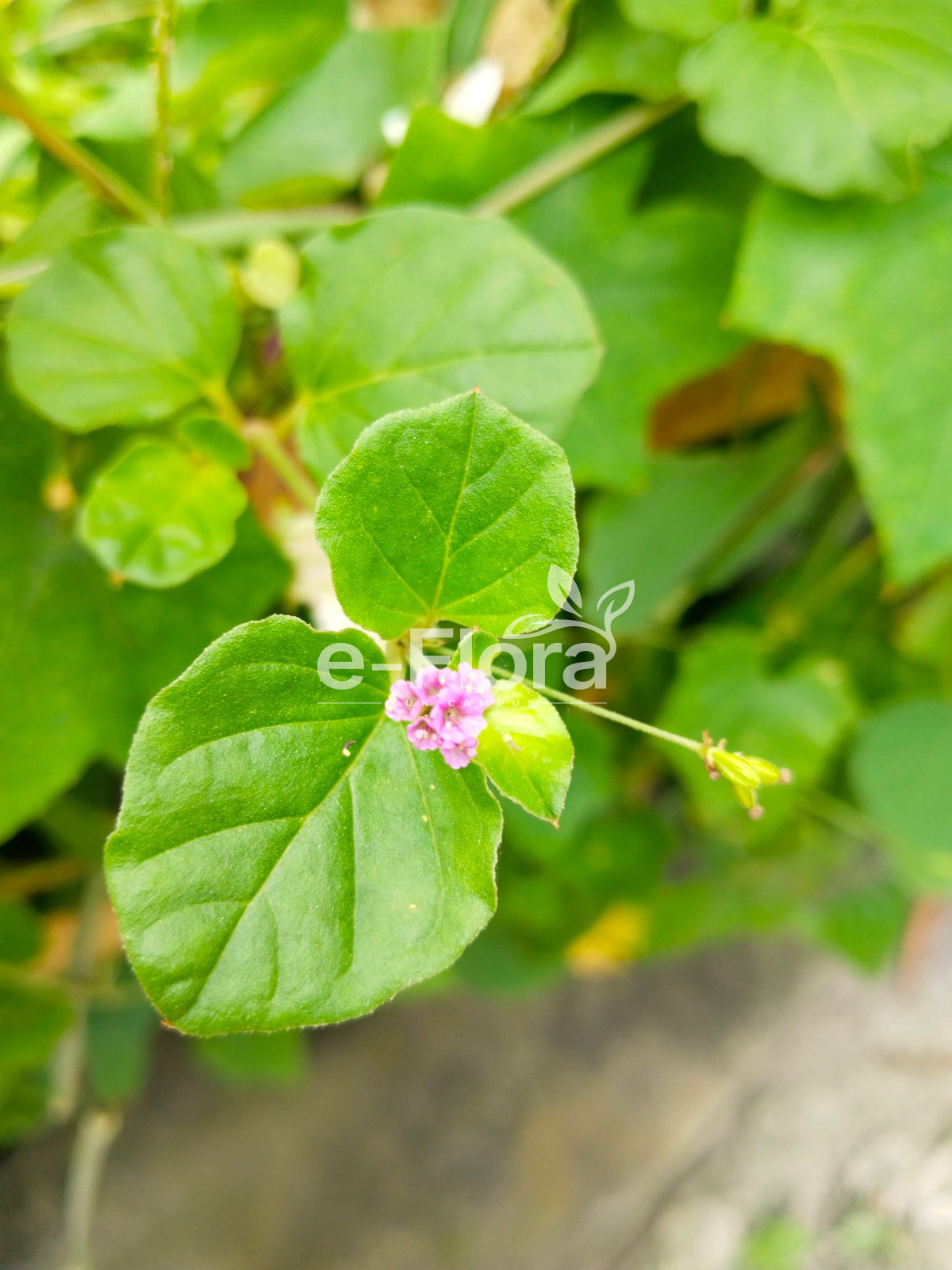
Leaf: Opposite, unequal in each pair, triangular-ovate to cordate-ovate, 3–6 × 2.5–5 cm, entire to undulate, acute to acuminate, petiolate.
Flowering: Mainly June–September.
Flowers: Small, pink to pale pink, funnel-shaped, borne in axillary or terminal cymose clusters; perianth tube short with a 5-lobed limb; stamens 2–4; ovary superior, unilocular with a peltate stigma.
Fruit: Obconical, about 6–7 mm long, 10-ribbed anthocarp, with minute glands; one-seeded.
Uses:
- The whole plant is used in traditional medicine as a diuretic and for treating oedema, urinary disorders, fever, inflammation, liver ailments, and wound healing.
- In traditional medicines, roots are use to treat galactosamine and paracetamol induced liver toxicity due to its hepatoprotective property.
- Due to its anthelmintic property, plant can be used against parasitic worm infestations.
- Traditional remedies uses the plant for the treatment of leucorrhea.
- Plant is used for its anti-inflammatory, analgesic, antipyretic and gastro-protective properties.
- Tender leaves are occasionally consumed as a leafy vegetable in some regions. It is also used as fodder for livestock.