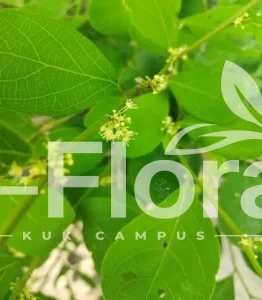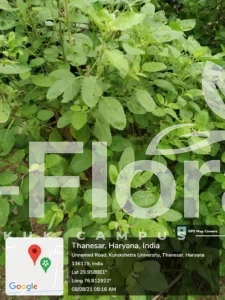

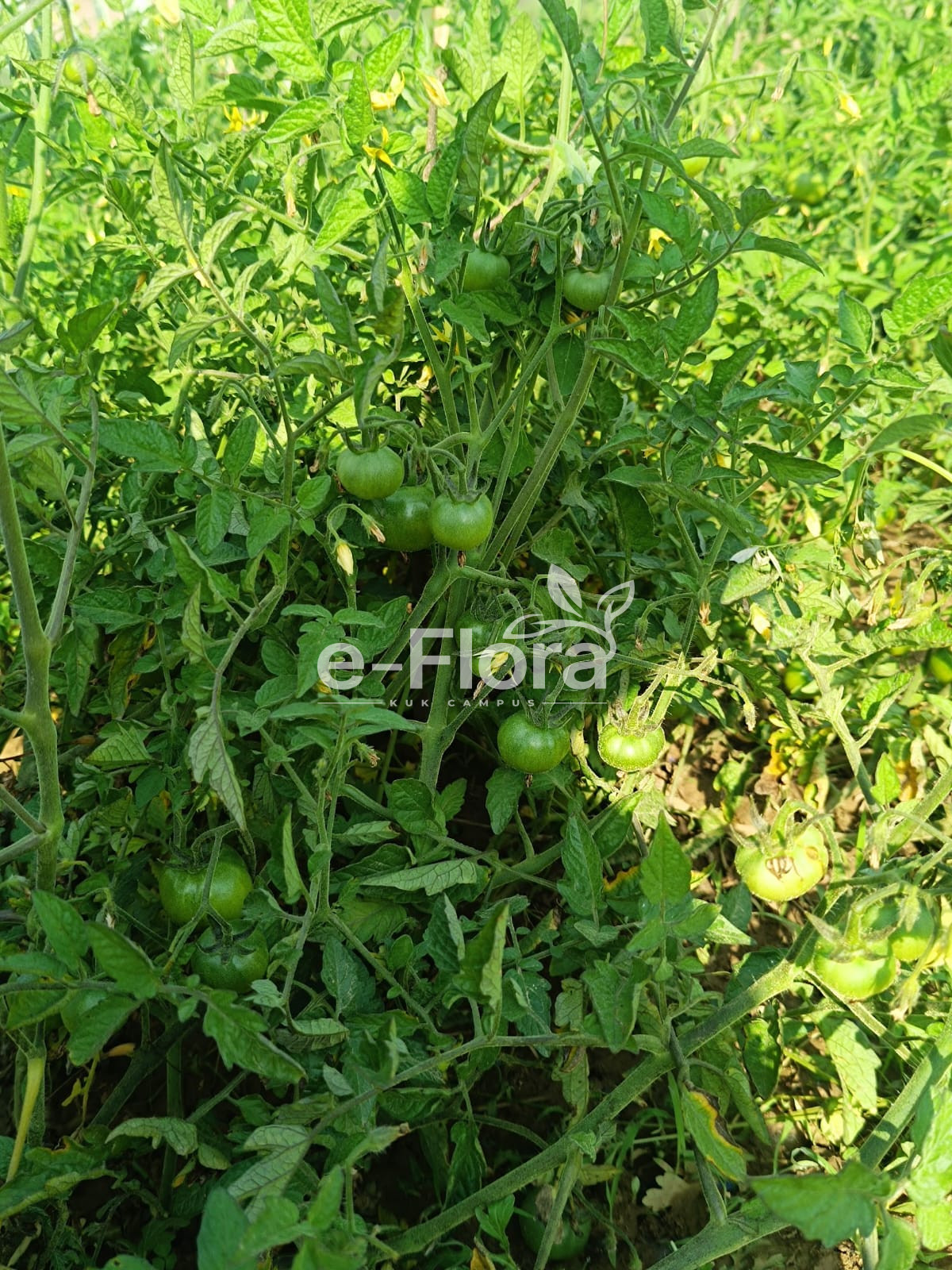
Solanum lycopersicum L.
Vernacular name: Tomato, Tamatar (Hindi: टमाटर)
Species Name: Solanum lycopersicum L. (syn. Lycopersicon esculentum Mill.)
Family: Solanaceae
Habit: Annual herb, weak-stemmed, glandular-pubescent, often scrambling.
Stem: Branched, angular, green, pubescent, becoming somewhat woody near base.
Leaf: Alternate, pinnately compound, 10–30 cm long; leaflets irregularly ovate-lanceolate, serrate, pubescent.
Flowering: Throughout the growing season.
Flowers: Axillary/lateral cymose clusters; yellow, rotate, 5-lobed; 5 stamens with connivent anthers forming a cone around the style; ovary superior, bicarpellary, multilocular.
Fruit: Fleshy, many-seeded berry, variable in shape and size, usually red when ripe; seeds flattened, yellowish, embedded in mucilaginous pulp.
Uses:
- Tomato contains potassium, folate, vitamin C, vitamin K and lycopene.
- Tomato helps in managing enlarged prostate symptoms and promote cardiovascular health.
- Topical application of sliced fruit is used to soothe sunburns, minor burns and scalds, whereas, pulp can be helpful in cleaning oily skins.
- In homeopathy, plant is used to treat rheumatism and headaches.
- Leaves extracts mixed with castor oil is used to treat leprosy spots.
- Tomato can be consumed as raw in salads or cooked in soups, stews, curries and sauces. Fruit can be processed in paste, puree, juices and ketchups.
- Cosmetic industry uses tomato for its antioxidant activities in lotions, creams and anti-aging serums.
- By-products of tomato can be processed as nutritious ingredient for livestock fodder.
- Extracts of soaps can be used in soap making and as traditional pest repellants.
- Seeds are used to extract a semi-drying oil.