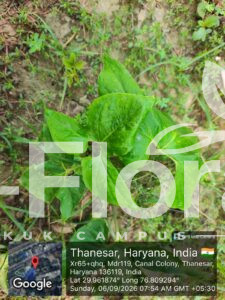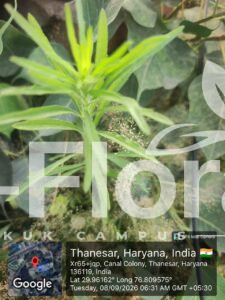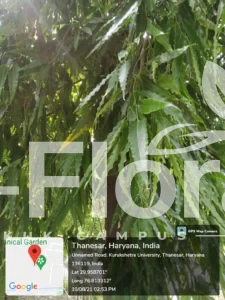
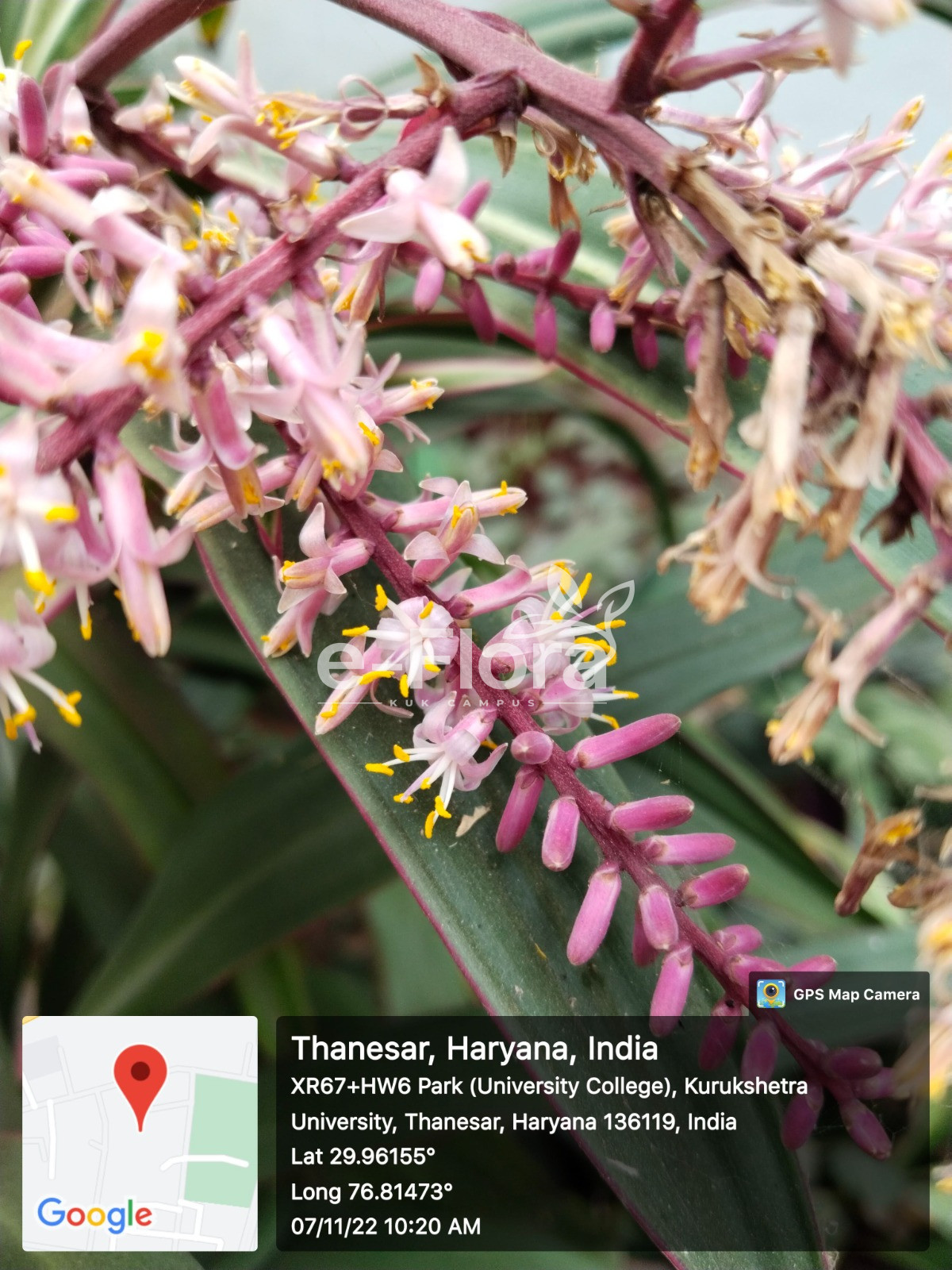
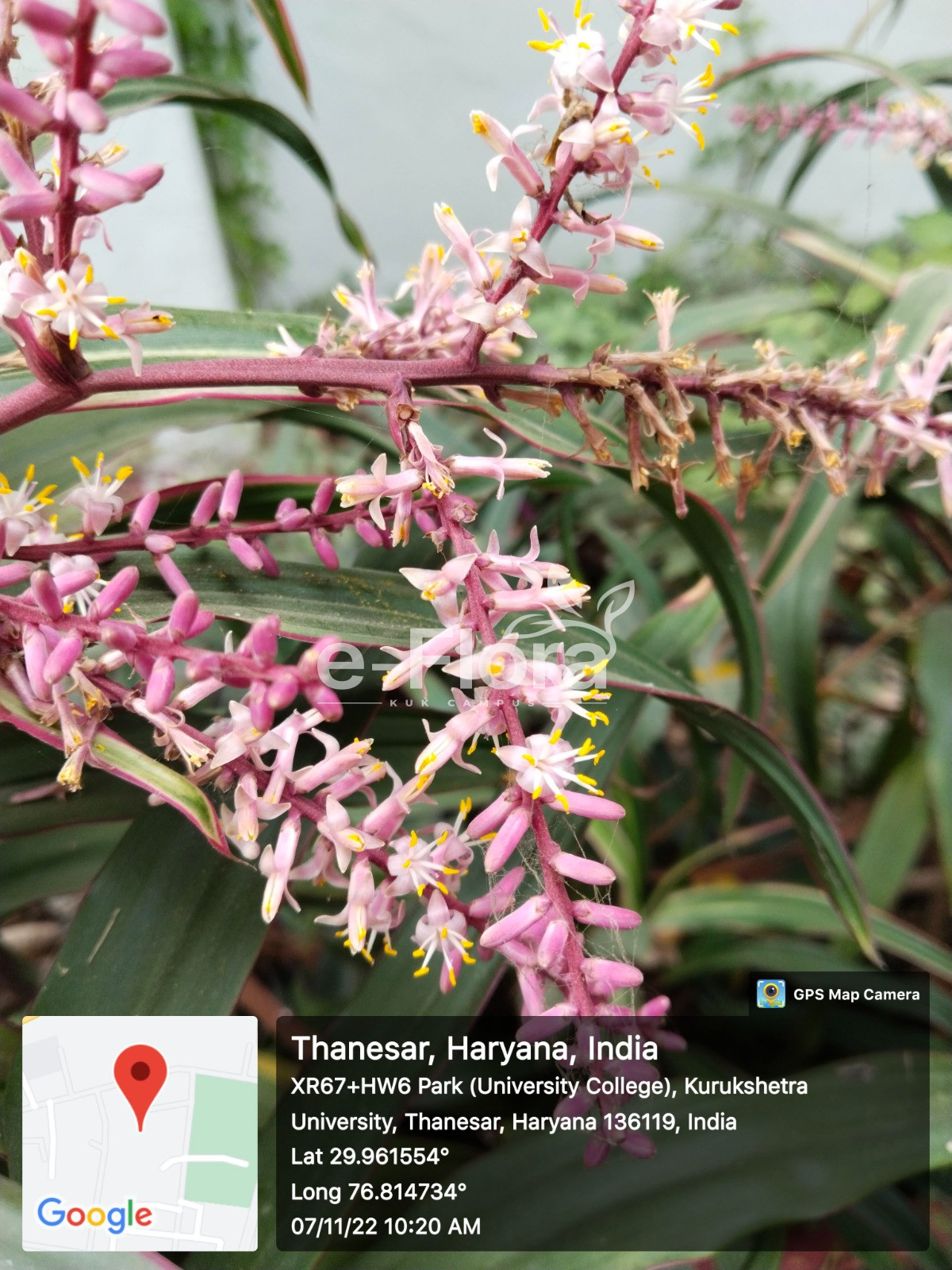
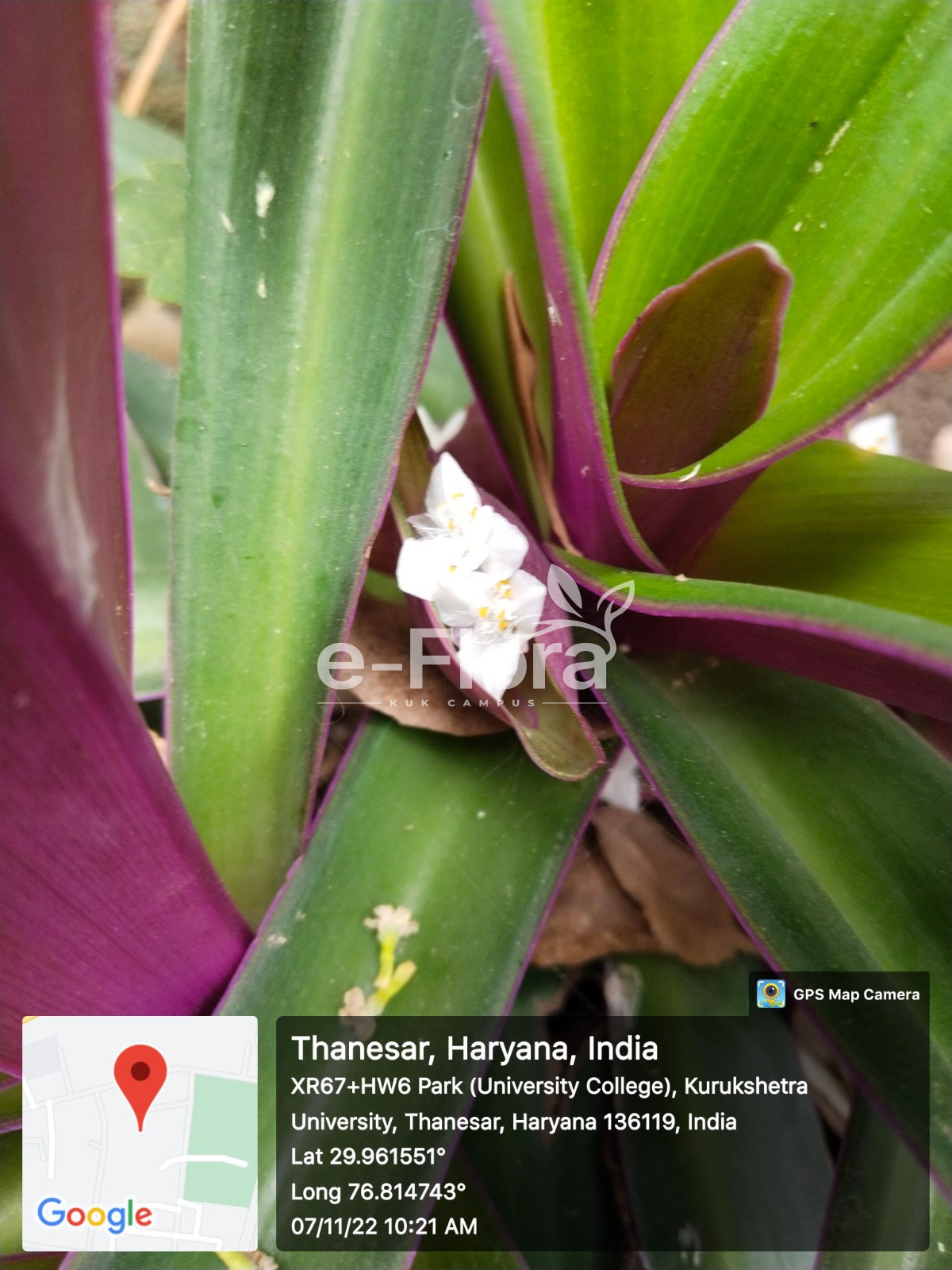
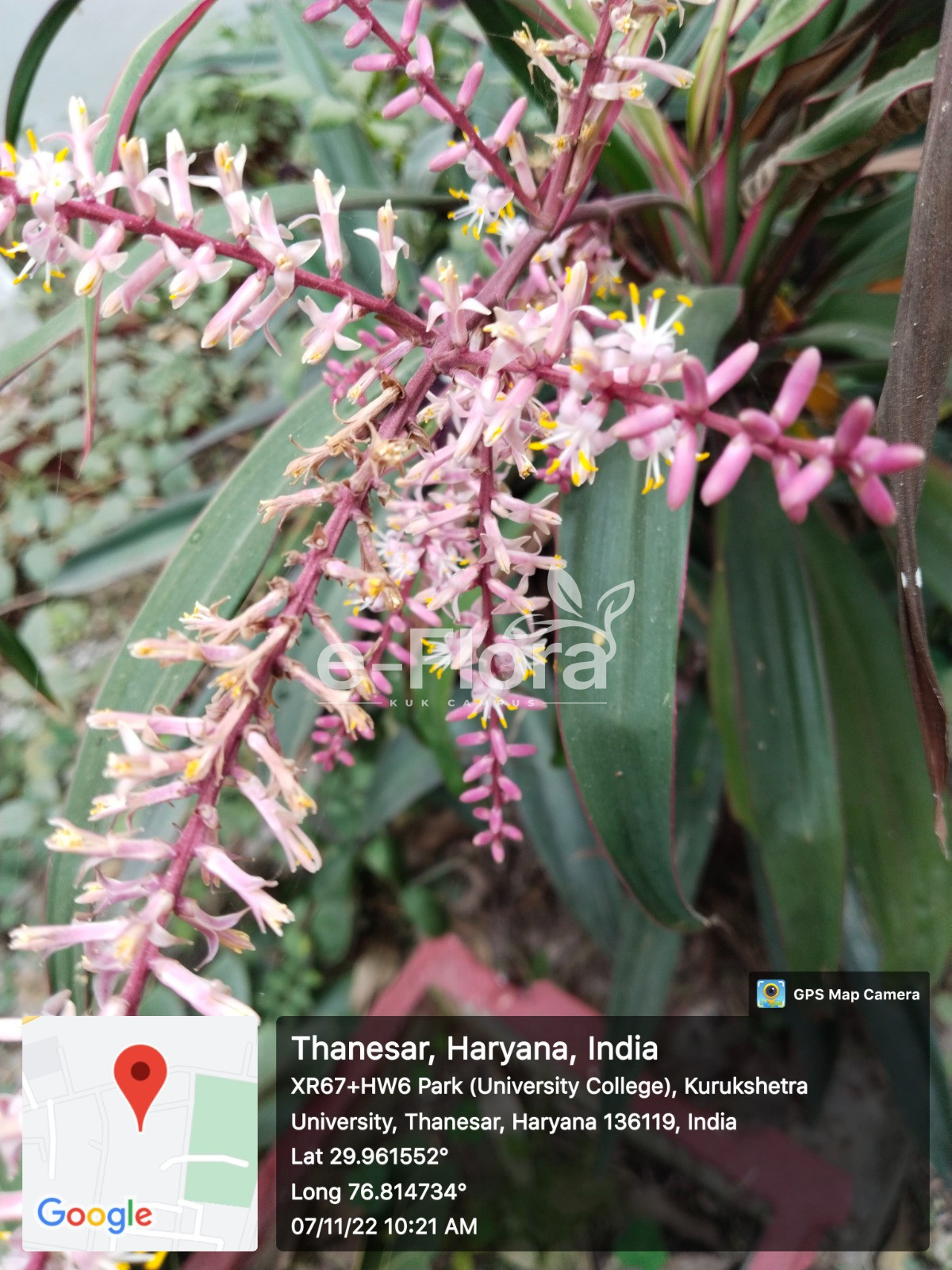
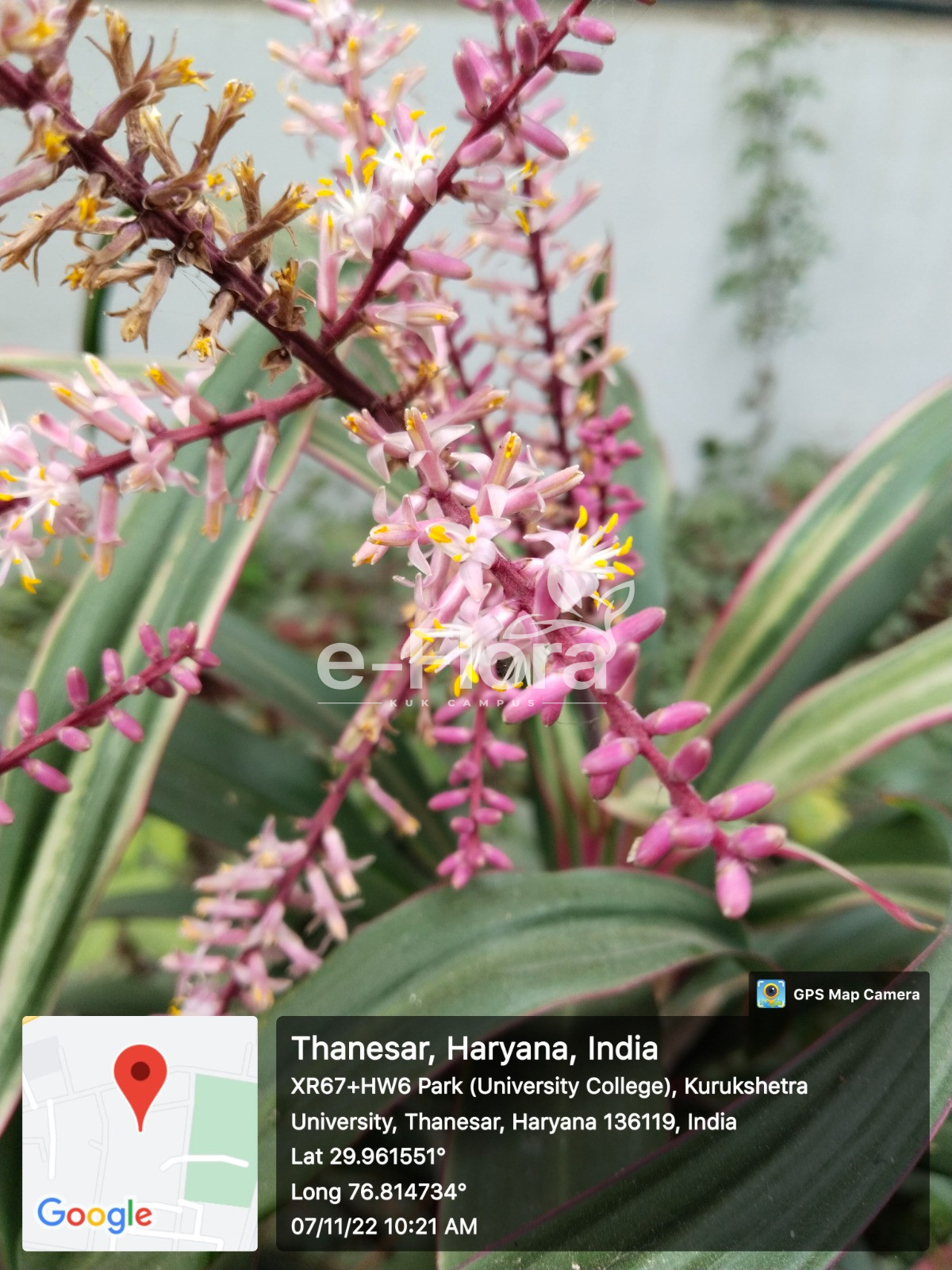
Cordyline fruticosa (L.) A.Chev.
Vernacular name: Ti Plant, Good Luck Plant, Hawaiian Ti
Species Name: Cordyline fruticosa (L.) A.Chev.
Family: Asparagaceae
Habit: Evergreen shrub.
Stem: Erect, slender, unbranched or sparingly branched, 1–4 m tall, marked with leaf scars.
Leaf: Spirally arranged, simple, lanceolate to elliptic, 30–60 × 5–10 cm, entire, leathery, long-sheathed; green, red, purple, pink, or variegated in cultivated forms.
Flowering: Spring–summer.
Flowers: Small, fragrant, white to pinkish-lilac, borne in large terminal panicles; perianth 6-lobed; stamens 6; ovary superior, tricarpellary.
Fruit: Globose berry, 0.8–1.2 cm diameter, green turning bright red at maturity, containing several black seeds.
Uses:
- Poultices of crushed leaves have cooling and antimicrobial properties and tropical application helps to treat burns, cuts, skin irritations and swellings.
- Traditional medicines uses leaf infusions to reduce fever, ease headaches, relieve joint and muscle aches.
- Root extracts have mild laxative property and used to soothe stomach and several minor digestive ailments.
- Stem juice assists with postpartum recovery.
- Widely cultivated as an ornamental foliage plant for gardens, hedges, and indoor landscaping due to vibrant green, red, pink and purple coloured foliage.
- In many Asian and Pacific cultures, it is planted for ceremonial, cultural, and religious purposes as believed to bring happiness, prosperity and ward off negative energy.
- Leaves are also used traditionally for wrapping food, weaving (hula skirts, capes, mats and sandals), thatched roof covering and in folk medicine.
- Rhizomes are thick and sweet can be baked into molasses-like food or fermented to traditional alcoholic beverages.