
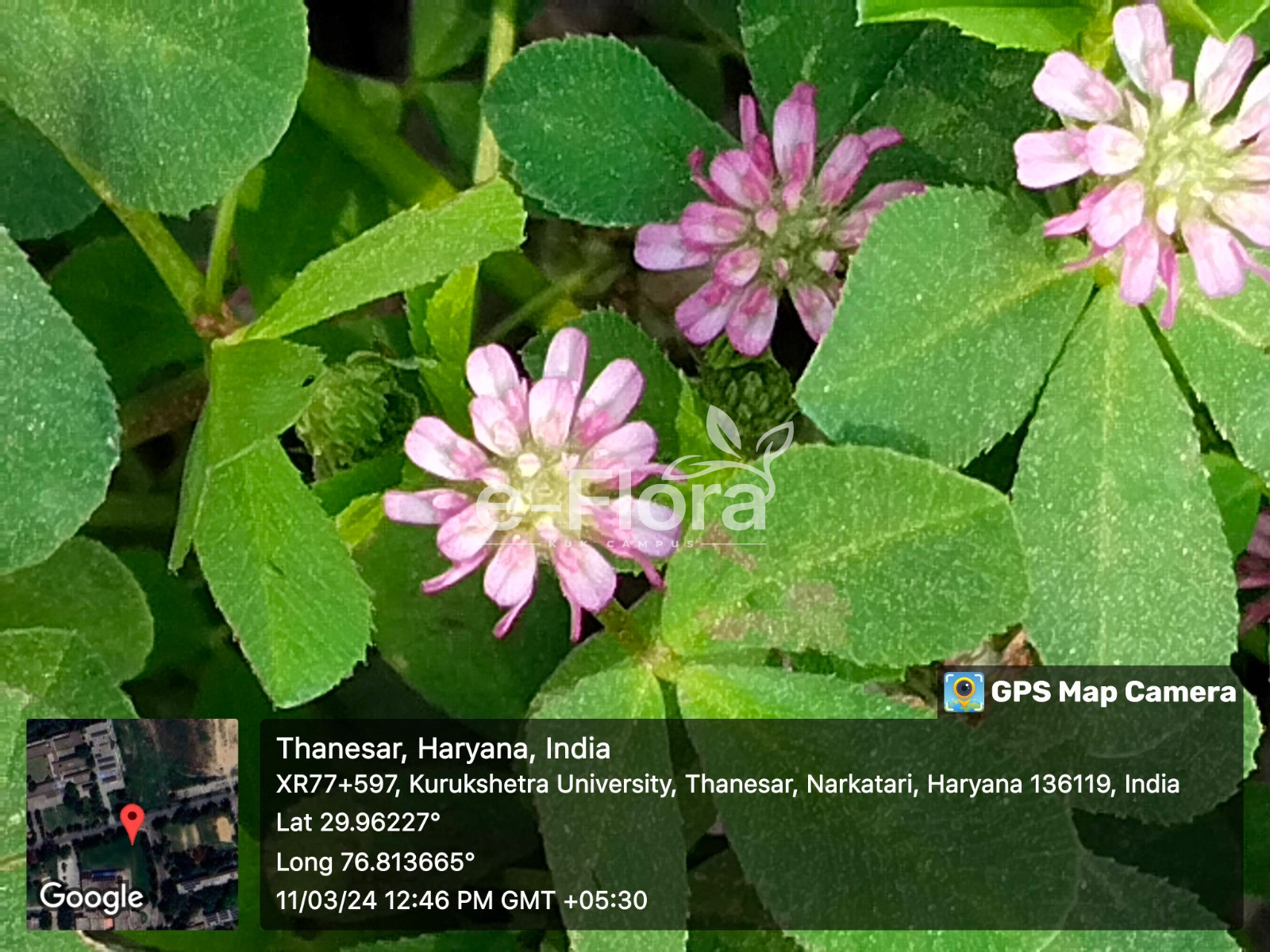
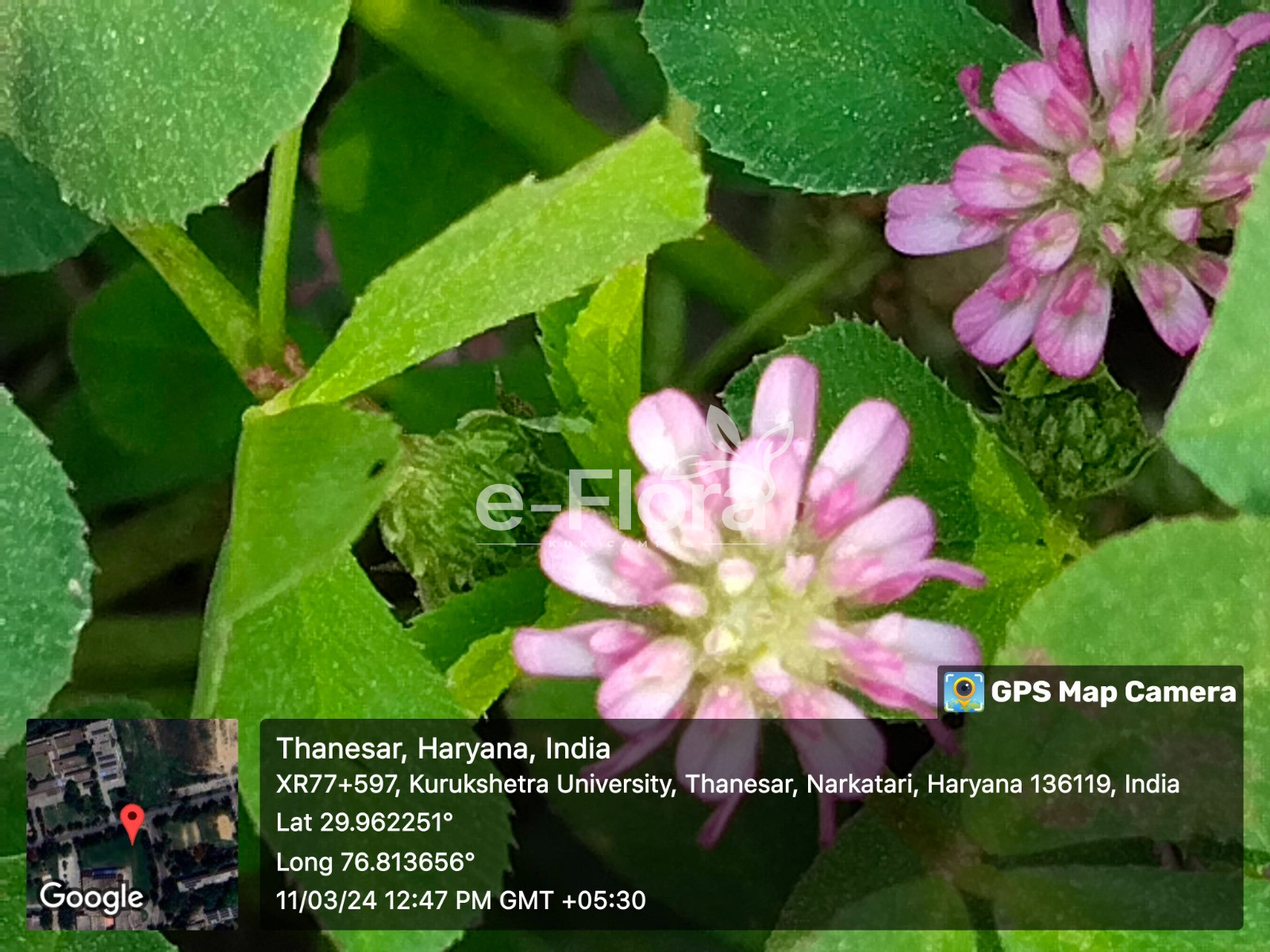
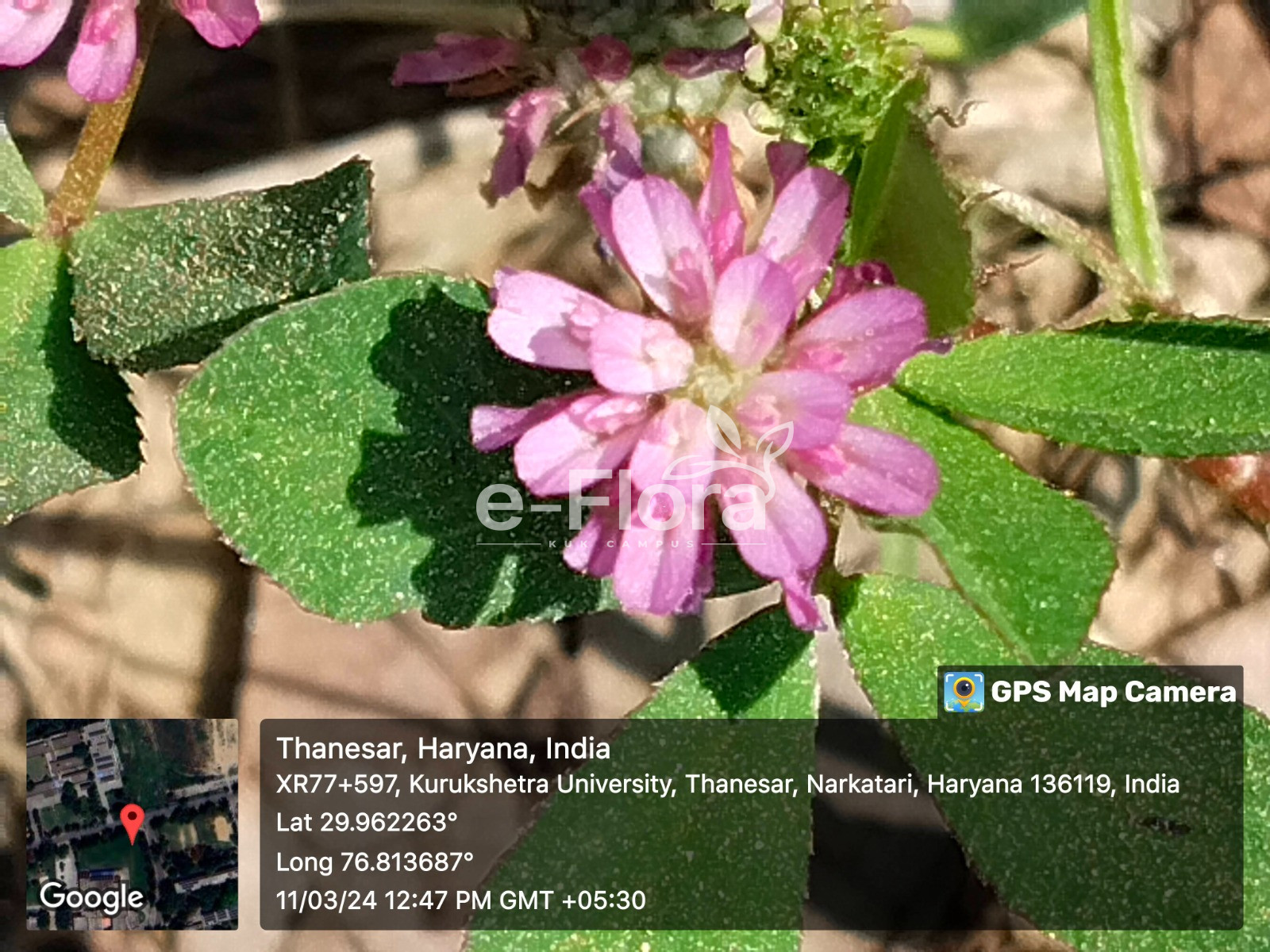
Trifolium resupinatum L.
Vernacular name: Persian Clover, Shaftal (Hindi: शफ्ताल)
Species Name: Trifolium resupinatum L.
Family: Fabaceae
Habit: Annual herb.
Stem: Erect to ascending, branched, glabrous to sparsely pubescent, 20–60 cm tall.
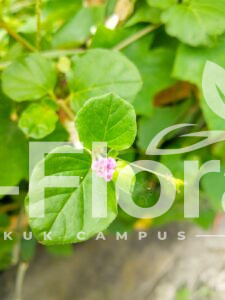
Leaf: Alternate, trifoliolate; leaflets obovate to obcordate, 1–3 cm long, finely serrulate towards the apex, long-petiolate; stipules membranous.
Flowering: Spring.
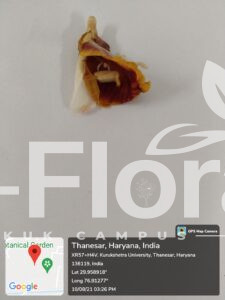
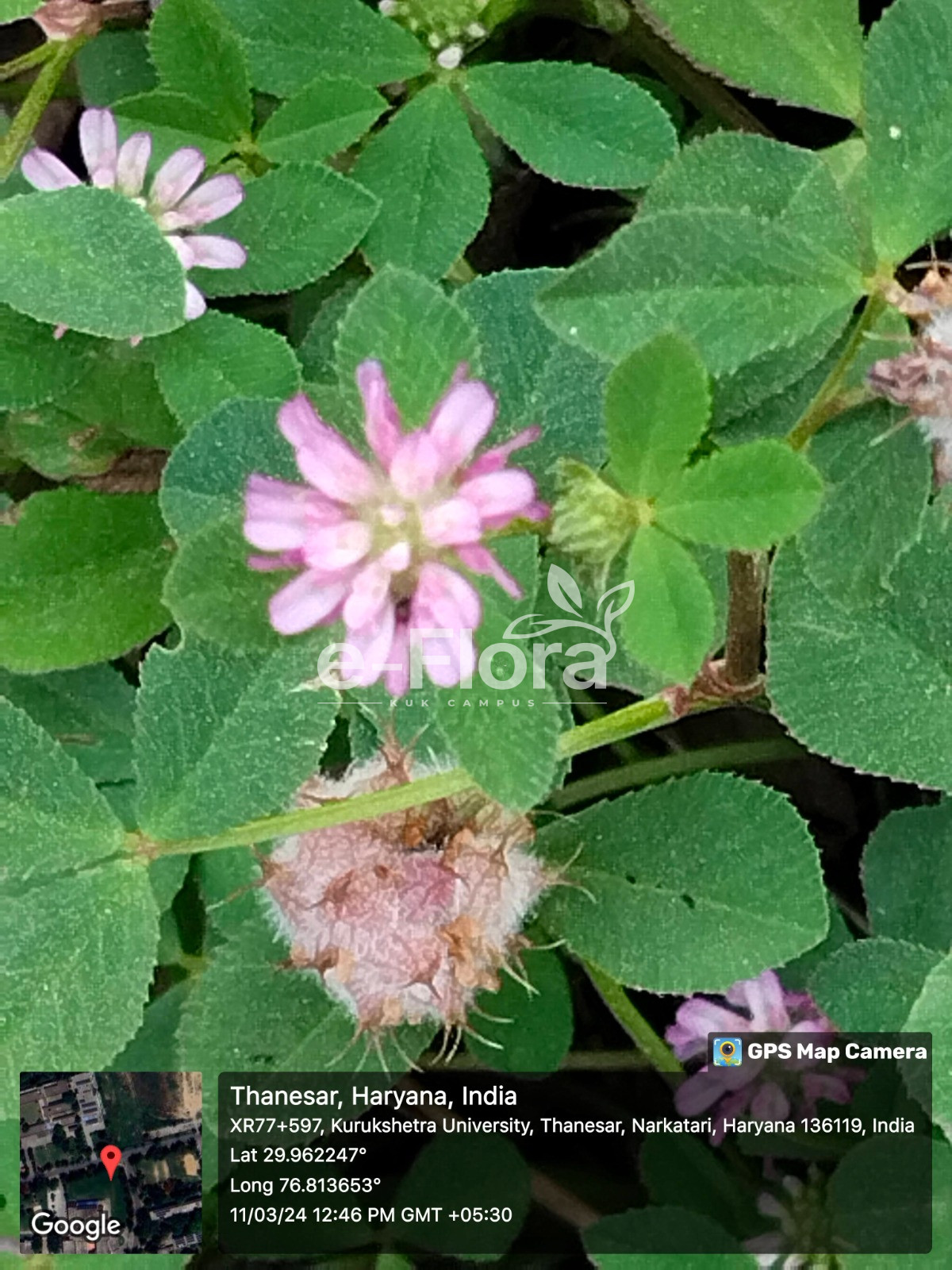
Flowers: Small, pink to purplish-pink, densely arranged in globose heads; papilionaceous; calyx 5-toothed, becoming inflated in fruit; stamens 10 (9+1); ovary superior, monocarpellary.
Fruit: Small indehiscent pod enclosed within the persistent inflated calyx, usually containing 1–2 seeds.
Uses:
- Plant extracts have antioxidant, anti-Alzheimer and neuroprotective properties.
- Plant contain components like isoflavones and quercetin that promotes metabolic benefits and anti-inflammatory functions.
- Cultivated as a nutritious fodder and pasture legume for livestock due to high protein content ranging 16% to 28%.
- It is also grown as a green manure and cover crop because of its nitrogen-fixing ability and extensive taproots that improving soil fertility and prevent soil erosion.
- It is an ornamental plant valued for its sweet-smelling pink-violet flowers.
- Flowers provide a valuable nectar source for bees and other pollinators.
- Young stems and leaves can be consumed as cooked vegetables.