Euphorbia pulcherrima Willd. Ex Klotzsch
Vernacular name: Poinsettia, Christmas flower, Lobster flower
Species Name: Euphorbia pulcherrima Willd. ex Klotzsch
Family: Euphorbiaceae
Habit: Evergreen shrub
Stem: Smooth, green to reddish, hollow, glabrous, branching from base; sap milky and irritant.
Leaf: Simple, alternate, ovate to elliptic, 10-20 cm long, entire to lobed margins (lower leaves often unlobed), dark green, petiolate.
Flowering: Winter (November–January).
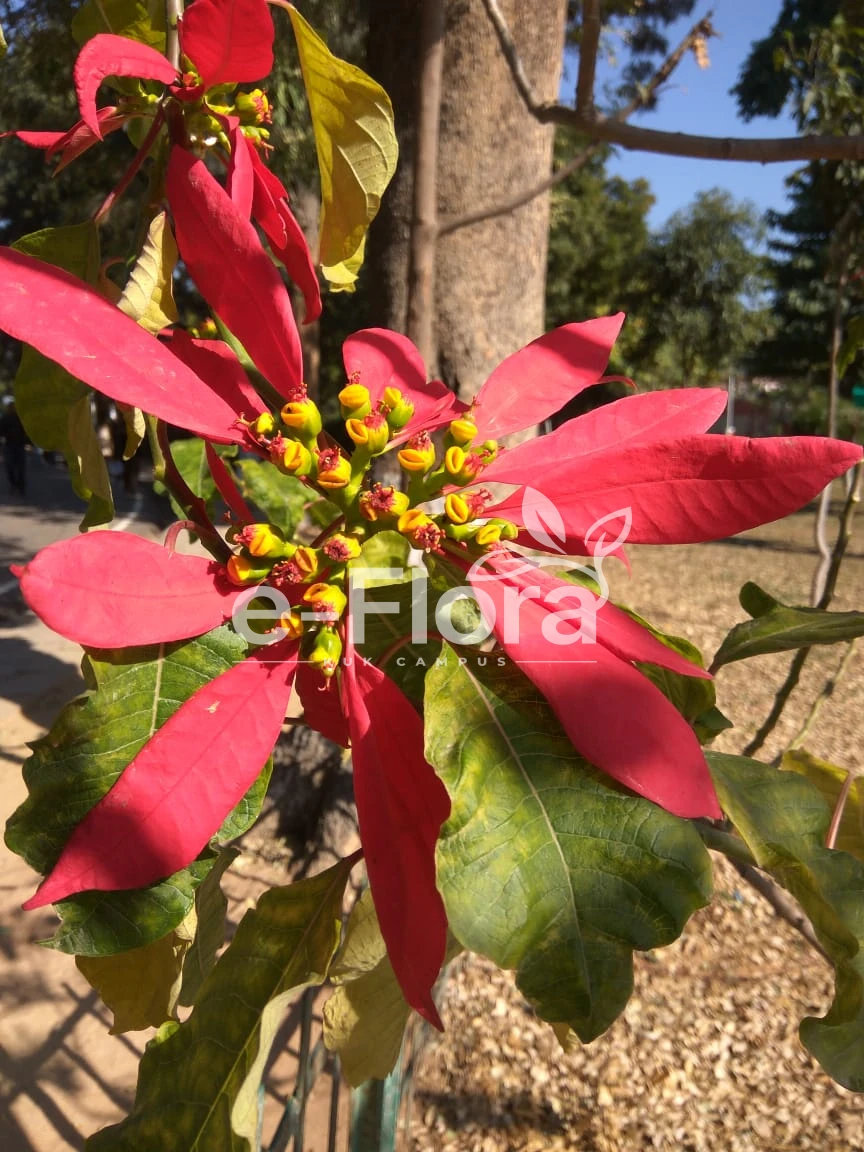
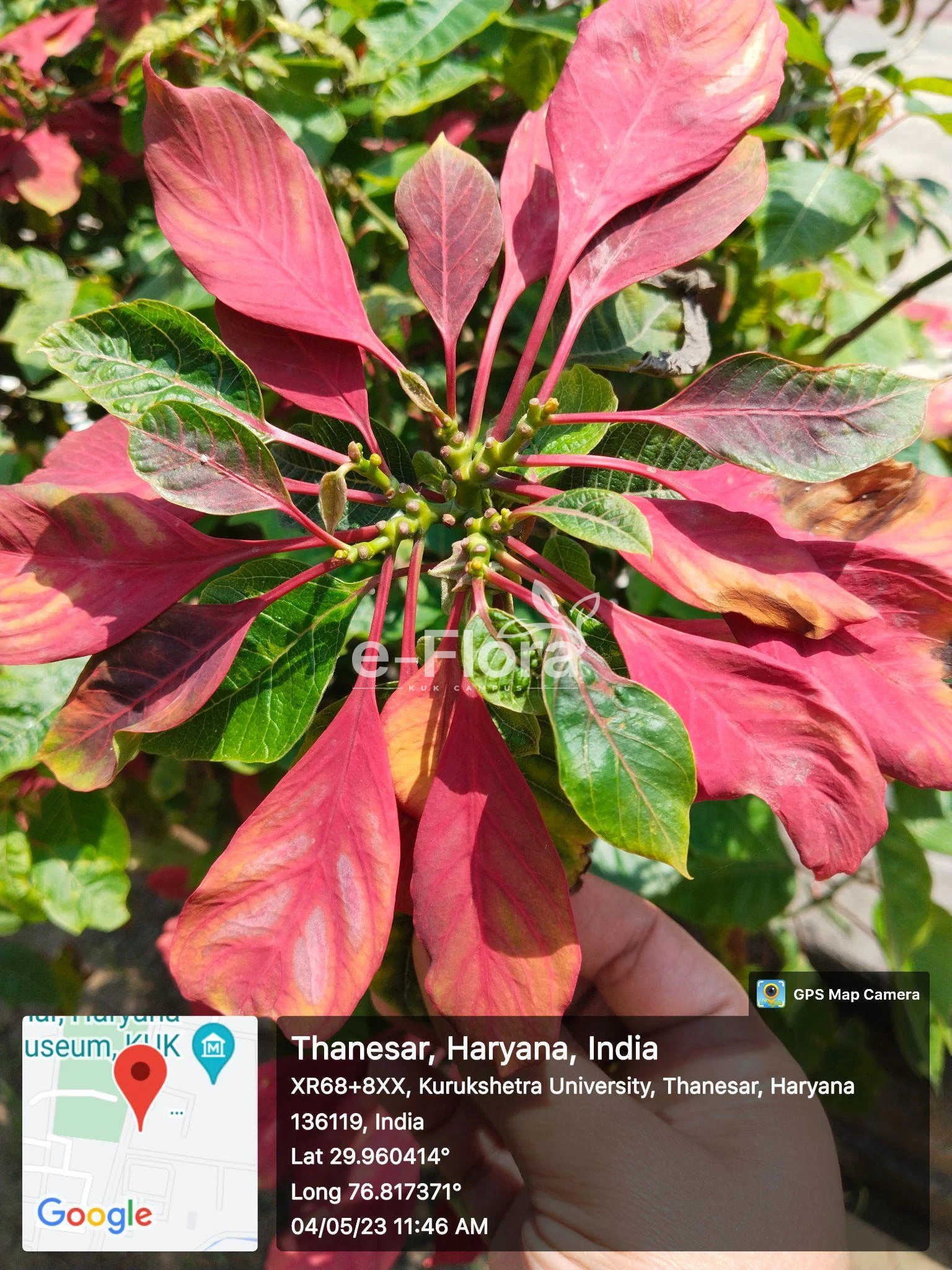
Flowers: Inconspicuous greenish-yellow cyathia clustered at branch tips; surrounded by 5–20 colorful bracts (red, white, pink, cream) functioning as false flowers.
Fruit: Small 3-lobed capsule, rarely maturing in cultivation.
Uses
- Euphorbia pulcherrima is named after Dr. J.R. Poinsett, and was introduced to gardeners in the early 19th century.
- Plant is used as an ornamental garden plant and Christmas holiday plant.
- A purplish red dye is extracted from plant that is used in textile, paper and cosmetic industry.
- Leaf and latex is used to treat fevers.
- Plant is also used to stimulate the production of breast milk.
- Plant sap can be toxic, so it is used with caution.
- Plant has anti-Alzheimer, antiviral, anti-inflammation, analdesic, sedative and muscle relaxant properties.