Ficus virens Aiton.
Vernacular name: Pilkhan, White fig
Species Name: Ficus virens Aiton
Family: Moraceae
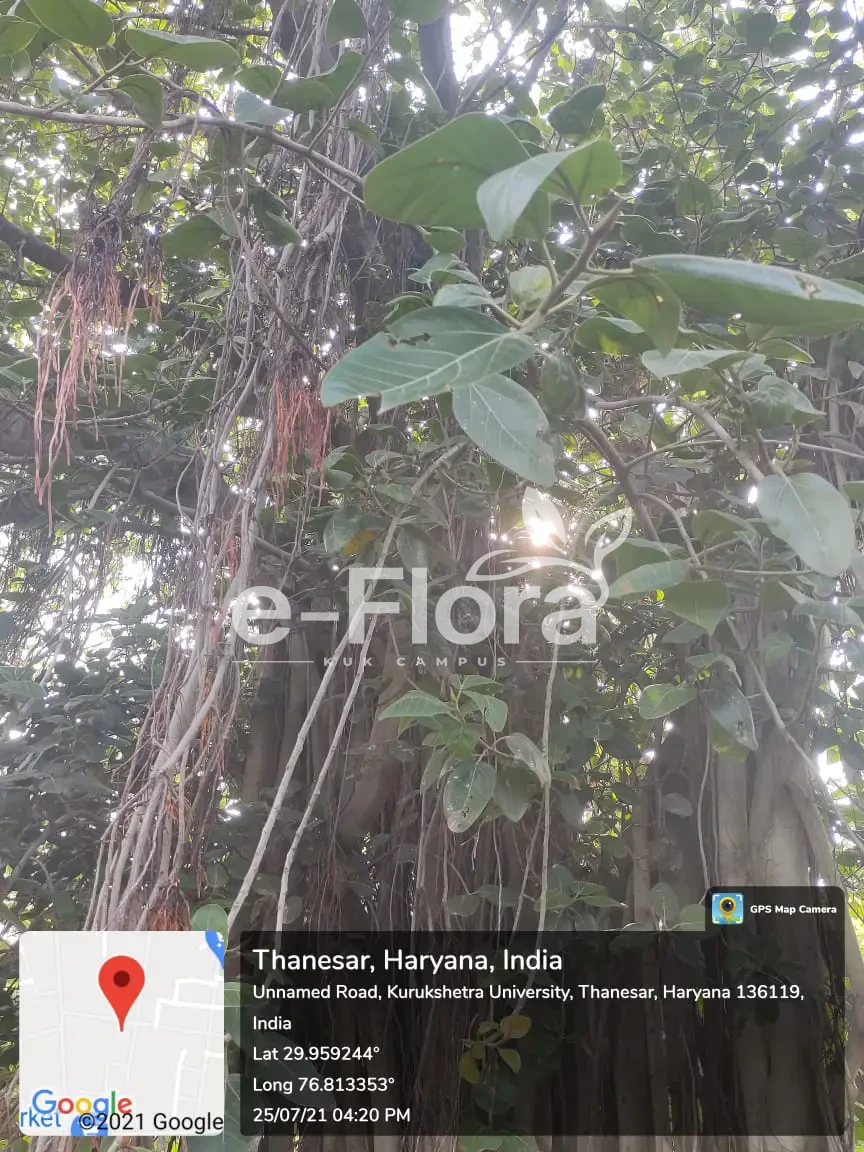
Habit: Deciduous Tree
Stem: tall, woody,
Leaf: Large, elliptical, whitish midrib, stipulate, longer than wider, acute-tipped, cystoliths present only on the lower side of the lamina
Flowering: March- December
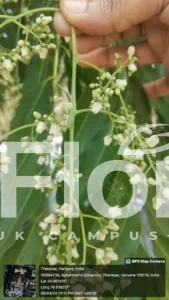
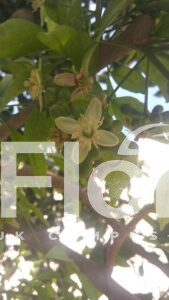
Flowers: Hypanthodium inflorescence, axillary pairs, peduncle 1-7 cm long, 3 basal bracts, Figs axillary, paired, ripening whitish, then pink to purple and black, basal bracts 3, persistent. Male flowers sessile, in 2-3 rings; tepals 2-3, acute, free. Galls sessile or shortly pedicellate, tepals 3-4, reddish, free. Female flowers sessile, tepals 3-4, free.
Fruit: subsessile, globose, glabrous
Uses
- The bark contains 4% tannin and is astringent.
- An infusion of it is used for ulcers and skin diseases.
- An aqueous extract of the bark shows anti-bacterial and anti- inflammatory activities.
- Leaves and tender shoots are used as purgative and in skin diseases.
- The fruit is laxative and the seeds are considered to be cooling, alterative and laxative.
- Dried fruit and leaves decoction is used to treat asthma and coughs.
- Bark extracts are used for stomach and tooth aches and mouth ulcer treatment.
- Prince Siddhartha meditated under this tree and found enlightenment, and became Gautam Buddha, and the tree got the name ‘Bo’.
- Lord Vishnu is said to have been born under a Peepul, which is why the tree is worshipped as Lord Vishnu.
- Its is a shade tree and various village meetings are held under it.
- Plant is a good specimen for bonsai.
- Plant fruit is used as food source by a large no. species of bats, primates and birds.