Alternanthera sessilis (L.) DC.
Vernacular names: Sessile joyweed, Dwarf copperleaf; Hindi: Gudrisag / Matsyakshi
Species Name: Alternanthera sessilis (L.) DC.
Family: Amaranthaceae
Habit: Annual or usually perennial, much-branched herb; commonly prostrate or ascending and often rooting at the nodes, especially in moist habitats.
Stem: Green to reddish/purplish, slender, branched and somewhat succulent; young stems may have a narrow line of hairs. In wet conditions the stems can become hollow and root readily at the nodes.
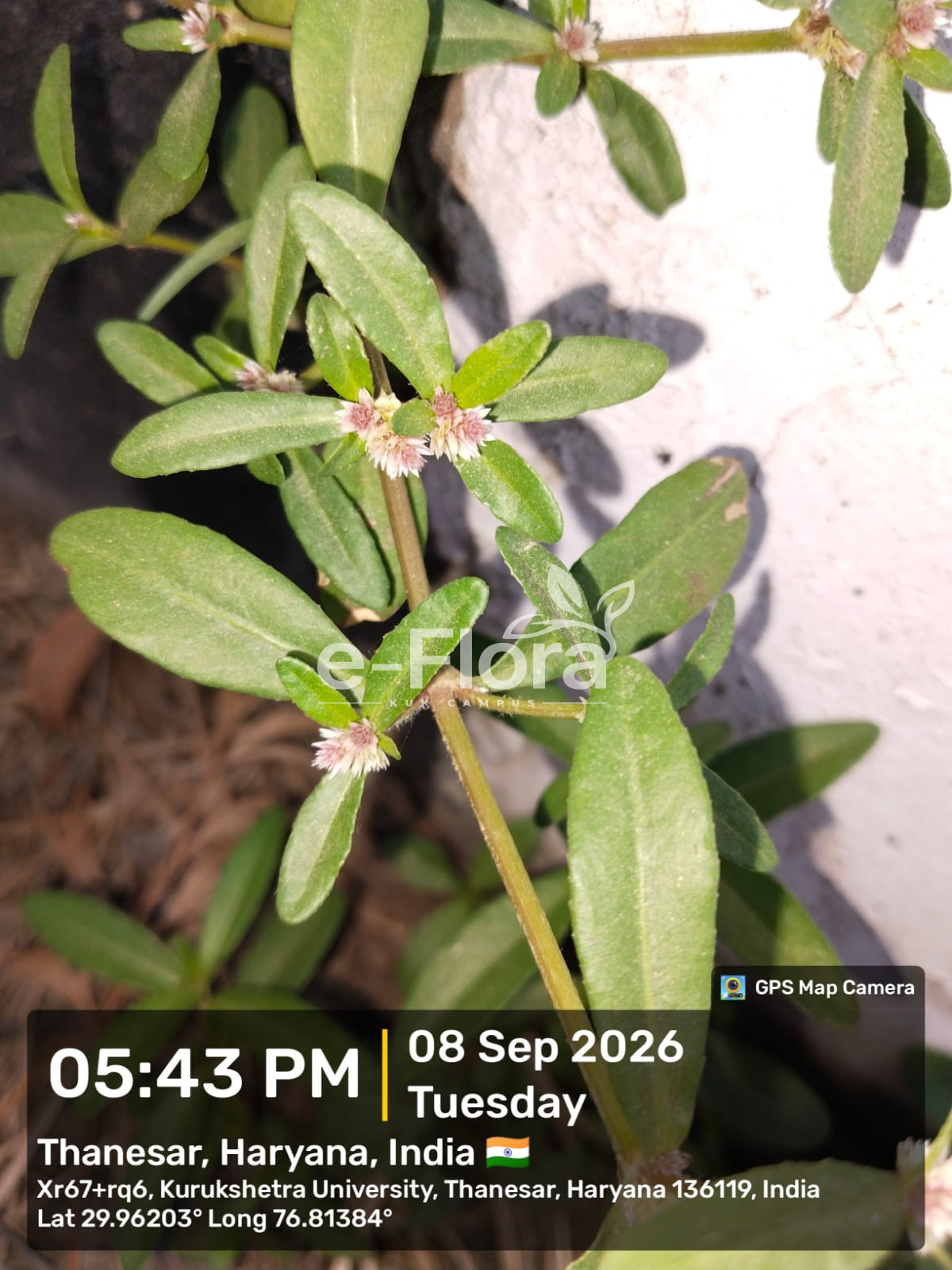
Leaf: Leaves simple, opposite, sessile or shortly petiolate, extremely variable from linear-lanceolate to oblong, ovate or obovate-spathulate. They are generally entire, glabrous or sparsely hairy.
Flowering: Flowering can occur for much of the year in suitable tropical conditions.
Flowers: Sessile, axillary, solitary or clustered globose heads, usually about 5 mm across. This axillary sessile flower-head arrangement is one of the most useful characters for identification. Very small, white to pink-tinged, with 5 tepals. Stamens are 5, with two sometimes lacking anthers; the ovary is strongly compressed with a very short style.
Fruit: Small, strongly compressed obcordate or cordate-orbicular utricle, about 2–2.5 mm long, with a narrow pale thickened margin. Seeds are small, brown, shining and faintly reticulate.
Uses:
- Plant decoction are used to treat dysentery, diarrhea, nausea, indigestion, haemorrhoids, gonorrhoea, dyspepsia, flatulence, liver and spleen diseases.
- Topical application of poultice made of root paste and crushed leaves is used to reduce inflammation, heal wounds, treat burning sensation and various skin diseases.
- In folk medicines, plant is used in the treatment of asthma, coughs, bronchitis and tightness in chest.
- Regional practices of many areas uses this plant to ease headaches, regulate blood pressure and to stimulate lactation (galactagogue).
- The tender shoots and leaves are consumed cooked as a leafy vegetable.
- Red and green both varieties of this plant can be consumed but red is also valued for its antioxidant property.