Artocarpus heterophyllus Lam.
Vernacular name: Jackfruit, Kathal (Hindi: कटहल)
Species Name: Artocarpus heterophyllus Lam.
Family: Moraceae
Habit: Evergreen medium to large tree.
Stem: Straight, cylindrical trunk, 10–20 m tall; bark greyish-brown, rough, exuding milky latex.
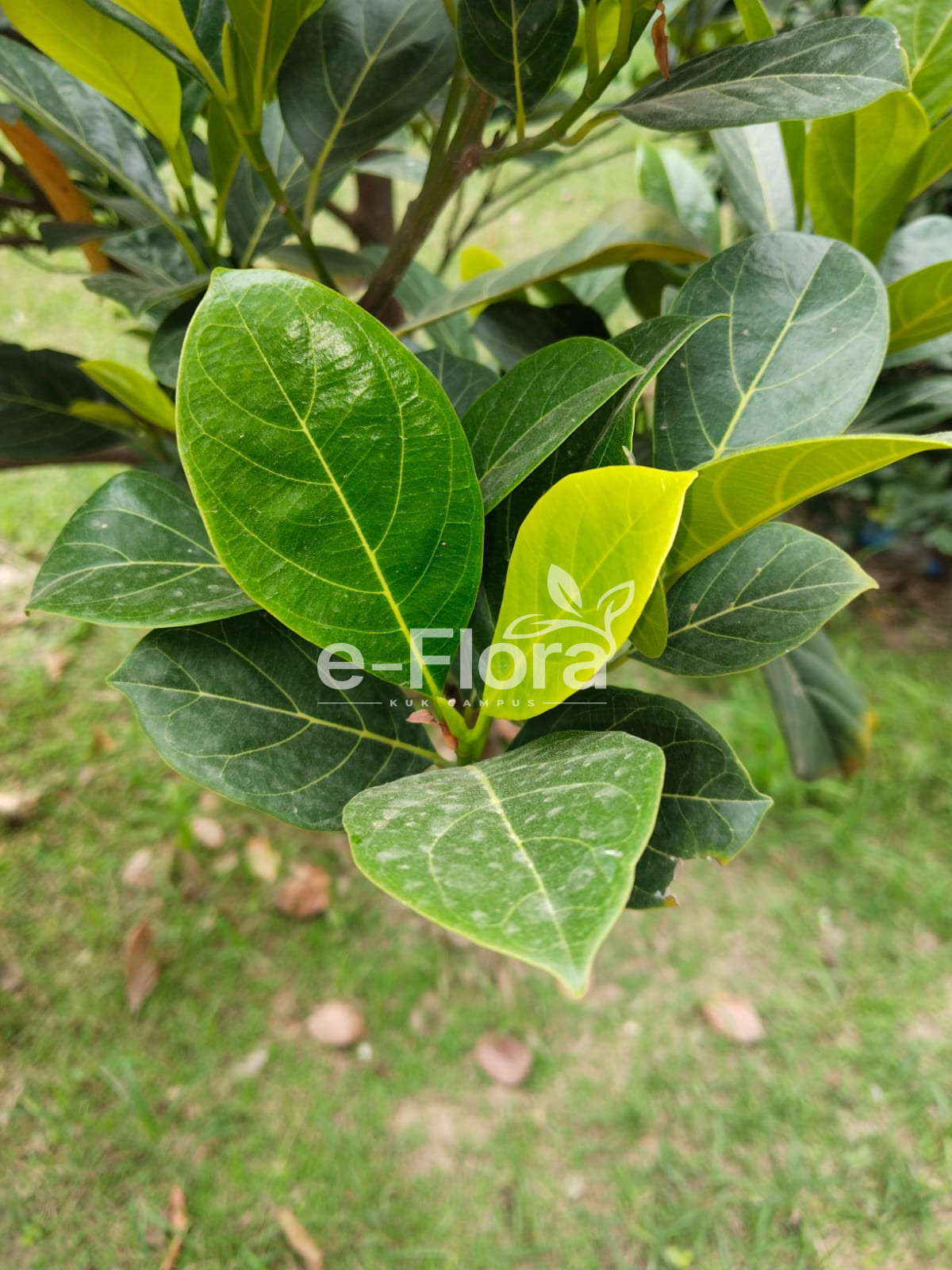
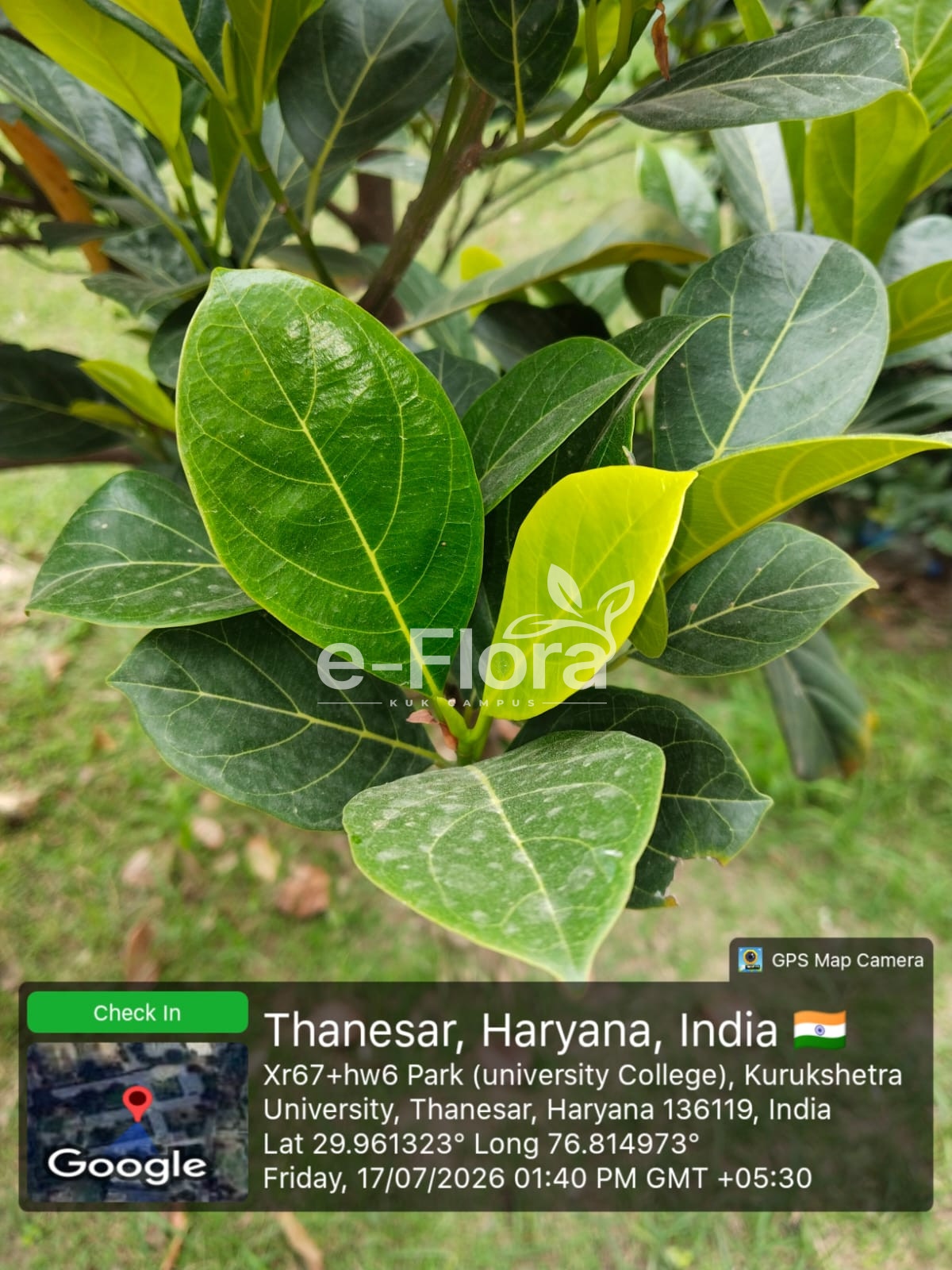
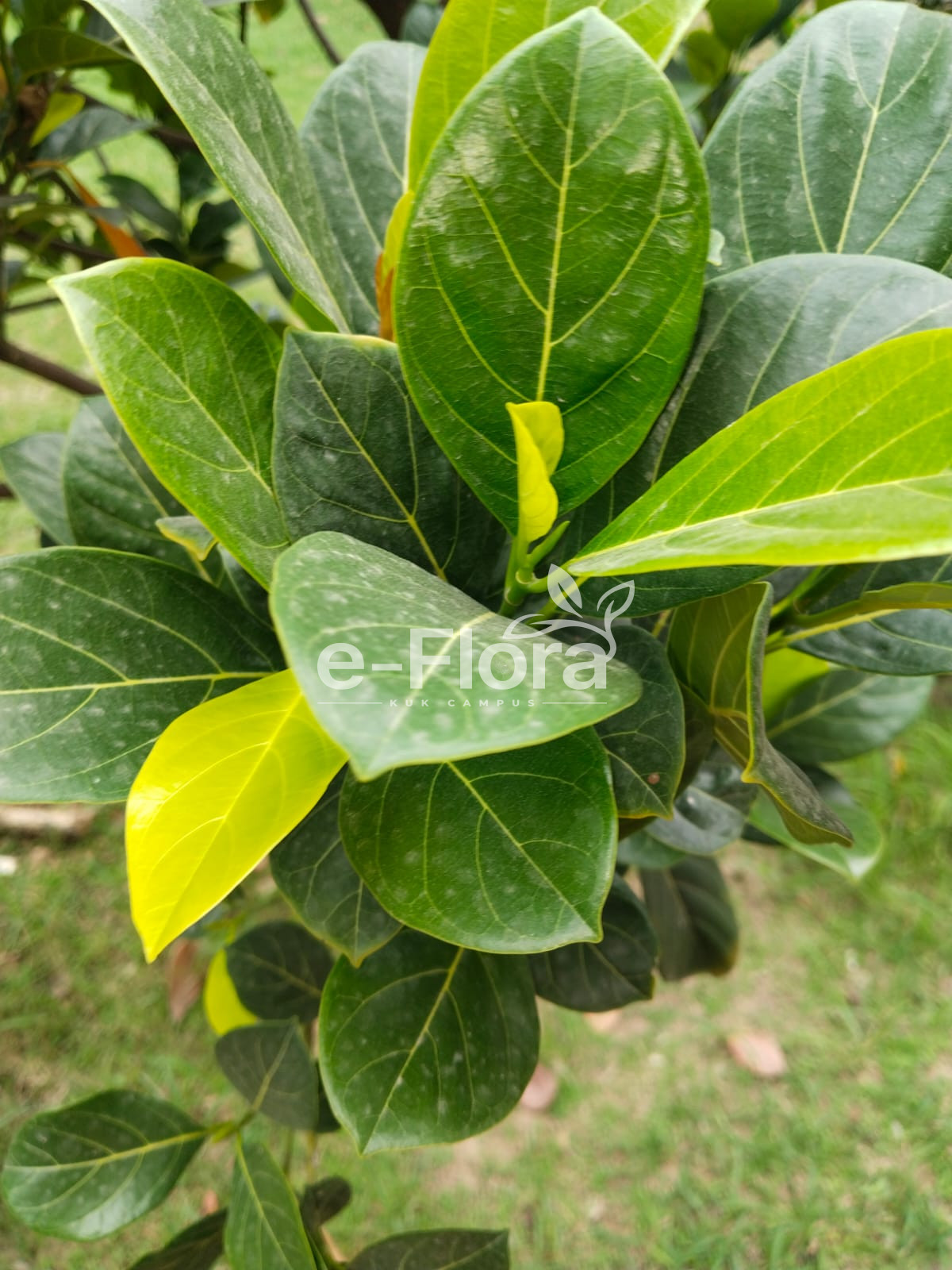
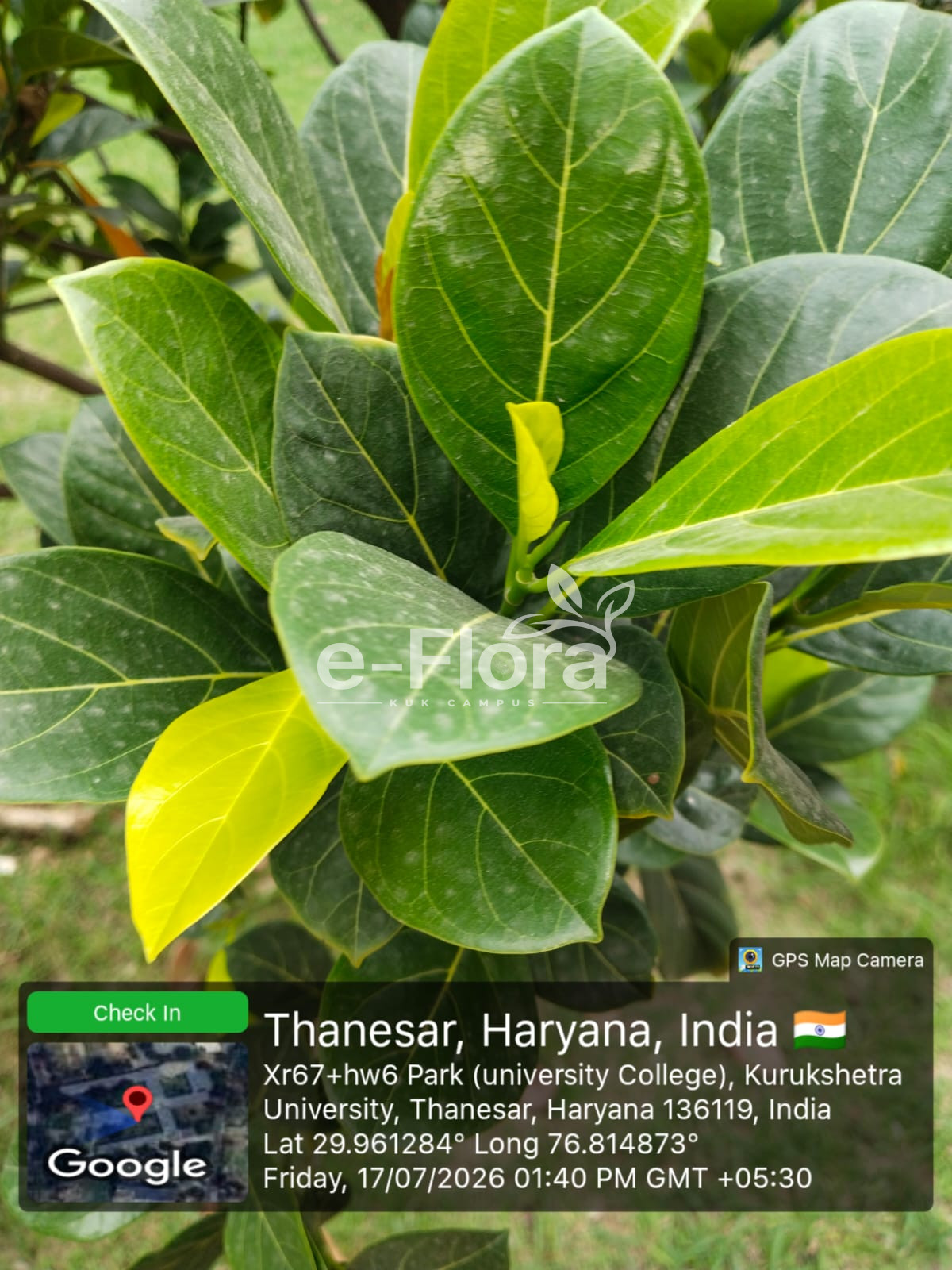
Leaf: Alternate, simple, elliptic to obovate, 10–20 × 5–10 cm, entire, leathery, glossy dark green; juvenile leaves may be lobed.
Flowering: Mainly spring–summer.
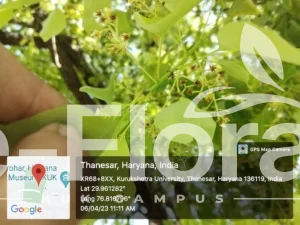
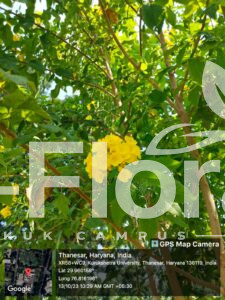
Flowers: Monoecious; male and female flowers borne separately on the same tree in dense spikes arising from the trunk and older branches (cauliflory). Male spikes cylindrical; female spikes larger and ovoid; flowers minute and apetalous.
Fruit: Very large syncarp (multiple fruit), oblong to globose, green becoming yellowish; surface covered with polygonal spines. Numerous edible bulbs (arils/perianth-derived flesh) surround the seeds.
Uses:
- Tropical application of heated leaves or its ashes helps to treat ulcer and wounds.
- Folk remedies uses extracts of roots and bark to alleviate fever, treat diarrhea and skin diseases.
- Plant contain a lectin protein called jacalin, that has immunological and anti-cancer activities.
- Sap of fruit is anti-syphilitic and vermifuge.
- Wood has a mild sedative property, while its pith can induce abortion.
- Jackfruit is cultivated for its edible ripe fruit and immature fruit, which is widely used as a vegetable. It is used as a substitute of meat due to high fibrous content and meat-like texture.
- Ripe fruit can also be used to make jam, jellies, beverages and ice creams.
- Seeds are consumed as boiled or roasted, can be cooked in gravies and curries and are rich in carbohydrates and protein.
- The wood is valued for furniture and timber as its durable, termite-resistant and yellow brown in colour. It can be used to craft musical instruments and in construction.
- Heartwood chips are processed to extract a rich golden-brown or yellow dye that can be used to dye silk, cotton and Buddhist monk robes.
- Plant exudes a sticky white latex that is used as an adhesive or gum on commercial level.
- Inner part of bark or bast can be used to yield fibers in textile industry.
- Resins yielded from stem and branches can be used in varnishes.
- Roots can also be used for carving photo frames.