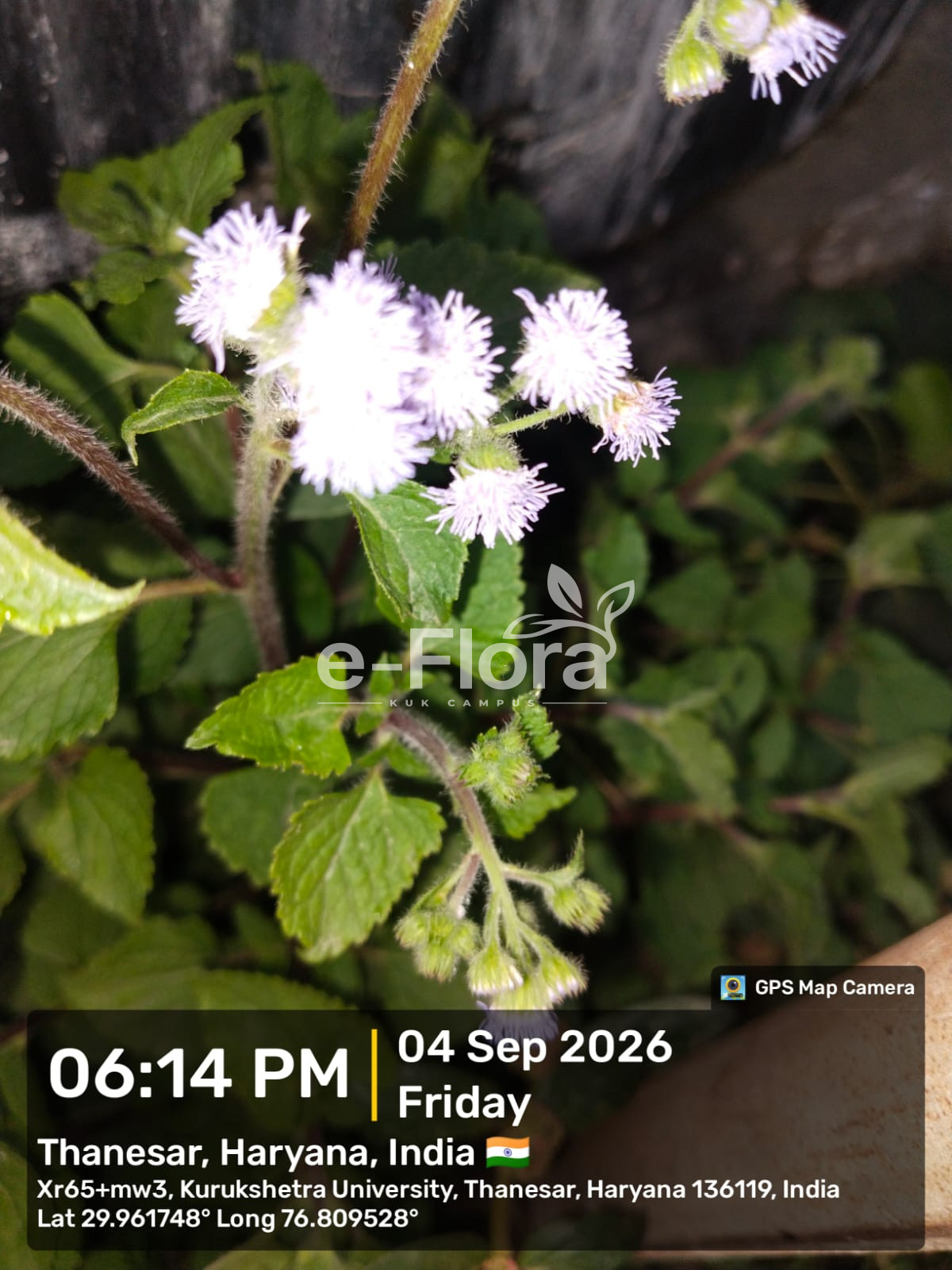
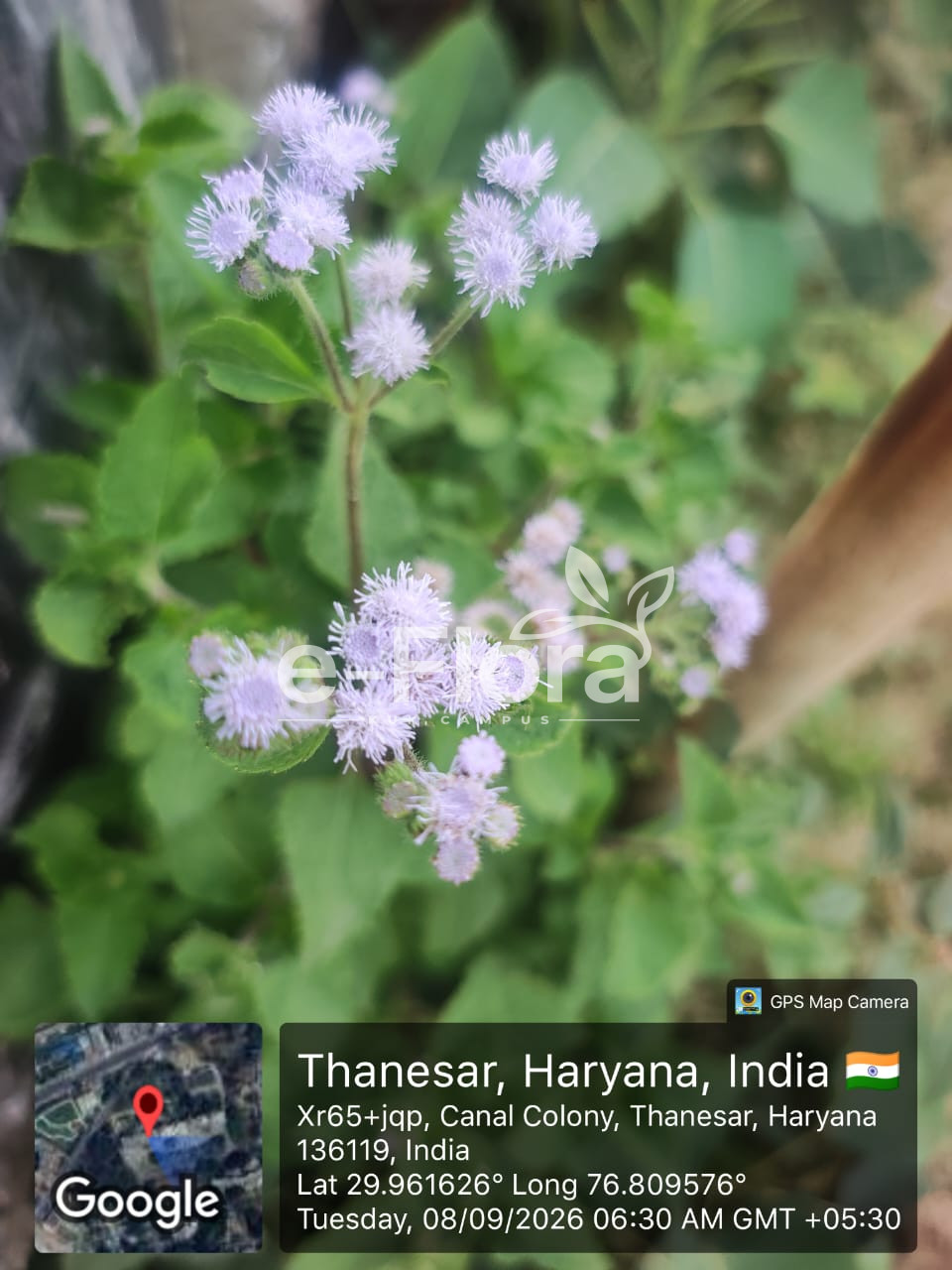
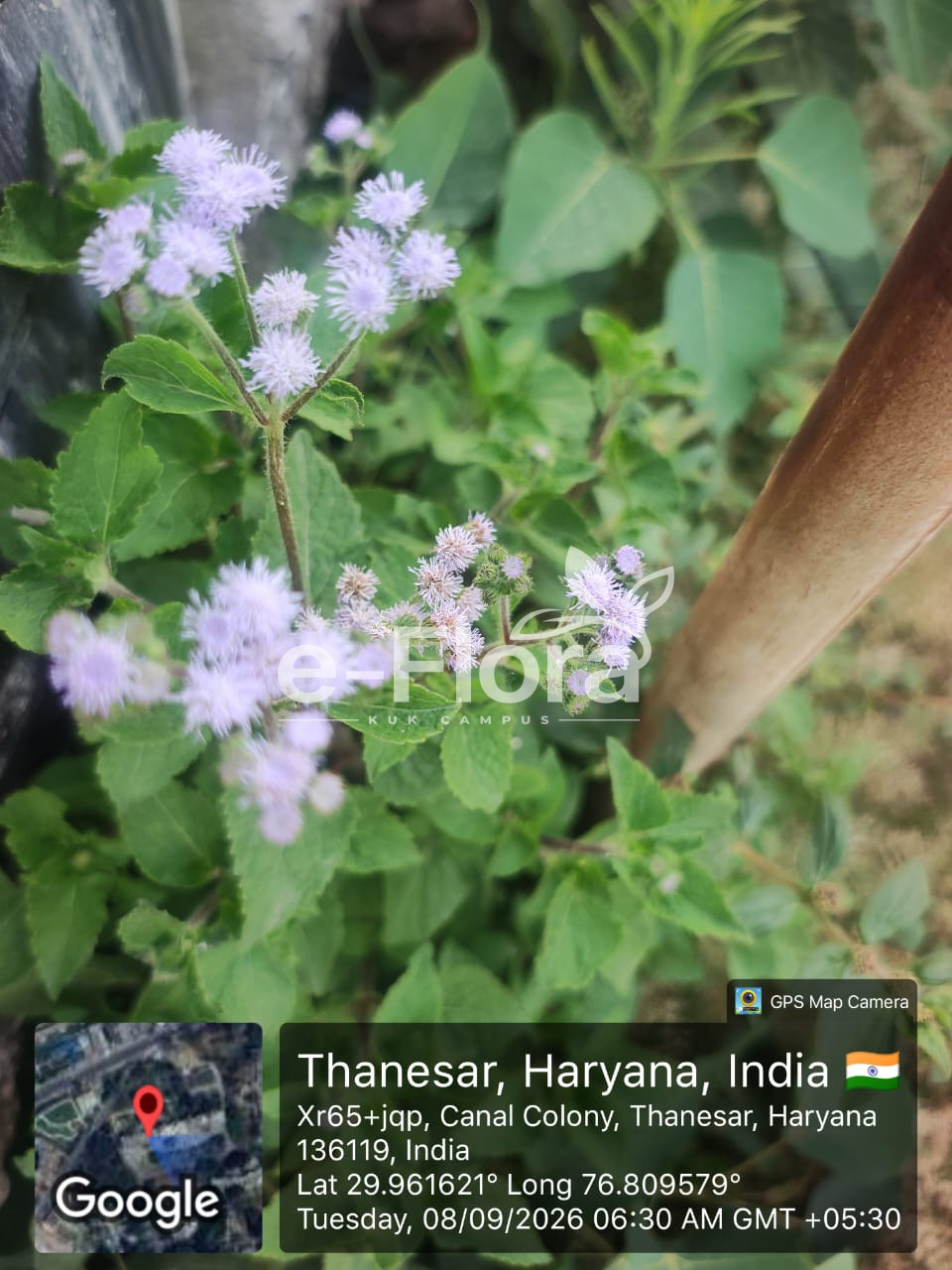
Ageratum conyzoides L.
Vernacular name: Goat Weed, Billygoat Weed, Tropical Whiteweed, Visadoori, Jangli Pudina, Osadi
Species Name: Ageratum conyzoides L.
Family: Asteraceae
Habit: Annual herb, usually about 0.5–1 m tall, erect to somewhat spreading and much-branched; a common weed of disturbed ground, fallow fields, roadsides and wastelands.
Stem: Erect, branched, green and generally covered with fine hairs; the stem and young branches are often somewhat soft and hairy.
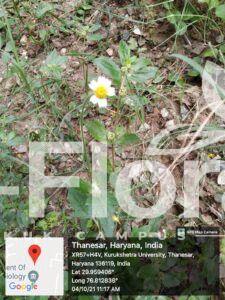
Leaf: Opposite, simple, ovate to broadly ovate, usually 2–6 cm long, petiolate, with crenate or shallowly toothed margins; leaves are typically 3-nerved from the base and hairy.
Flowering: Throughout the year under suitable conditions
Flowers: Very small, tubular, bisexual, usually white, pale blue or mauve; individual florets have a 5-lobed corolla and anthers with characteristic appendages. Inflorescence terminal and sometimes axillary clusters of discoid capitula, often arranged in a loose panicle. The individual heads are small and contain numerous tubular florets.
Fruit: Small, angular achene (cypsela), usually 4–5 angled, with a pappus of several awned scales that assists in dispersal.
Uses:
- Vernacular name: Goat Weed, Billygoat Weed, Tropical Whiteweed, Visadoori, Jangli Pudina, Osadi
- Species Name: Ageratum conyzoides L.
- Family: Asteraceae
- Habit: Annual herb, usually about 0.5–1 m tall, erect to somewhat spreading and much-branched; a common weed of disturbed ground, fallow fields, roadsides and wastelands.
- Stem: Erect, branched, green and generally covered with fine hairs; the stem and young branches are often somewhat soft and hairy.
- Leaf: Opposite, simple, ovate to broadly ovate, usually 2–6 cm long, petiolate, with crenate or shallowly toothed margins; leaves are typically 3-nerved from the base and hairy.
- Flowering: Throughout the year under suitable conditions
- Flowers: Very small, tubular, bisexual, usually white, pale blue or mauve; individual florets have a 5-lobed corolla and anthers with characteristic appendages. Inflorescence terminal and sometimes axillary clusters of discoid capitula, often arranged in a loose panicle. The individual heads are small and contain numerous tubular florets.
- Fruit: Small, angular achene (cypsela), usually 4–5 angled, with a pappus of several awned scales that assists in dispersal.