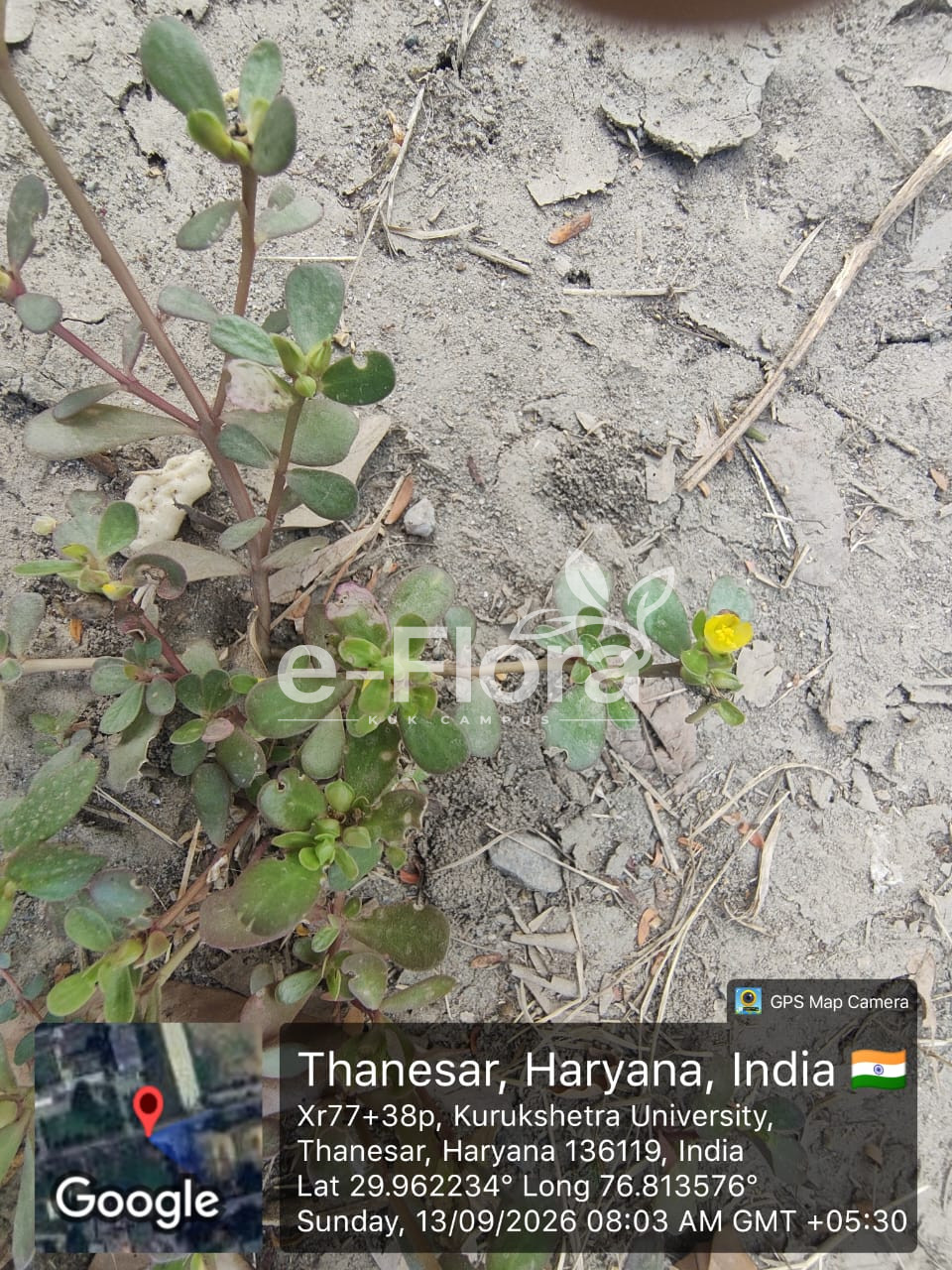
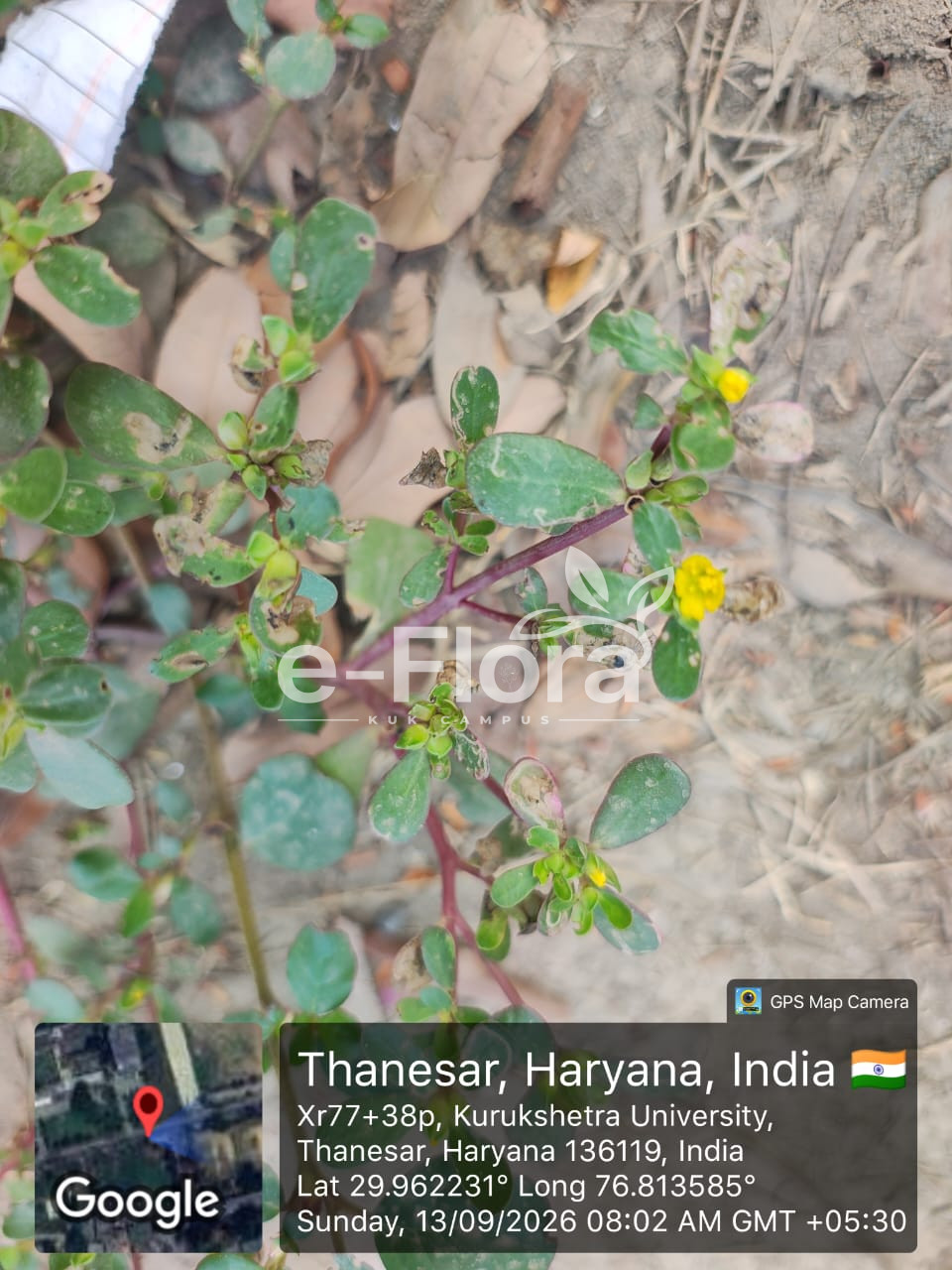
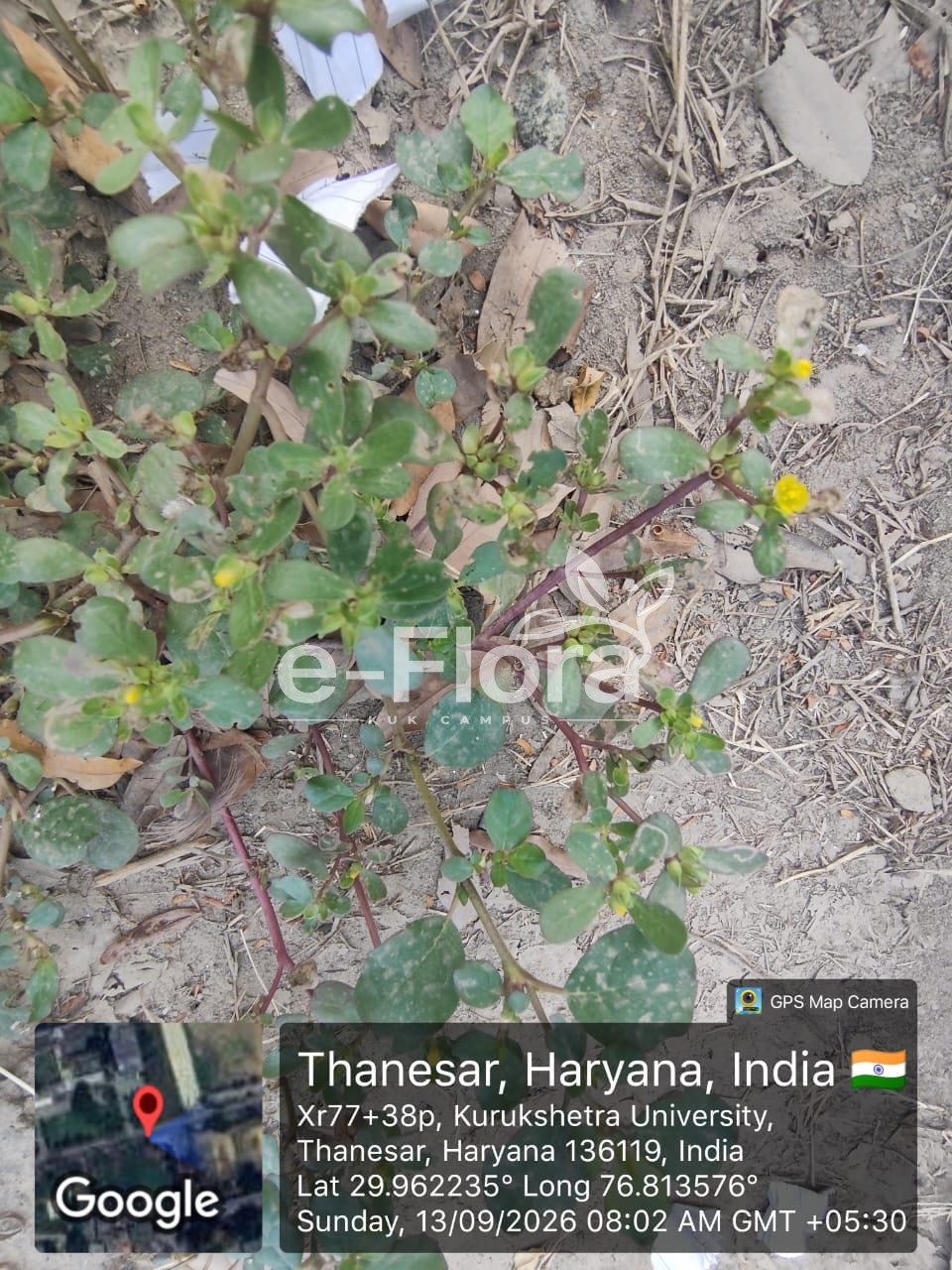
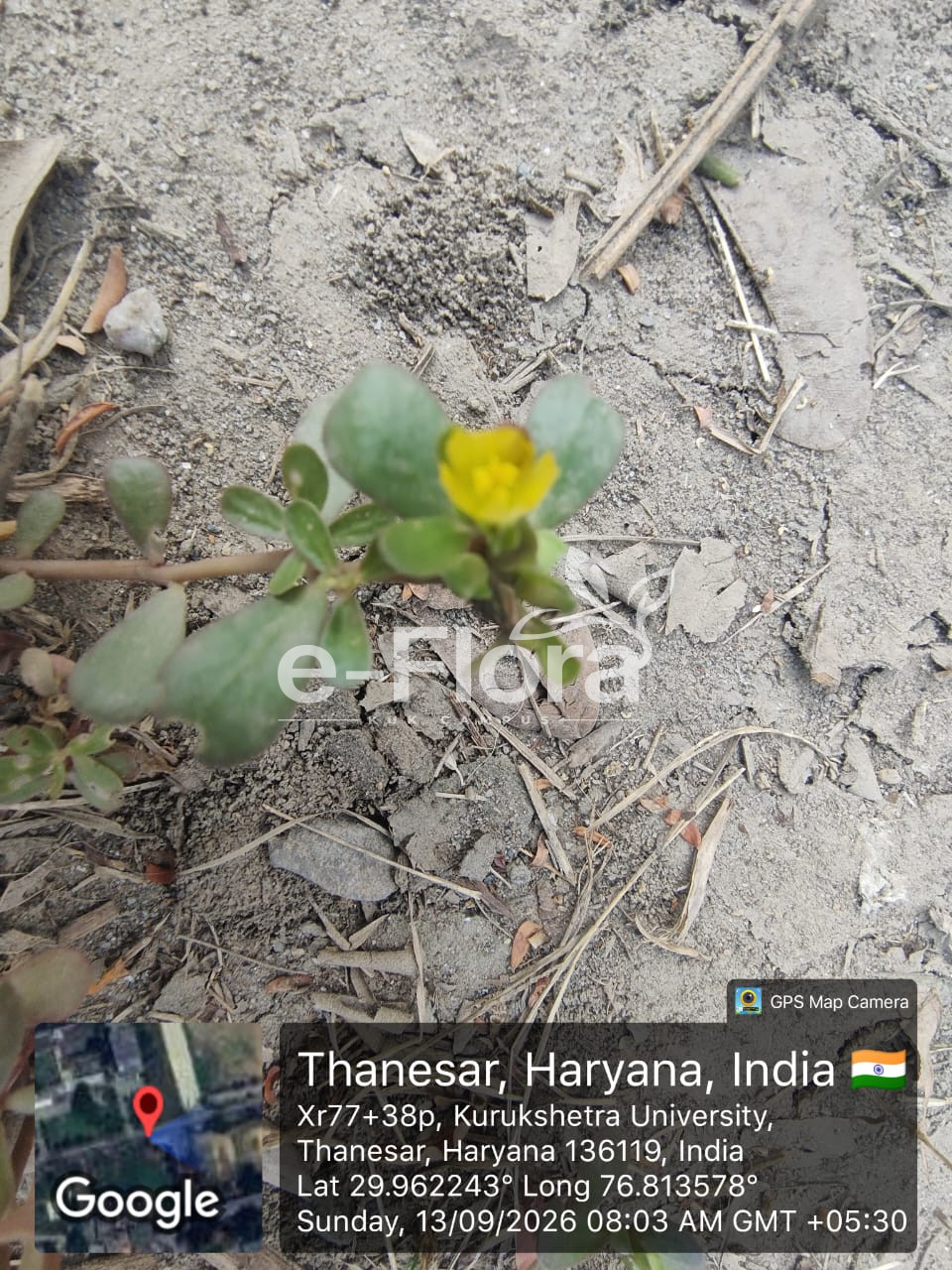
Portulaca oleracea L.
Vernacular name: Purslane, Common purslane, Kulfa (Hindi: कुलफा)
Species Name: Portulaca oleracea L.
Family: Portulacaceae
Habit: Succulent annual herb, prostrate to ascending, much-branched.
Stem: Fleshy, smooth, cylindrical, green to reddish, rooting at lower nodes.
Leaf: Alternate or subopposite, fleshy, obovate to spatulate, entire, sessile or shortly petiolate, often reddish beneath.
Flowering: June–October
Flowers: Small, yellow, axillary or terminal, usually opening in sunshine; 5 petals, numerous stamens, ovary superior.
Fruit: Small circumscissile capsule (pyxis), opening by a transverse lid and containing numerous black, rounded seeds.
Uses:
- Plant is used as supplement as it supports heart health due to the presence of α-linolenic acid in significant quantity.
- It is used to manage blood sugar levels and metabolism.
- Plant is rich in antioxidant compounds like glutathione, melatonin, vitamin A, vitamin C and vitamin E and can be used to eliminate carcinogens and free radicals from body, boost immune system, and repair damage tissue.
- Poultices or juice of plant is applied externally in traditional medicines to treat insect bites, burns and skin irritations.
- Due to presence of Omega-3s, flavonoids, polysaccharides and antioxidant compounds, plant is very useful in treating redness, irritation, acne, eczema, acts as humectants to pull moisture into skin barriers, and protect from damage and breakdown of collagen due to UV radiations.
- Young shoots and leaves are widely eaten as a leafy vegetable and are also used in salads and curries for crispy tangy and slightly salty taste. Cooked purslane releases a mucilaginous that can be used a natural thickening agent in food. Seeds are grounded and mixed into breads, cereals and pancakes.