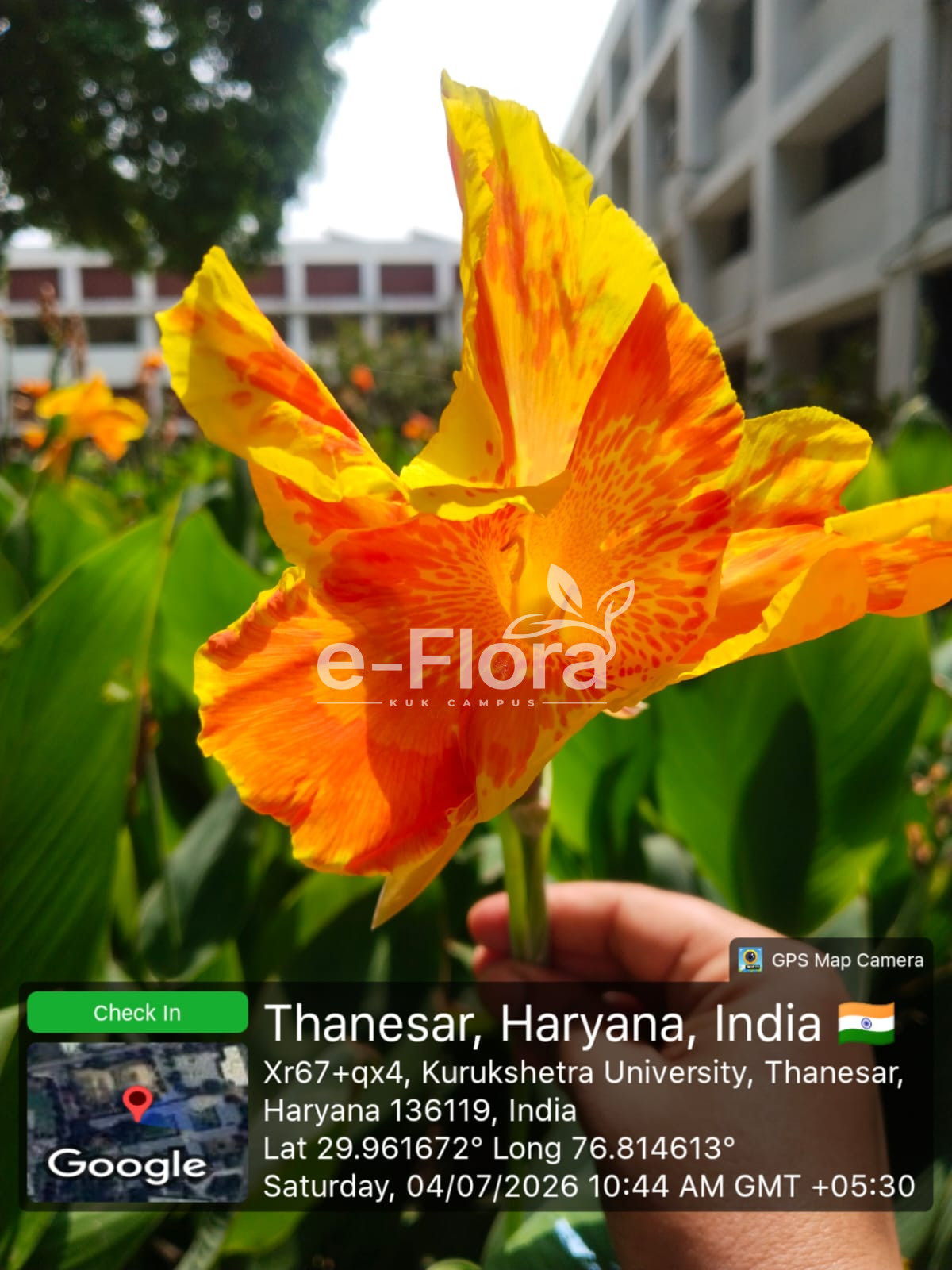
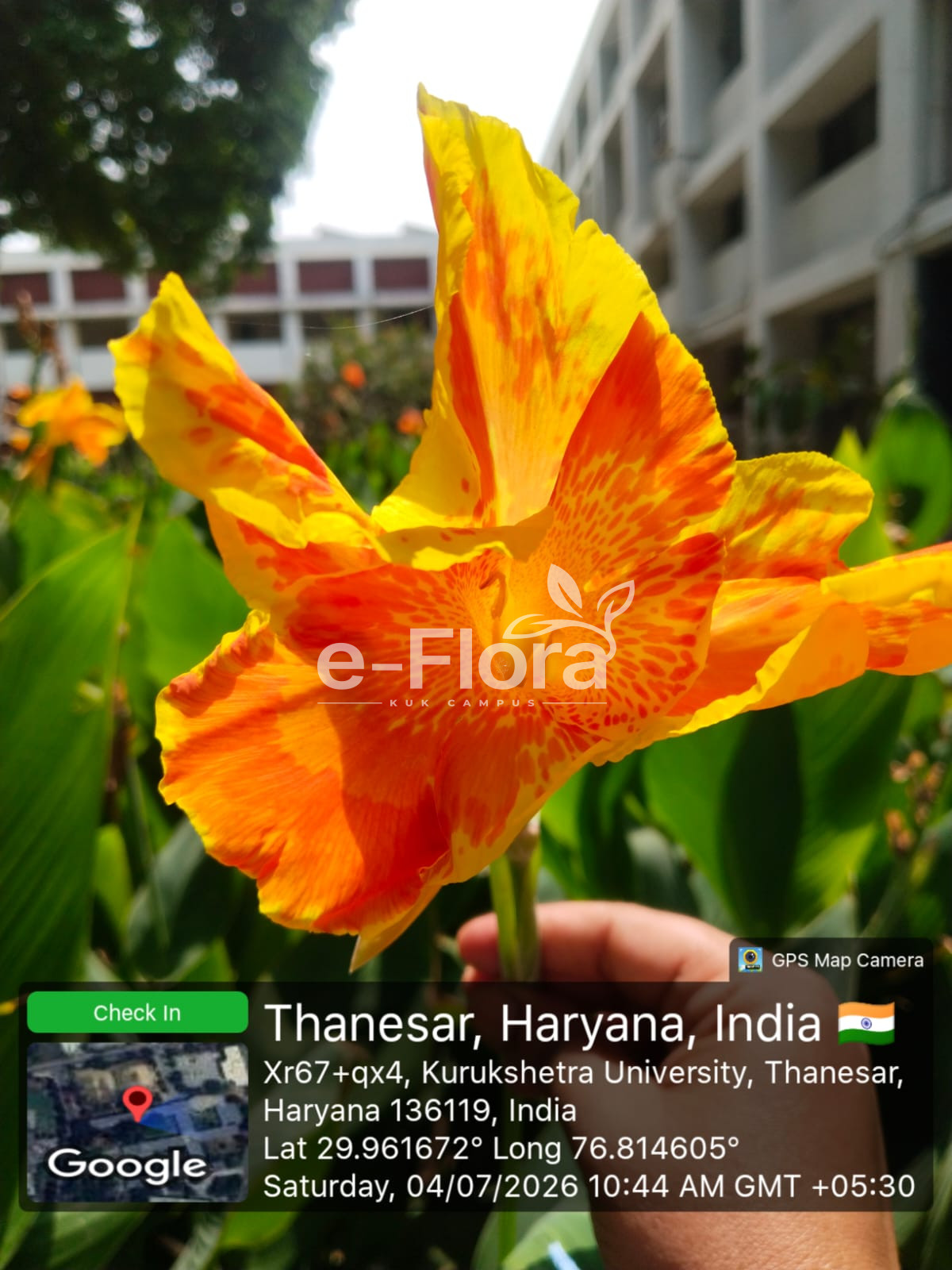
Canna indica L.
Vernacular name: Indian shot, Wild canna, Sarvajaya, Kardali (Hindi: सर्वज्जय; Marathi: कर्दळ)
Species Name: Canna indica L.
Family: Cannaceae
Habit: Perennial rhizomatous herb, erect, usually 1–2 m tall.
Stem: Pseudostem formed by overlapping leaf sheaths; stout, erect and green.
Leaf: Alternate, large, simple, broadly elliptic to lanceolate, 30–60 × 10–20 cm, entire, prominently parallel-veined.
Flowering: Throughout the year, mainly in warm and rainy seasons.
Flowers: Terminal racemes or panicles; showy orange-red to scarlet, irregular; sepals 3, petals 3; stamens 5, petaloid with one fertile anther; ovary inferior, 3-locular.
Fruit: Globose to ovoid, warty capsule; seeds numerous, hard, smooth and black.
Uses:
- Folk remedies uses the flowers and roots to make decoctions that can help to soothe sore throats, reduce fever and ease joint or muscle stiffness.
- Roots have diaphoretic and diuretic properties and can be helpful in the treatment of gonorrhoea and amenorrhoea.
- Local practices used the infusions and root powders to treat dysentery, diarrhea and digestive ailments.
- Topical application of various parts of plant is used to treat sores, skin rashes and wound healing.
- The rhizome is used as a source of starch and is eaten after boiling, baking or processing it into flour (Queensland arrowroot) to make noodles or cakes. Young shoot and seeds are also consumed cooked.
- Foliage and roots can also be used as nutrient rich source of livestock fodder.
- The plant is also cultivated as an ornamental for its conspicuous flowers and foliage in flowerbeds, water gardens and moist soil borders.
- Broad leaves are used to wrap food like tamales in Central and South America.
- Seeds are processed to extract a purple dye, while leaf fibers are processed into light brown paper or used as jute substitute.
- Smoke from burning leaves acts as natural insecticide.
- In reclamations of wetlands, plant can help to improve the quality of water.
- Rattling seeds can be used to make rosaries and necklaces.