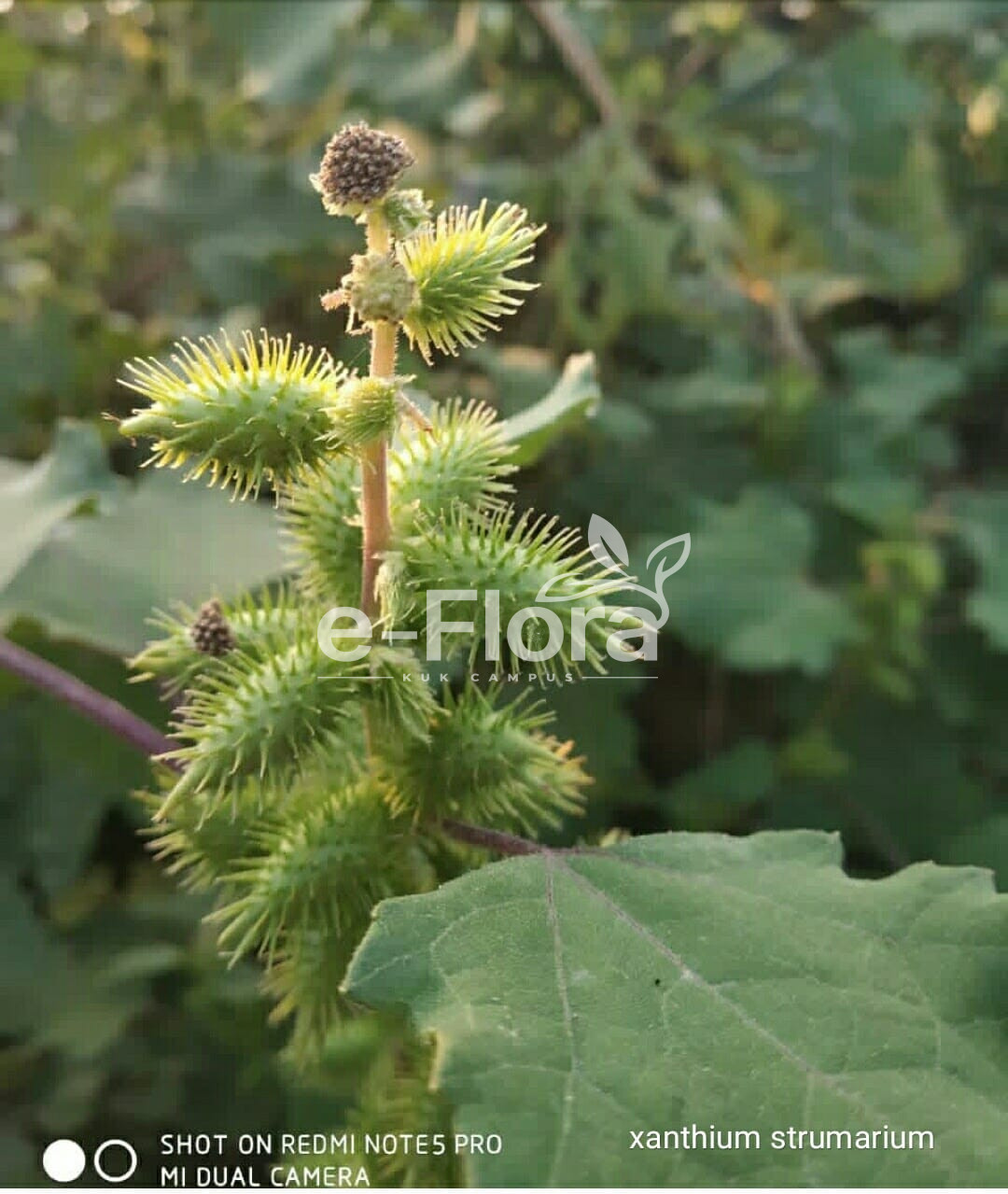
Xanthium strumarium L.
Vernacular name: Chhota Dhatūra (छोटा धतूरा), Chhota Gokhru (छोटा गोखुरू), Ghāghrā (घाघरा), Sankhahuli; Common Cocklebur, Rough Cocklebur, Burweed
Species Name: Xanthium strumarium L.
Family: Asteraceae (Compositae)
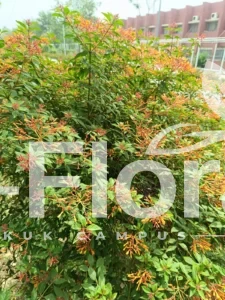
Habit: Coarse annual herb, often reaching about 1–1.5 m; commonly found in wastelands, roadsides, fields and other disturbed or moist areas.
Stem: Erect, stout and much-branched, green to reddish-brown, rough or scabrid and hairy; branches may become somewhat woody toward the base.
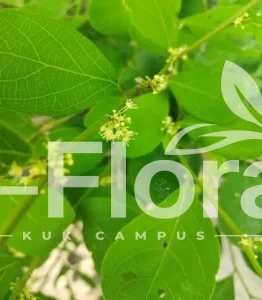
Leaf: Alternate, broadly ovate to triangular or deltate, simple or shallowly to deeply 3–5-lobed, about 5–12 cm long; margins coarsely toothed/crenate; base often cordate; both surfaces rough-hairy; prominently 3-nerved from the base. Petiole long.
Flowering: Can flower and fruit for much of the year in suitable conditions
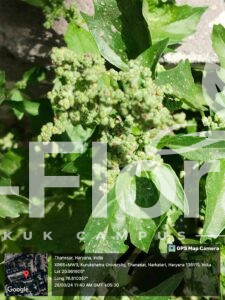
Flowers: Small, inconspicuous, yellowish-green flowers. The species is monoecious, with separate male and female flower heads on the same plant. Inflorescence heads arranged in terminal and axillary clusters, with the staminate (male) heads generally positioned above the pistillate (female) heads. The female heads develop into the characteristic spiny burr.
Fruit: A distinctive spiny bur (burr), ovoid to ellipsoid and about 1.5–2 cm long, covered with hooked prickles and usually bearing two prominent hooked/mucronate beaks. It encloses the two mature achenes.
Uses:
- Ayurveda and Chinese traditional medicines uses plant to treat sinusitis, allergic rhinitis, headaches and nasal congestion.
- Topical application of plant is used to treat rheumatism, joint pain and arthritis.
- Folk medicines used this plant to treat minor bacterial and fungal infections, insect bites and skin ailments like urticaria.
- Decoction of roots is used to treat high fevers and help women recovery after childbirth.
- Plant extracts found to contain phenolic acids, flavonoids and xanthatin (sesquiterpene lactone) that contributes to antifungal, antibacterial, antioxidant, antimicrobial and anticancer activities and promote osteogenic differentiation.
- Plant is used in pest management for its eco-friendly insecticidal activities.
- Seeds are rich in protein and essential oils and can be used in synthesis of biodiesel.
- Dried leaves are a good source of tannins.
- Leaves are used to extract a yellow dye whereas seed powder is used as blue body paint.
- Carboxyatractyloside a very potent toxin is present in the raw seeds and seedlings of plants that if ingested can cause seizures, liver damage and death in humans and grazing animals. To neutralize this toxin extensive boiling and cooking is needed.