Lepidium didymum L.
Vernacular name: Lesser swine-cress, Bitter cress, Jangli hala (Hindi: जंगली हाला)
Species Name: Lepidium didymum L. (syn. Coronopus didymus (L.) Sm.)
Family: Brassicaceae
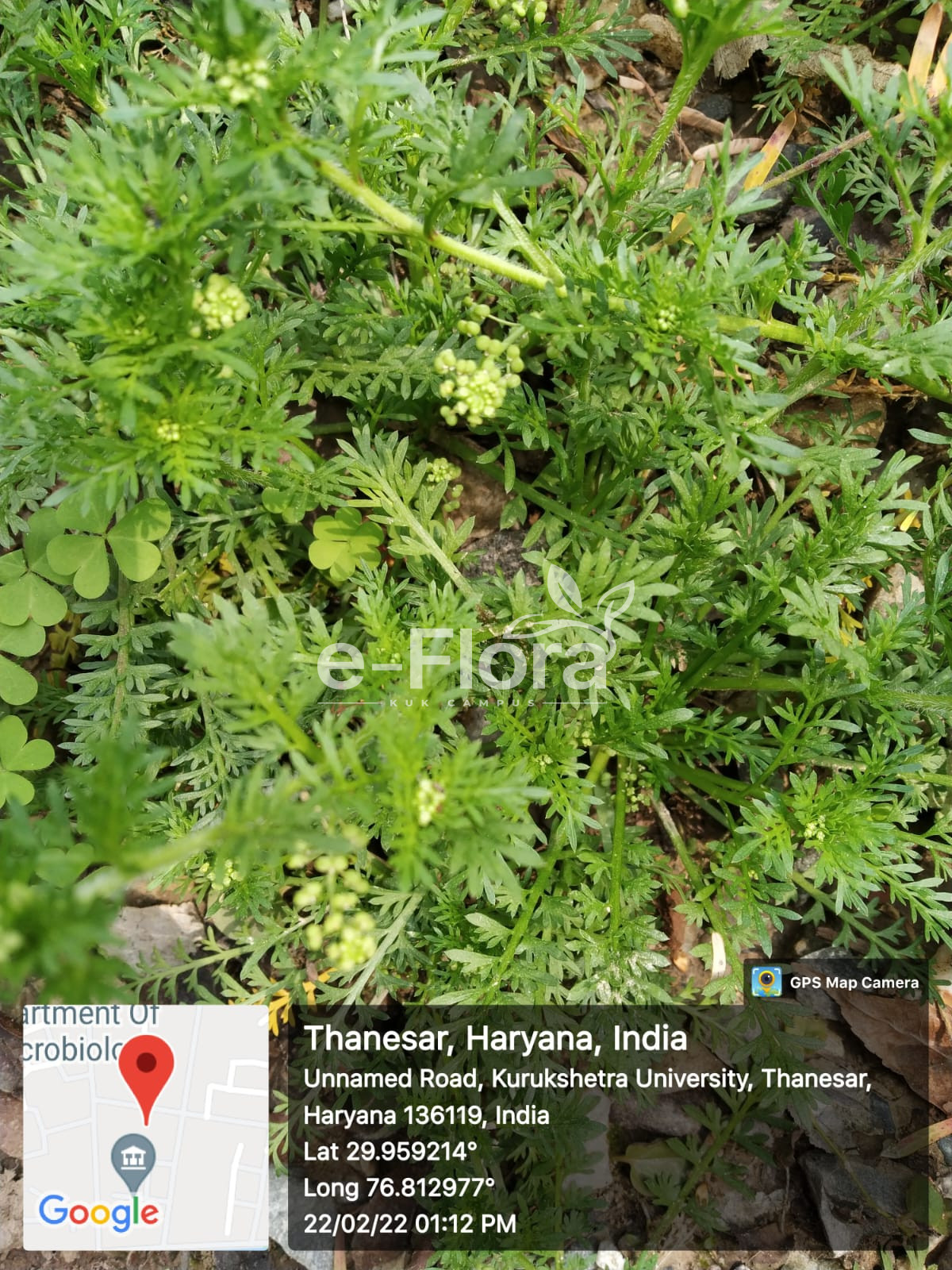
Habit: Small spreading annual herb, branched from base, fetid when crushed.
Stem: Slender, prostrate to ascending, much-branched.
Leaf: Alternate; basal leaves 5–10 cm, pinnatisect with numerous small segments; upper leaves smaller and sessile.
Flowering: Mainly winter–spring.
Flowers: Very small, greenish-white, borne in short compact racemes that elongate in fruit; petals minute or absent; stamens usually 2.
Fruit: Didymous silicula, about 2.5 mm broad, deeply 2-lobed, each lobe containing one seed.
Uses:
- Indigenous medicines and herbal remedies uses the plant to treat and manage fevers, headaches, digestive discomforts and respiratory issues like cough and cold.
- Folk remedies have long history of using this plant for wound healing, soothing skin inflammations, treating gangrene and haemorrhoids.
- Plant contain bioactive compounds like phenolic acids, flavonoids and glucosinolates that attributes for antimicrobial, antioxidant and anti-inflammatory properties.
- The plant is recorded as a sources of food as it contains dietary fibers, calcium, iron, phosphorus, plant proteins and can be consumed raw or cooked and gives a sharp, hot pungent mustard-like flavor. In some regions can be used as animal food. In India it is chiefly encountered as a small wild or weedy herb.
- Plant has excellent potential for mitigating lead from the polluted soil and help with soil remediation.