Tamarindus indica L.
Vernacular name: Imli, Tamarind (Hindi: इमली)
Species Name: Tamarindus indica L.
Family: Fabaceae
Habit: Large evergreen/semi-evergreen tree (20-30 m)
Stem: Short stout trunk; rough grey-brown fissured bark
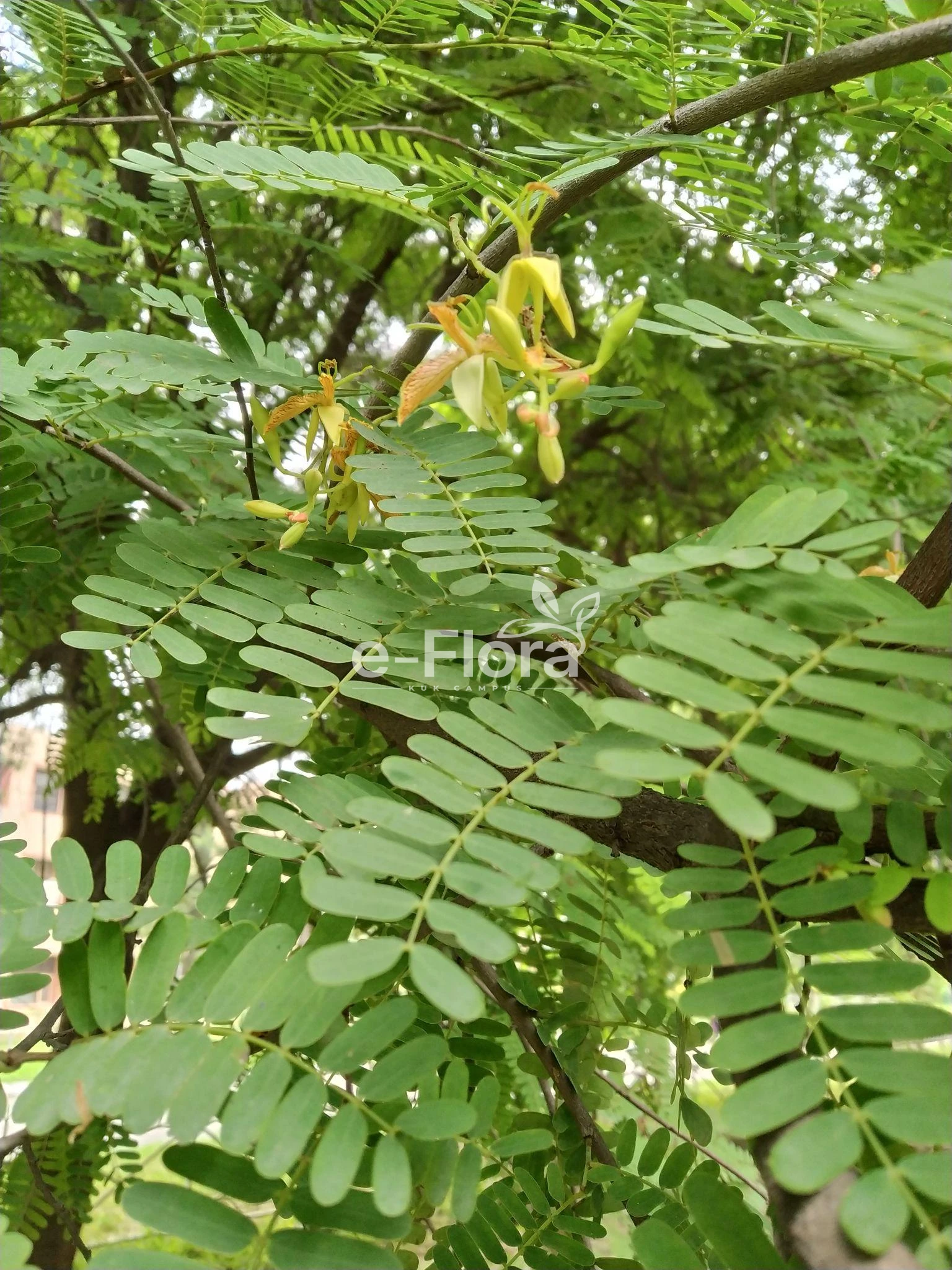
Leaf: Even-pinnate; 10-18 pairs oblong leaflets; fold at night
Flowering: February-April
Flowers: Lax racemes ; pale yellow with red streaks; 4 sepals, 3 large + 2 small petals; 9+1 stamens
Fruit: Indehiscent pod; brown velvety; acidic pulp surrounding 1-12 seeds
Uses:
- Fruit pulp is a rich source of natural laxative due to the presence of tartaric acid, potassium and high fiber content, that helps with several digestive issues and to ease constipation. Bark of Imli helps with dysentery.
- Traditional medicines uses leaf decoction to lower fever, ease sore throats and inflammations.
- Bark contains tannins, flavonoids and polyphenols that contributes to its antiseptic and antioxidant properties and helps the fight against free radical damage.
- Pulp of fruit is sweet-sour in taste and is main ingredient in many chutneys, beverages, candies, juice, curries, sauces and soups. Fruit of Imli is key ingredient of many South Indian dishes like sambhar.
- Young leaves and buds are cooked traditionally as vegetable to prepare stews and salads.
- Seed kernel are rich in starch and used as thickener in many dishes.
- Seeds are processed to drive Tamarind Kernel Powder (TKP) that is extensively used as sizing agent in the jute and textile industry.
- Leather industry processes bark and seed testa to extract tannins.
- Timber is dense and heavy and used to craft tool handles, furniture, mortars and pestles.
- Imli is also known as “Date of India“, pan-Asian culinary staple and is a Hindu sacred tree.
- Imli is also planted as windbreaker and live fence. It’s a natural nitrogen-fixer that helps to improve quality of soil.