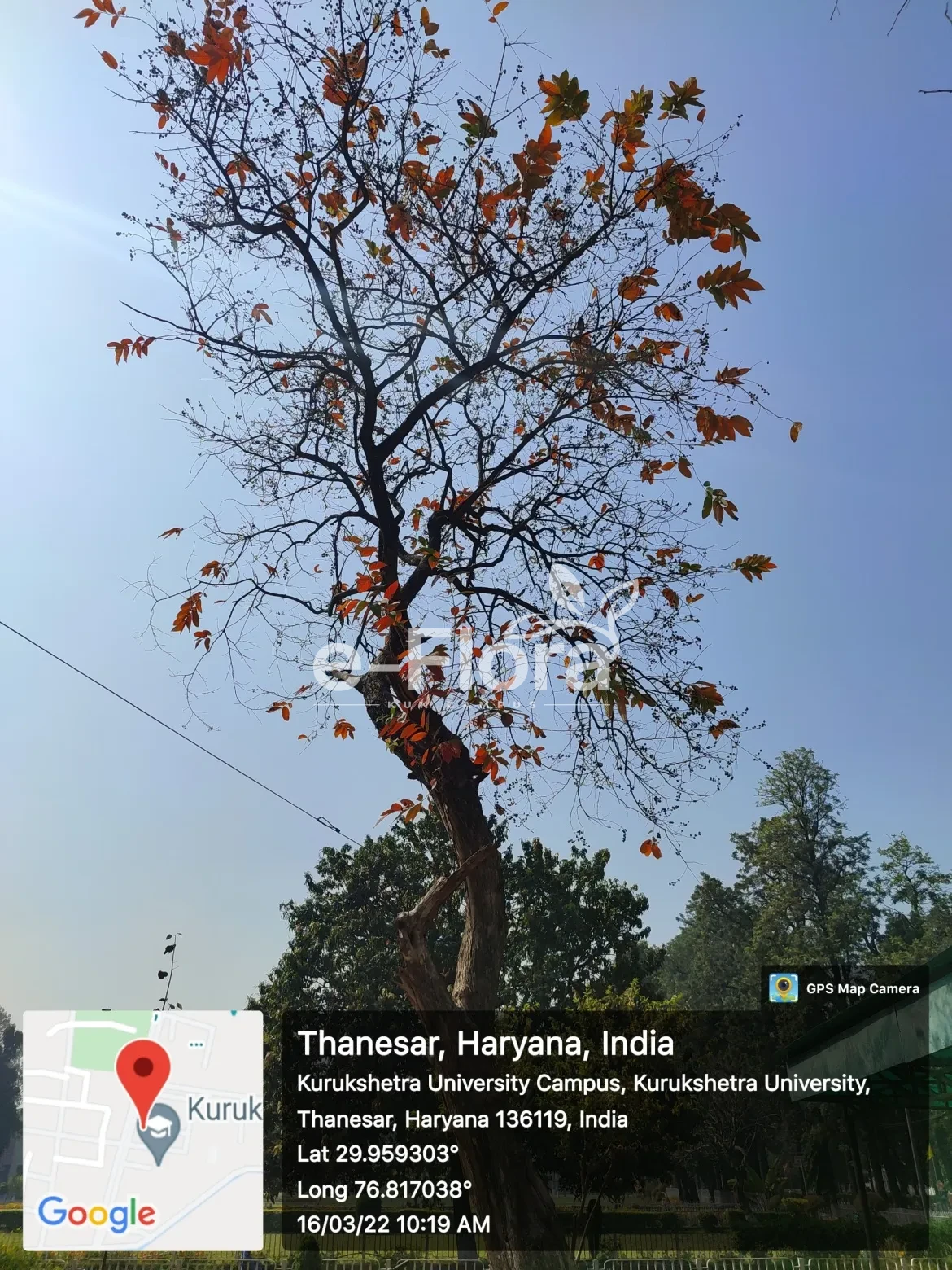
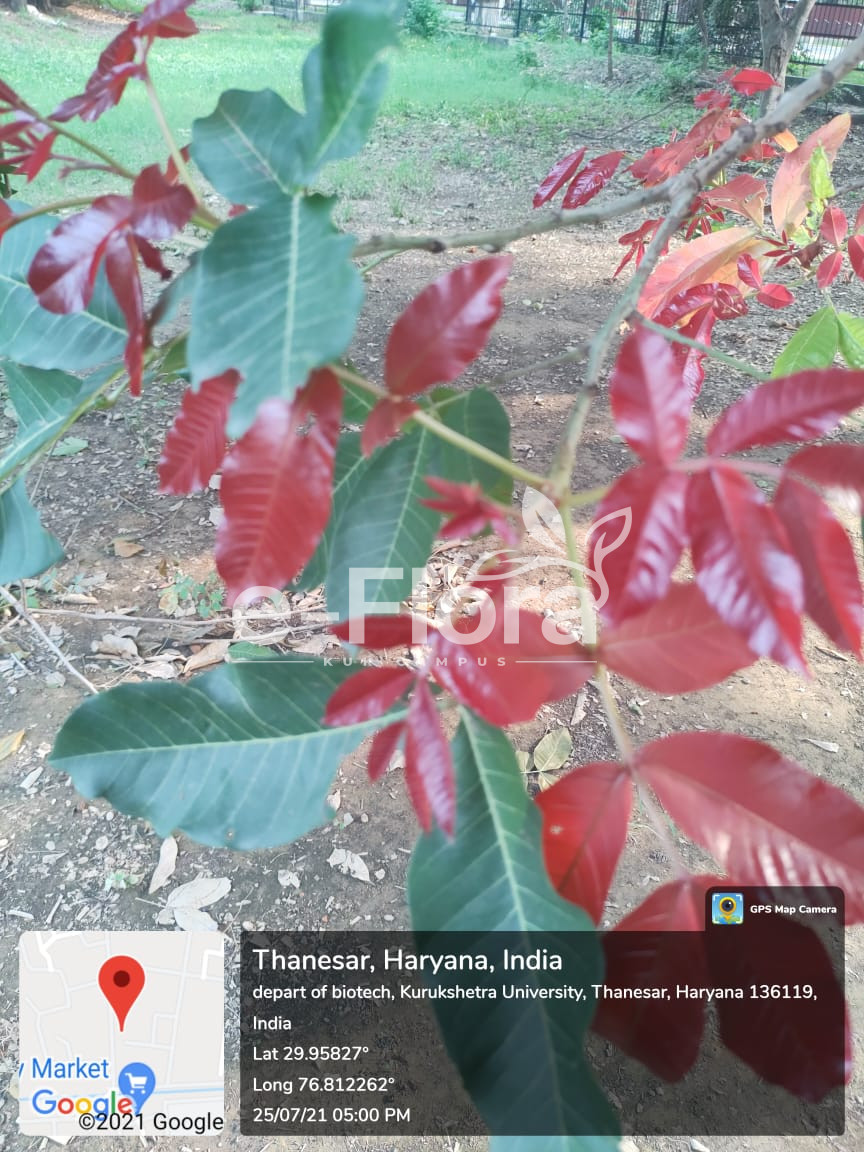
Schleichera oleosa (Lour.) Oken
Vernacular name: Kusum tree, Ceylon oak, Lac tree (Hindi: कुशुम)
Species Name: Schleichera oleosa (Lour.) Oken
Family: Sapindaceae
Habit: Large deciduous tree
Stem: Crooked fluted trunk, smooth grey bark
Leaf: Paripinnate, 2-4 pairs elliptic-obovate leaflets, bright red when young
Flowering: February-April
Flowers: Short dense axillary thyrses; pale yellow-green apetalous; 4-5 sepals, 5-9 stamens, dioecious; thick style
Fruit: Ovoid-ellipsoid hard drupaceous berry, yellow, 1-2 seeds with yellow arillode
Uses:
- Bark has astringent properties and help with fever treatment and in paste form helps with skin diseases like inflammations, ulcers, eczema and parasitic infections.
- Different parts of tree is used in traditional medicines to treat malaria, dysentery, diarrhea and diabetes.
- Plant has veterinary applications as seed powder is used to treat maggot infestation in cattle.
- Plant is dry deciduous forests plant as its drought and shade tolerant. It is a South East Asia native having nitrogen-fixing tendencies.
- Seeds has 59-72% kusum oil or macassar oil and is used for cooking, soaps and illumination (lamps).
- In ayurveda, seed oil is used for hair and skin care industry, helping with acne, promote hair growth, soothe burns and manage scalp health.
- In folk remedies, oil is mixed with garlic and massaged to relieve rheumatism and body aches and used to treat ear aches and cold related fever.
- Tree is primary host for Kerria lacca (lac insect) and helps with production of “kusum lac” to produce commercial shellac.
- Pinkish brown durable heartwood is used for the manufacturing of cartwheels, plows, pestles, agricultural tools and rice-pounding blocks.
- Seed oil has volatile properties and can be used as biofuels whereas wood provides excellent charcoal.
- Leaves and twigs serves as a good source of fodder for livestock.