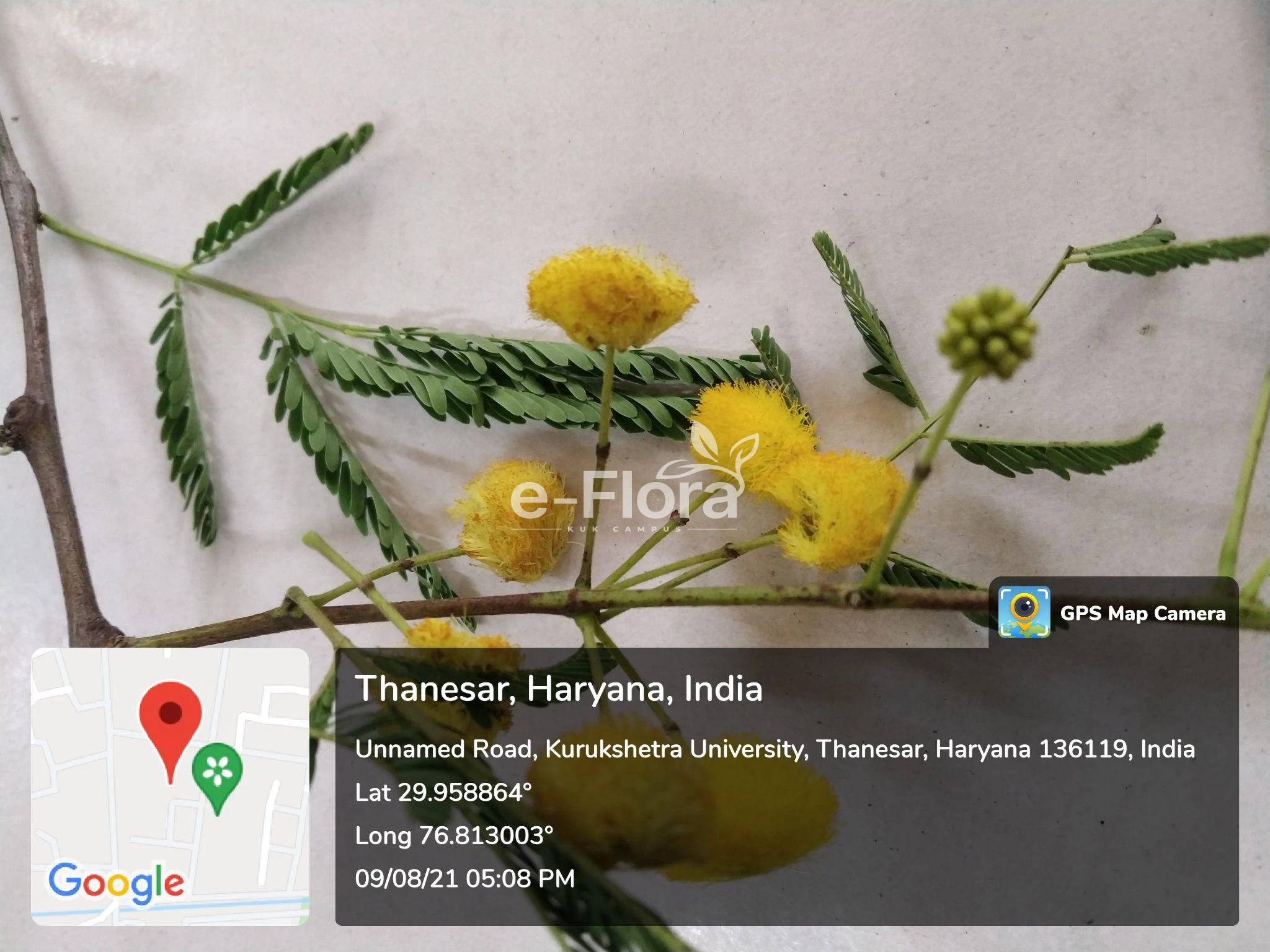
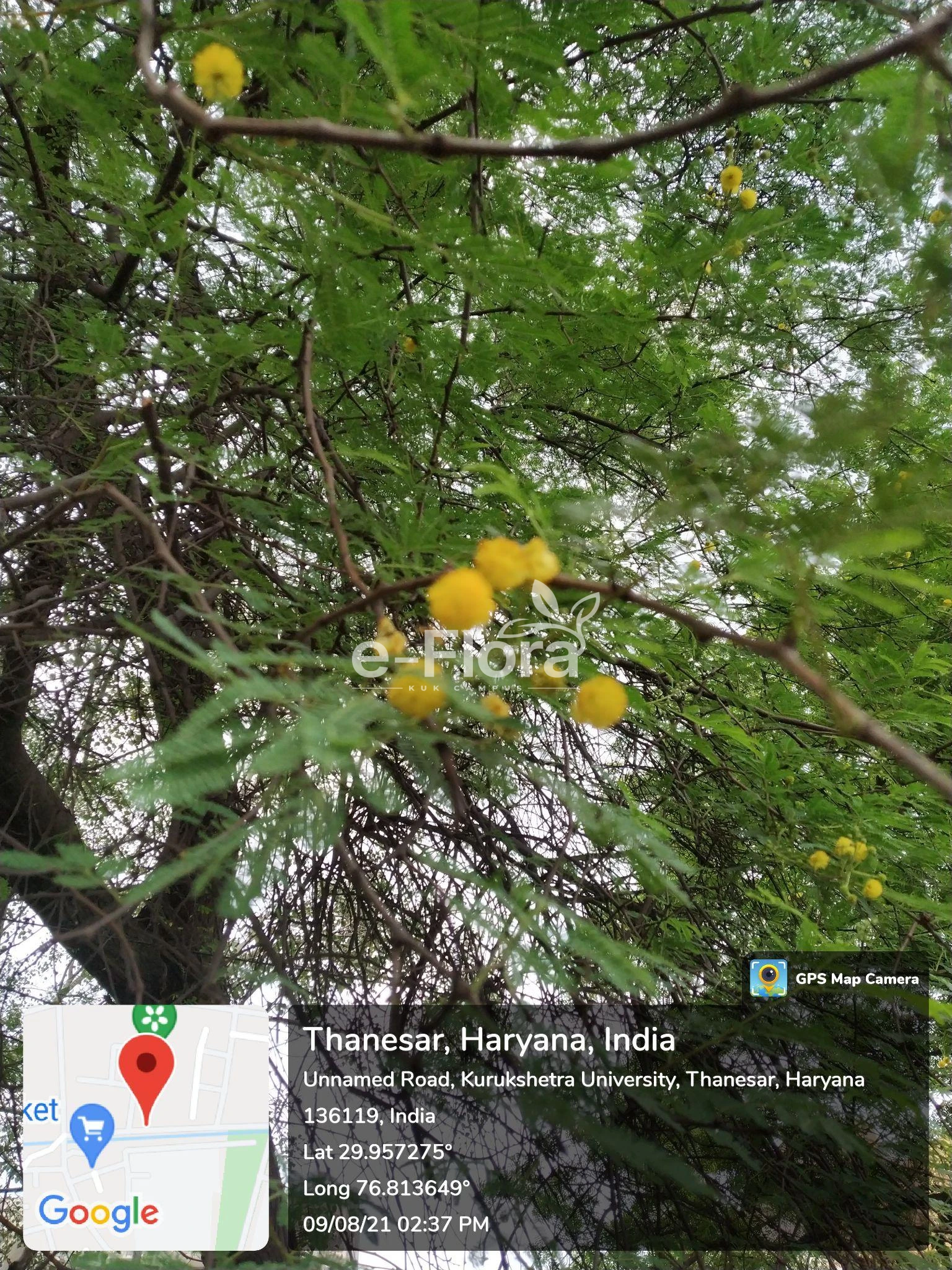
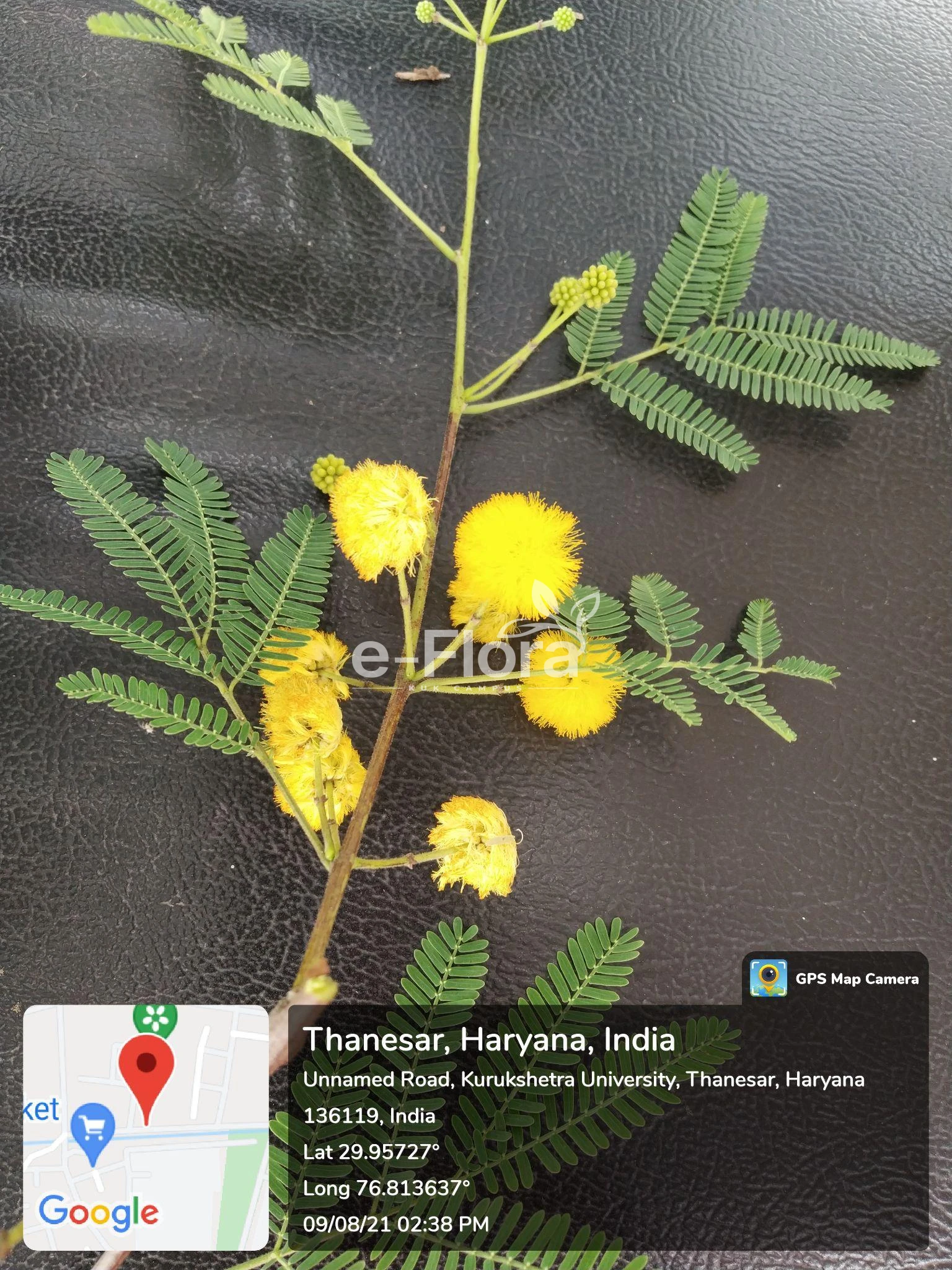
Vachellia nilotica (L.) P.J.H.Hurter & Mabb.
Vernacular name: Babul, Kikar (Hindi: बबूल, कीकर)
Species Name: Vachellia nilotica (L.) P.J.H.Hurter & Mabb. (syn. Acacia nilotica (L.) Delile)
Family: Fabaceae (Mimosoideae)
Habit: Thorny deciduous tree.
Stem: Medium-sized tree 5–20 m tall; bark dark brown to black, rough and deeply fissured; branches armed with straight white stipular spines.
Leaf: Alternate, bipinnate, 3–10 cm long; pinnae 3–10 pairs; leaflets numerous, minute, linear-oblong, grey-green.
Flowering: Rainy season to early winter.
Flowers: Bright golden-yellow, fragrant, in globose axillary heads; flowers bisexual, actinomorphic; stamens numerous, exserted; ovary superior, monocarpellary.
Fruit: Flat to slightly constricted pod, grey-brown to black at maturity, indehiscent or tardily dehiscent, containing several hard seeds.
Uses:
- It is an important multipurpose tree.
- Bark and pods are rich in tannins and used in leather tanning and dyeing.
- Wood is hard and durable, used for agricultural implements, railway sleepers, fuelwood, charcoal, and construction.
- Leaves and green pods can serve as livestock fodder due to their high protein value.
- Tree is cultivated to improve soil due to the tolerance of extreme heat, drought and floods.
- Stem is used to derive a gum arabic that is used in adhesives, inks and pharmaceutical preparations.
- Bark and twings are used as toothbrushes (“babul gum” or datoon) for preventing bleeding gums, mouth ulcers and dental care like teeth strengthening.
- In Ayurveda, bark, leaves and pods are used to manage bleeding piles, sever diarrhea, intestinal worms and stop bleeding from wounds due to their astringent property.