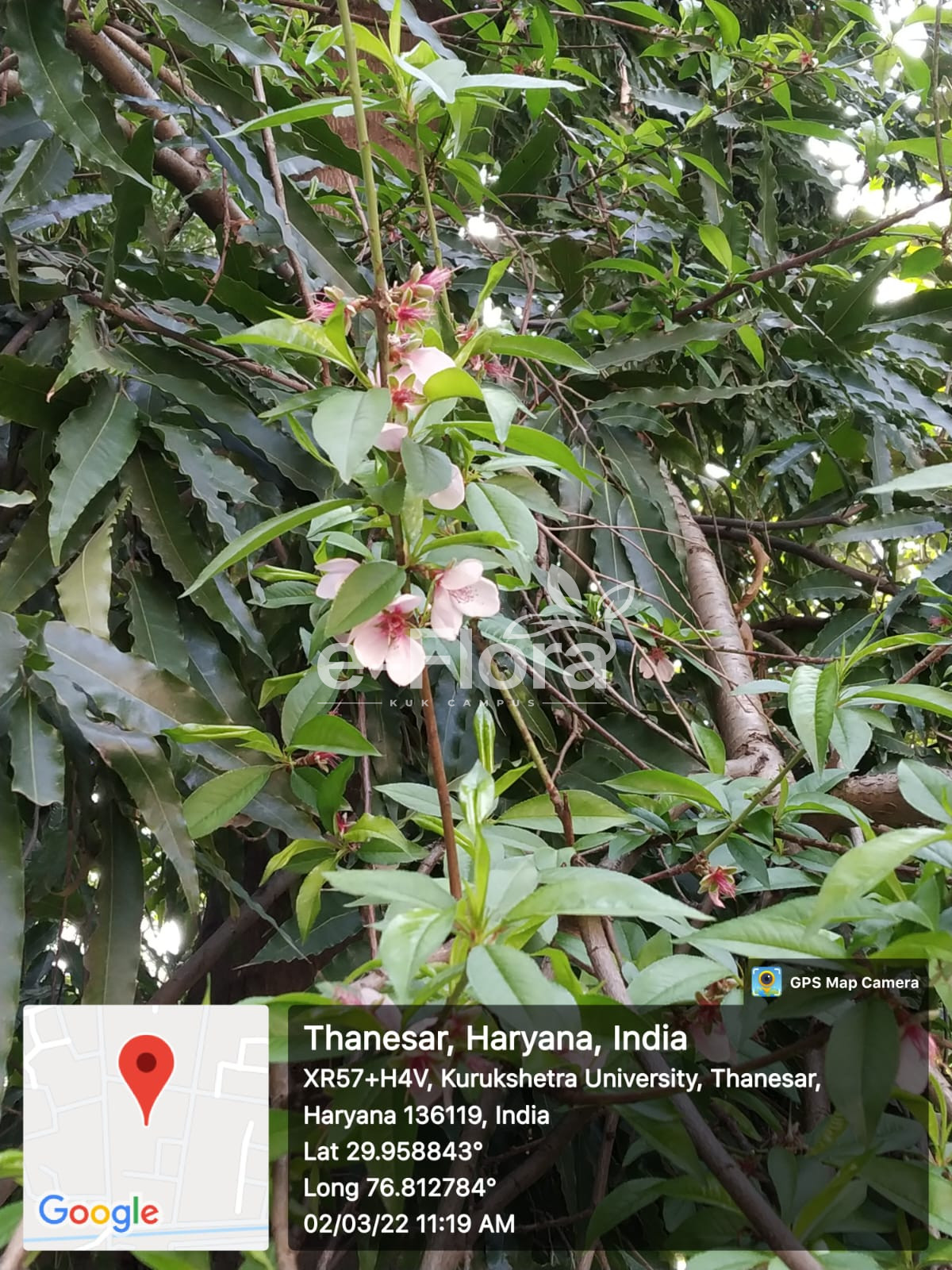
Prunus persica (L.) Batsch
Vernacular name: Peach (Hindi: आड़ू)
Species Name: Prunus persica (L.) Batsch
Family: Rosaceae
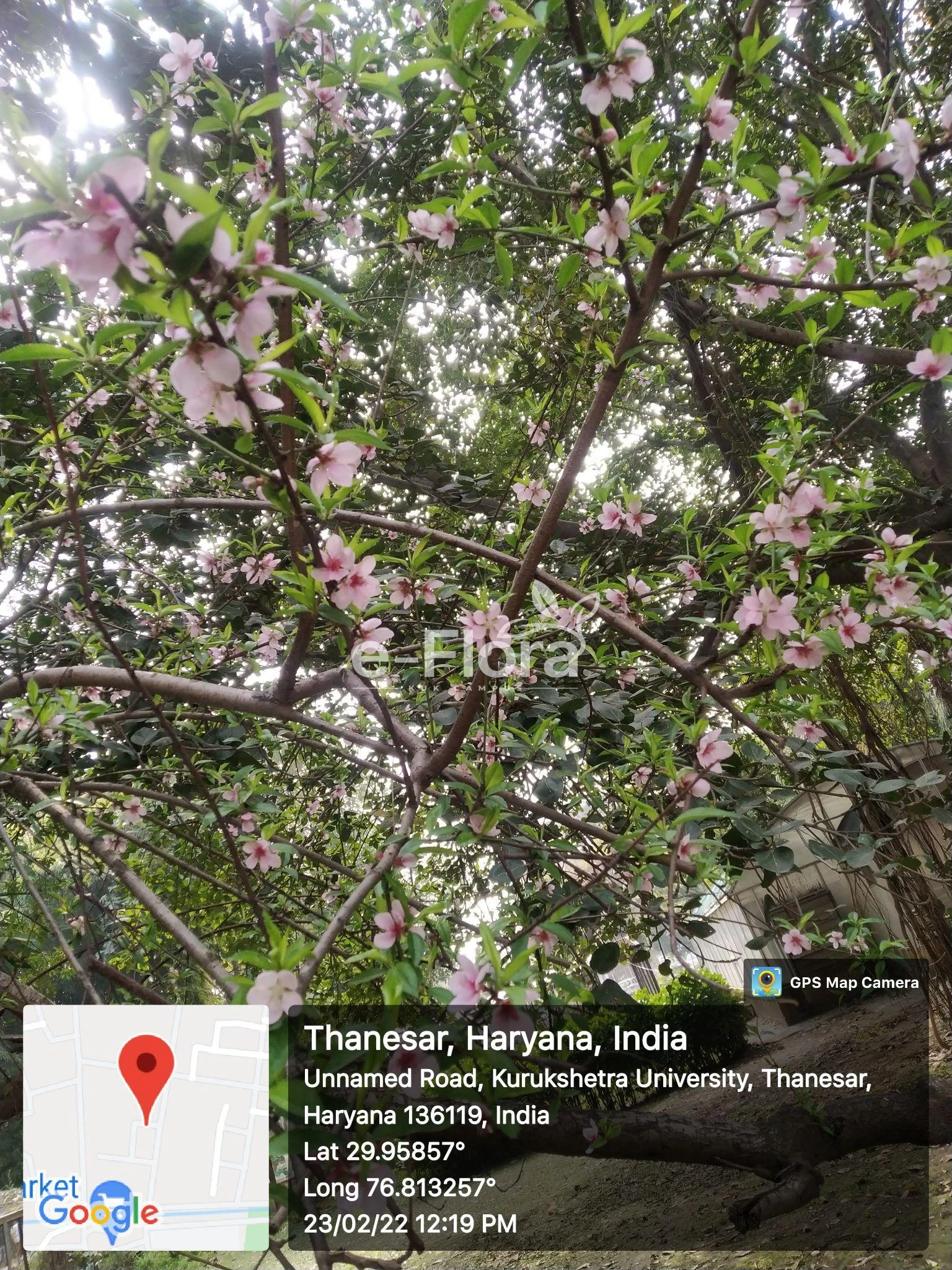
Habit: Deciduous fruit tree
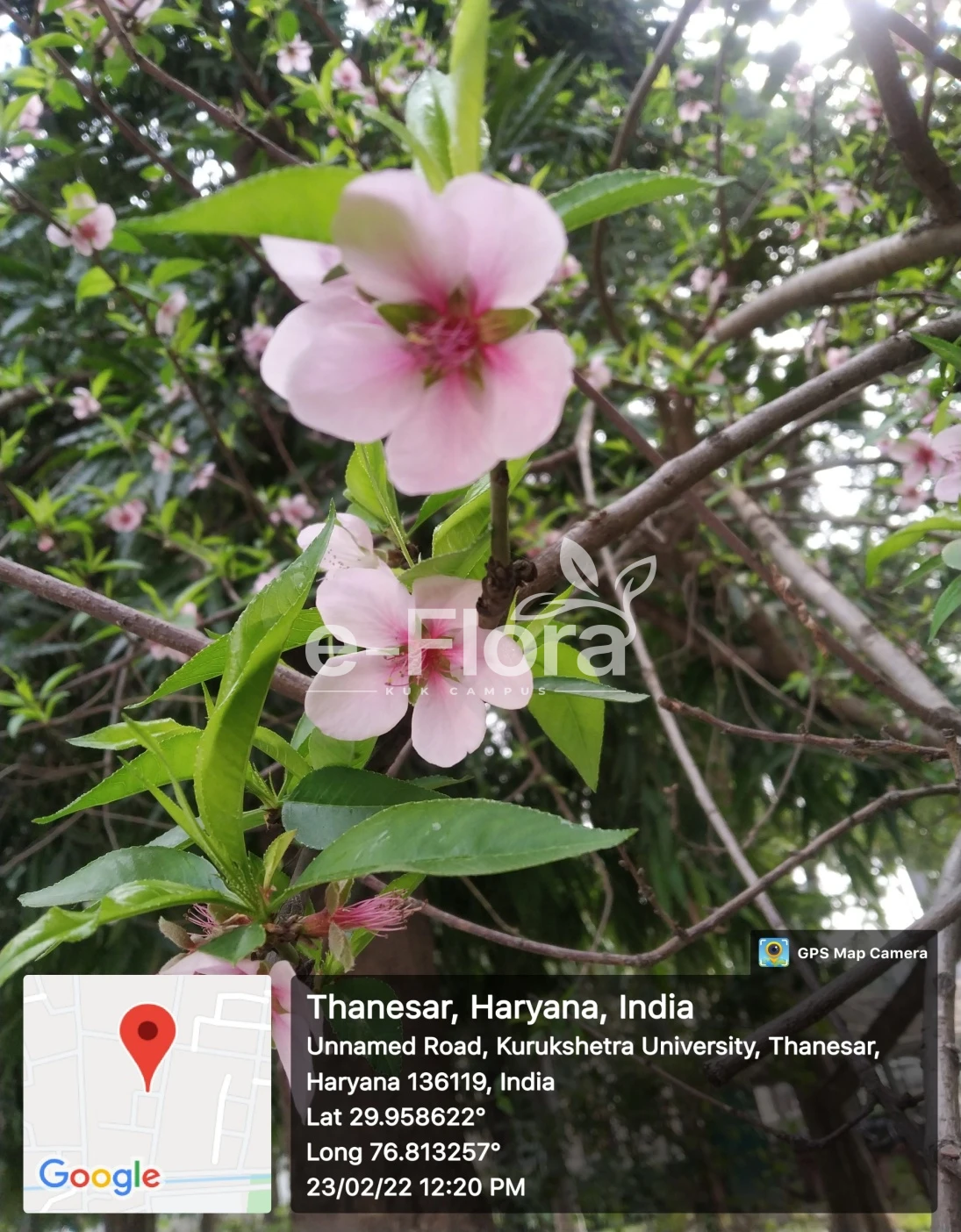
Stem: Single or multiple trunk 4-8 m tall, reddish-brown bark, spreading branches.
Leaf: Lanceolate serrate 7-18×3-5 cm, glossy green, pinkish petiole.
Flowering: Early spring (March-April)
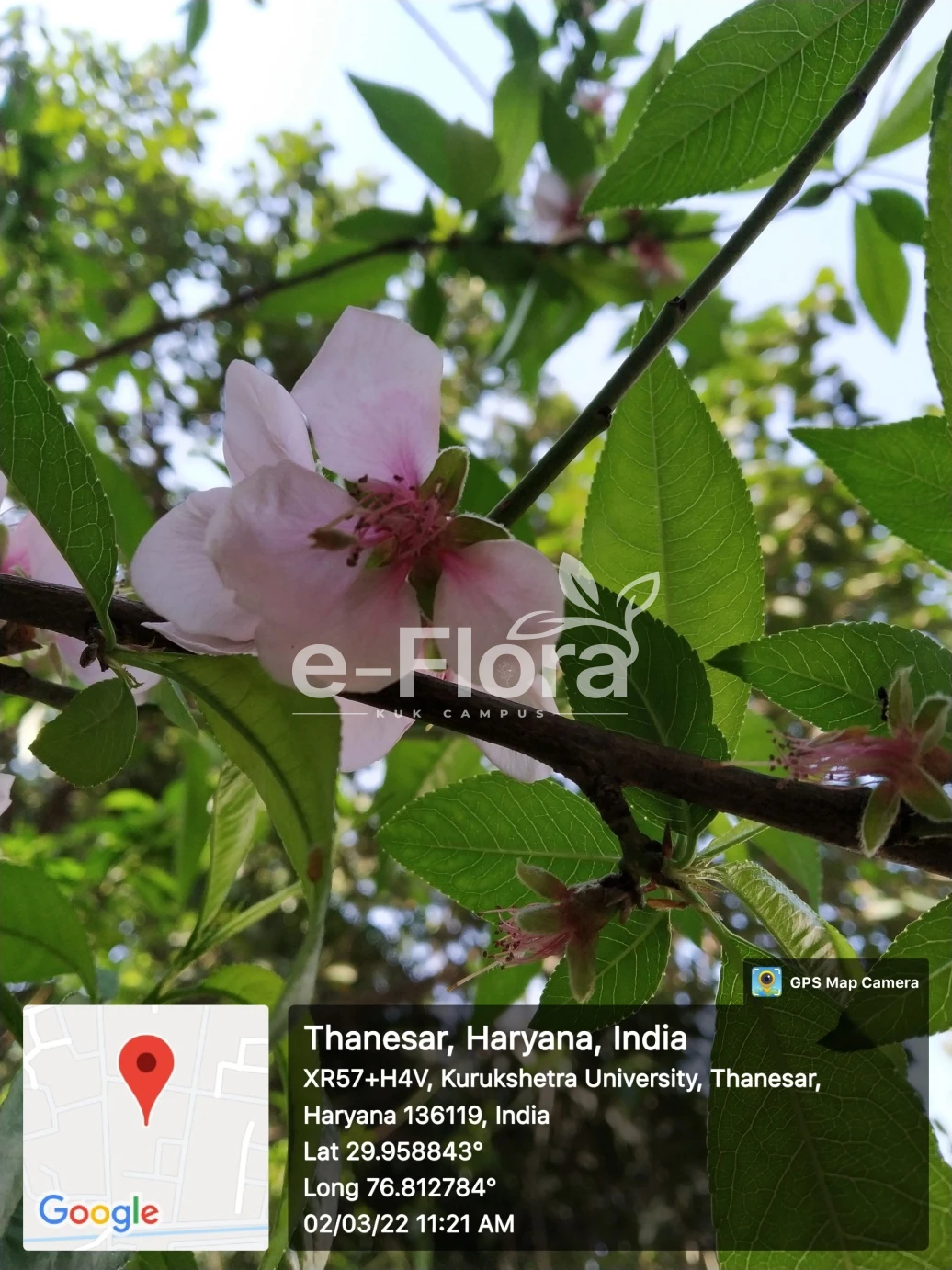
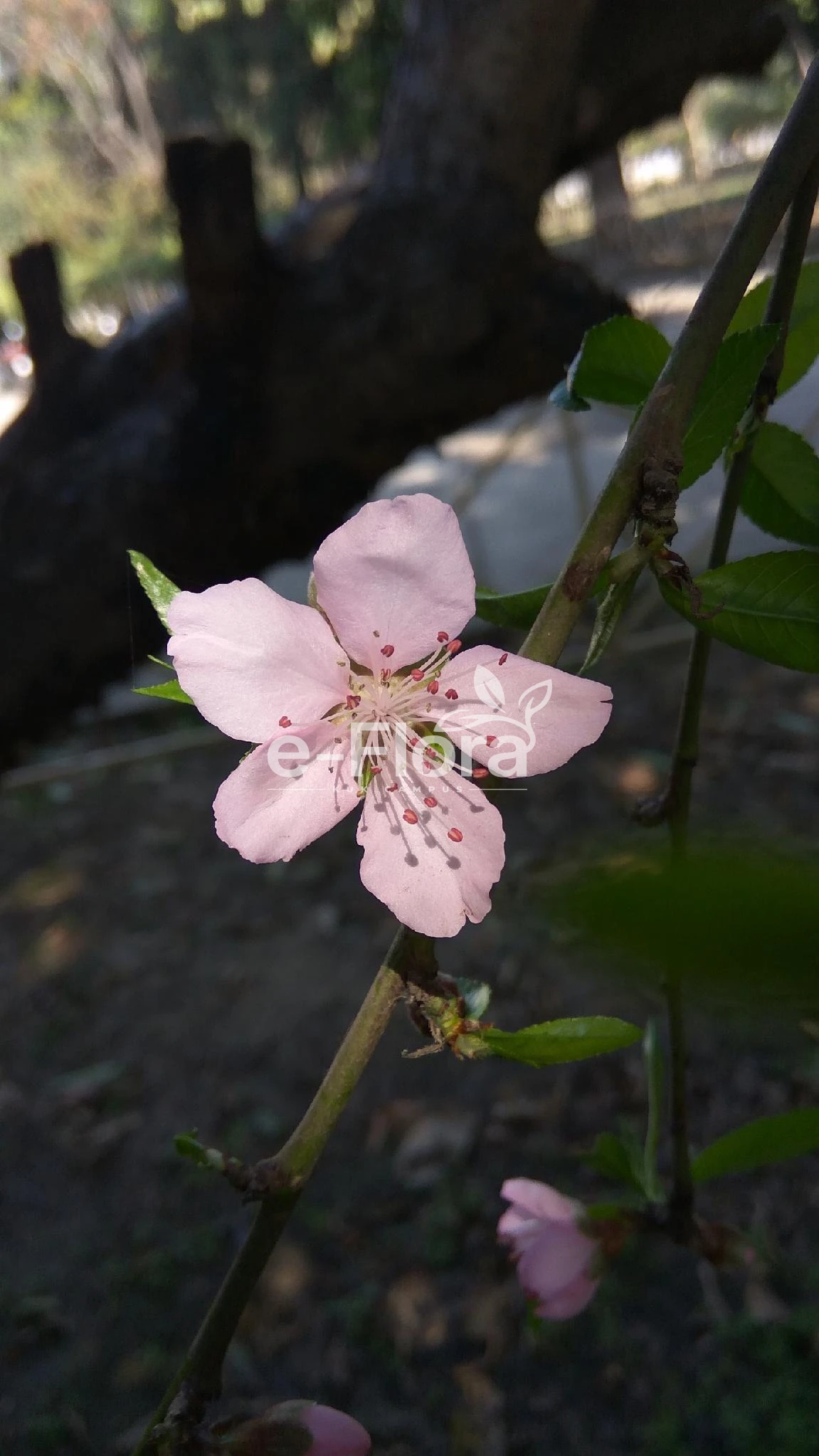
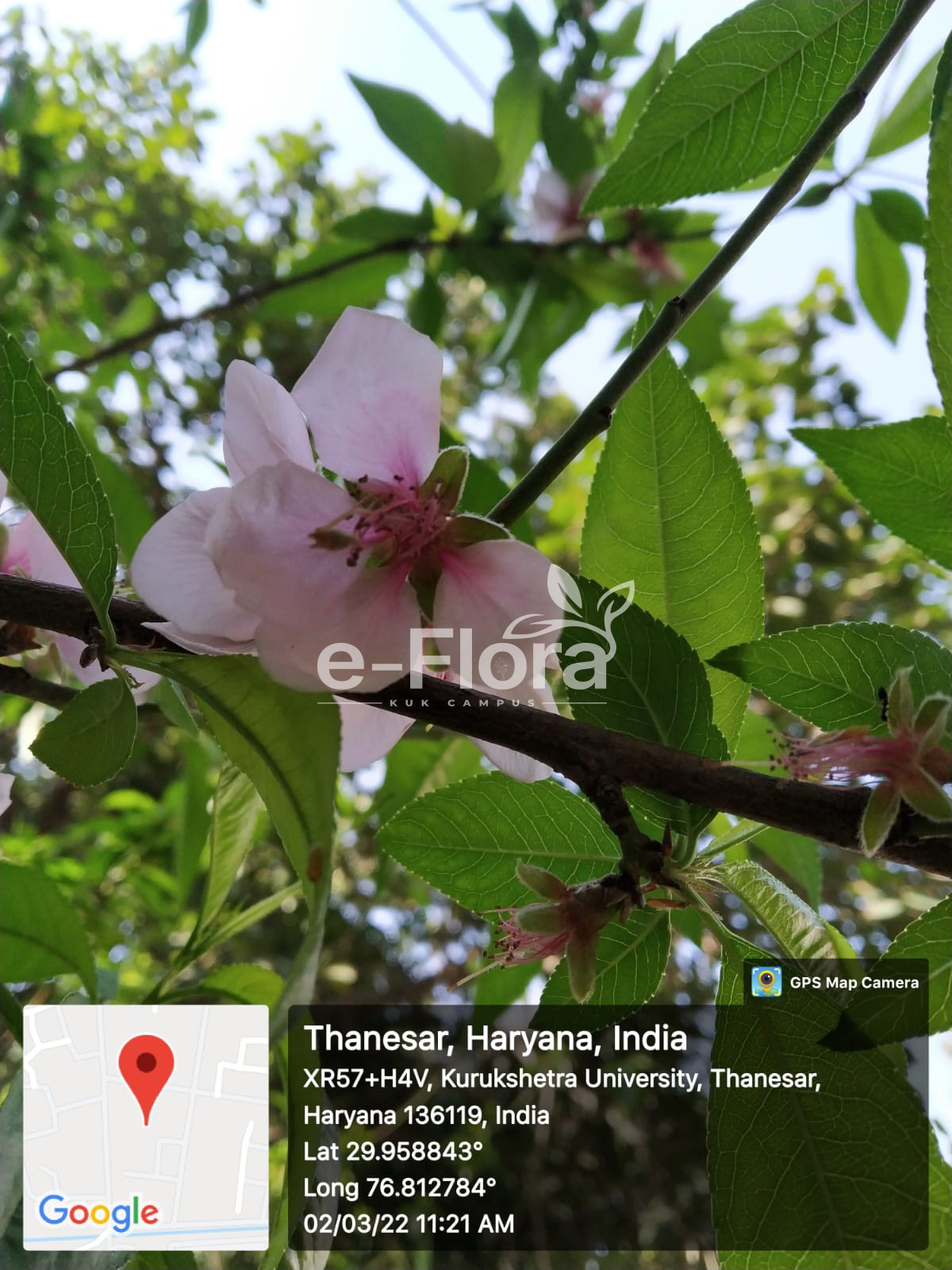
Flowers: Solitary or clustered sessile pink/white 2.5-3.5 cm diameter; calyx 5 red sepals, 5 petals obovate, 15-25 stamens (anthers yellow), superior 2-locular ovary with 1 style.
Fruit: Velvety drupe 3-7 cm, yellow-red blush, single large pit.
Uses:
- Economically important fruit pulp contains vitamin A and C, fiber and phenolic compounds. It can be consumed fresh or used to make jam, pies and beverages.
- Plant is an ornamental spring blooms.
- Fruit pulp is used to protect against cellular damage and aids digestion.
- Leaves and bark have astringent property and infused in teas or tinctures to make cooling nervine that acts as sedatives to ease restlessness and obsessive thinking.
- In Ayurveda, Pitta balance is managed with detoxifying property of powdered seed. Powdered seeds are also used to help with menstrual discomfort and bowel movements. Seeds are used to extracts oils that are applied externally to soothe skin dryness and irritation.
- Flower contain kaempferol glycosides that help to treat rashes, eczema and UVB-induced skin damage.
- Wood is used for carving and nectarines have glabrous mutant.
- Plant has Chinese origin (~4000 yrs) and known “Persian apple“ that travelled via Silk Road.