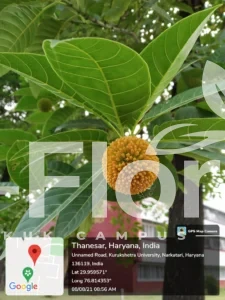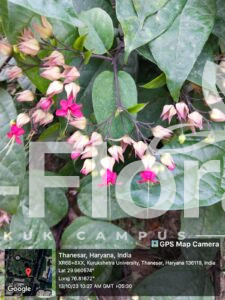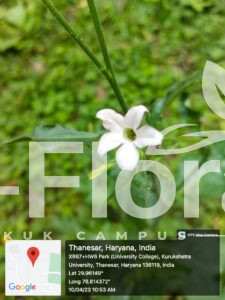
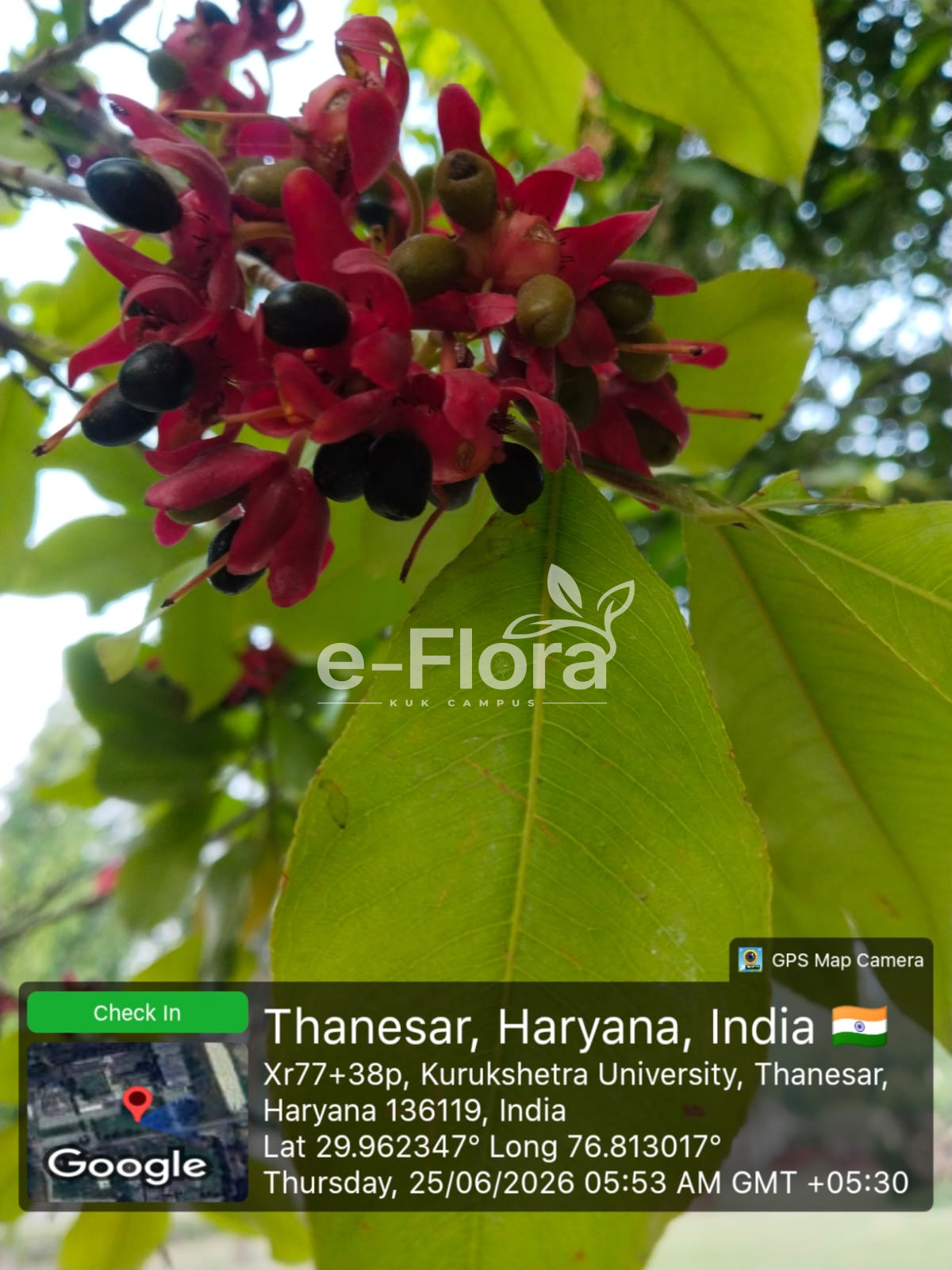
Ochna serrulata (Hochst.) Walp.
Vernacular name: Mickey Mouse Plant, Small-leaved Plane (Hindi: मिकी माउस पौधा)
Species Name: Ochna serrulata (Hochst.) Walp.
Family: Ochnaceae
Habit: Evergreen shrub or small tree.
Stem: Much-branched, 2–5 m tall; bark grey-brown, smooth; young branchlets reddish.
Leaf: Alternate, elliptic to oblanceolate, 3–8 × 1–3 cm, finely serrulate, glossy, glabrous, short-petiolate.
Flowering: Spring–summer.
Flowers: Bright yellow, solitary or in small terminal clusters; petals 5, free; sepals 5, persistent, enlarging and turning bright red after flowering; stamens numerous; ovary superior, 5–12-carpellary.
Fruit: Black, shiny drupes (usually 5–10) borne on the enlarged bright red persistent calyx, giving the characteristic “Mickey Mouse” appearance.
Uses:
- In folk and indigenous medicines decoction or poultice of roots are used to treat hemorrhoids, gangrenous rectitis, bone and skeleton ailments.
- Widely cultivated as an ornamental shrub for its bright yellow flowers and distinctive red calyx with black fruits. Commonly planted in gardens, hedges, and landscape borders. It is grown primarily for ornamental value with limited traditional medicinal use.
- Fragrant yellow flowers attracts bees, butterflies, beneficial pollinators and wildlife. Ripe berries attracts a variety of birds.