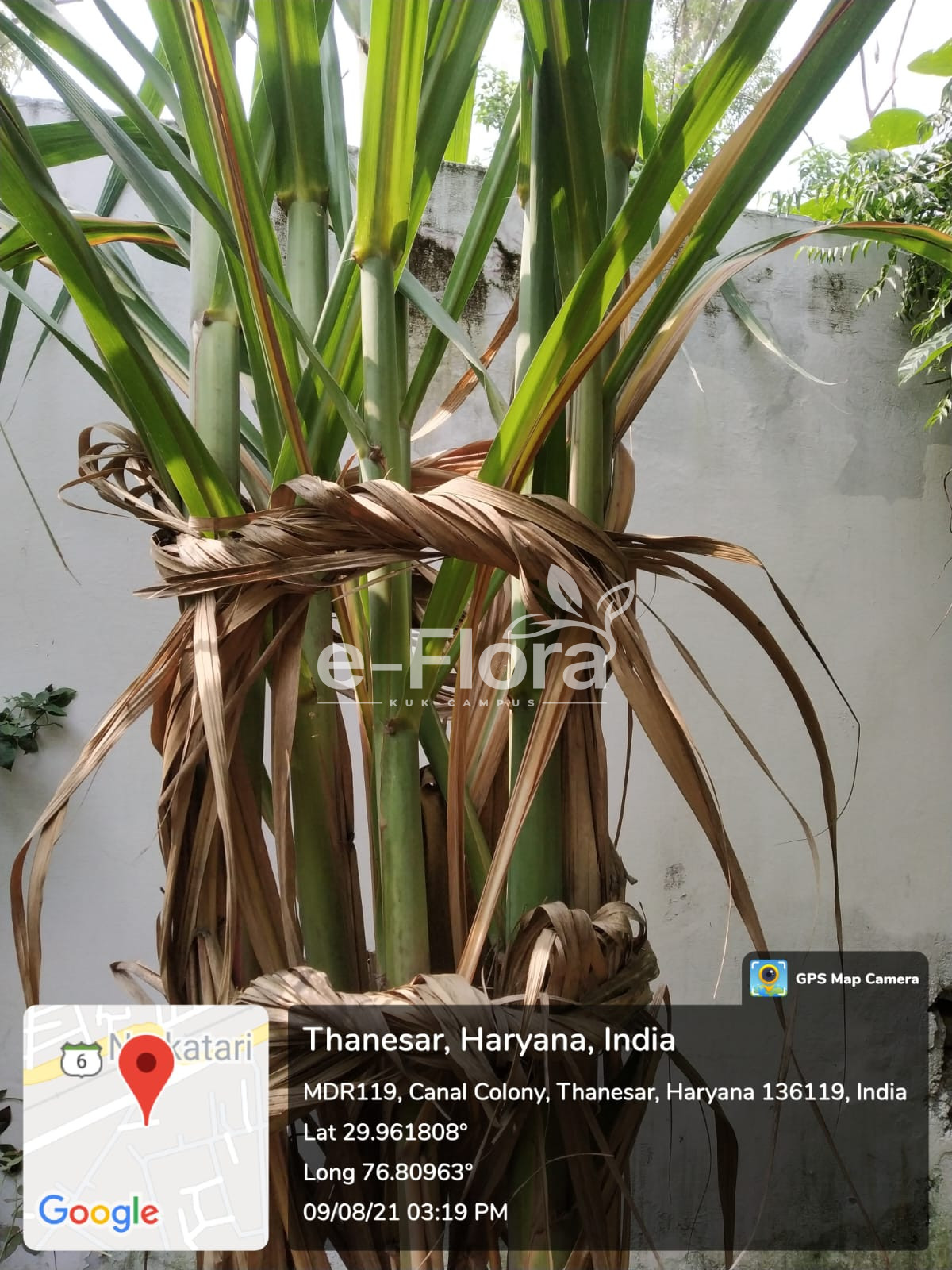
Saccharum officinarum L.
Vernacular name: Sugarcane, Sugar cane, Ganna (Hindi: गन्ना)
Species Name: Saccharum officinarum L.
Family: Poaceae
Habit: Tall, perennial, rhizomatous grass, usually cultivated as a crop.
Stem: Culms erect, stout and juicy, 3–6 m tall, 2–4.5 cm thick, distinctly jointed with swollen nodes.
Leaf: Alternate, linear-lanceolate, 70–150 x up to 6 cm, long-sheathing at base, rough-margined.
Flowering: Rarely flowers under ordinary cultivation; flowering occurs under suitable tropical conditions.
Flowers: Numerous small spikelets arranged in a large, silky, plumose terminal panicle; spikelets paired and surrounded by long hairs.
Fruit: Small, dry, one-seeded caryopsis, about 1.5 mm long.
Uses:
- Ayurvedic and folk remedies uses plant for its diuretic properties, to soothe sore throats and treat jaundice and digestive issues.
- Folk medicines uses sugarcane for its antiseptic, antidote, antibacterial, antiviral, demulcent, cardiotonic, laxative, intoxicant, refrigerant, pectoral and stomachic properties.
- Sugarcane is used to treat arthritis, cancers, boils, cold, cough, dysentery, diarrhea, fever, hiccups, laryngitis, inflammations, tumors and wounds.
- Powdered and pulped sugar can be used to stop bleeding of minor cuts and wounds, treat gonorrhea, whopping cough, catarrh and abdominal tumors.
- The juicy stems are the principal source of sugar and are also chewed fresh or processed into juice, jaggery, sucrose, brown sugar and molasses. Sugarcane is widely cultivated as a food and industrial crop and its residues are used as bio-fuel (ethanol) and fibrous residue (bagasse) are used as nutritious animal feed for cattle and pigs. Kew also records medicinal and other social uses.
- Extracts of plant contains natural α-hydroxy acids that are used in cosmetic formulations as humectants and gentle exfoliants.