Pterospermum acerifolium (L.) Willd.
Vernacular name: Bayur tree, Kanak champa, Muchkunda (Hindi: मुचकुंद)
Species Name: Pterospermum acerifolium (L.) Willd.
Family: Malvaceae
Habit: Deciduous semi-evergreen tree
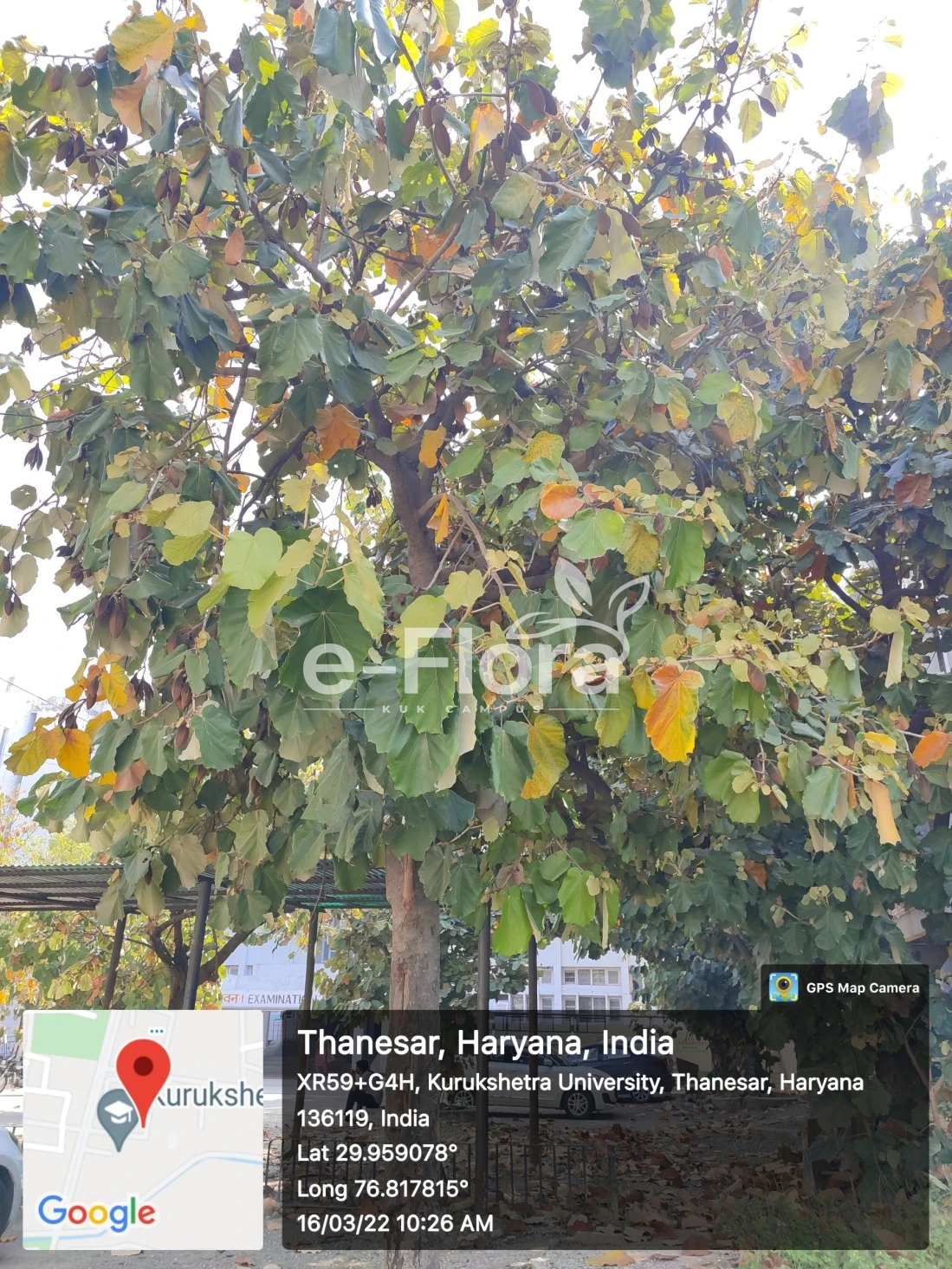
Stem: Erect 12-20 m tall, grey-brown rough bark, young twigs ferruginous-tomentose.
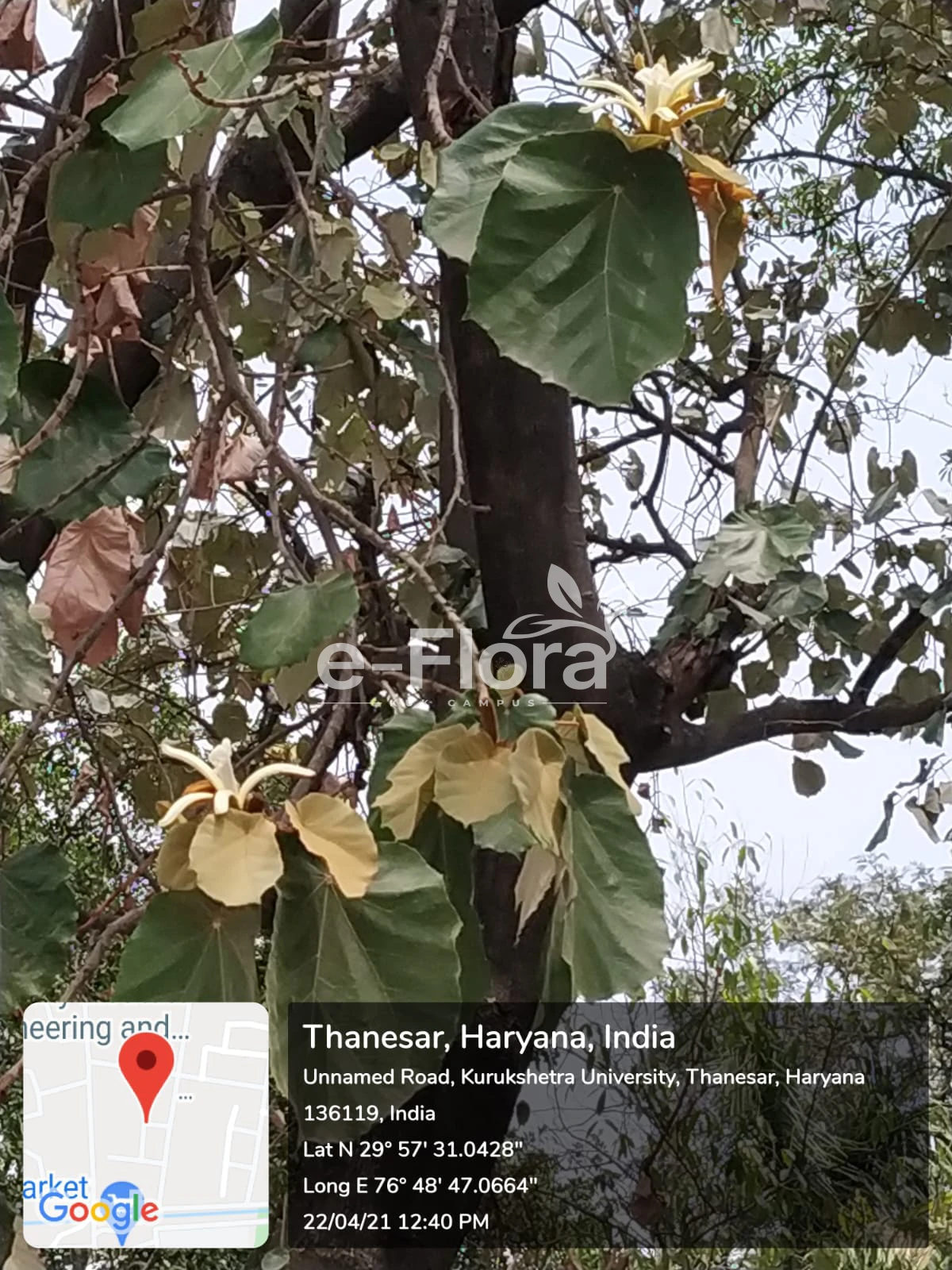
Leaf: Alternate palmately-lobed obovate 15-30×10-25 cm, dark green glossy above, grey-tomentose below, peltate base, coarsely dentate wavy margins.
Flowering: Pre-monsoon (April-June), nocturnal fragrant
Flowers: Large axillary solitary 12-15 cm diameter; epicalyx 3 laciniate bracteoles, calyx 5 linear-oblong sepals 10-12 cm densely tomentose, 5 cream petals oblong stellate-pubescent, 15 monadelphous stamens in 5 bundles opposite sepals (anthers linear), 5-locular ovary many-ovuled, clavate stigma.
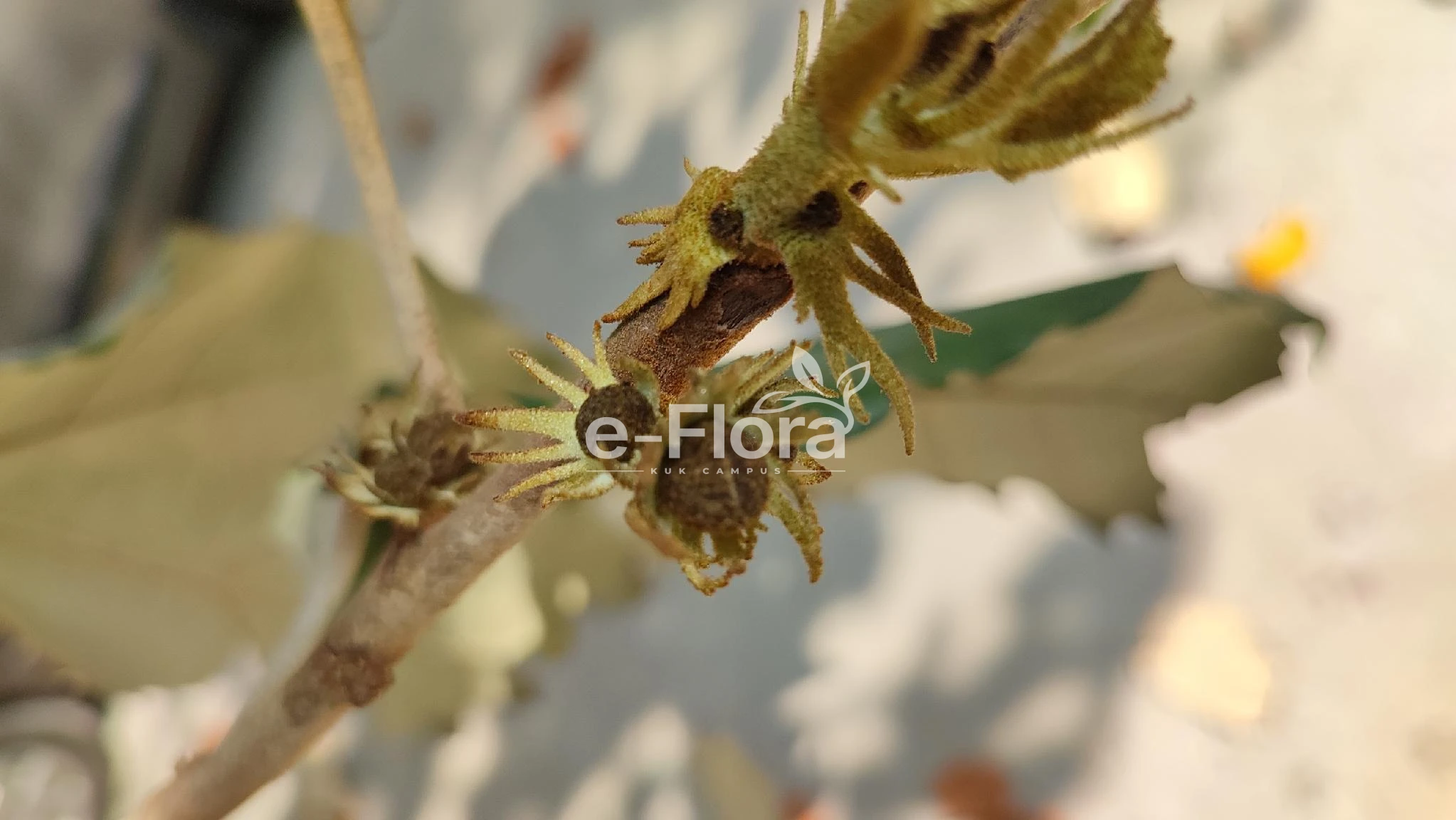
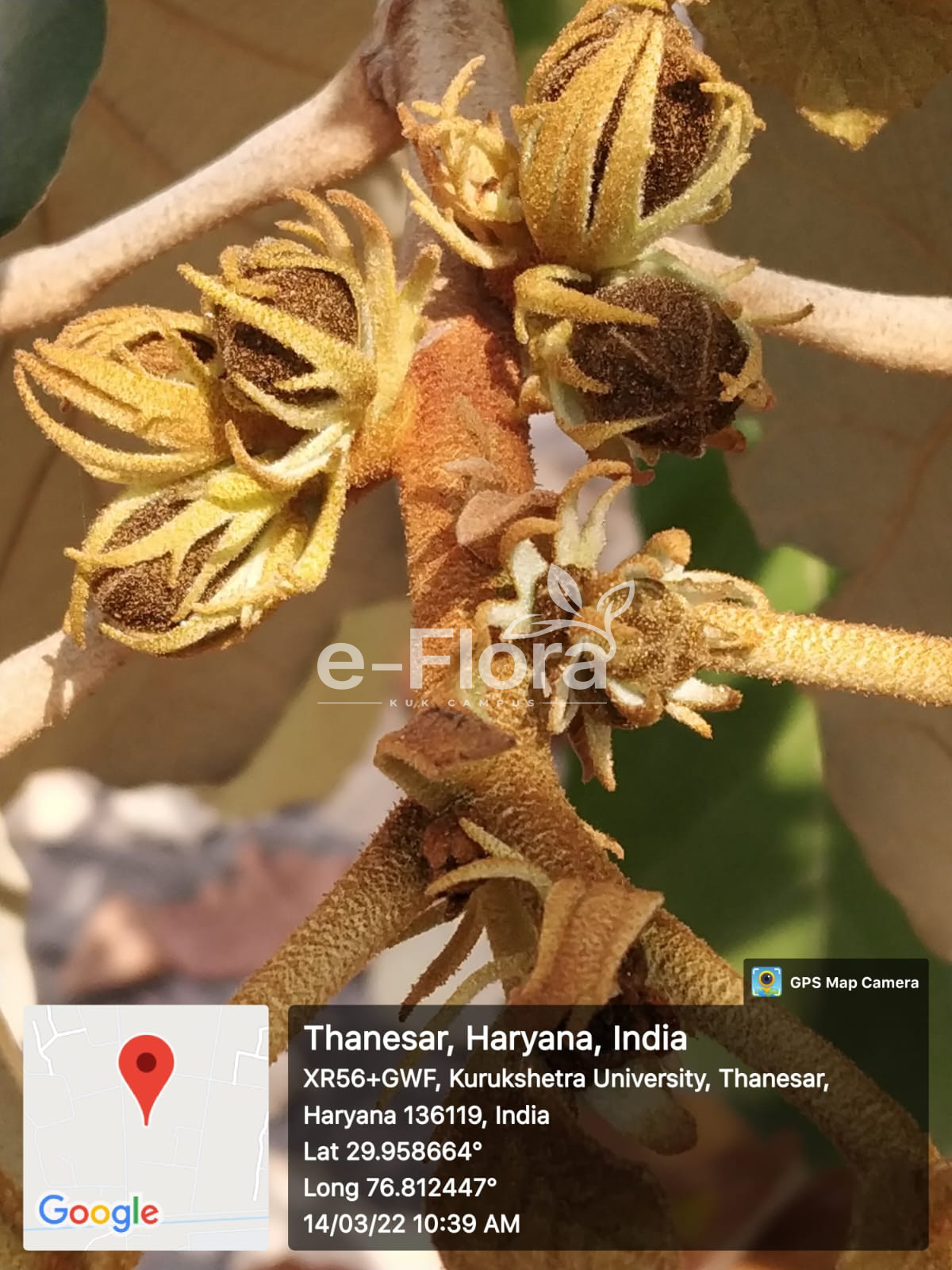
Fruit: Oblong 5-angled woody capsule 10-15 cm, brown-tubercled, dehisces loculicidally into 5 valves releasing winged seeds.
Uses:
- Flowers has antidiabetic properties.
- In folk remedies, flowers with ghee and sugar are applied to treat bleeding piles and excess bleeding.
- In Ayurveda, flower and bark decoctions are use to relieve cough, hoarse throat and clear excess kapha.
- Paste made from bark powder has analgesic properties that makes it useful to treat joint pain and ulcers and enhance wound healing.
- Traditionally bark and leaves are used to treat smallpox, minor poisons and various skin disorders.
- Leaves can grow up to 35cm in width making it apt for used as natural biodegradable dinner plates, wrappers and packaging.
- Wood is durable and used for making planking, flooring and packaging boxes.
- Wood and leaves are used to prevent leaking from roofs.
- Fragrant flowers are used for worship and making perfume and natural insect repellents by burning dried ones.
- Bark extracts are used in lipstick preparations.
- It is an ornamental avenue tree whose bark fibre is used for rope-making.
- Also known as Vishnu’s resting tree and has Mahabharata Muchukunda sage association.