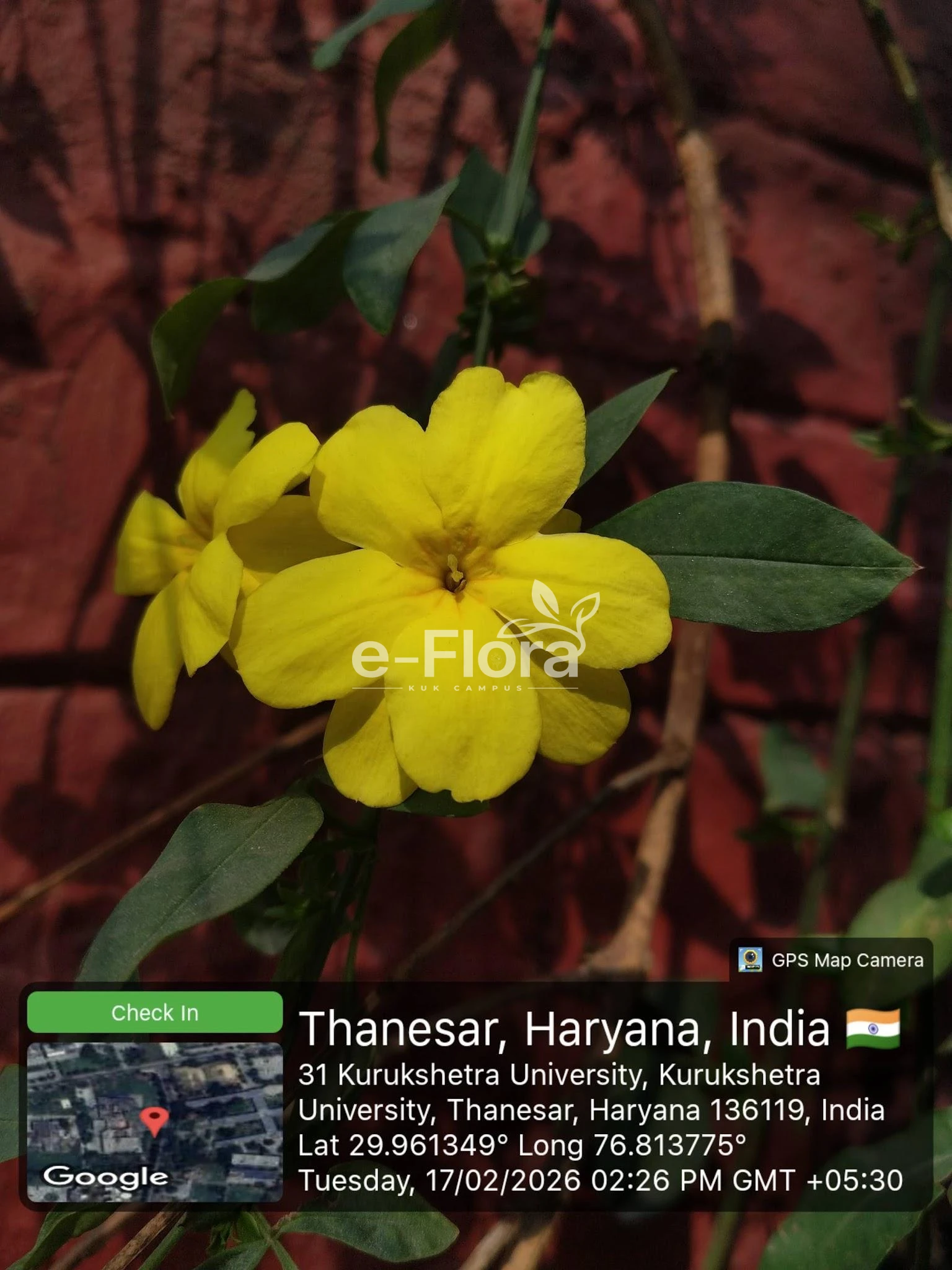
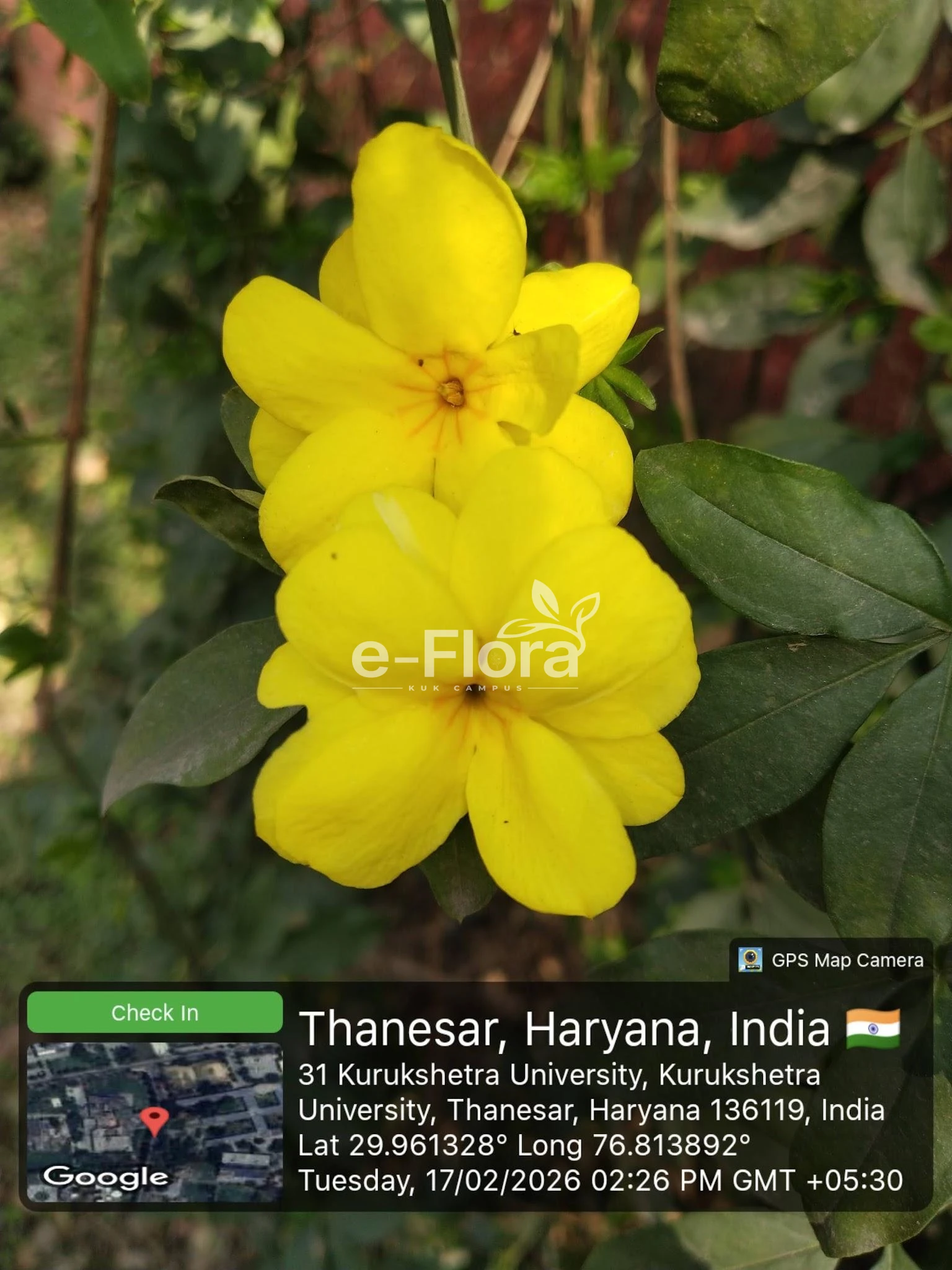
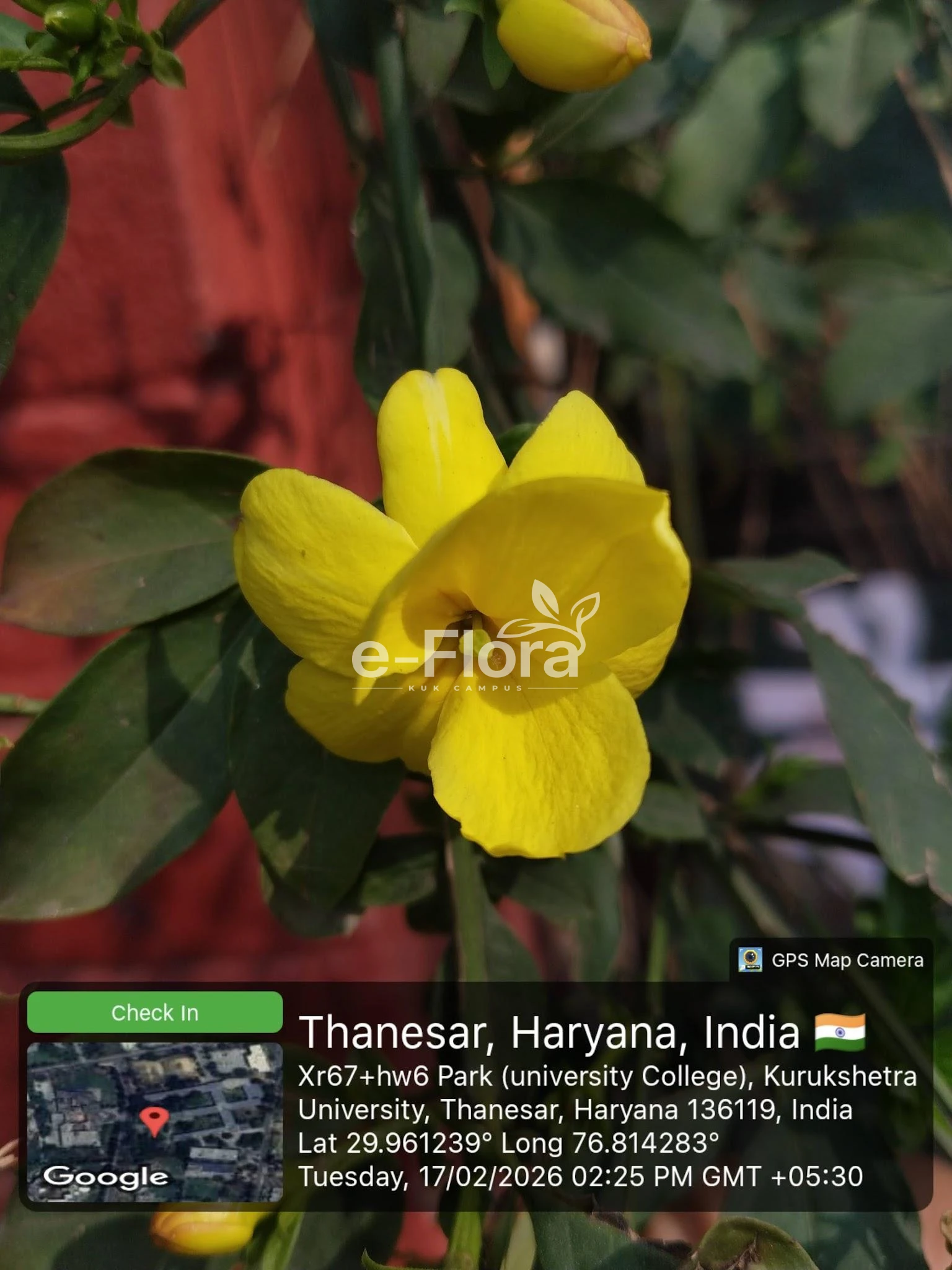
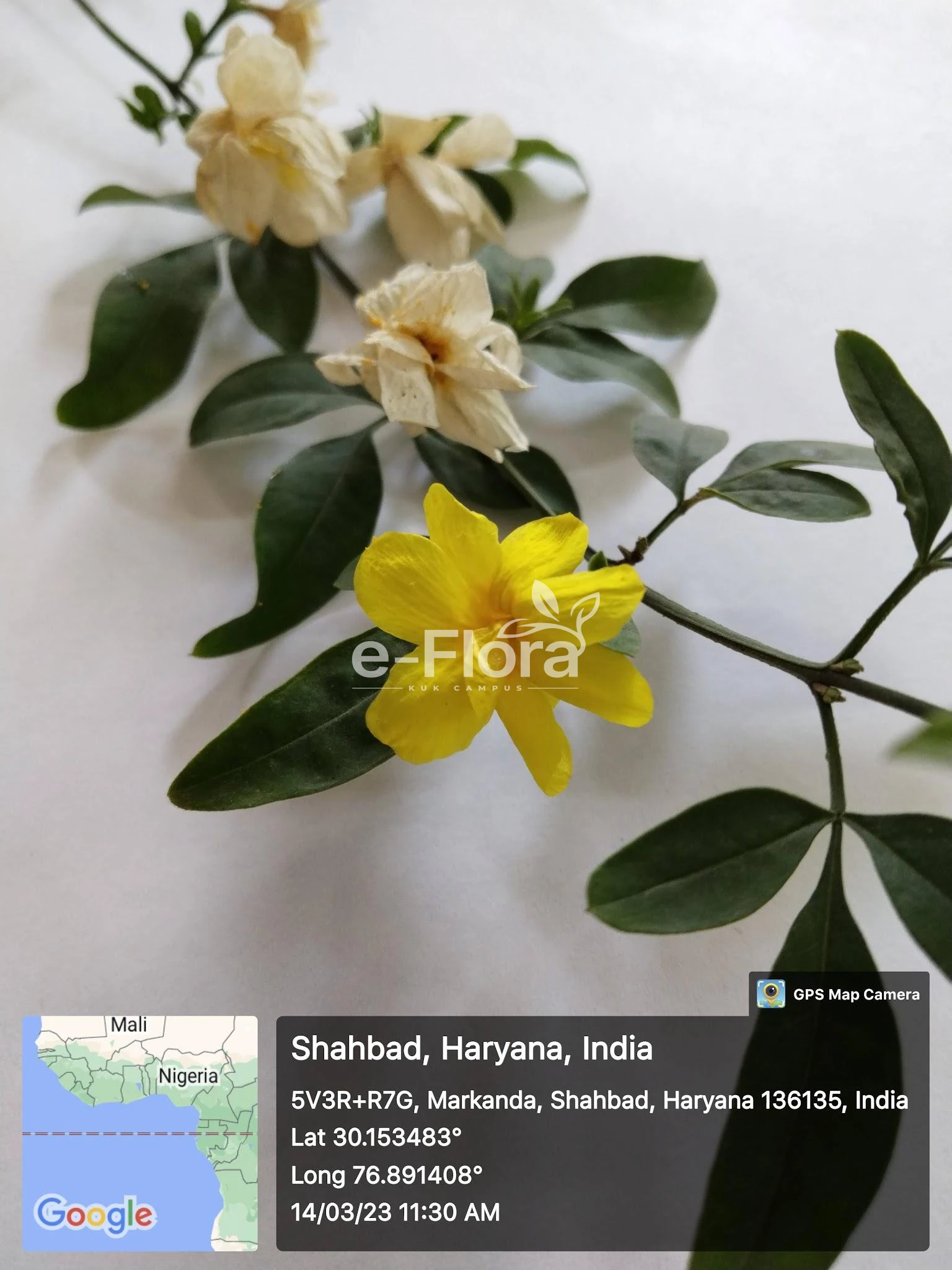
Jasminum mesnyi Hance
Vernacular name: Primrose Jasmine, Japanese Jasmine, Yellow Jasmine, Spring Jasmine
Species Name: Jasminum mesnyi Hance
Family: Oleaceae
Habit: Evergreen scrambling shrub, scandent shrub or weak climber
Stem: Green when young, angular to quadrangular, long arching branches, glabrous, becoming woody and brown with age.
Leaf: Opposite, usually trifoliolate; terminal leaflet elliptic-oblong to lanceolate (3–7 cm long), lateral leaflets smaller and sessile; margin entire; apex acute to mucronate; base cuneate; surface glossy dark green, coriaceous, glabrous.
Flowering: January–April
Flowers: Solitary, axillary, bisexual, yellow, pedicellate; calyx 5–6 lobed, green; corolla funnel-shaped with 6–10 or more petals (often double); stamens 2, epipetalous; ovary superior, bicarpellary, bilocular with axile placentation; style slender, stigma bifid.
Fruit: Berry, globose to ellipsoid, blackish-purple when mature, fleshy, containing 1–2 seeds. Fruiting is uncommon in cultivated plants, especially semi-double forms.
Uses:
- Flowers are traditionally used in folk medicine for their mild soothing and aromatic properties.
- Jasmine extracts are employed in aromatherapy for stress reduction and relaxation.
- Essential oils obtained from jasmine are used in perfumery and cosmetic industries for oils and cream preparations.
- Flower extracts possess antioxidant compounds.
- Traditionally used in some regions for minor skin ailments and as a fragrant herbal preparation.
- Crude root extracts are use to heal wounds and skin ulcers.
- A traditional herbal formula called Pahari Butti is prepared from leaves to maintain blood glucose levels.
- Extracts from plant is used traditionally to manage stomach problems and central nervous system disorders.
- Bright yellow flowers makes it a popular ornamental plant choice.
- Plant is used to prevent soil erosion of slopes and steep banks.