

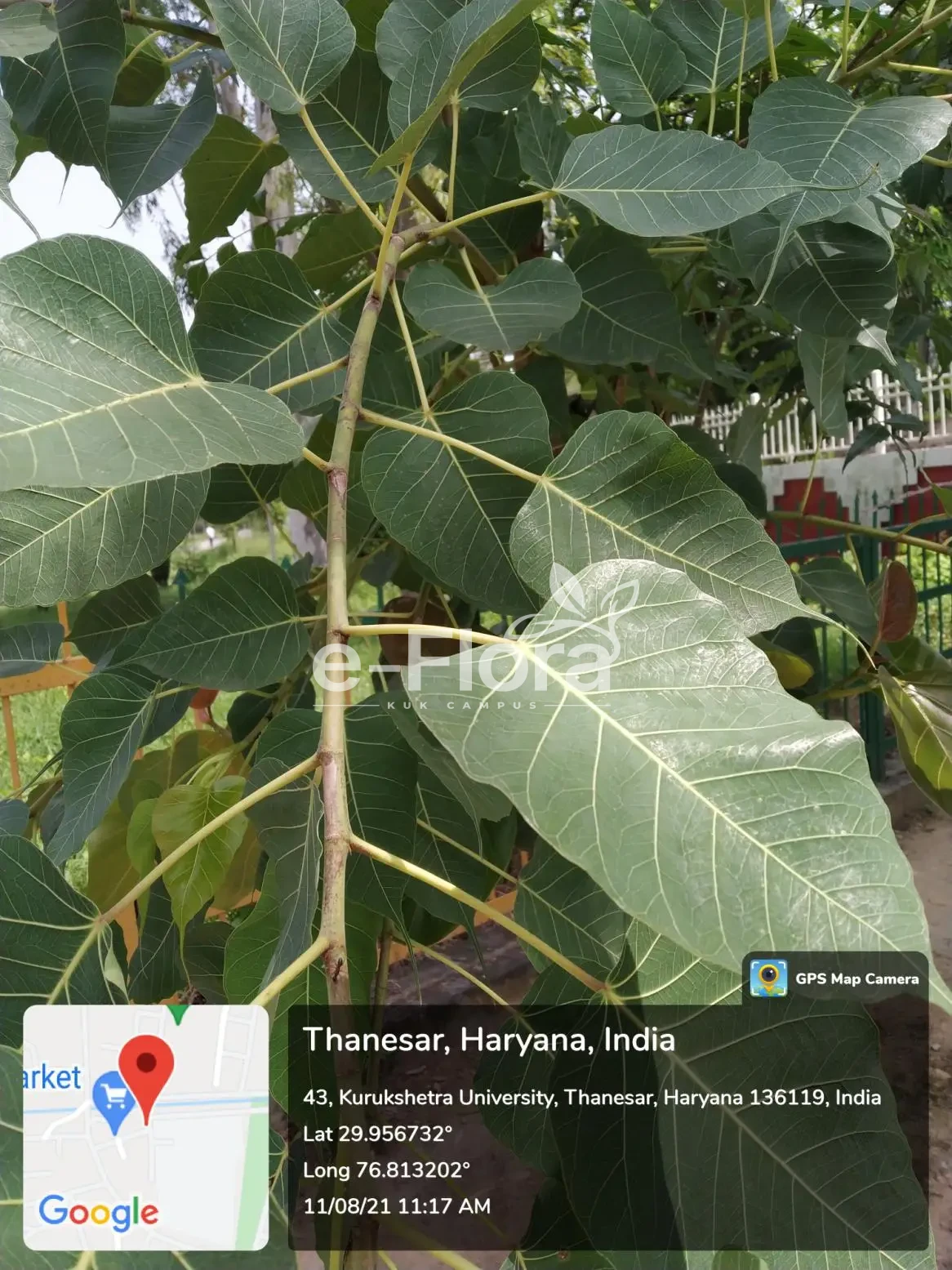
Ficus religiosa L.
Vernacular name: Peepal, Sacred Fig tree
Species Name: Ficus religiosa L.
Family: Moraceae
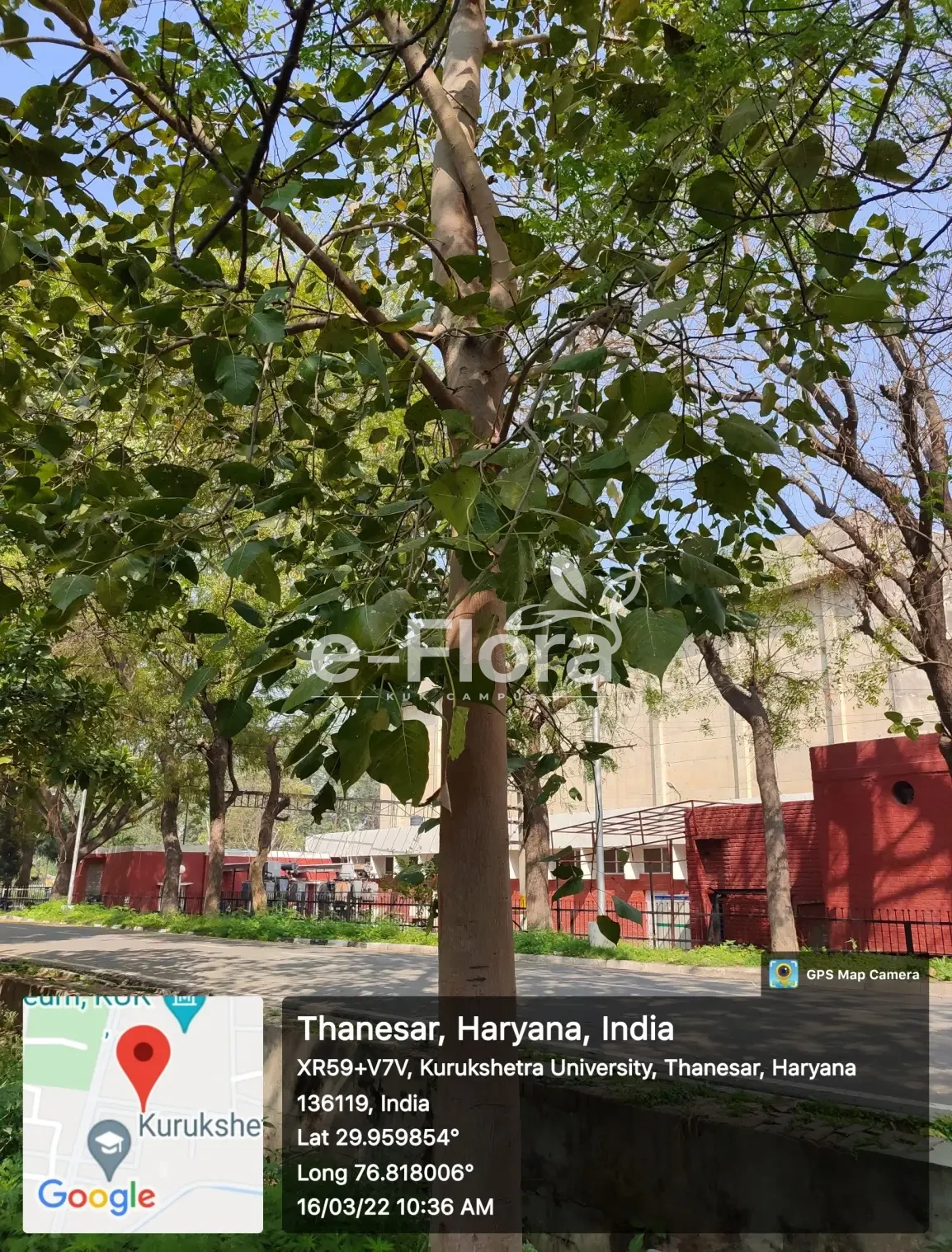
Habit: Deciduous tree, Epiphytic when young
Stem: Pale, aerial roots fused with stem
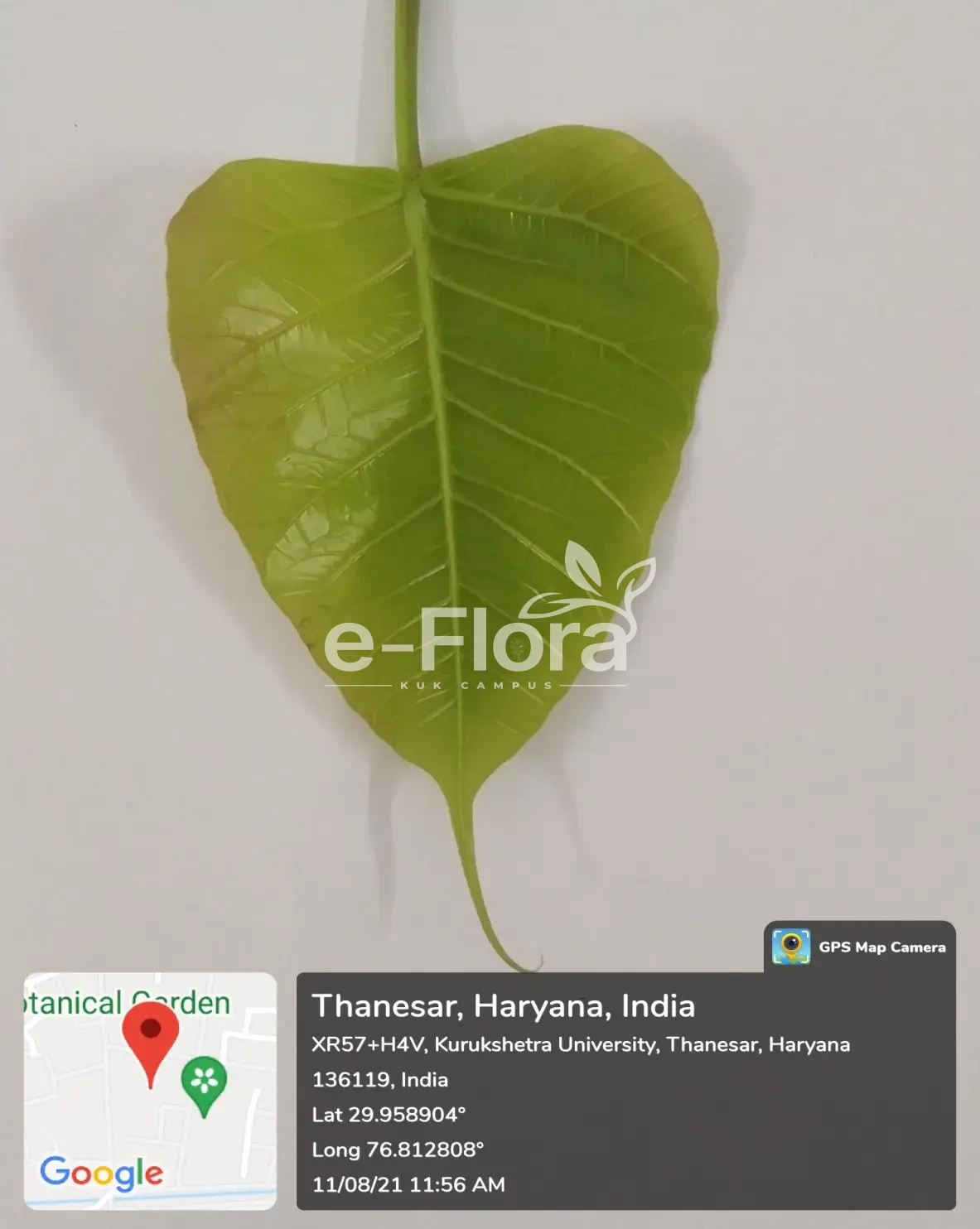
Leaf: Simple, Leathery, somewhat egg-shaped or rounded, tailed at the tip and heart-shaped at the base
Flowering: December-March
Flowers: Hypanthodium inflorescence, flowers minute, androgynous sessile in axillary pairs, apex truncate, florets few, gall florets mane, tepals 2-3, valvate, monandrous staminate florets, sessile ovary
Fruit: Syconous, globose, dry
Uses
- The bark contains 4% tannin and is astringent.
- An infusion of it is used for ulcers and skin diseases.
- An aqueous extract of the bark shows anti-bacterial and anti- inflammatory activities.
- Leaves and tender shoots are used as purgative and in skin diseases.
- The fruit is laxative and the seeds are considered to be cooling, alterative and laxative.
- Dried fruit and leaves decoction is used to treat asthma and coughs.
- Bark extracts are used for stomach and tooth aches and mouth ulcer treatment.
- Prince Siddhartha meditated under this tree and found enlightenment, and became Gautam Buddha, and the tree got the name ‘Bo’.
- Lord Vishnu is said to have been born under a Peepul, which is why the tree is worshipped as Lord Vishnu.
- Its is a shade tree and various village meetings are held under it.
- Plant is a good specimen for bonsai.
- Plant fruit is used as food source by a large no. species of bats, primates and birds.