
Causonis trifolia (L.) Mabb. & J.Wen
Vernacular name: Bush Grape, Three-leaved Cayratia (Hindi: अमलवेल, जंगल अंगूर)
Species Name: Causonis trifolia (L.) Mabb. & J.Wen (syn. Cayratia trifolia (L.) Domin)
Family: Vitaceae
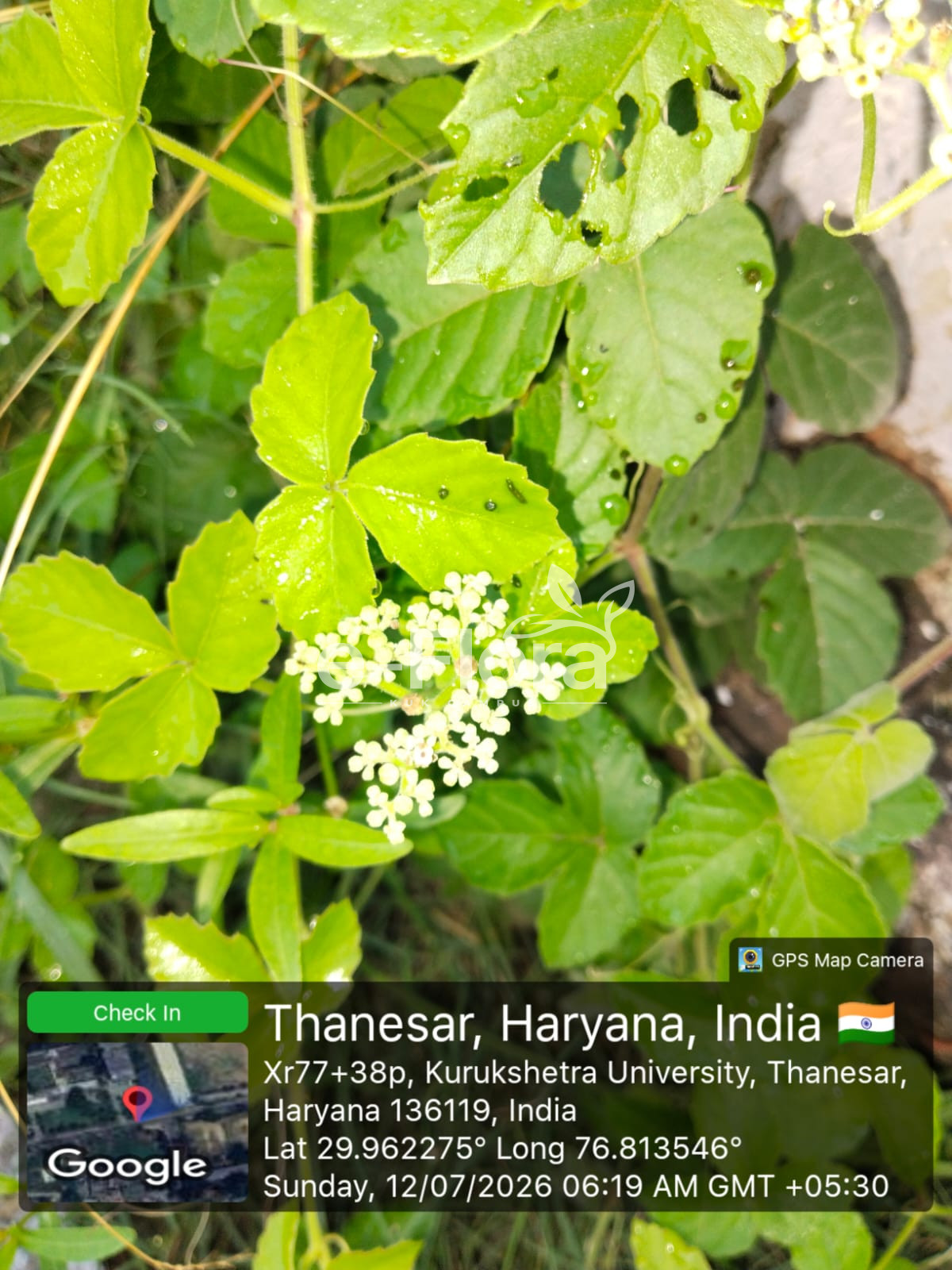
Habit: Perennial climbing vine.
Stem: Slender, branched, glabrous to sparsely pubescent, climbing by forked tendrils opposite the leaves.
Leaf: Alternate, trifoliolate; leaflets ovate to elliptic, 3–10 × 2–6 cm, coarsely serrate, acute, glabrous, petiolulate.
Flowering: Summer–autumn.
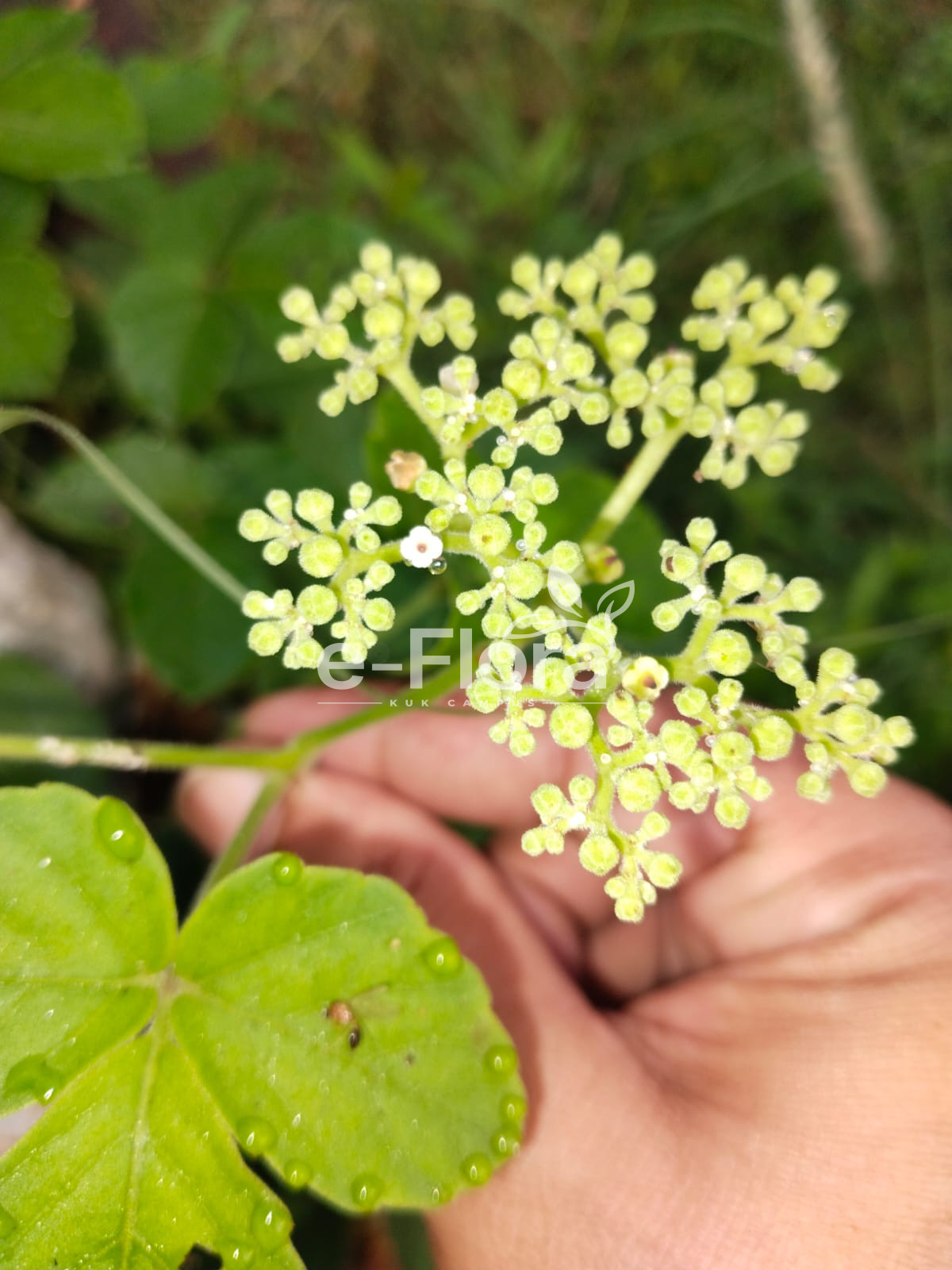
Flowers: Small, greenish-white, borne in opposite cymose panicles; petals 4, valvate and caducous; stamens 4; ovary superior, bicarpellary.
Fruit: Globose berry, 0.8–1.2 cm diameter, green turning purplish-black when ripe, containing 2–4 seeds.
Uses:
- In folk practices, extracts of tuber and seed infusions are recommended for oral consumptions to help with regulating the blood glucose levels.
- A tropical application of poultices of tuber and root is used to treat and soothe wounds, eczema, local swellings, boils and snakebites.
- Different parts of plant have variable diuretic property and in traditional medicines, is used to treat chronic fevers, ease joint pain and neuralgia.
- Extracts of bark is used to treat ulcers of nose, dysentery, diarrhea and other minor digestive ailments.
- Stem can be used as a blood purifier, expectorant and carminative.
- Plant contains flavonoids, tannins and phenolic compounds responsible for antioxidant, antiviral, astringent, antiscorbutic and antibacterial properties.
- Juice of leaves in combination with young pineapple juice can be used to treat itching, dandruff and other scalp issues.
- Fruits are edible when fully ripe but slightly acidic. The vine is also planted as a natural cover and provides food for birds and other wildlife.