
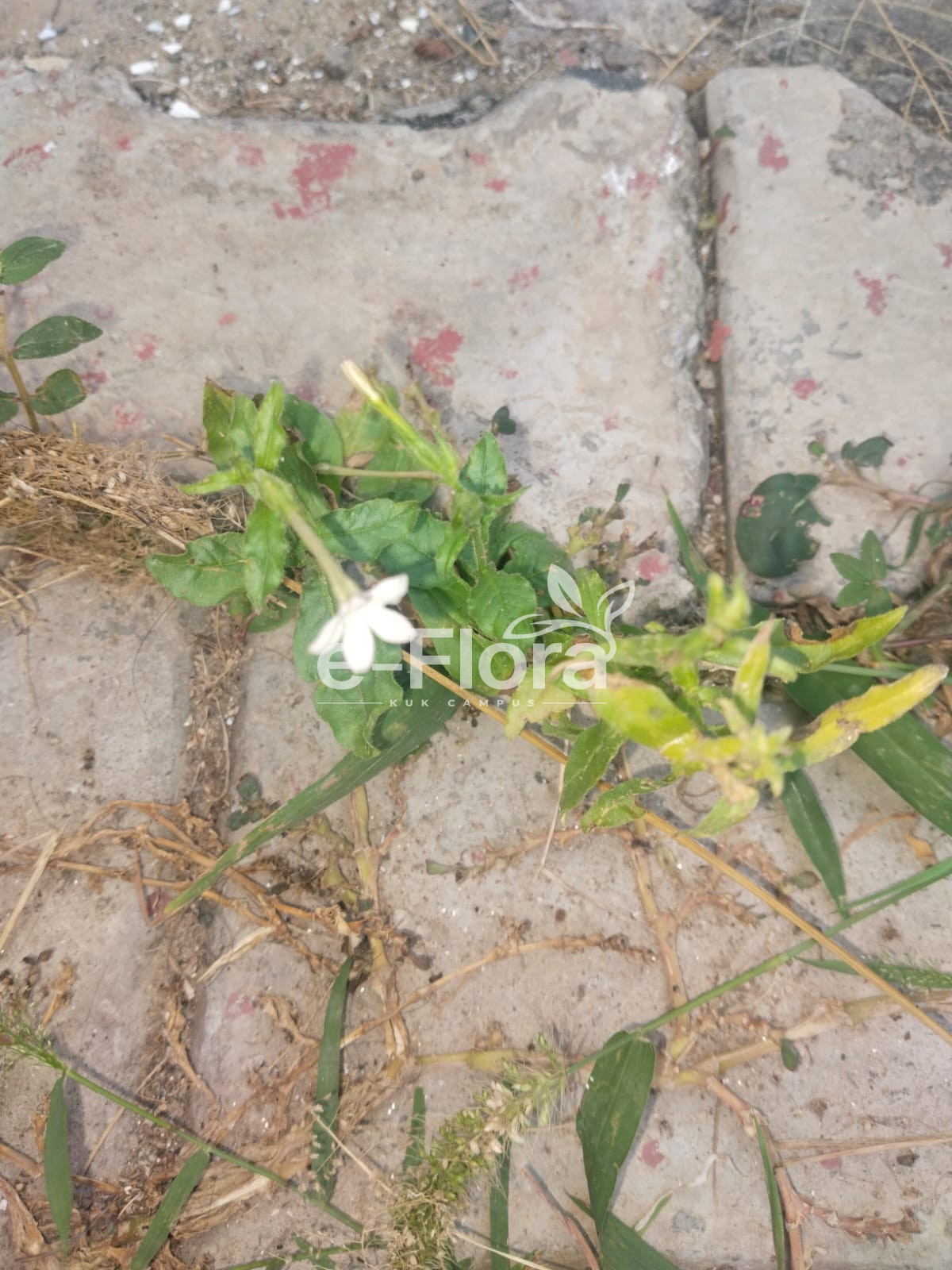
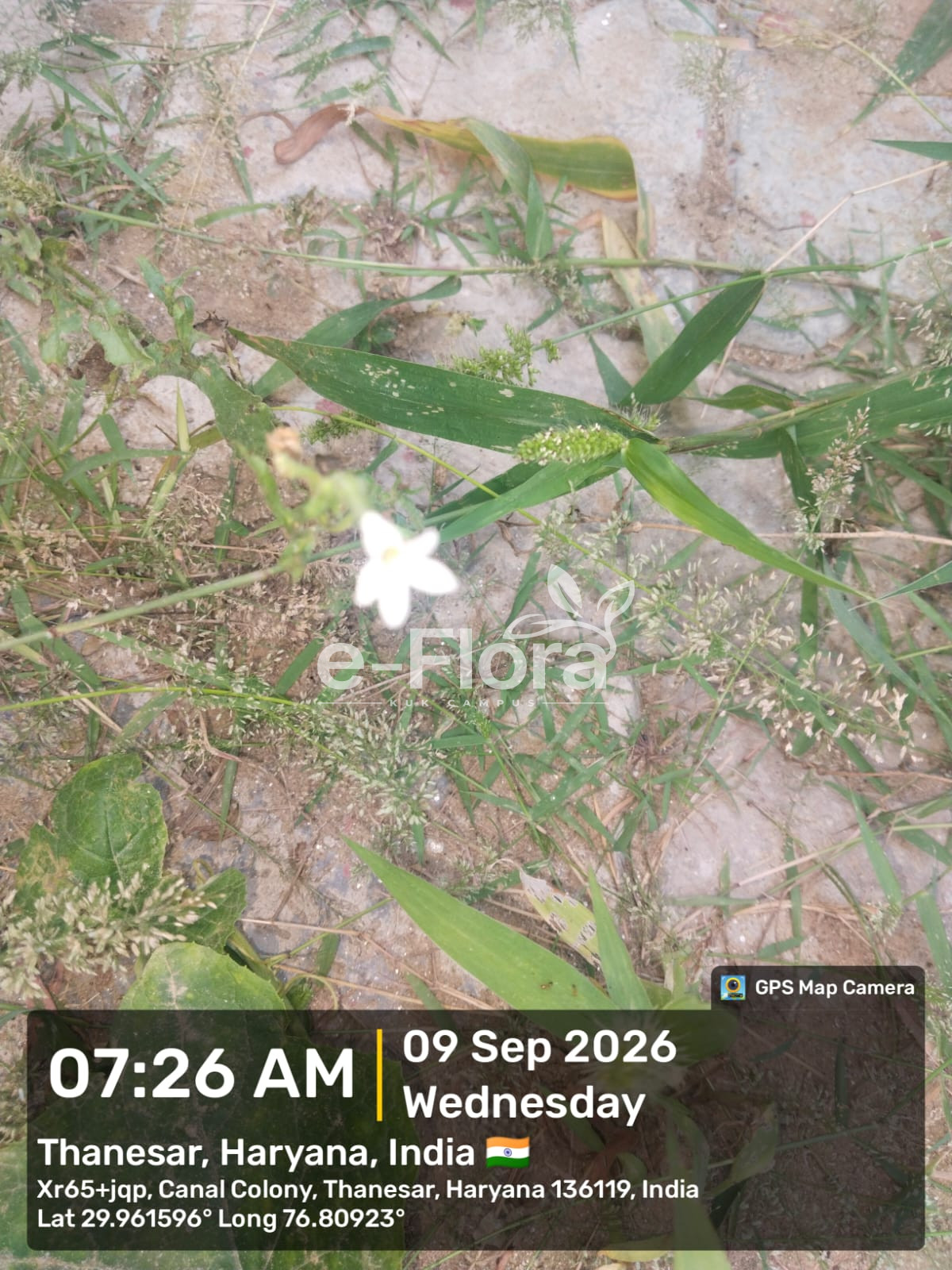
Nicotiana plumbaginifolia Viv.
Vernacular name: Wild tobacco, Jangli tambaku (Hindi: जंगली तंबाकू)
Species Name: Nicotiana plumbaginifolia Viv.
Family: Solanaceae
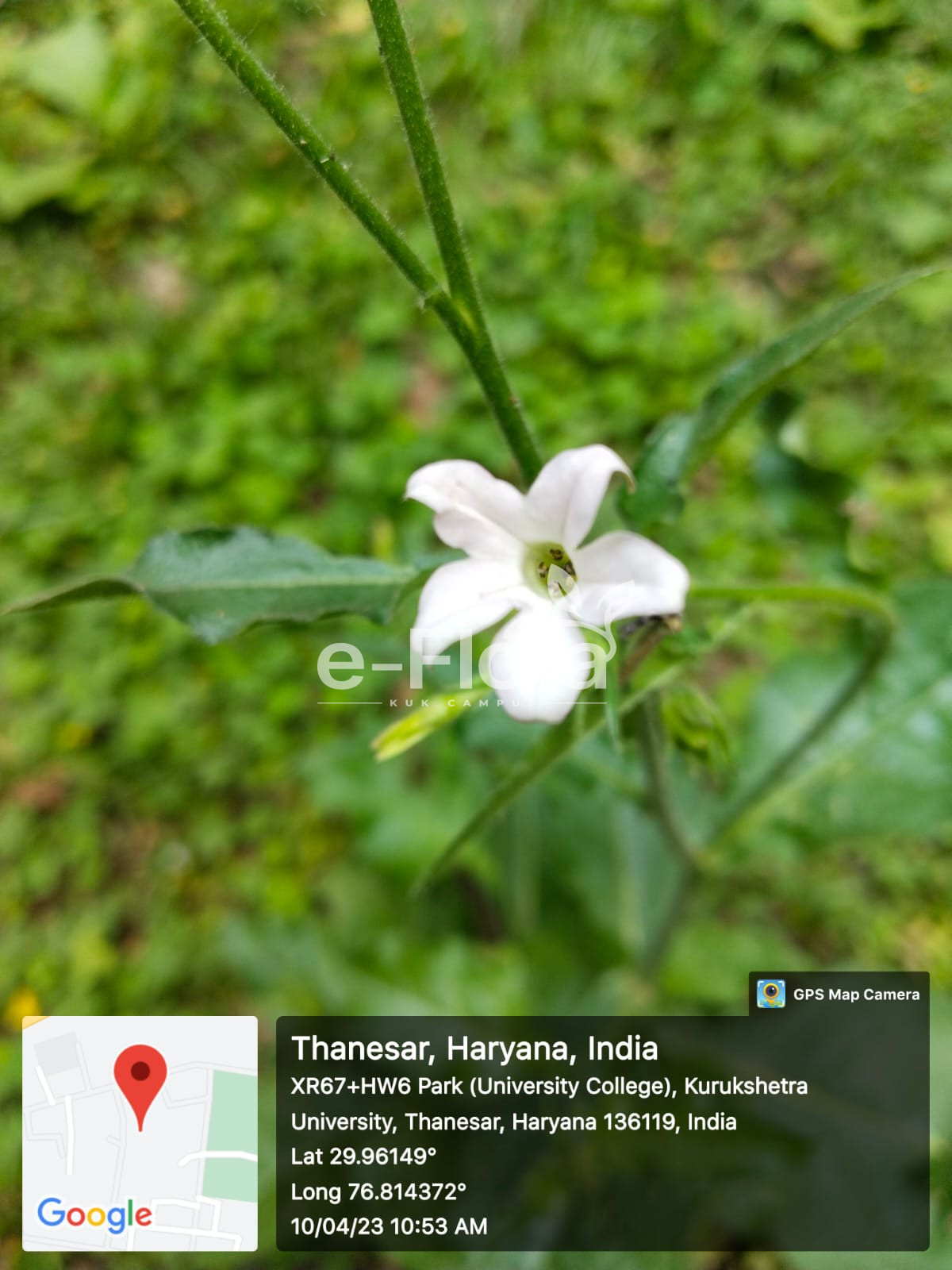
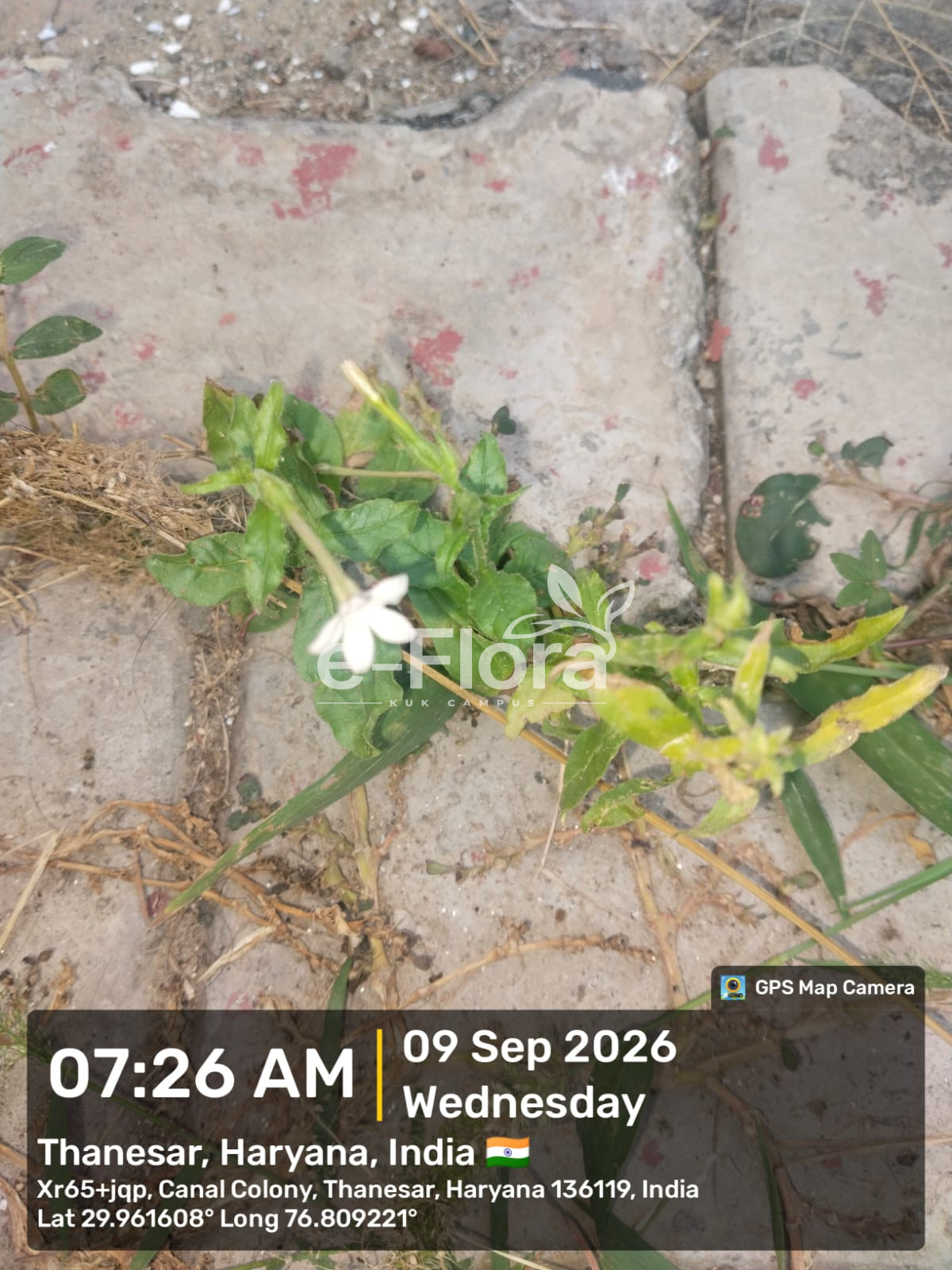
Habit: Annual herb, erect, glandular-pubescent, often branched.
Stem: Slender, erect, green, glandular-hairy.
Leaf: Lower leaves oblong to elliptic, petiolate; upper leaves smaller and sessile, entire or slightly wavy.
Flowering: Mainly during the rainy season.
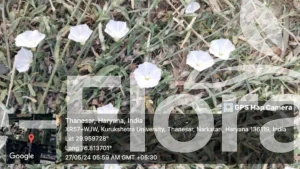
Flowers: Terminal/axillary panicles; flowers white, long-tubed, 5-lobed, distinctly salverform; stamens 5, included or slightly exserted; ovary superior, bicarpellary.
Fruit: Ovoid to ellipsoid capsule, dehiscing by 2 valves; numerous minute seeds.
Uses:
- Traditional remedies uses the wild tobacco to relieve body pain, rheumatic swellings, general joint discomfort, treat nausea, travel sickness, piles and toothaches.
- Plant is used to ease cough and congestion due to its diuretic, antispasmodic, mucolytic and expectorant properties.
- Extracts of plant is externally applied to treat cuts, wounds, sores and skin diseases. For animal wound healing, crushed leaves are used as veterinary germicide.
- Plant is found to have antioxidant, antimicrobial, sedative, antidepressant, muscle-relaxant, anxiolytic, antidiabetic and antibacterial properties.
- Plant is used as natural pesticide and insecticide.
- Wild tobacco is mainly a naturalised wild weed in India rather than a major cultivated tobacco crop. It is also grown occasionally as an ornamental. Its tobacco-like foliage contains nicotine.