

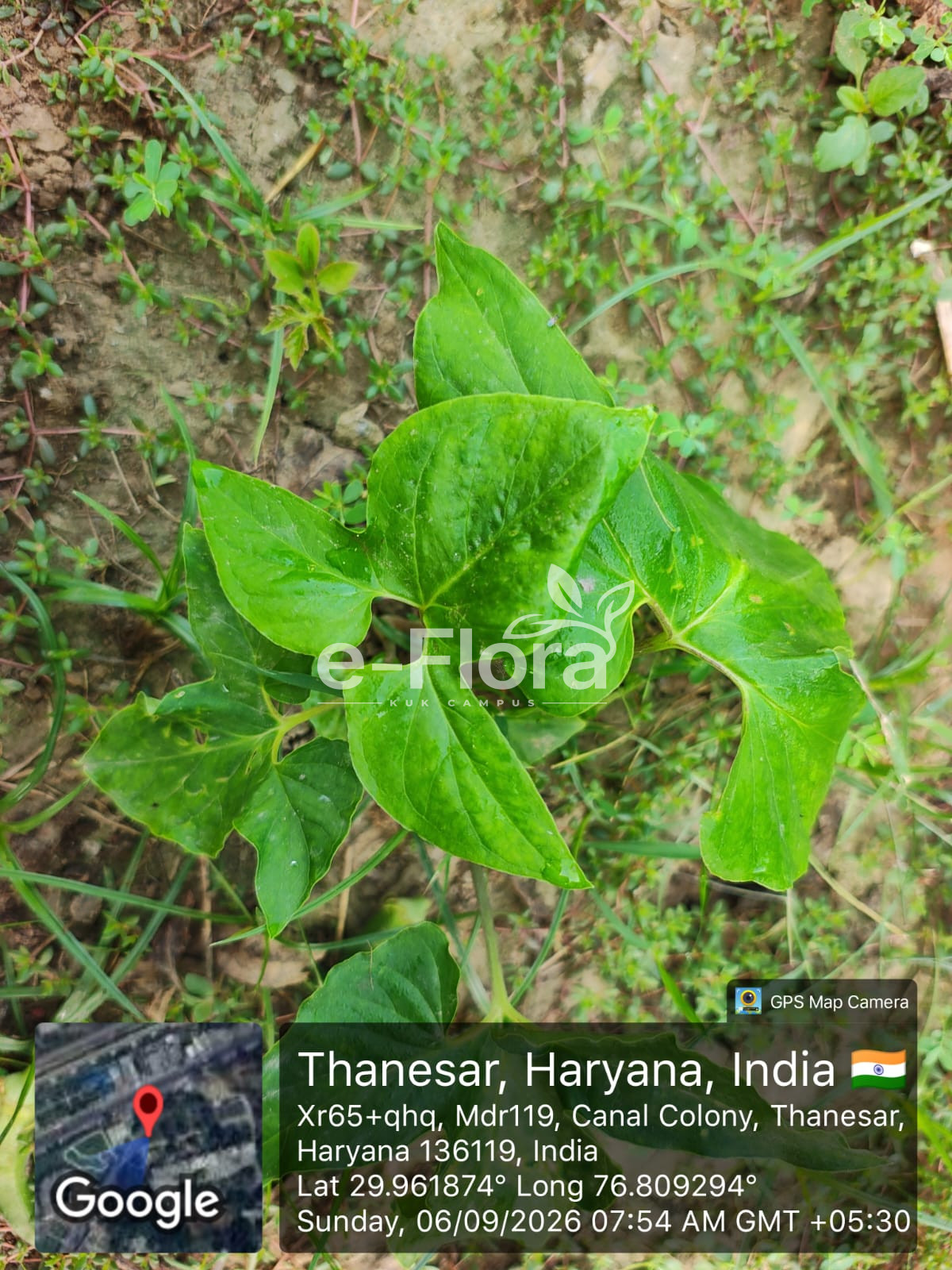
Typhonium trilobatum (L.) Schott
Vernacular name: Kharkol, Ghatkanchu, Bengal arum
Species Name: Typhonium trilobatum (L.) Schott
Family: Araceae
Habit: Perennial tuberous herb.
Stem: Very short, subterranean tuber; leaves and inflorescence arising basally.
Leaf: Long-petiolate, sagittate to deeply 3-lobed, green, often appearing after flowering.
Flowering: Spring–rainy season.
Flowers: Solitary spathe-spadix inflorescence; spathe greenish outside, maroon to purplish within; spadix slender, enclosed by the spathe, with unisexual flowers.
Fruit: Cluster of small, fleshy berries, greenish to reddish when mature.
Uses:
- Leaf or tuber poultice is used traditionally to treat inflammatory conditions, swellings and joint pain.
- Folk remedies used plant to treat stomach aches, diarrhea, piles, wounds, respiratory disorders and venomous snakebites.
- Plant contains phenolic acids, alkaloids, saponins and flavonoids that are responsible for antidiabetic, antioxidant, antimicrobial and anti-inflammatory properties.
- The tuber is used as a vegetable in some traditional communities after appropriate processing.
- Plant contain calcium oxalate crystals, so ingestion of raw parts can cause swelling, burning and irritation in mouth and throat.