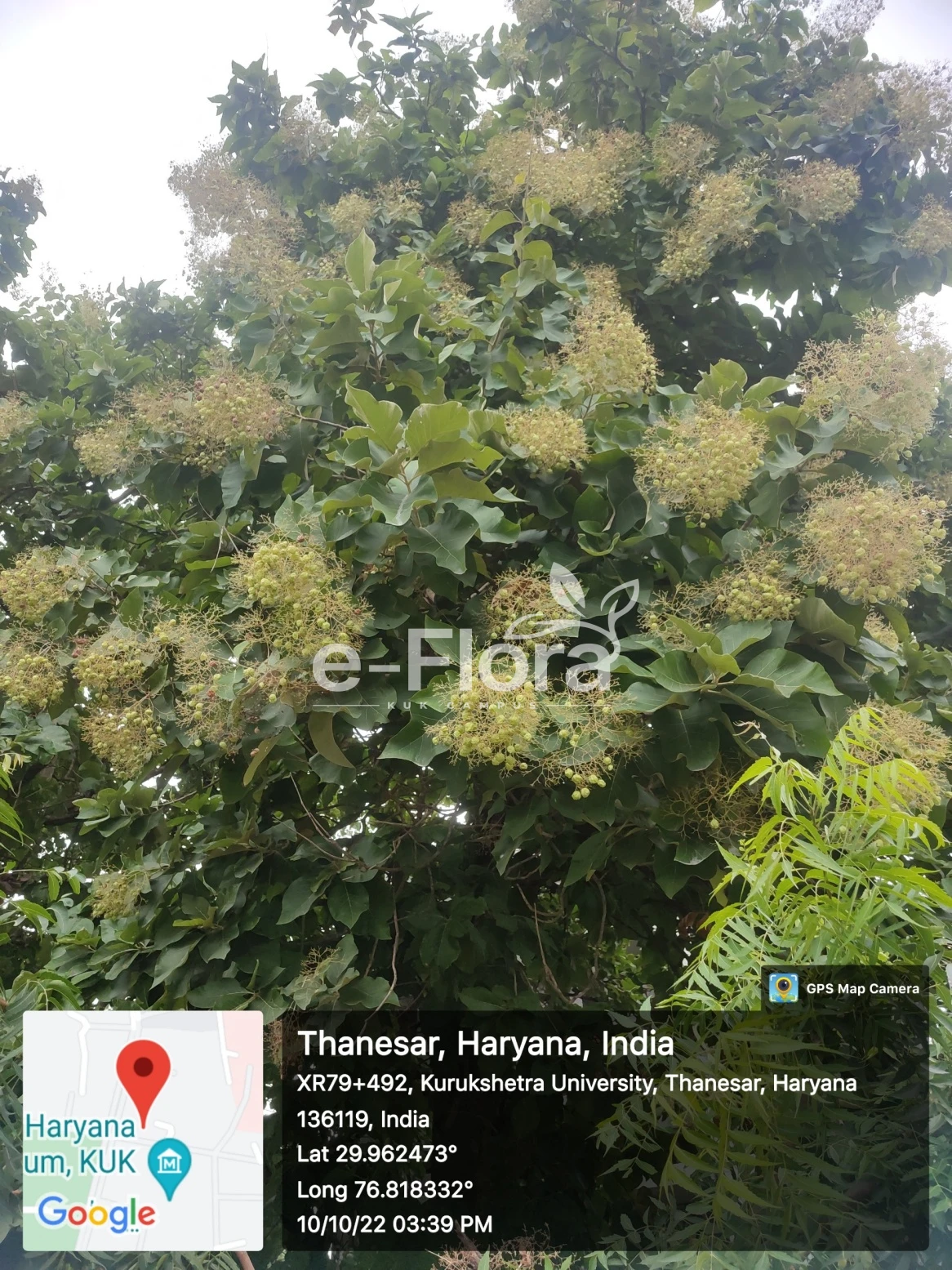
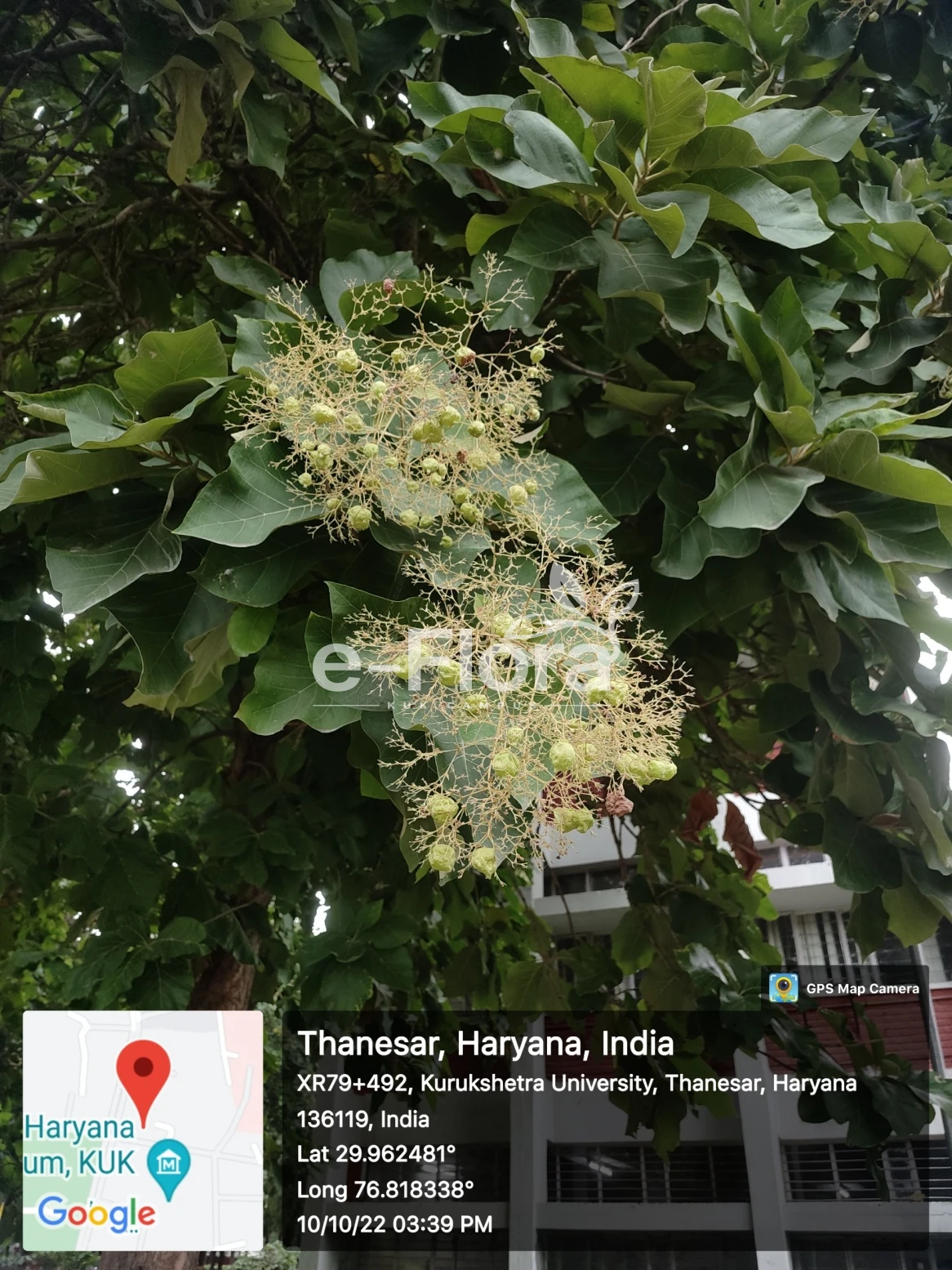
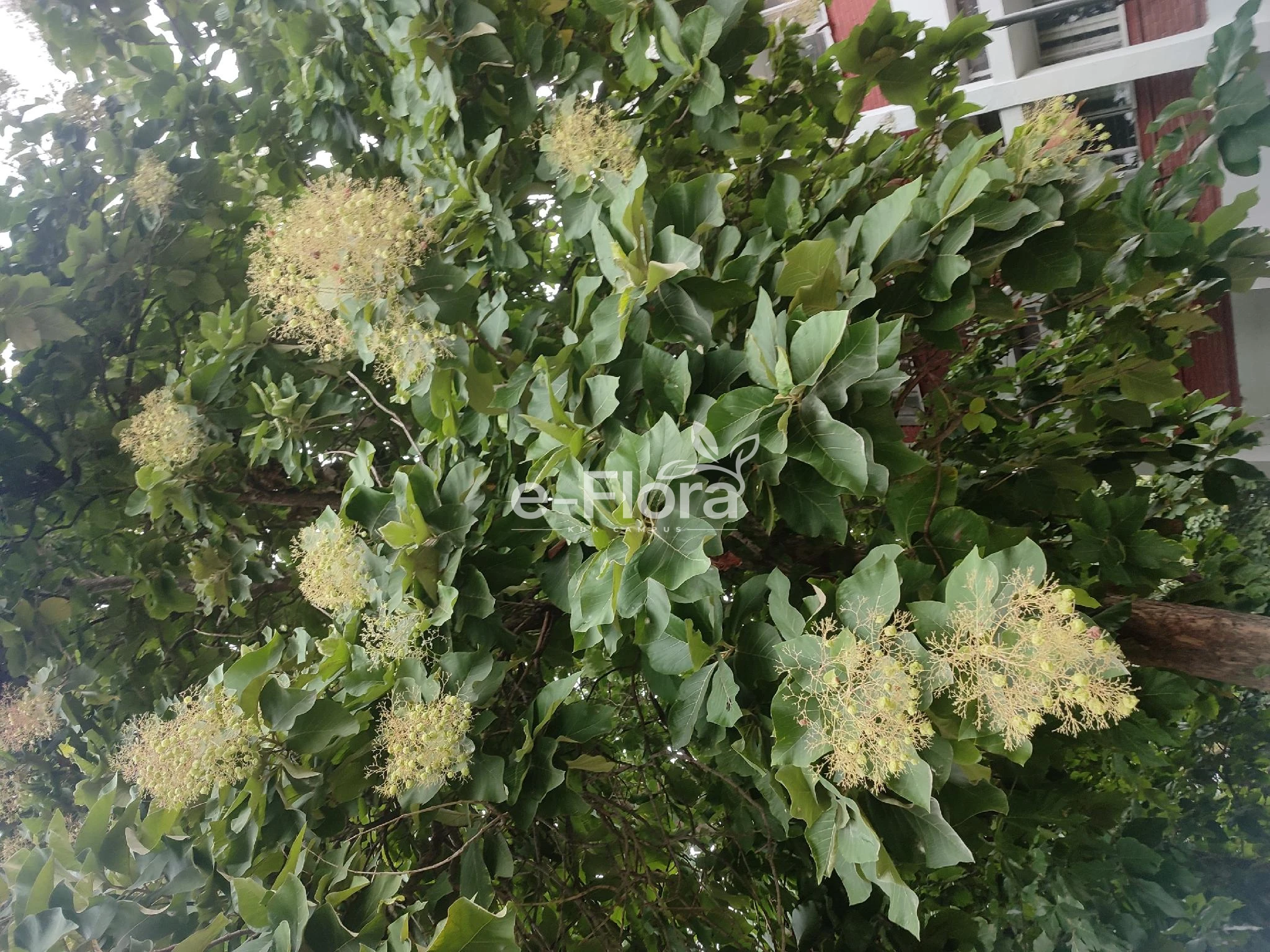
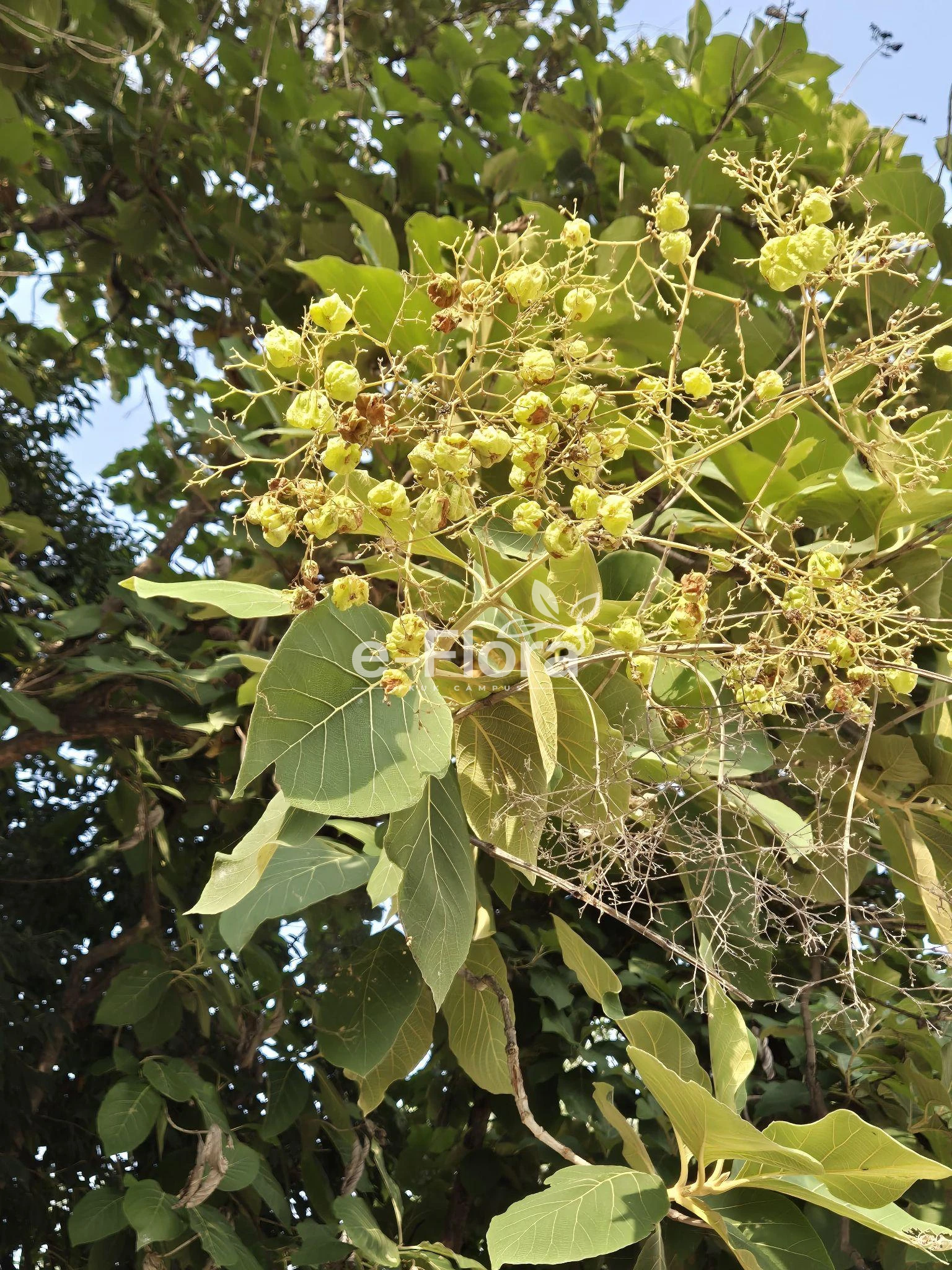
Tectona grandis L.f.
Vernacular name: Sagwan, Teak
Species Name: Tectona grandis L.f.
Family: Lamiaceae
Habit: Large deciduous tree (25-40 m)
Stem: Straight cylindrical bole (15-25 m clear trunk); buttressed base; pale brown fibrous bark
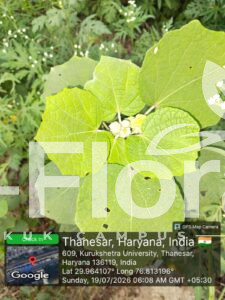
Leaf: Opposite decussate; elliptic-obovate, glabrous above, silvery-pubescent below; red when young
Flowering: May-July
Flowers: Terminal thyrsoid panicles; small white subtubular; 5 sepals, 5 petals, 5 stamens (2 long anterior), inferior ovary; dry dusty pollen
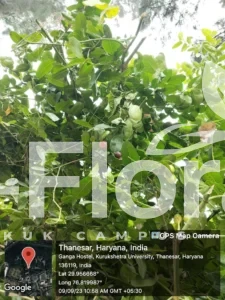
Fruit: Drupe enclosed in enlarged persistent calyx, 4 hard nutlets.
Uses:
- Leaf ash is used to manage diabetes whereas bark infusion helps to treat dysentery.
- Traditional medicines uses tropical application of decoction and paste derived from teak leaves to treat ulcers, burn, wounds and skin rashes.
- Folk remedies extracts nut and seed oil and applied it externally to stimulate growth of hair and reduce scalp itchiness or scabies. Seed oil is also used as hair tonic and to manage joint pains.
- Bark flower extracts have astringent properties and brewed into teas that are used to treat digestive problems, fevers and urinary tract complications.
- Teak timber is famous all over the world for house-building and furniture (indoor and outdoor). Wood is highly resistant to warping, rotting and marine borers and has a golden-brown lustre and dimensional stability. Its varied qualities makes teak timber ideal for ship buildings, docks, piers, exterior decking, veneers and woodcarvings.
- Plant is known as King of timbers (world’s most valuable hardwood) that is in use since 2000 BC and is also sacred to Hindu kings.