
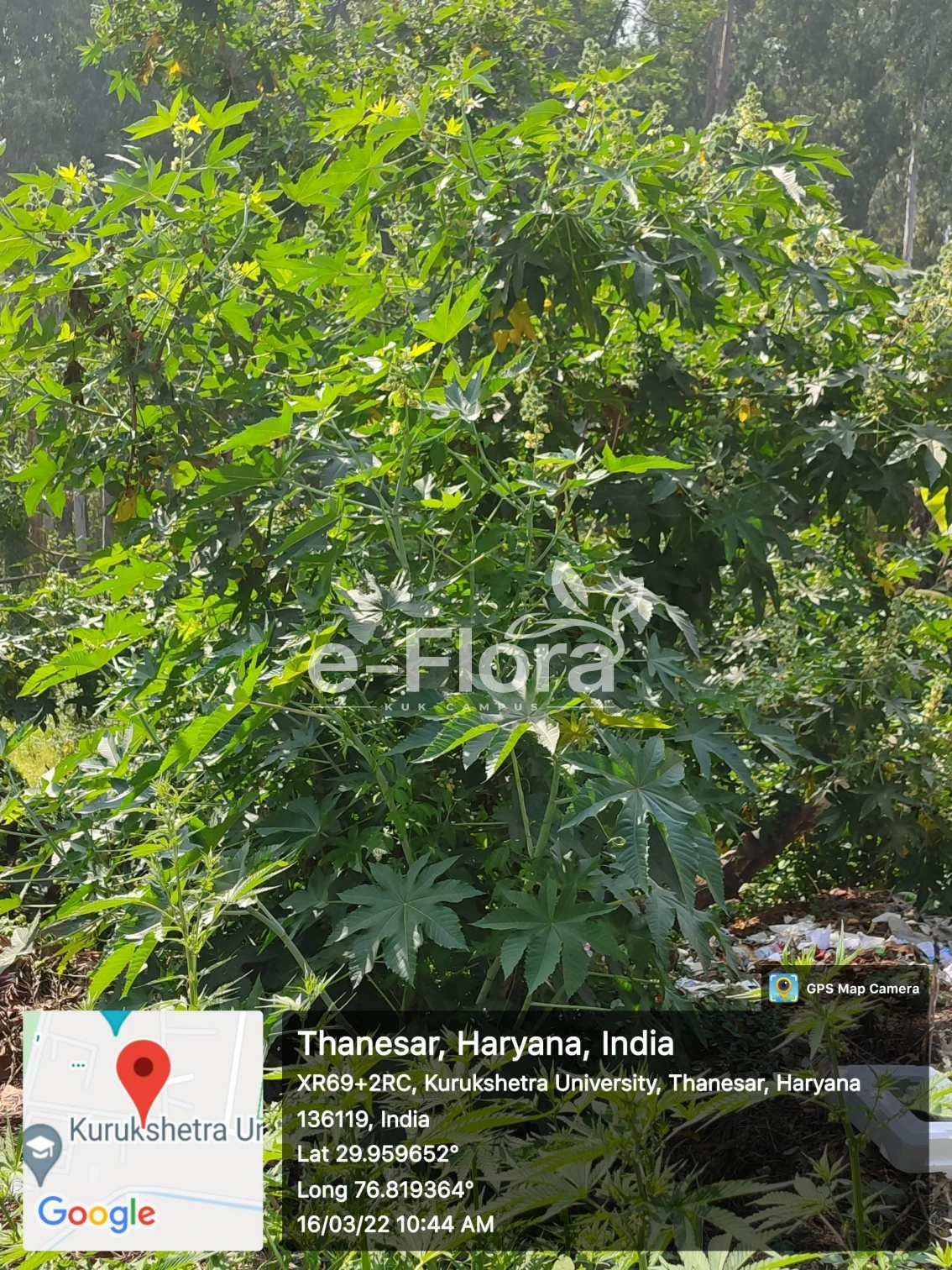
Ricinus communis L.
Vernacular name: Castor oil plant, Arandi (Hindi: अरंडी)
Species Name: Ricinus communis L.
Family: Euphorbiaceae
Habit: Fast-growing annual/perennial shrub or small tree.
Stem: Hollow green to red, stout, often purple-tinged
Leaf: Alternate, palmately compound, 5-11 deeply-lobed radiating fingers, peltate.
Flowering: Year-round (peaks July-October)
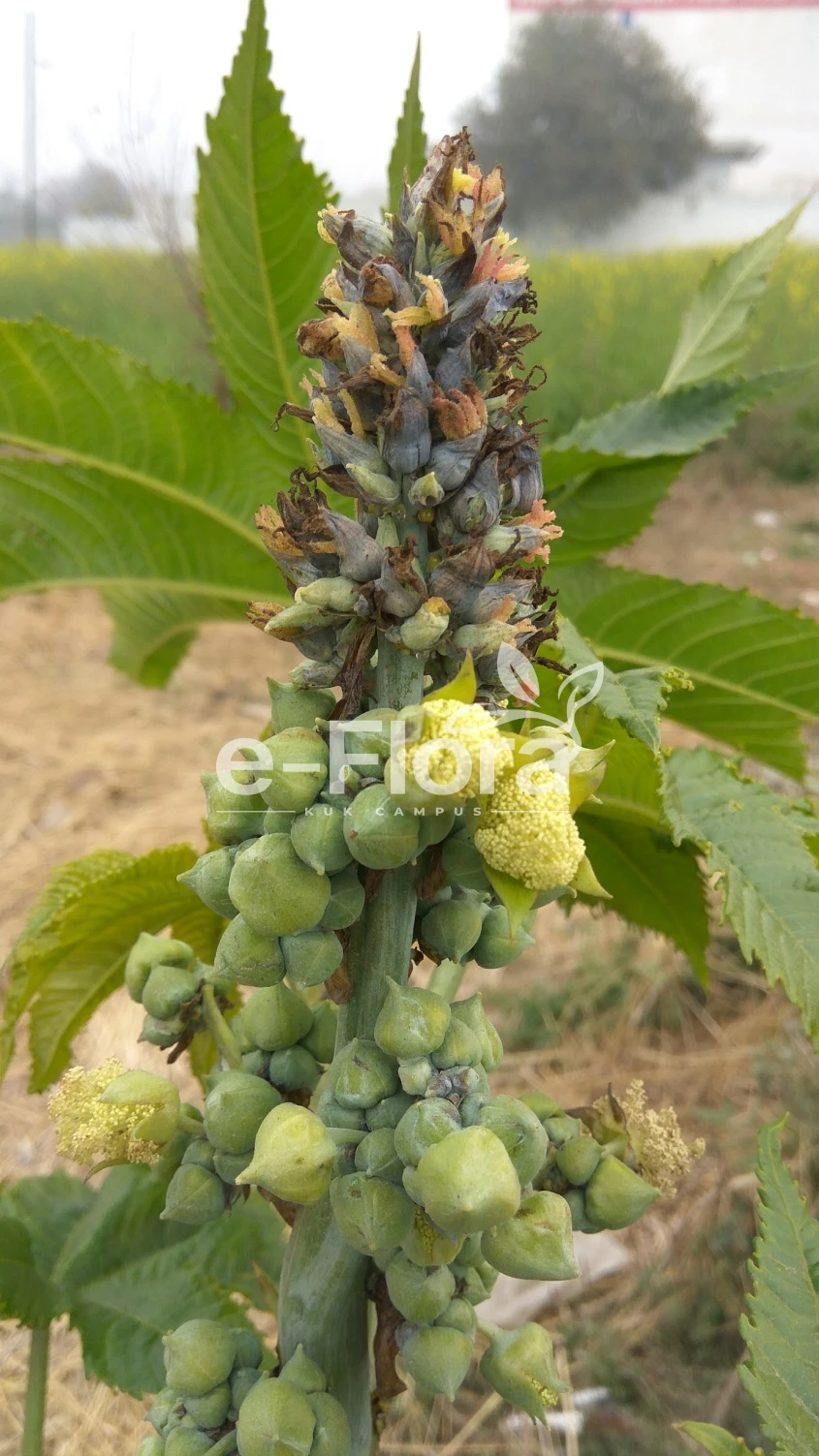
Flowers: Monoecious terminal racemes; male flowers basal (yellow-green numerous stamens), female flowers apical (red 3-lobed styles, 3-carpellate ovary); no petals, cup-shaped disc
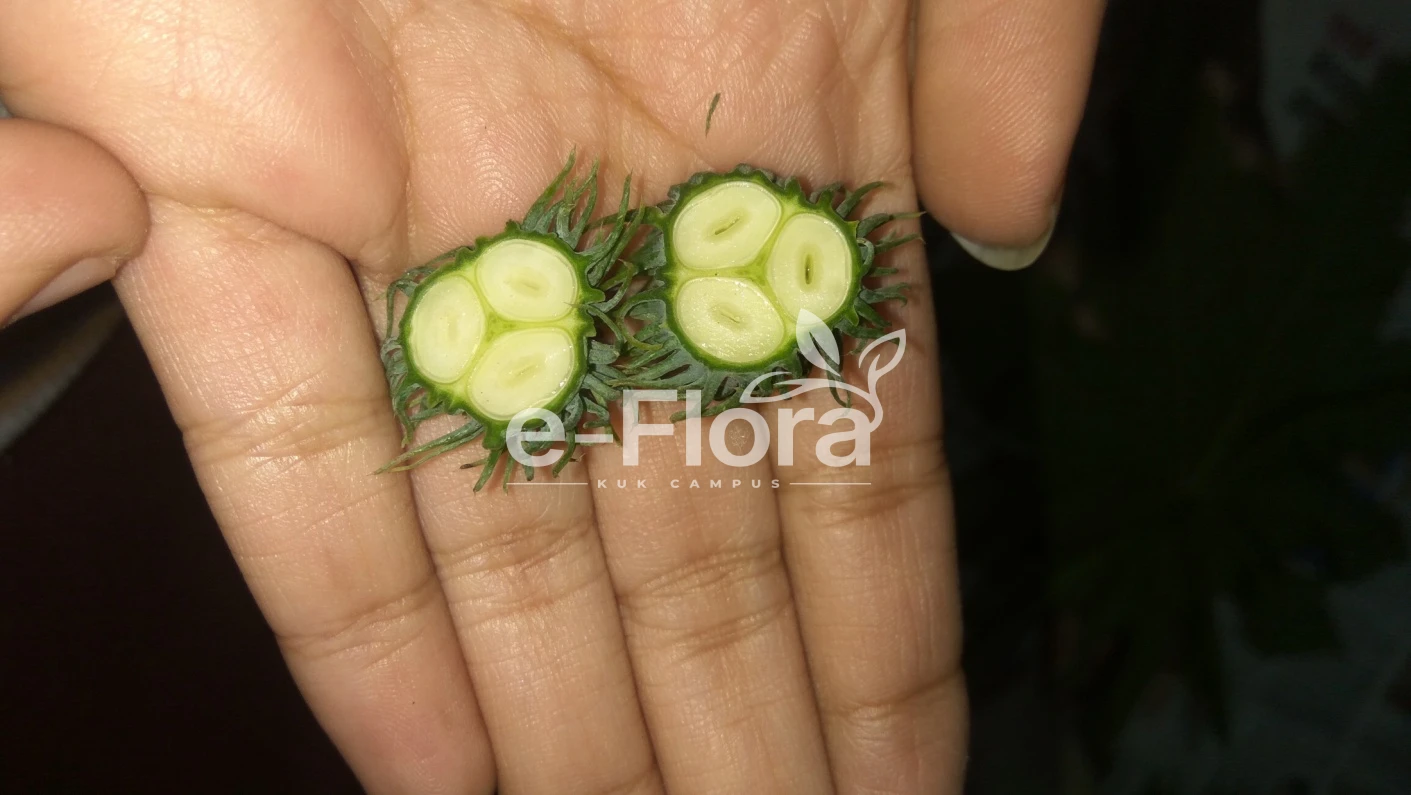
Fruit: Green spiny explosive capsules turning brown; 3 mottled poisonous seeds with caruncle.
Uses:
- Oil acts as a purgative due to presence of ricinoleic acid and helps with bowel movement and relieve constipation.
- Oil act as skin emollient and is used in cosmetic and skin care industry to hydrate skin, promote hair health and treat dry skin and reduce dandruff.
- Leaves are used to derive anti-inflammatory poultice and roots has laxative properties.
- Ayurveda and herbal medicines uses plant to soothe digestive system and enhance lactation.
- In some traditional practices, plant is used for inducing labor and easing delivery.
- Plant can be used as Waste-land colonizer as its drought-tolerant and is a widespread tropical weed whose seeds are ant-dispersed.
- Seeds 40-60% castor oil (ricinoleic acid) used for manufacturing lubricants (engines and aerospace machinery), soaps, paints, biodiesel, nylon, varnishes and biopolymers.
- Seed contain a very potent toxin, Ricin that is water soluble and is fatal to humans and animals though toxin gets inactivated during extraction process of oil.
- Ancient Egyptian embalming/purgative; Hindu sacred oil; “Tree of Eden” folklore