
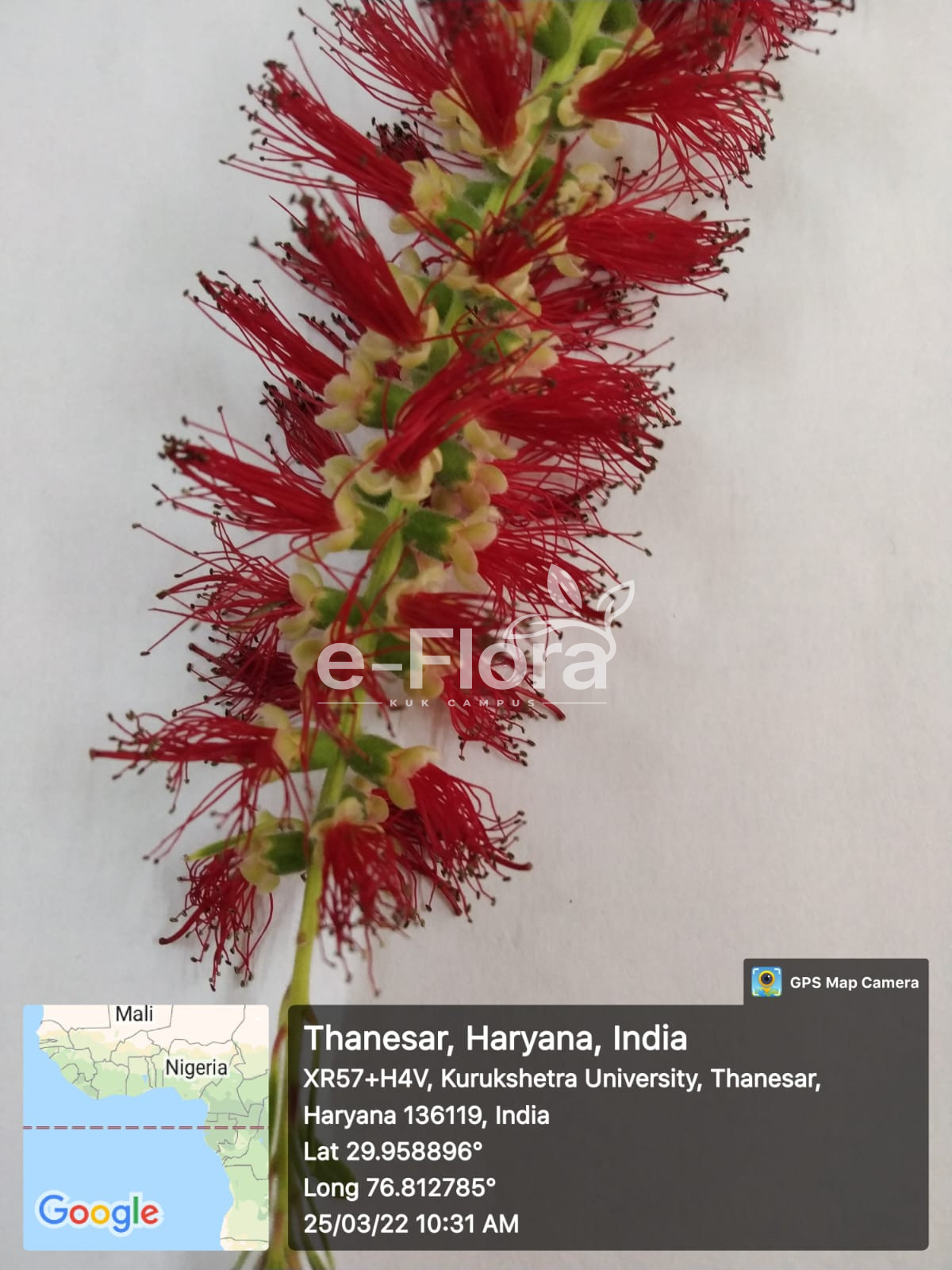
Melaleuca citrina (Curtis) Dum.Cours.
Vernacular name: Bottlebrush
Species Name: Melaleuca citrina (Curtis) Dum.Cours.
Family: Myrtaceae
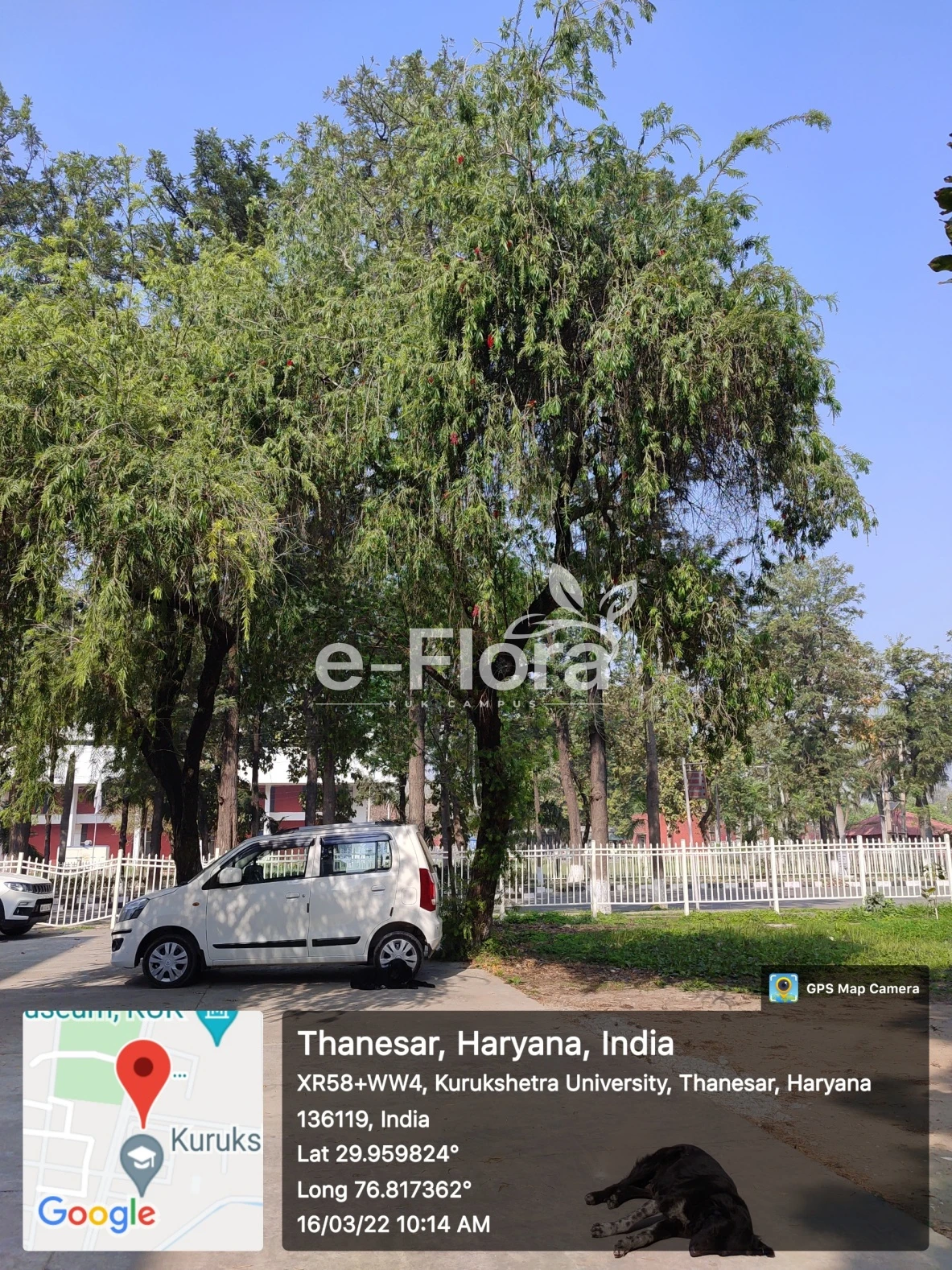
Habit: Evergreen Perennial Tree
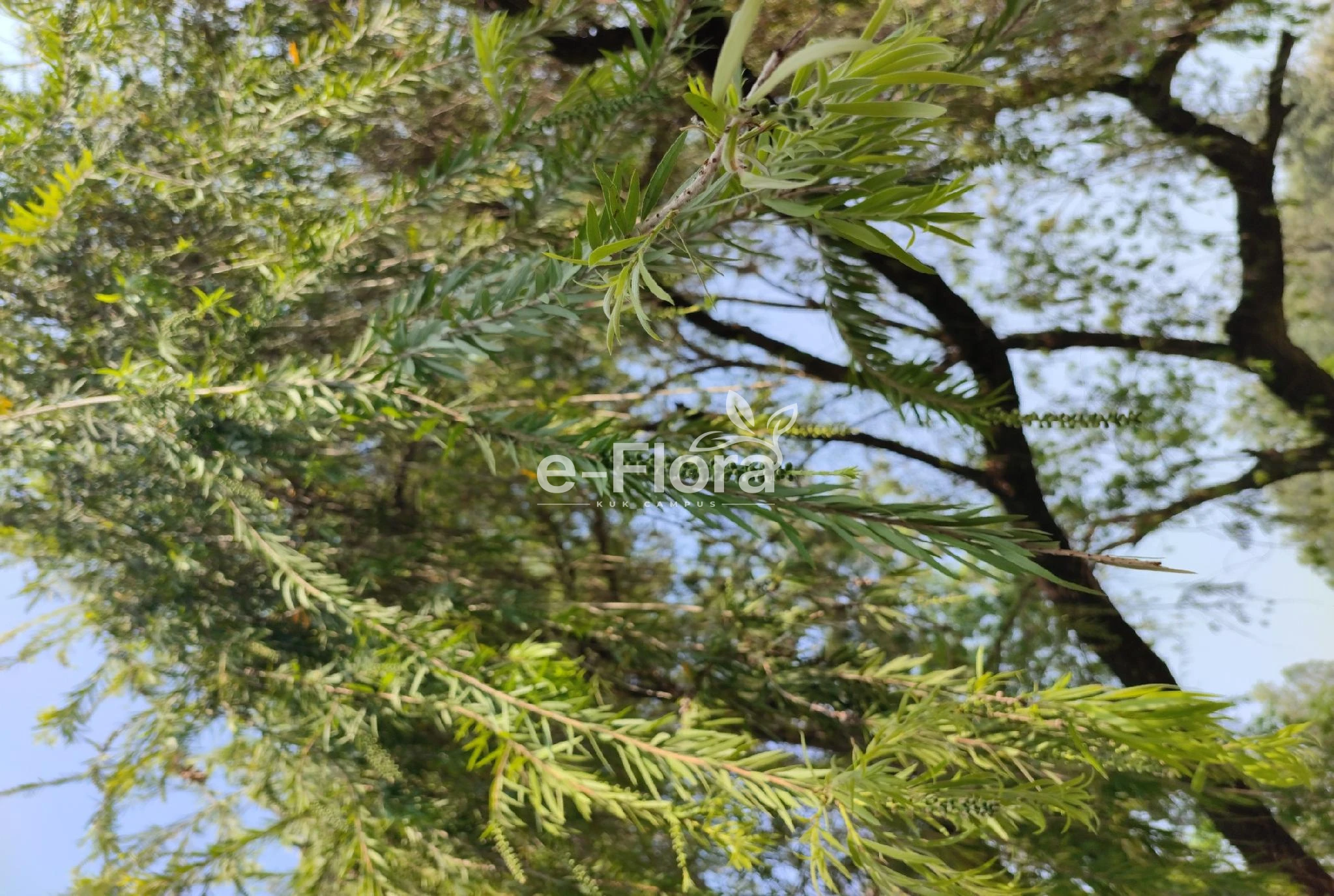
Stem: Woody but upper portions herbaceous, erect, smooth grey bark.
Leaf: Ramal and cauline, simple, alternate, entire, acute, gland-dotted, leathery, unicostate reticulate venation, with inframarginal veins.
Flowering: Feb–April.
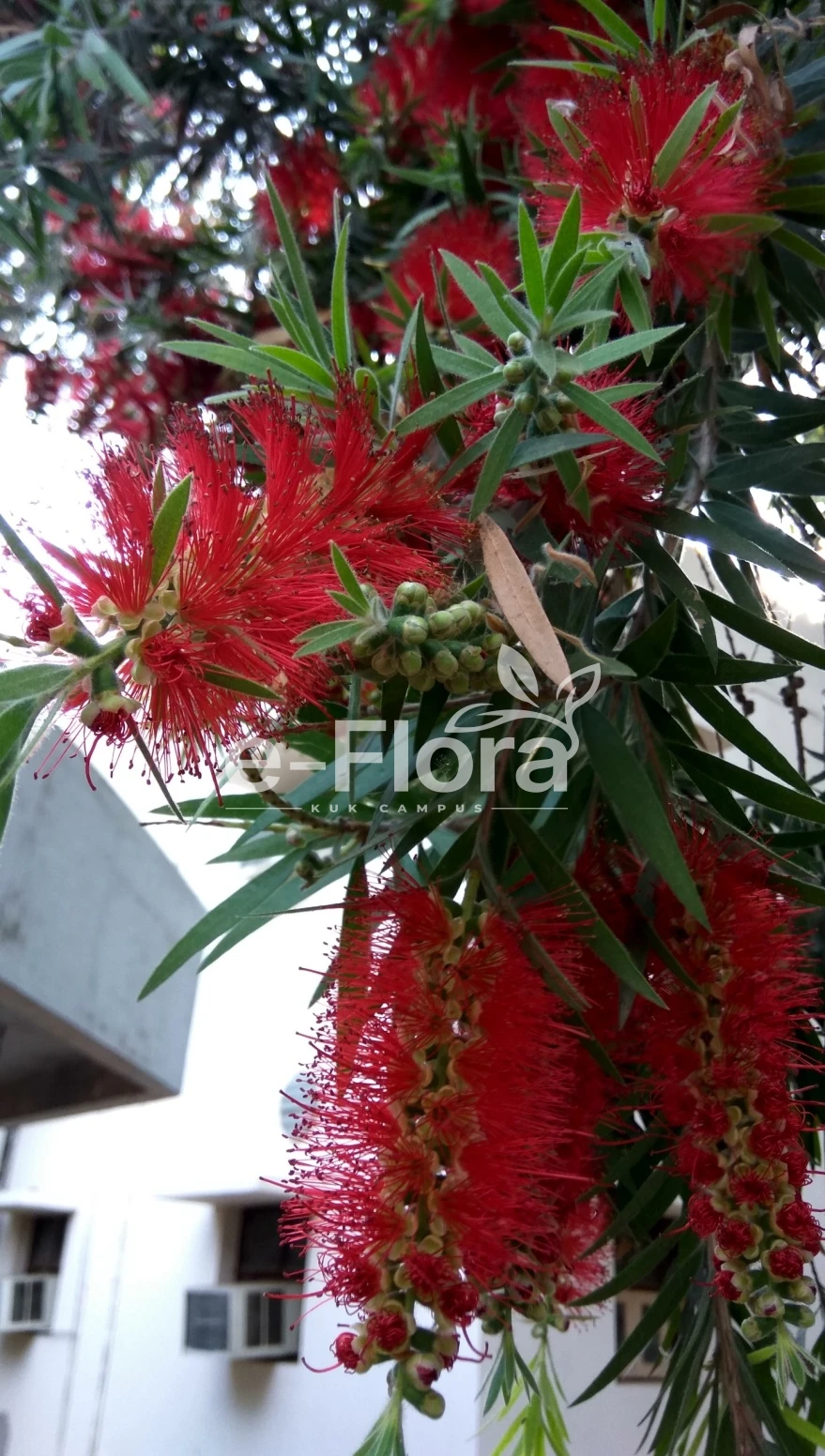
Flowers: Terminal dense spikes (spicate-cylindrical inflorescence, bottlebrush-like); crimson red stamens 4–10 cm long, 50–100 per flower, tubular hypanthium.
Fruit: Capsule
Uses:
- Callistemon citrinus is regarded as a synonym of Melaleuca citrina, Callistemon lanceolatus is an older name.
- The herbicide Mesotrione was developed as a synthetic analogue of leptospermone, a natural herbicide produced by the roots of Callistemon citrinus.
- Volatile oils extracted from plant acts insect repellent.
- Essential oils extracted from this plant has antibacterial and antifungal properties.
- It is a popular streetscape and roadside plant.
- Its nector rich and bright red flowers attracts a variety of birds, bees and butterflies.
- Crimson brush like flowers has long shelf life in water, so used as cut flowers.
- Plant is commercially used in honey production.
- Plant leaves when crushed, releases a citrus like aroma.
- Leaves are used in folk remedies to treat colds, cough and bronchitis.
- Different parts of plant are used to prepare traditional medicines for dysentery, diarrhea and rheumatism.
- Plant is under research for its cancer preventing properties.