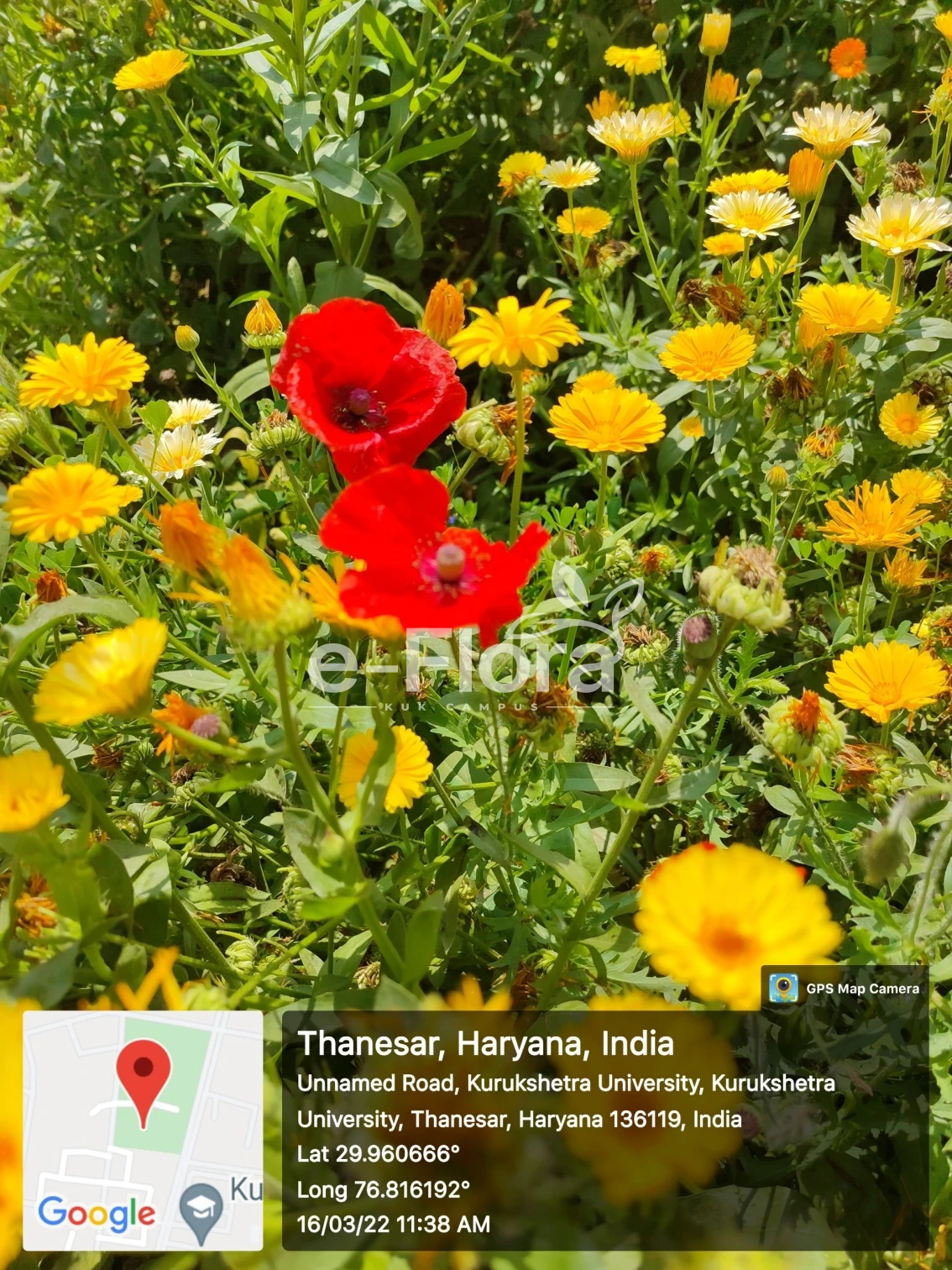
Papaver rhoeas L.
Vernacular name: Common poppy, Corn poppy, Flanders poppy (Hindi: पोस्ता)
Species Name: Papaver rhoeas L.
Family: Papaveraceae
Habit: Annual erect herb
Stem: Branched bristly-hairy 25-90 cm tall, terete with milky latex.
Leaf: Basal rosette and cauline, pinnatisect 5-15×2-5 cm, irregularly lobed with acute segments, glaucous.
Flowering: Late spring-early summer
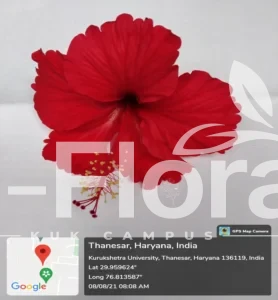
Flowers: Terminal solitary long-peduncled 5-10 cm diameter; calyx 2 ovate sepals 1-2 cm (soon caducous), 4 crumpled scarlet petals 2-5 cm with black basal blotch, numerous stamens (anthers yellow), flask-shaped ovary with 4-8 rayed stigma.
Fruit: Obovoid dehiscent capsule 1-2 cm, apical pores under stigmatic disc, numerous small seeds
Uses:
- It is an ornamental wildflower that is also a remembrance symbol (WWI Flanders fields).
- Traditionally syrups are made from petals that help to ease coughing, sore throats, treatment of bronchial issues and promote relaxation without addiction tendencies.
- Ayurveda uses this plant to manage Vata (nervous tensions) and Kapha (mucus).
- Petals are used to derive alkaloid rhoeadine, used as sedative to reduces stress and calm nerve and anxiety without causing any addictions,
- Plant helps to ease minor aches and irritations owing to anti-inflammatory and antioxidant property of flavonoids and anthocyanins.
- Natural food colouring and teas are prepared from bright petals of plant. Seeds are used in Mediterranean baking and leaves can be eaten in salads.
- Petals yield a traditional red dye, used in textile and paper industries.
- Seeds can be mildly toxic due to presence of alkaloids.
- Greek word “rhoeas” means cornfield poppy, also known as Victorian “sleep flower”; and is a WWII emblem.