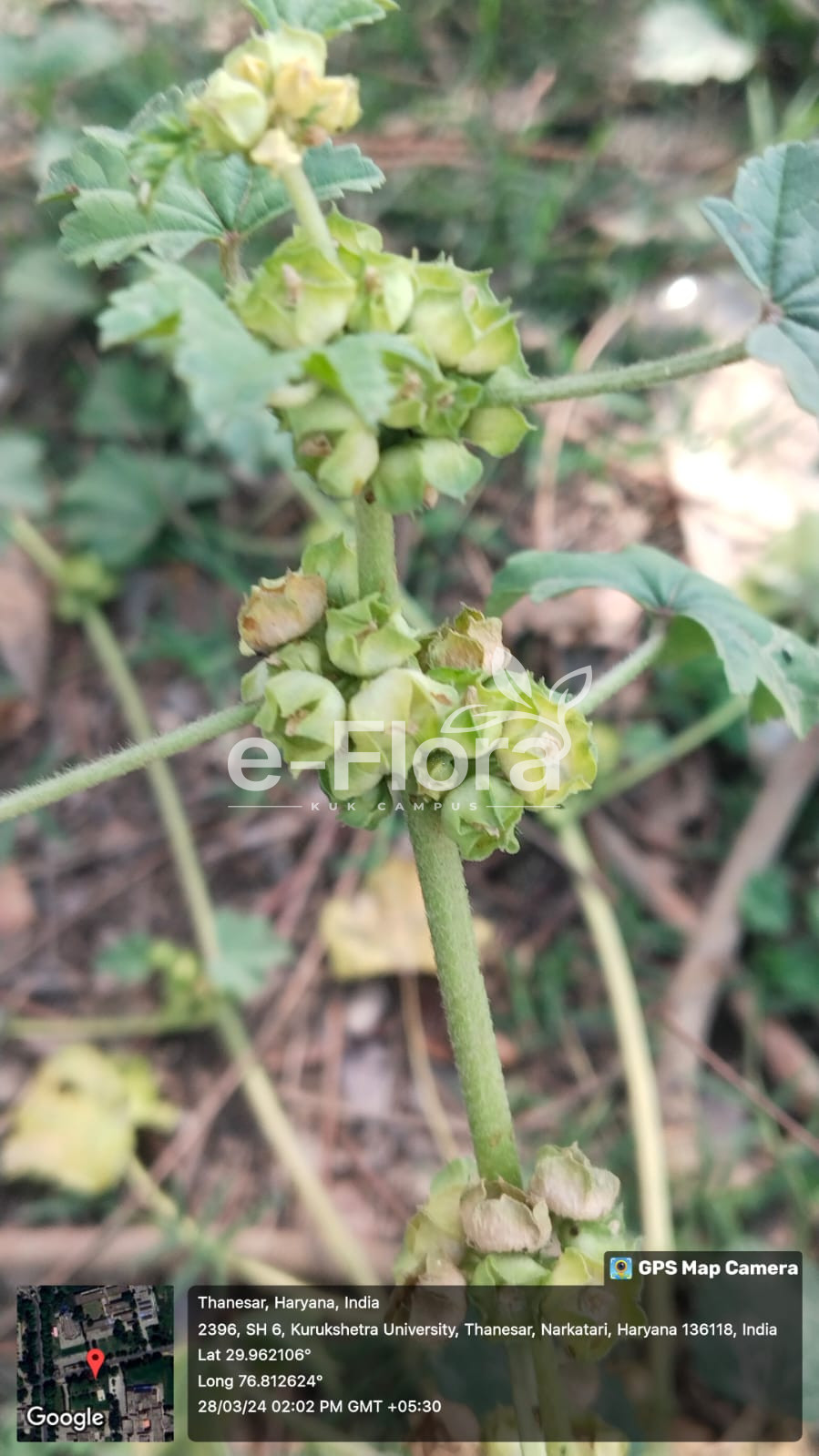
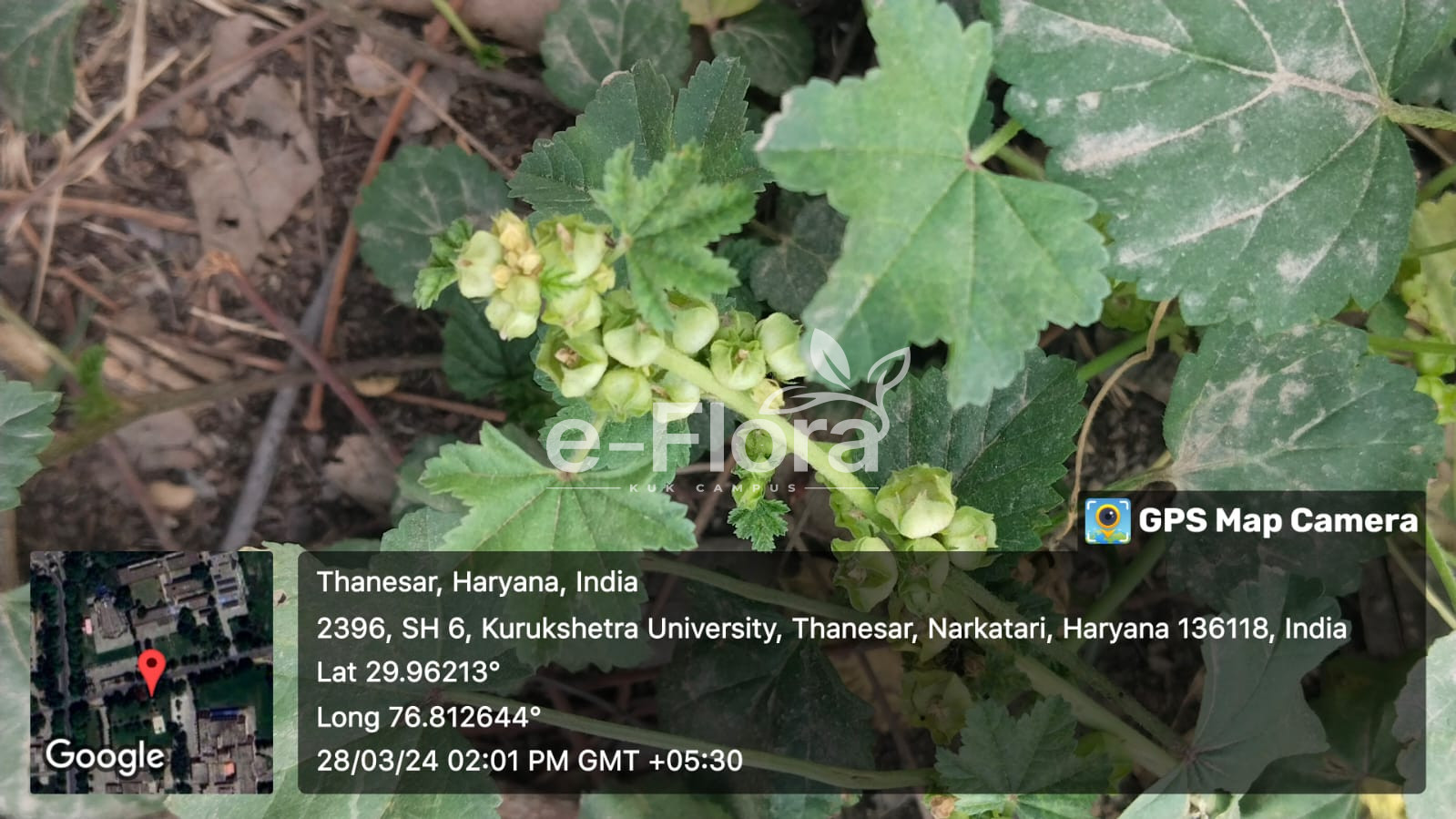
Malva parviflora L.
Vernacular names: Small-flowered mallow, Least mallow; Gogi-sag, Narr (Marathi)
Species Name: Malva parviflora L.
Family: Malvaceae
Habit: Annual herb, usually erect to spreading and branched; commonly occurs as a weed of cultivation.
Stem: Slender, cylindrical, branched and generally hairy or velvety.
Leaf: Leaves alternate, simple, long-petiolate, broadly rounded to ovate, shallowly 5–7-lobed, with crenate or toothed margins. The leaves are typically somewhat rough/hairy.
Flowering: October–March
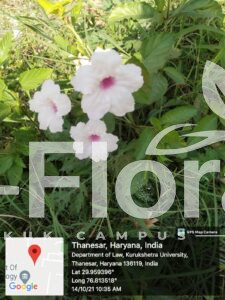
Flowers: Occur singly or in small axillary clusters rather than in a large terminal inflorescence. Small, usually white to pale pink/lilac, 5-petalled and actinomorphic. Numerous stamens are united into the characteristic staminal column surrounding the style.
Fruit: A characteristic schizocarp consisting of several wedge-shaped mericarps arranged in a circular disc. The fruit becomes green and then brown at maturity.
Uses:
- Warm poultices are made from crushed leaves and used for topical application to treat and soothe swellings, boils, bruises and infected purulent wounds.
- Folk remedies uses infusions of the plant to treat gastritis, mild constipation and stomach aches.
- Leaves and other plant parts are brewed into herbal teas that are consumed to help ease cold, cough, sore throats and bronchitis.
- Leaves and roots decoctions are used as softening hair wash, soothing skin moisturizer and to eliminate dandruff.
- Young tender leaves are consumed as raw in salads or cooked as leafy vegetables or potherbs for its mild and pleasant taste. Fruits can be eaten raw or added in dishes for its nutty flavour.
- A gelatinous mucilage is present in leaves and seeds that acts as a thickening agent for various dishes, soups and stews.
- Plant parts and seed heads are processed to yield cream, yellow and green-coloured dyes.
- Seeds are processed to extract a fatty oil.
- It’s a weed of agriculture, when growing well can be seen as as indicator of fertile soil.