
Pandanus odorifer (Forssk.) Kuntze
Vernacular name: Fragrant screw pine, Kewda, Ketaki (Hindi: केवड़ा)
Species Name: Pandanus odorifer (Forssk.) Kuntze
Family: Pandanaceae
Habit: Branched dioecious shrub/tree
Stem: Flexuous trunk 3-9 m tall, supported by prop roots, pale grey bark.
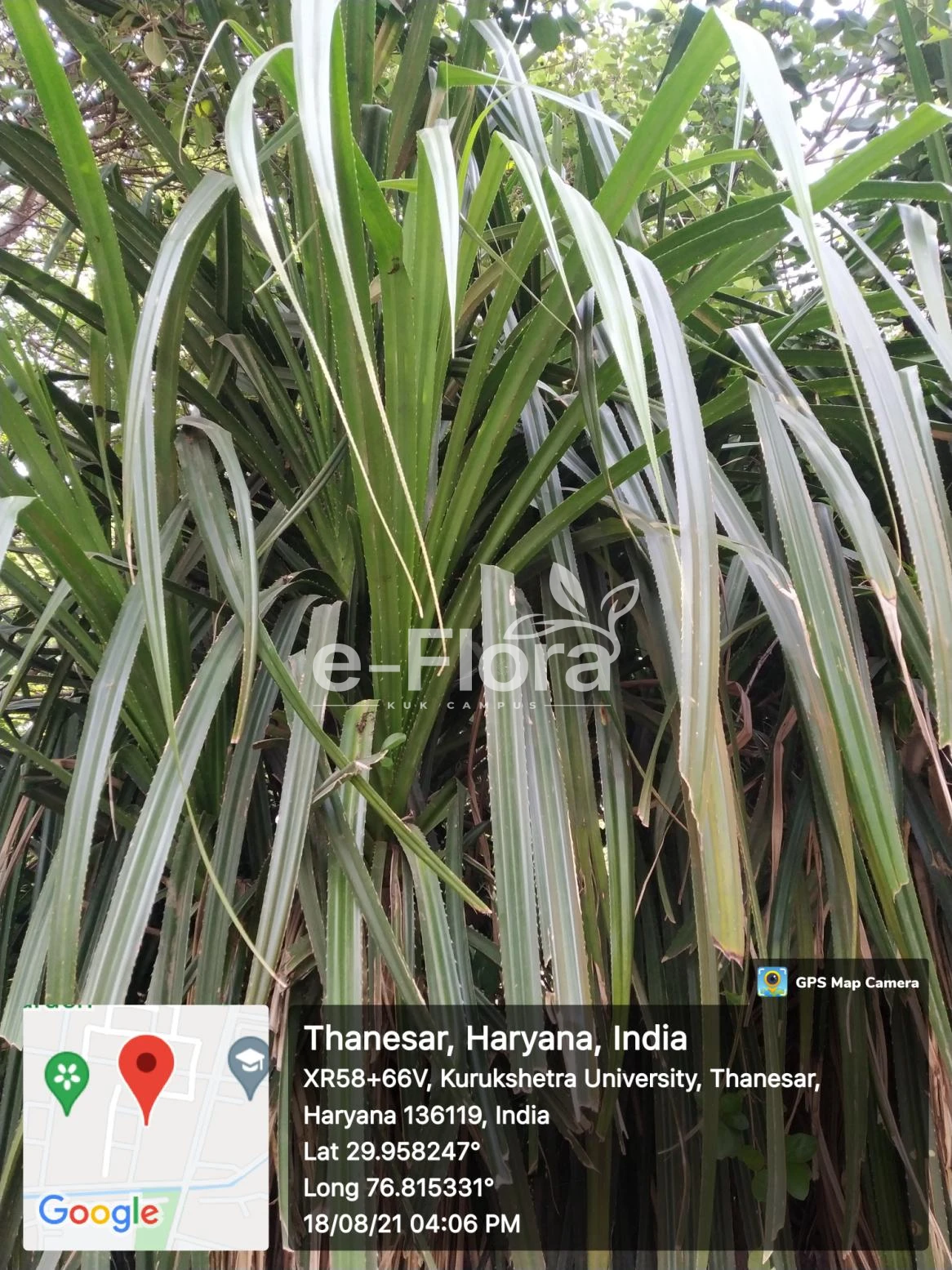
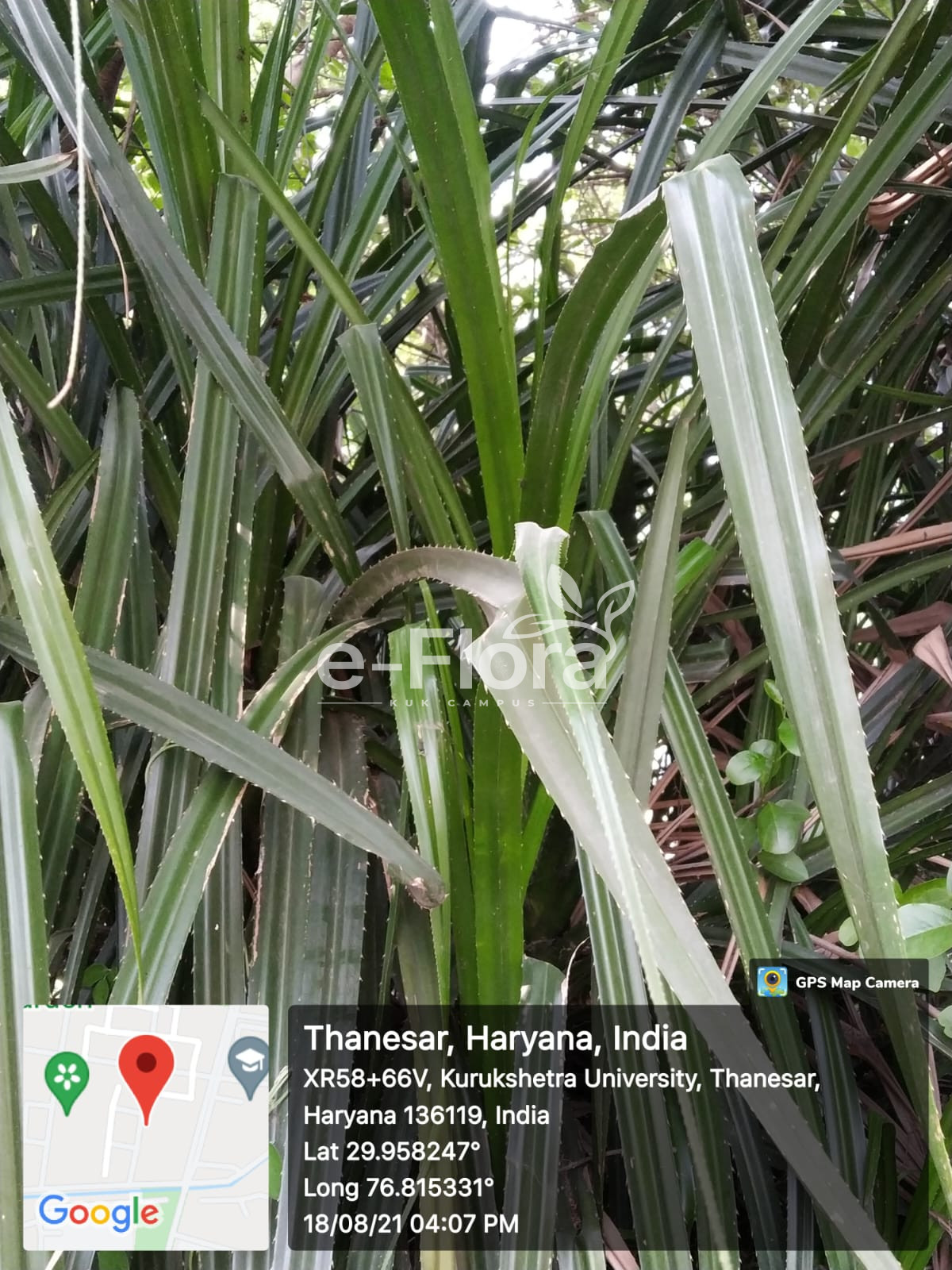
Leaf: Rosettes at branch ends, linear sword-shaped, glaucous bluish-green, spiny margins/toothed apex.
Flowering: Summer
Flowers: Male inflorescences sweetly fragrant (wrapped for market); branched spadices; tepals 3 lanceolate, numerous stamens (anthers linear); female globose heads with free carpels.
Fruit: Syncarp, orange-red angular drupes in spherical head.
Uses:
- Various parts of plants in Ayurveda is used in treatment of headaches, spasms, rheumatism and skin diseases.
- Root acts as diuretic, depurative and general tonic.
- Herbal oils (Ketakyadi Rasayana) and extracts are used to soothe scalp and promote healthy hair follicle.
- Leaves are used for thatching and weaving cordage, baskets and mats while roots are used for binding.
- Fruit is edible and shoots can be eaten similar to bamboo shoots.
- In South India, kewda water is used for flavoring of beverages, paan and desserts (rasgulla and biryani).
- Male flowers yield perfume while essential oils are used to make attar, kewda water.
- Plant is used as scenting agent in lotions, soaps, hair oils and incense sticks.
- It is used as scented temple offering; “male-female” plant pair in mythology and acts as a coastal stabilizer.