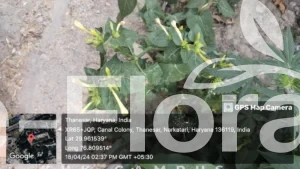

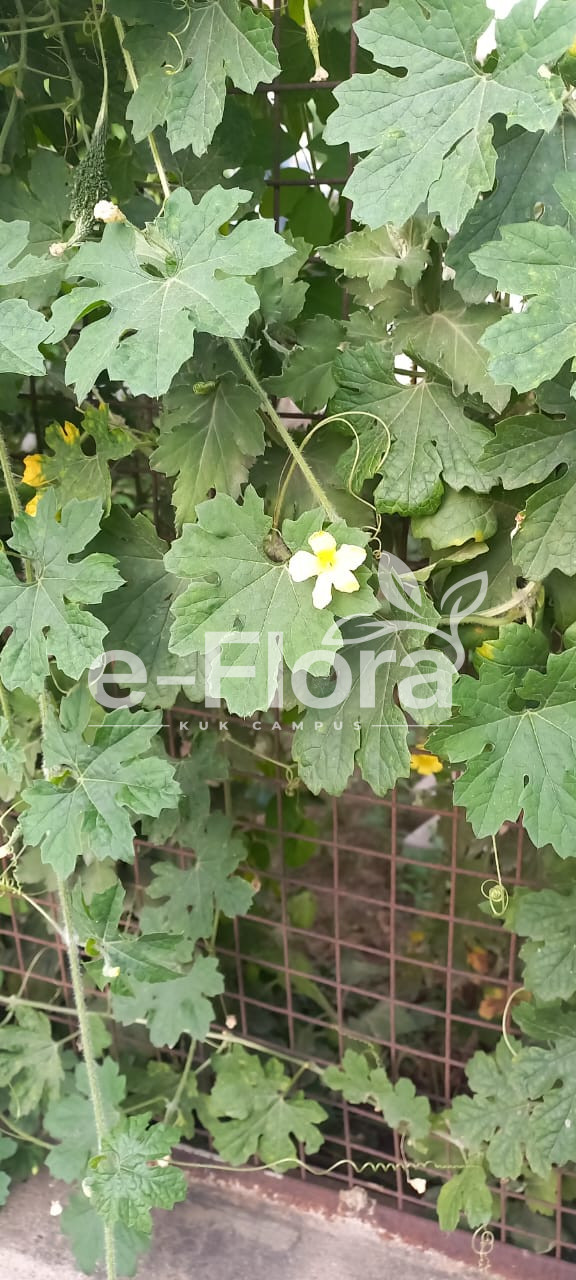
Momordica charantia L.
Vernacular name: Bitter Gourd, Bitter Melon, Karela (Hindi: करेला)
Species Name: Momordica charantia L.
Family: Cucurbitaceae
Habit: Annual climbing herbaceous vine.
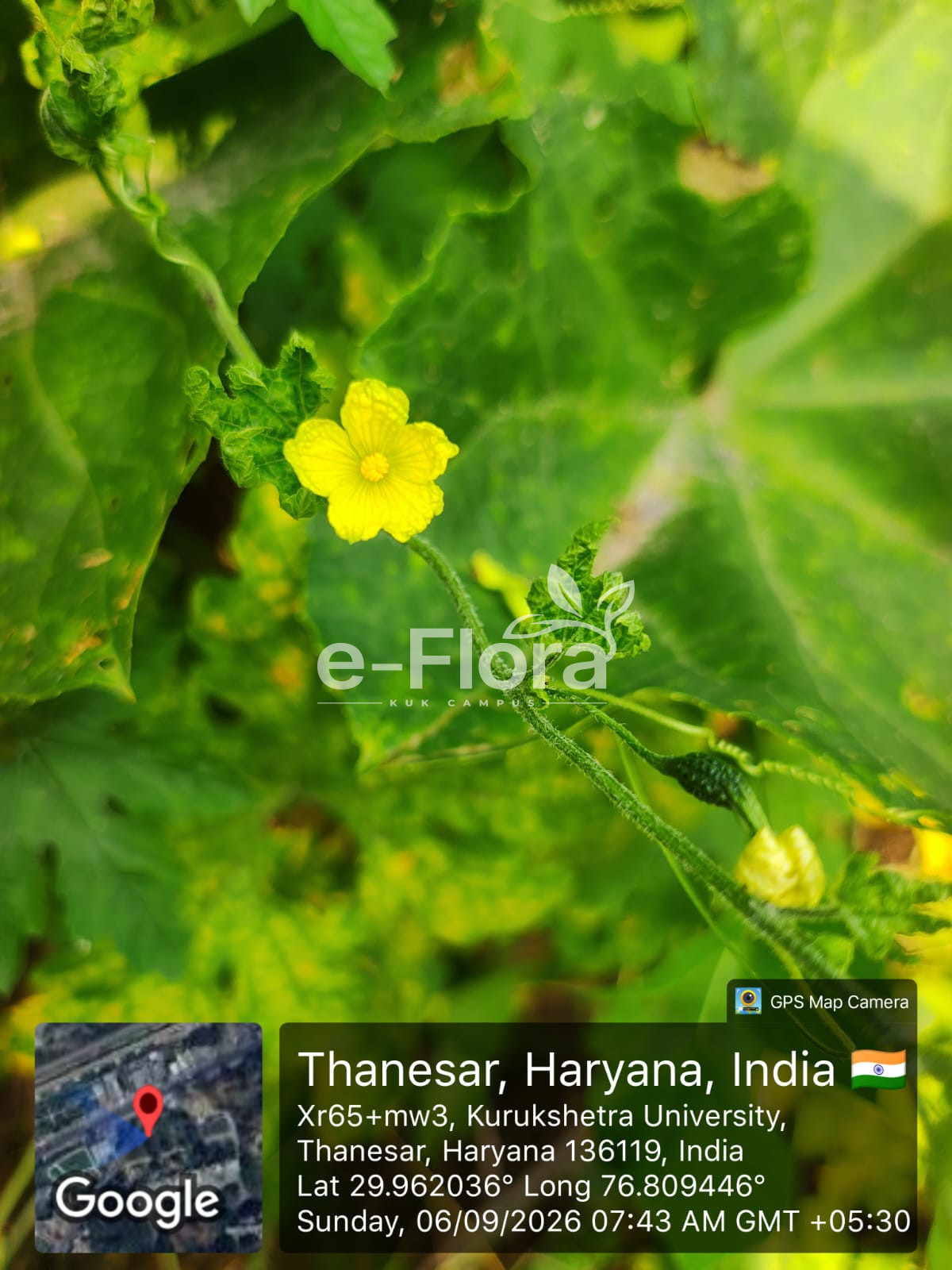
Stem: Slender, angular, branched, pubescent; climbs by simple, unbranched tendrils.
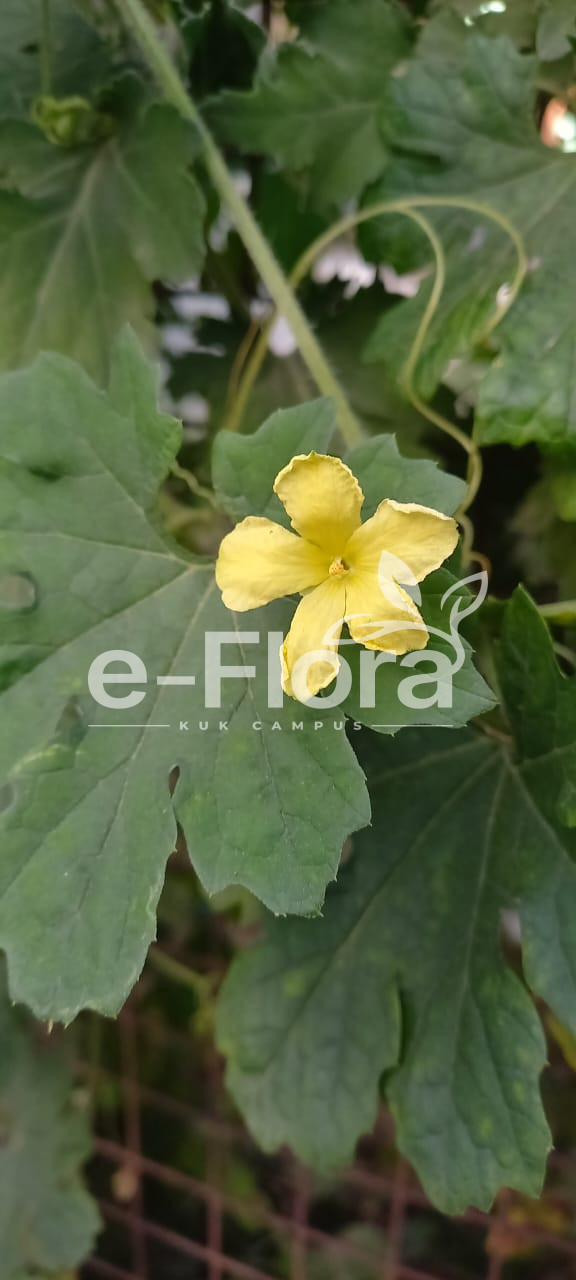
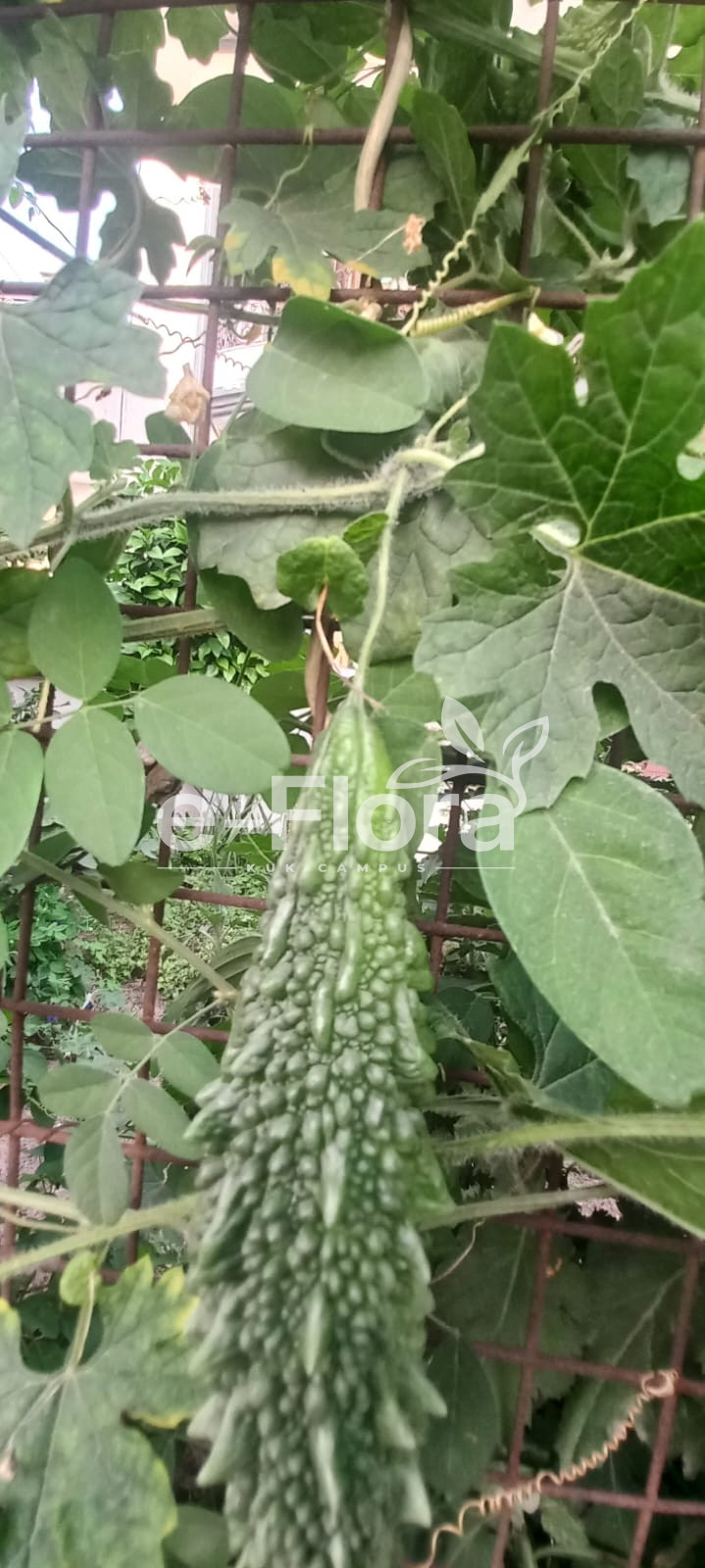
Leaf: Alternate, broadly ovate to orbicular, 1–10 × 1–12.5 cm, deeply palmately 3–7-lobed, margins sinuate-dentate, petiolate.
Flowering: Mainly summer–rainy season.
Flowers: Unisexual, yellow, axillary; male flowers solitary with 5 free stamens, female flowers solitary with an inferior ovary and 3-branched stigma; both borne on the same plant.
Fruit: Fleshy, oblong-fusiform berry, strongly tuberculate, green turning yellow-orange at maturity; opens irregularly when ripe, exposing bright red pulp surrounding numerous seeds.
Uses:
- Folk medicines uses plants for its antibacterial, anti-parasitic and antiviral properties.
- Various preparations from leaves and fruits of plant is tropically applied to speed up healing of ulcers and skin wounds.
- Traditional systems uses this plant to aid digestion and treat intestinal colics due to its carminative and mild laxative properties.
- Presence of bioactive compounds like polypeptide-p (plant insulin) and charantin in plant helps with the regulation of blood glucose levels and improve insulin sensitivity.
- Extracts and juice consumption of bitter gourd helps with the reduction of bad cholesterol and better regulation of lipid metabolism that can directly manage obesity.
- Immature fruits are widely eaten as a vegetable and used in curries, pickles, and other preparations. Young shoots and leaves are also consumed as greens in some regions.