Kigelia africana (Lam.) Benth.
Vernacular name: Sausage Tree (Hindi: सॉसेज वृक्ष)
Species Name: Kigelia africana (Lam.) Benth.
Family: Bignoniaceae
Habit: Medium to large deciduous tree.
Stem: Straight trunk 10–20 m tall; bark grey to brown, smooth when young, becoming rough and fissured with age; crown broad and spreading.
Leaf: Opposite to whorled, imparipinnate, 20–50 cm long; leaflets 3–9, elliptic to ovate, 6–20 × 3–8 cm, entire, glabrous to sparsely pubescent.
Flowering: Spring–summer (often irregular in tropical climates).
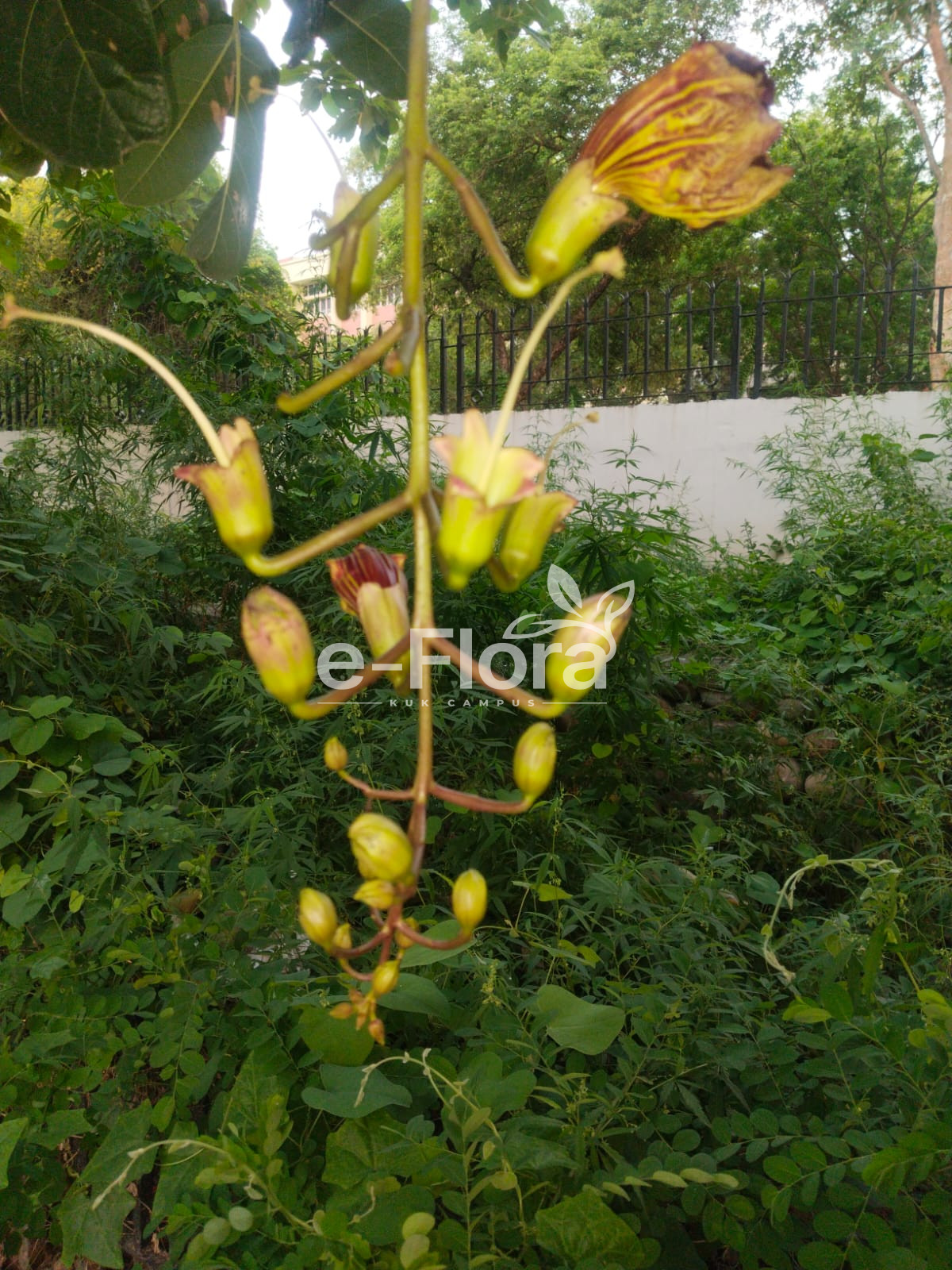
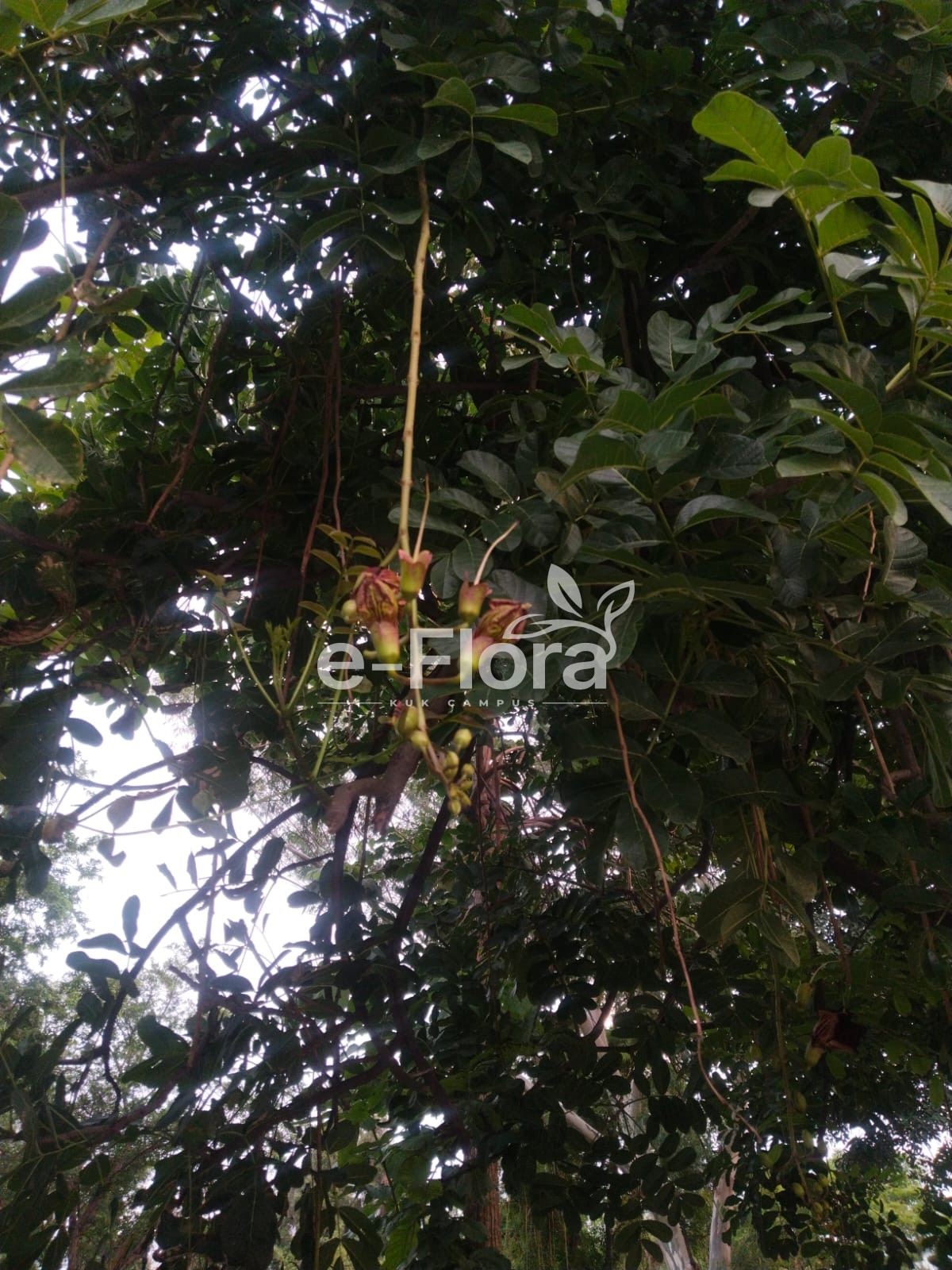
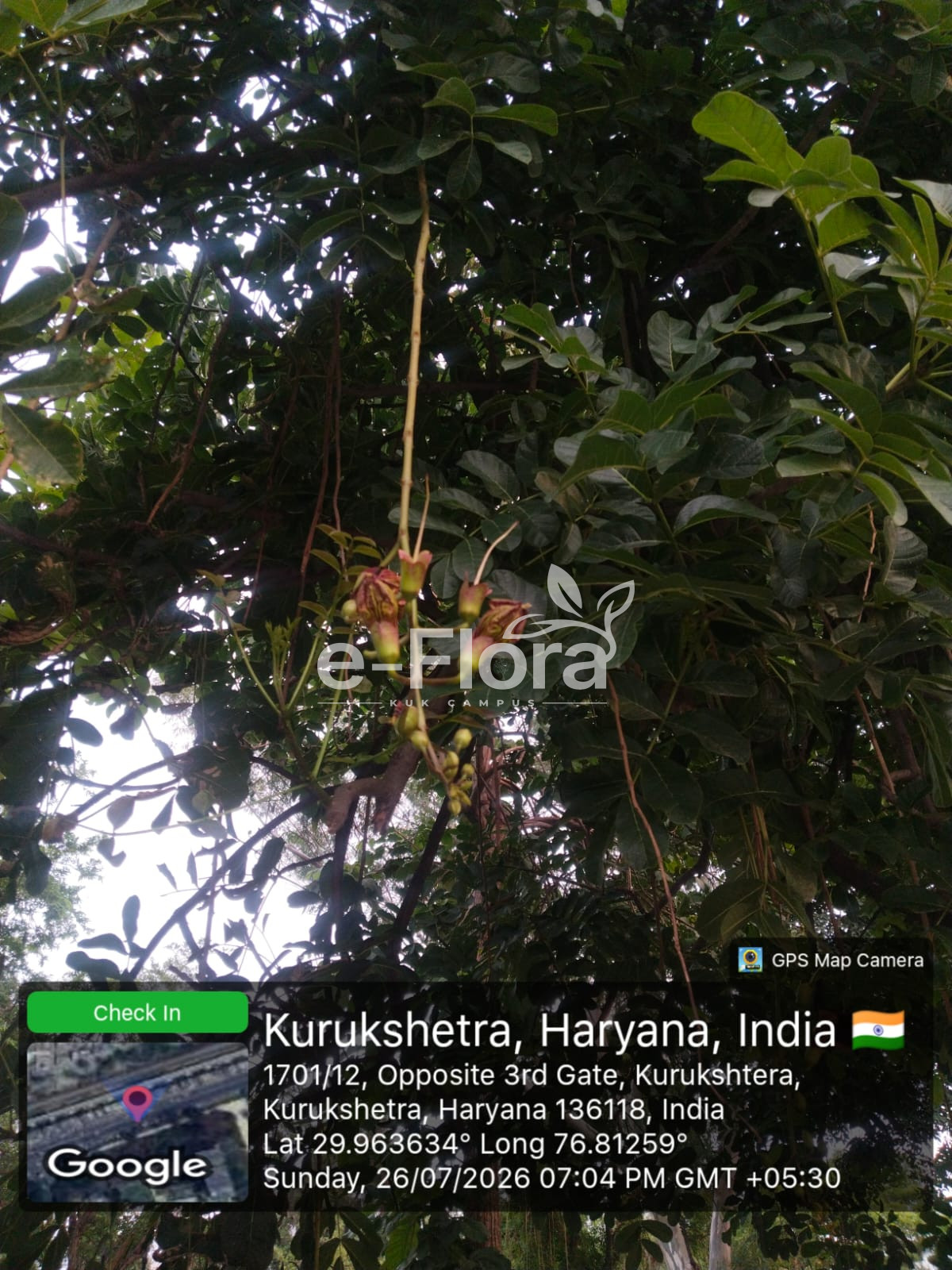
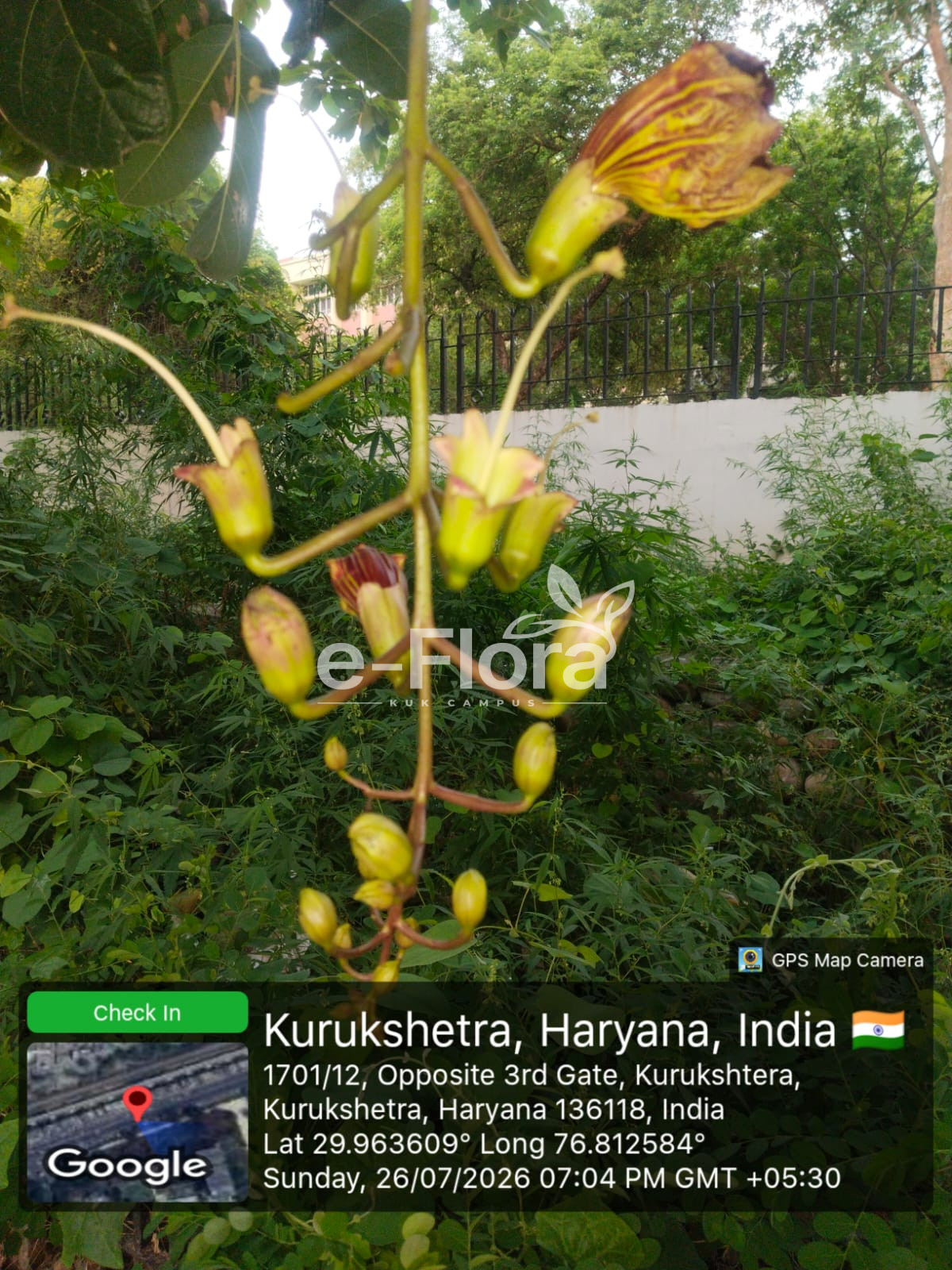
Flowers: Large, pendulous, dark maroon to reddish-purple with yellow veins, campanulate, borne in long hanging racemes; corolla 5-lobed; stamens 4, didynamous; ovary superior, bicarpellary.
Fruit: Large, pendulous, cylindrical, woody berry, 30–100 cm long, grey-brown at maturity, containing numerous seeds embedded in fibrous pulp.
Uses:
- Widely cultivated as an ornamental avenue tree for its striking flowers and distinctive sausage-shaped fruits, though the raw fruits are generally not edible.
- Fruits, bark, and leaves are extensively used in traditional African medicine for skin disorders, wounds, rheumatism, and infection treatments.
- Fruit and bark decoctions are used as salves to soothe rheumatism, joint pain, sprains and bruising.
- Mouth gargles or washes made by boiling bark of this tree can help to relieve tooth and gum aches.
- Folk remedies uses different part of this plant to treat low libido, gynecological problems and male sexual health issues.
- Tropical application of crushed fruits, bark and leaves helps with the healing of fungal infection, boils, ulcers, ringworms and open sores.
- Extracts of different parts of this plant have anti-aging and firming properties, making it a versatile component for skin care and cosmetic industries, that prepare creams and serums using these extracts to soothe skin irritation, reduce inflammations and improve elasticity.
- Traditional medicines uses poultice of fruit and leaves to treat sun-burn or heat rash affected skins.
- Wood is tough and used in manufacturing of boxes, shelves and canoes.
- In East and Southern Africa, roasted fruit is used to brew beer traditionally.
- Roots can be used to yield a brilliant yellow coloured dye that can be used in textile and paper industry.