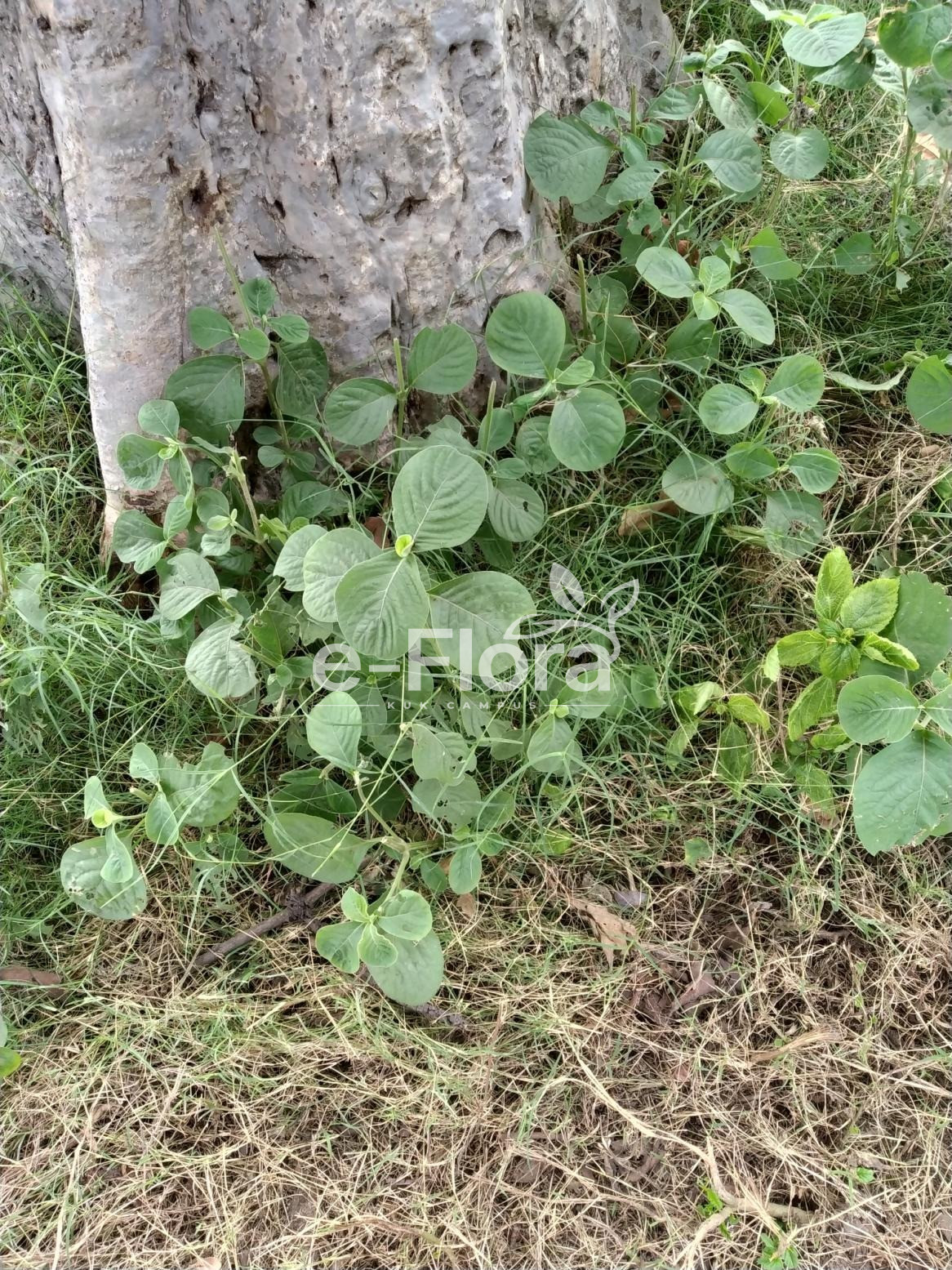
Achyranthes aspera L.
Vernacular name: Prickly chaff flower, Devil’s horsewhip, Apamarga (Hindi: अपमर्ग)
Species Name: Achyranthes aspera L.
Family: Amaranthaceae
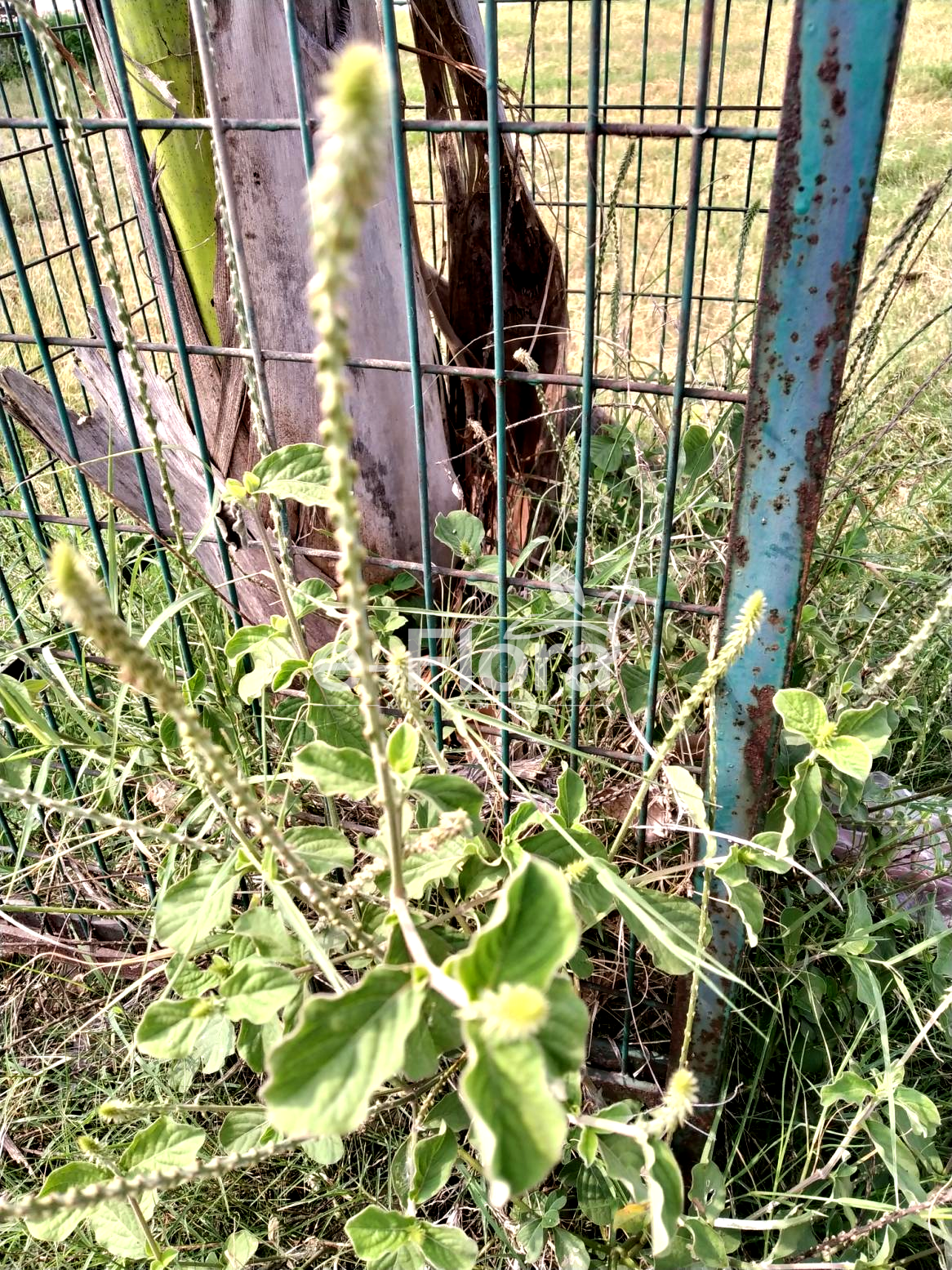
Habit: Erect annual or short-lived perennial herb
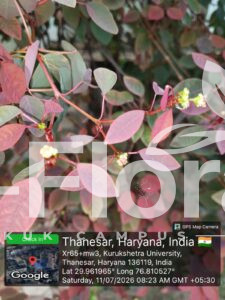
Stem: Sturdy, ribbed, 30-120 cm tall, often reddish, pubescent.
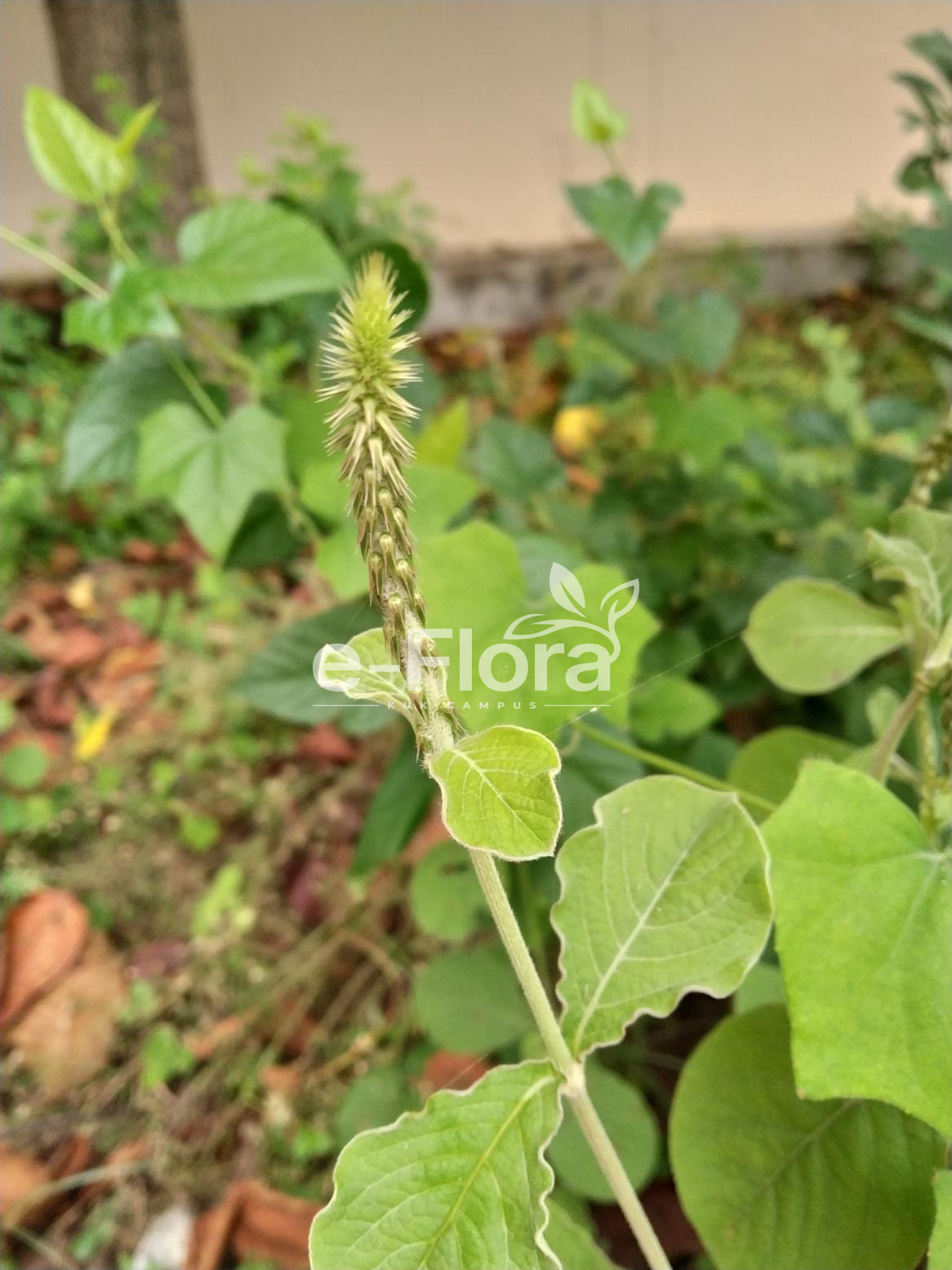
Leaf: Opposite, lanceolate-elliptic, 3-12 cm long, acute tip.
Flowering: August–December
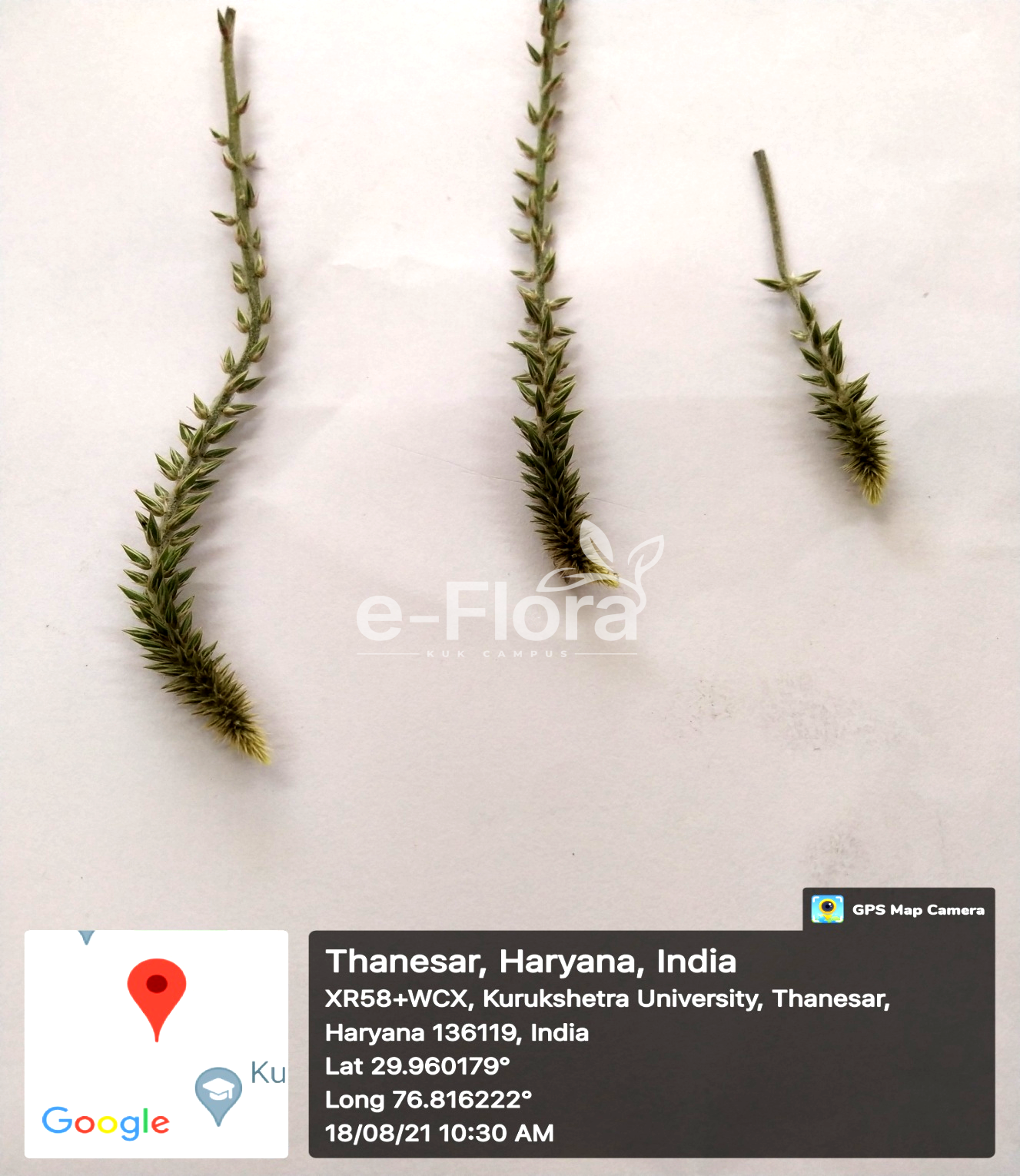
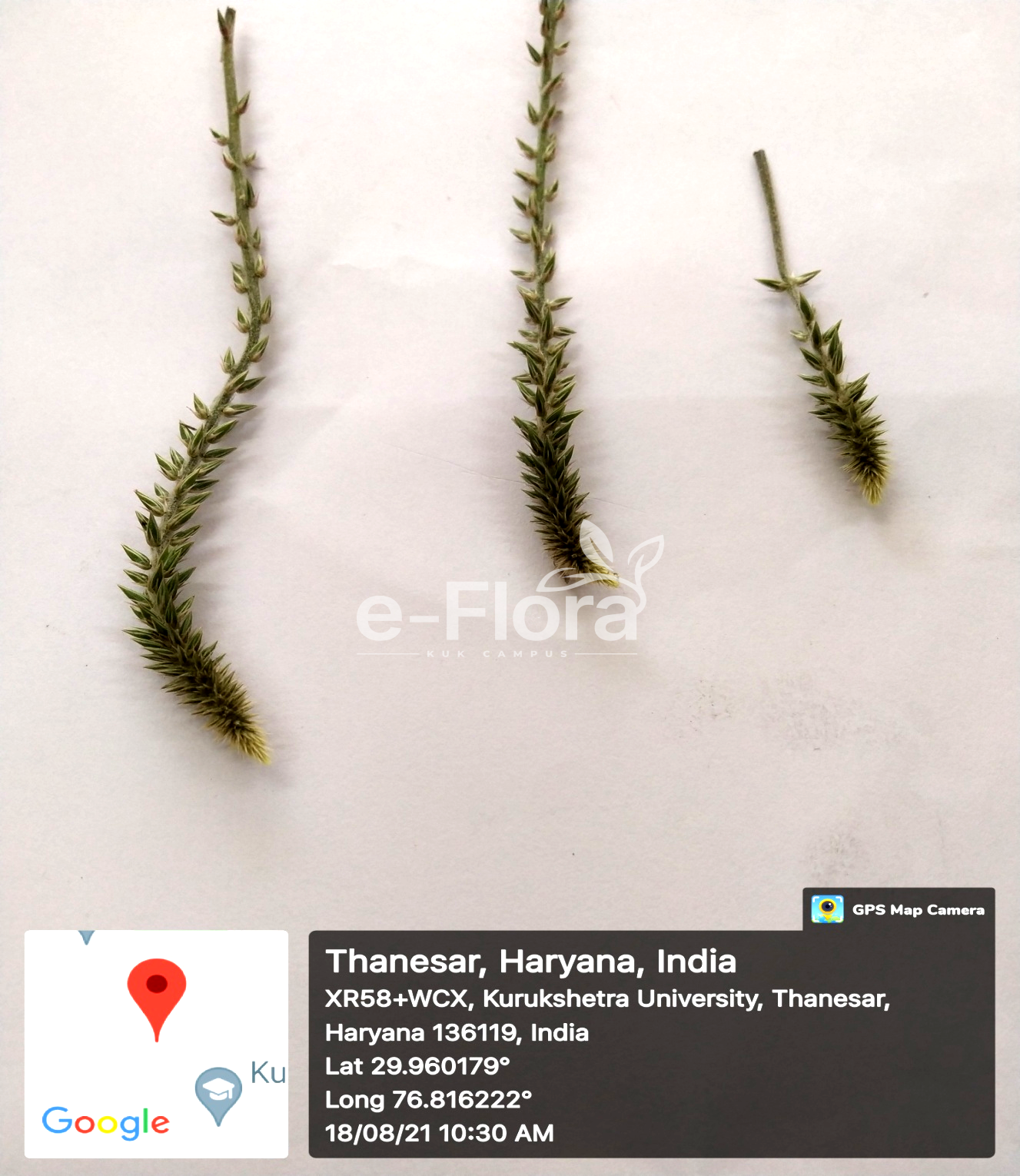
Flowers: Long axillary pedunculate spikes 7-25 cm (spicate inflorescence – sessile unisexual flowers in continuous spike); greenish-white, bracteolate, unisexual.
Fruit: Utricle enclosed in persistent perianth, 2 mm long.
Uses:
- It is very useful in dropsy, piles, boils and for colic in children.
- Different parts of the plant are ingredients in many native prescriptions in combination with more active remedies. In Western India the juice is applied to relieve toothache. The ashes with honey are given to relieve cough; the root in dosed of one tola is given at bedtime for night blindness, and rubbed into a paste with water it is used as an anjan (eye salve) in opacities of the cornea. The seeds are often used as a famine food in India, especially in Rajputana, where the plant is called Bharotha (grass).
- In Atharvaveda, it is said to be kshetriya roga nasak and yatudhan Krimi nasak. In Yajurveda it is said to be used for hawan purpose due to its Rakshoghan Property.
- According to the Black Yajurveda, Indra, having killed Vritra and other demons was overcome by Namuchi and made peace with him, promising never to kill him with any solid or liquid, neither by day or by night. But Indra collected some foam, which is neither solid nor liquid, and killed Namuchi in the morning between night and daybreak. From the head of the demon sprung the herb Apamarga, with the assistance of which Indra was able to kill all demons. Hence this plant has the reputation of being a powerful talisman, and is now popularly supposed to act as a safeguard against scorpions and snakes by paralysing them.