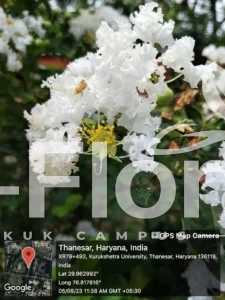
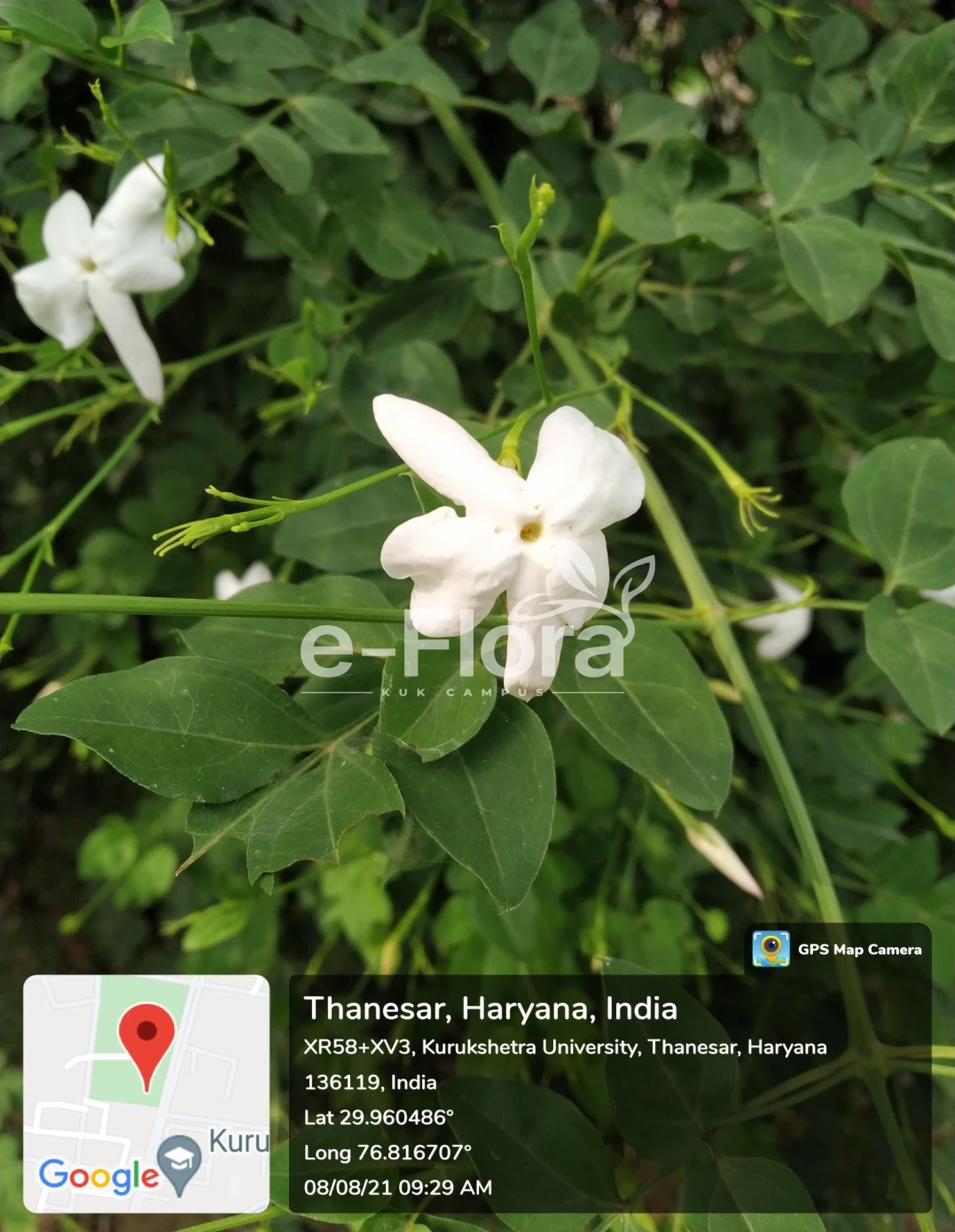
Jasminum grandiflorum (L.)
Vernacular name: Royal Jasmine
Species Name: Jasminum grandiflorum L.
Family: Oleaceae
Habit: Shrub
Stem: Branchlets are round in cross-section
Leaf: Opposite, leaflets 3-7, the terminal one much larger than the rest, all ovate or lanceolate, acuminate
Flowering: May-June
Flowers: Terminal corymbs or cyme inflorescence, bisexual flowers, White, fragrant, Calyx tube 2-5 mm long, lobes 5, Corolla tube 12-16 mm long, lobes about as long, ovate or elliptic
Fruit: Berry, full of crimson juice
Uses:
- It is popular as an alternative to standard western allopathic medicine for a variety of problems, including cancer (specially of the bone, lymph nodes and breast), stress relief, anxiety as well as depression.
- The root is said to be used in the treatment of ringworm.
- The leaves are chewed for relief in cases of ulceration of the mucous membrane of the mouth.
- Fresh juice of leaves is used as an application for corns.
- An oil preparation containing the juice is used in otorrhea.
- The whole plant is considered to be anthelmintic, diuretic and emmenagogic.
- The scented oil and attar from flowers are valued for their cooling effect and used in skin diseases, headache and eye troubles.
- Essential oils of plant is used in cosmetic industry to prepare facial and hair oils, lotions, balms, soaps and luxury perfumes.
- In traditional remedies, extracted oils are used to treat hair loss and promote scalp health.
- Chewing leaves of this plant helps with gingivitis, toothaches and aphthous ulcers.