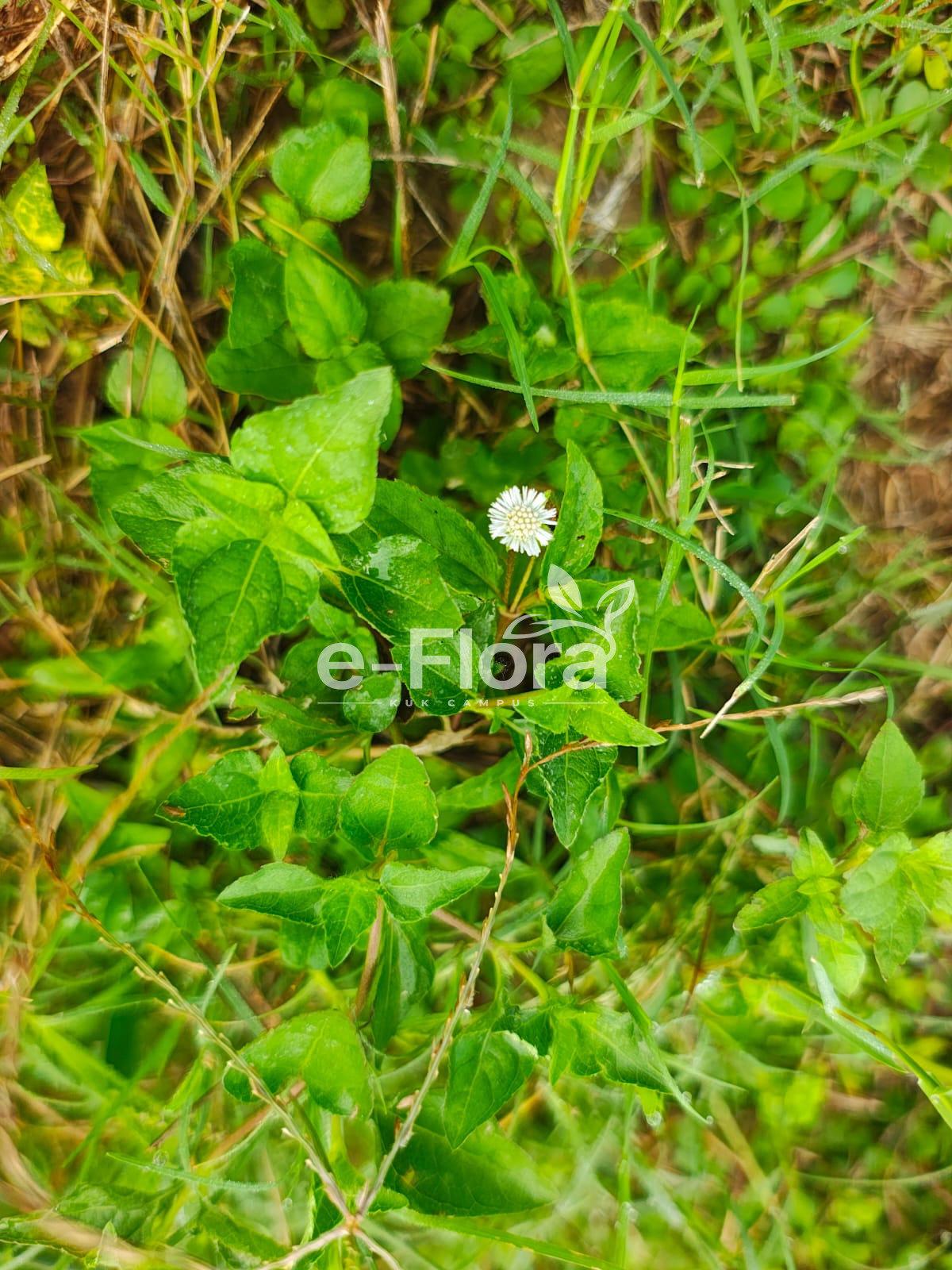
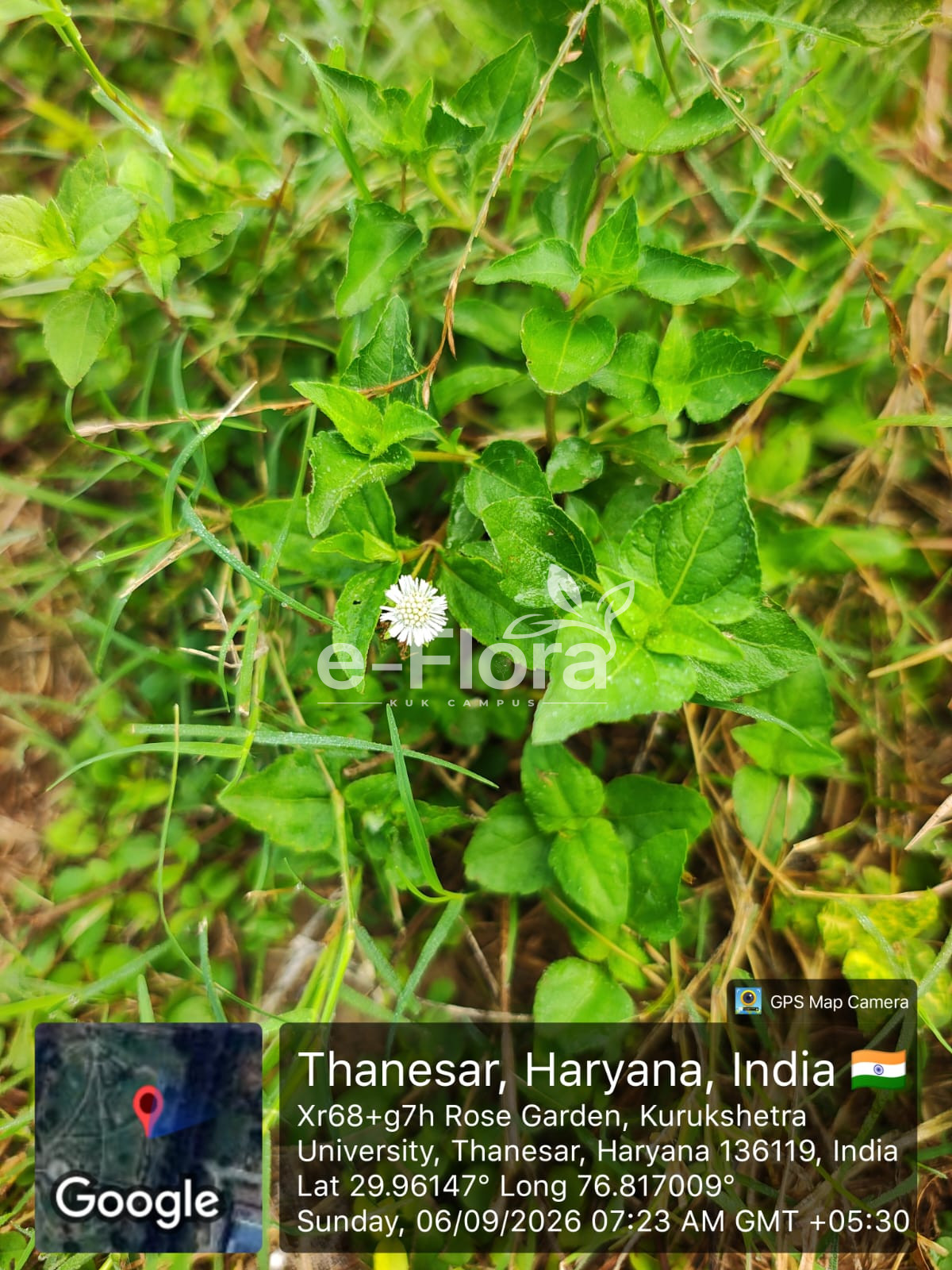
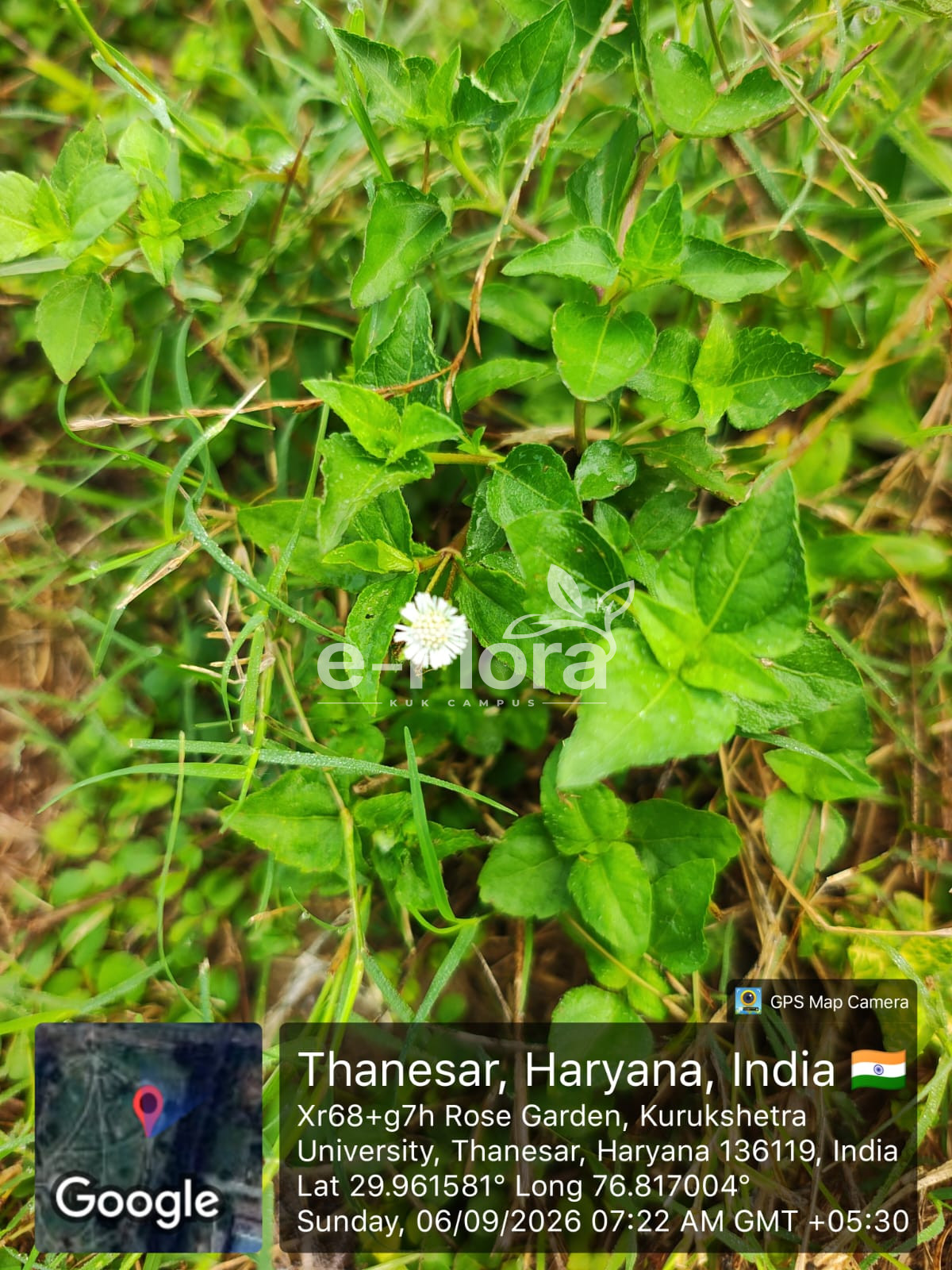
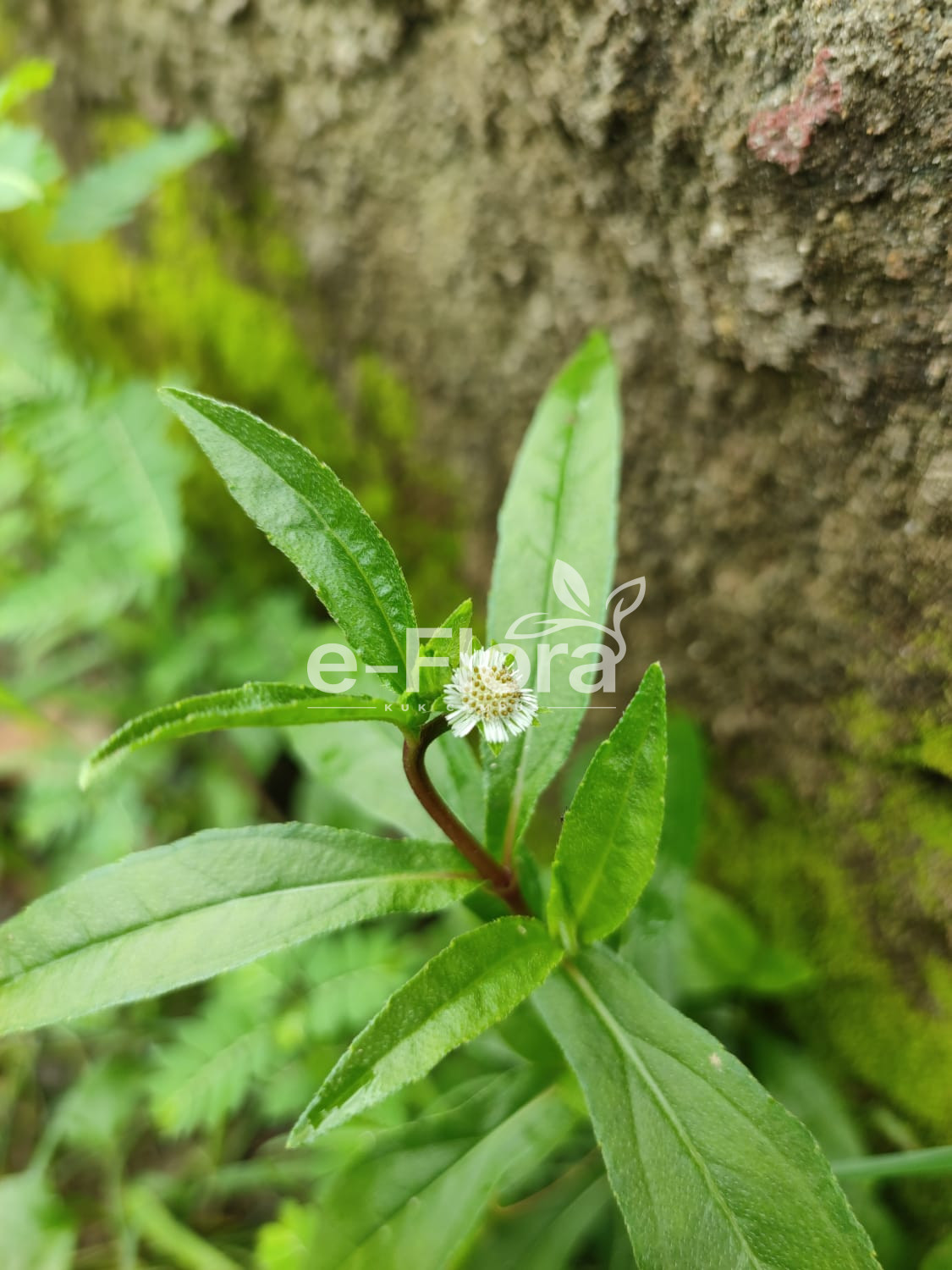
Eclipta prostrata (L.) L.
Vernacular name: Bhringraj, False Daisy (Hindi: भृंगराज)
Species Name: Eclipta prostrata (L.) L.
Family: Asteraceae
Habit: Annual to short-lived perennial herb.
Stem: Erect to prostrate, much-branched, green to reddish, cylindrical, rough and appressed-hairy, rooting at lower nodes.
Leaf: Opposite, sessile to short-petiolate, lanceolate to oblong, 3–10 × 1–3 cm, entire to slightly serrate, rough-pubescent.
Flowering: Throughout the year, mainly during the rainy season.
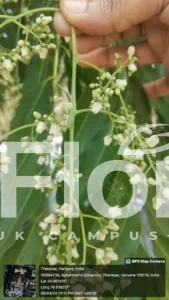
Flowers: Small, solitary or paired axillary/terminal capitula; ray florets white, female and ligulate; disc florets yellowish-white, bisexual and tubular; involucre in 1–2 series; ovary inferior.
Fruit: Flattened, blackish-brown cypsela, narrowly winged or wingless, without a pappus.
Uses:
- A major Ayurvedic herb, especially valued in hair oils and preparations traditionally used to support scalp health. The whole plant is also used traditionally for liver disorders, inflammation, skin diseases, and wound healing.
- Plant extracts are used as liver tonic in traditional practices to support liver health and to treat jaundice and hepatitis and to improve blood flow.
- Traditional medicines of Asia and South America uses this plant to check external and internal bleedings such as coughing blood or nosebleeds.
- Oils (Bhringraj oil) and extracts of plant are used to massage scalp to promote hair growth, prevent premature graying of hair and to reduce hair fall.
- Paste or juice of this herb is tropically applied to treat dermatitis, minor cuts, wounds, eczema and insect bites.
- Folk remedies uses extracts, pastes and juice of this plant to manage digestive issues, respiratory ailments like asthma and cough and snake bites as anti-venom.
- Bhringraj has cooling effect and used to alleviate tension and stress, calm mind and anxiety, support deep sleep and helps with smooth radiant skin.
- It is commonly found as a weed in moist places, agricultural fields, and along water bodies throughout India.