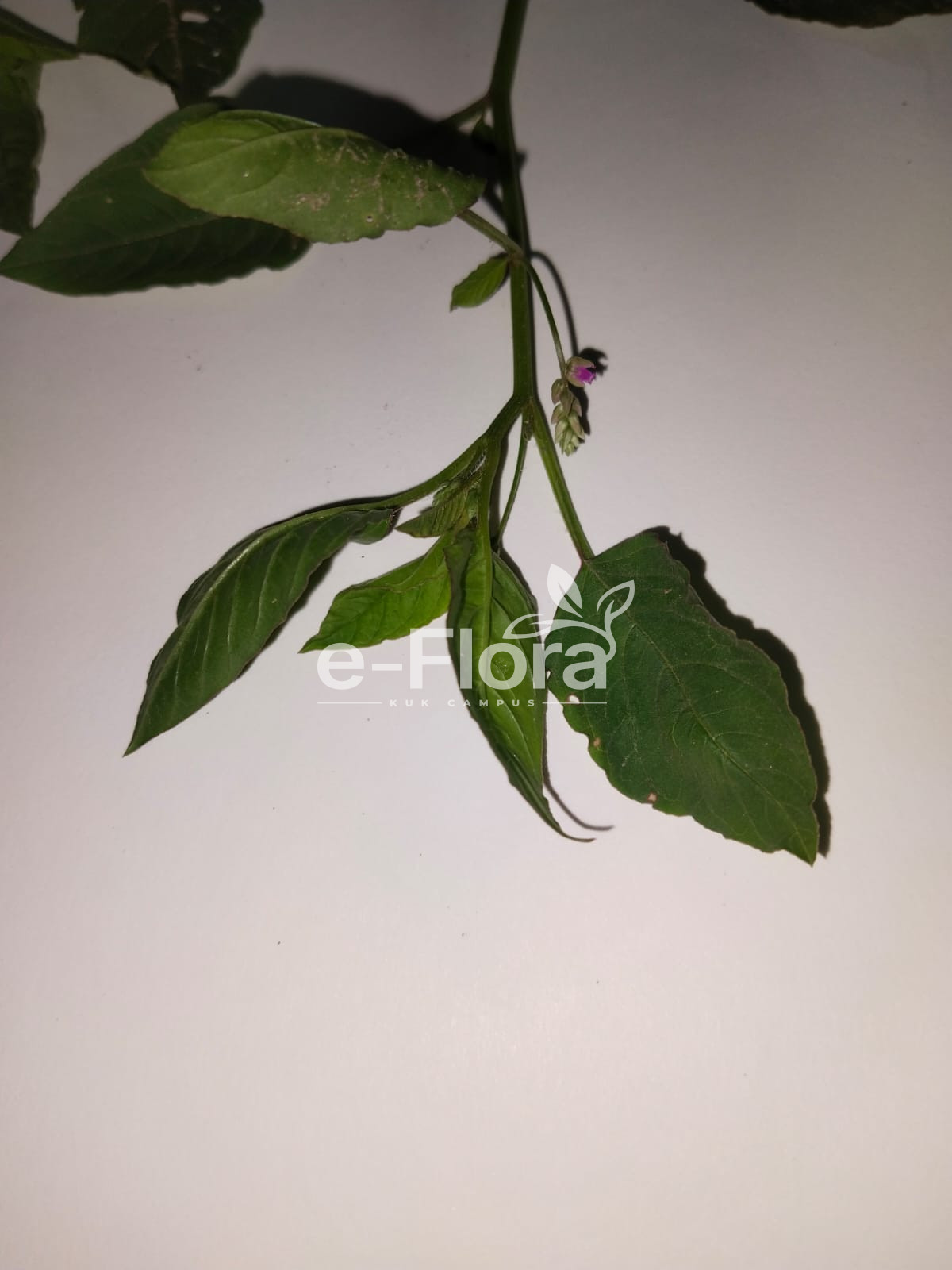
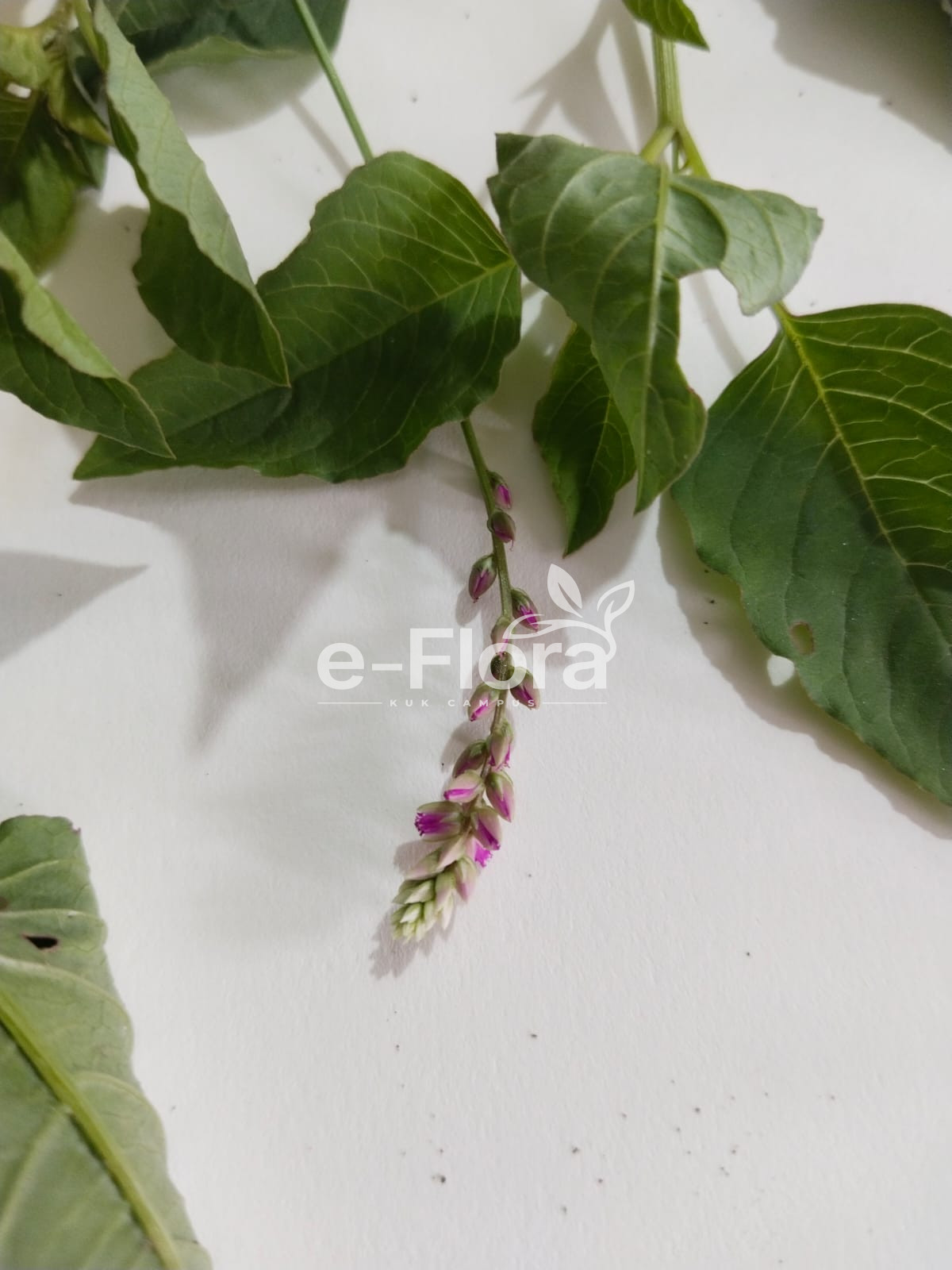
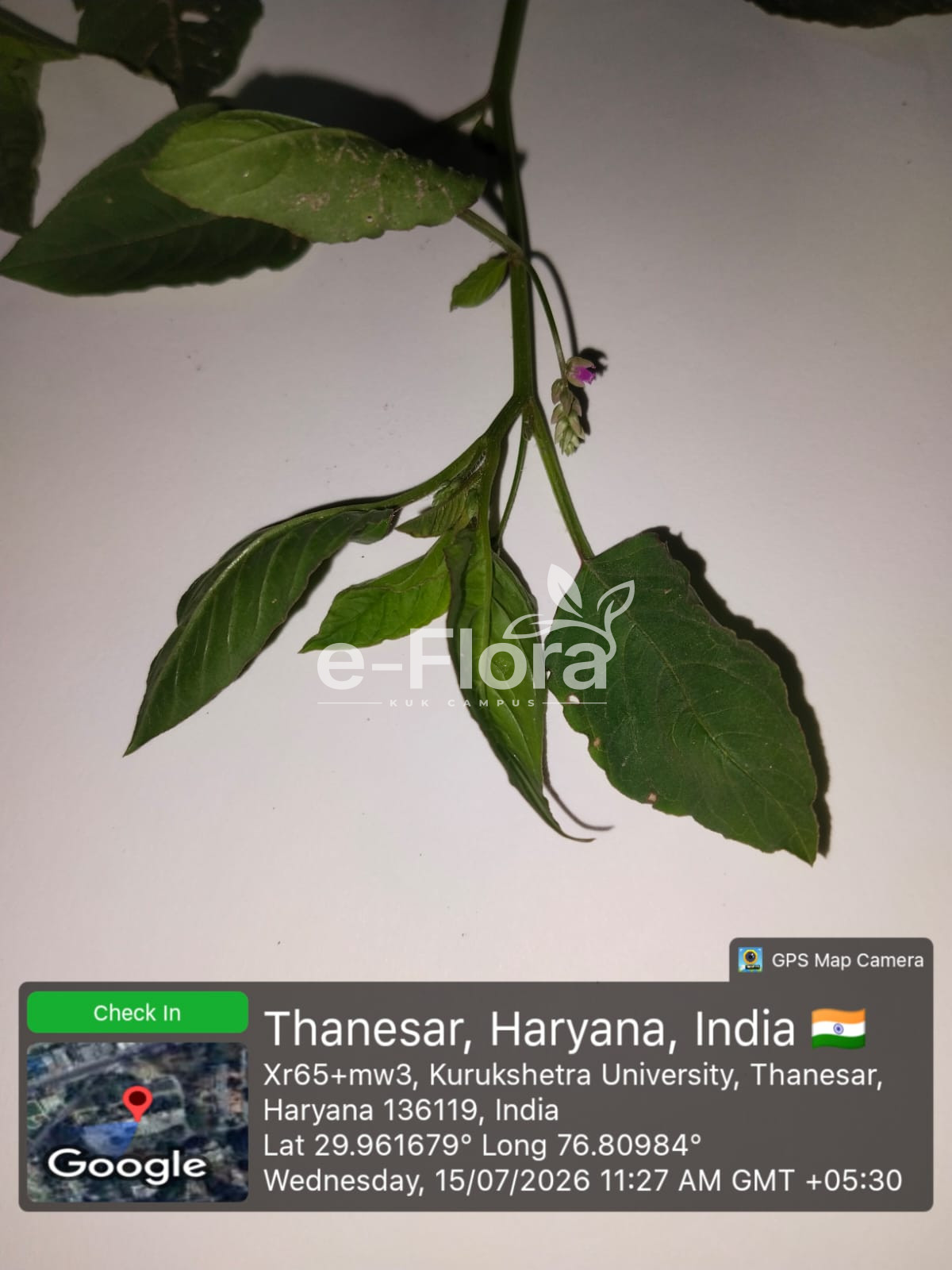
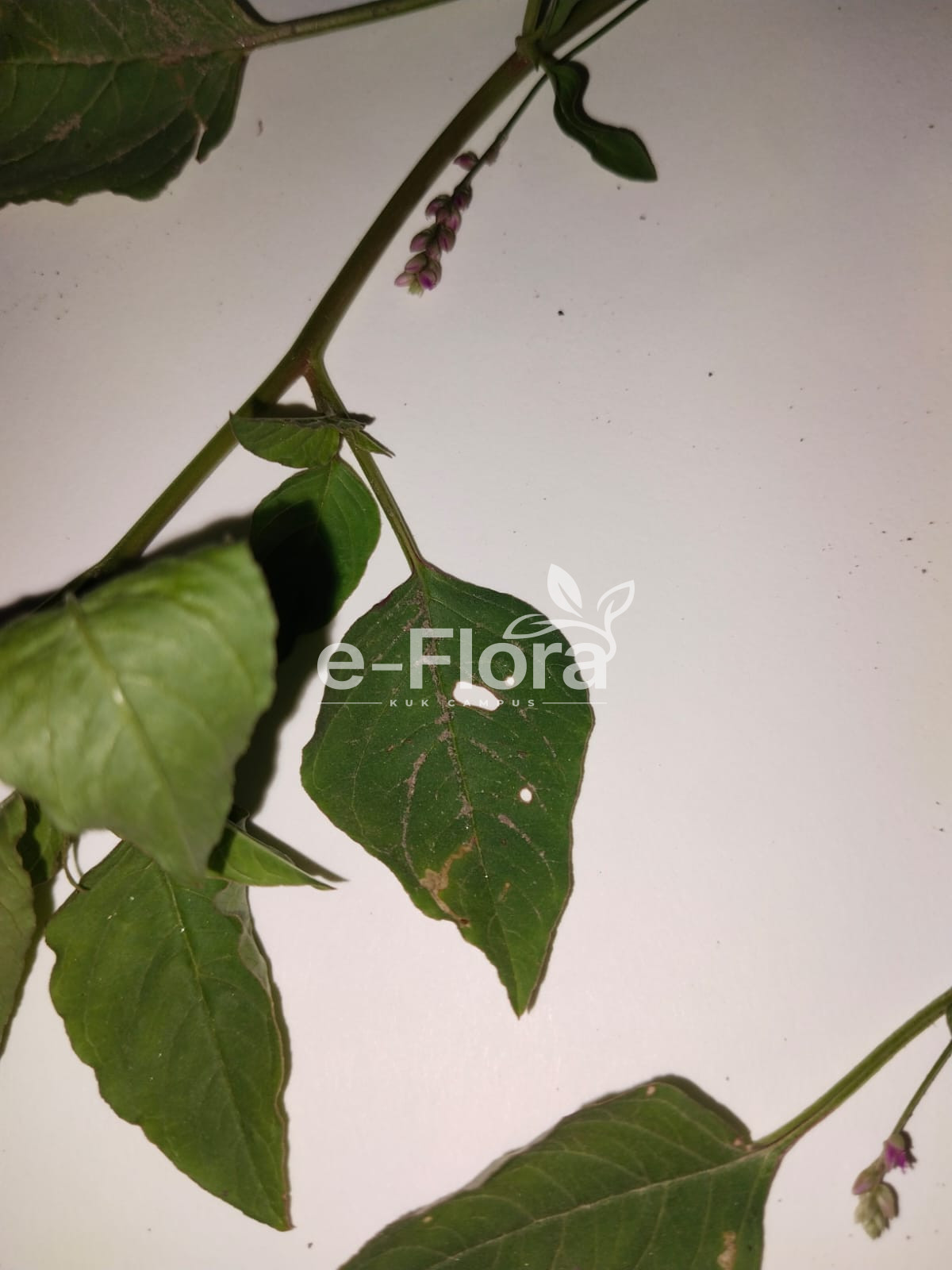
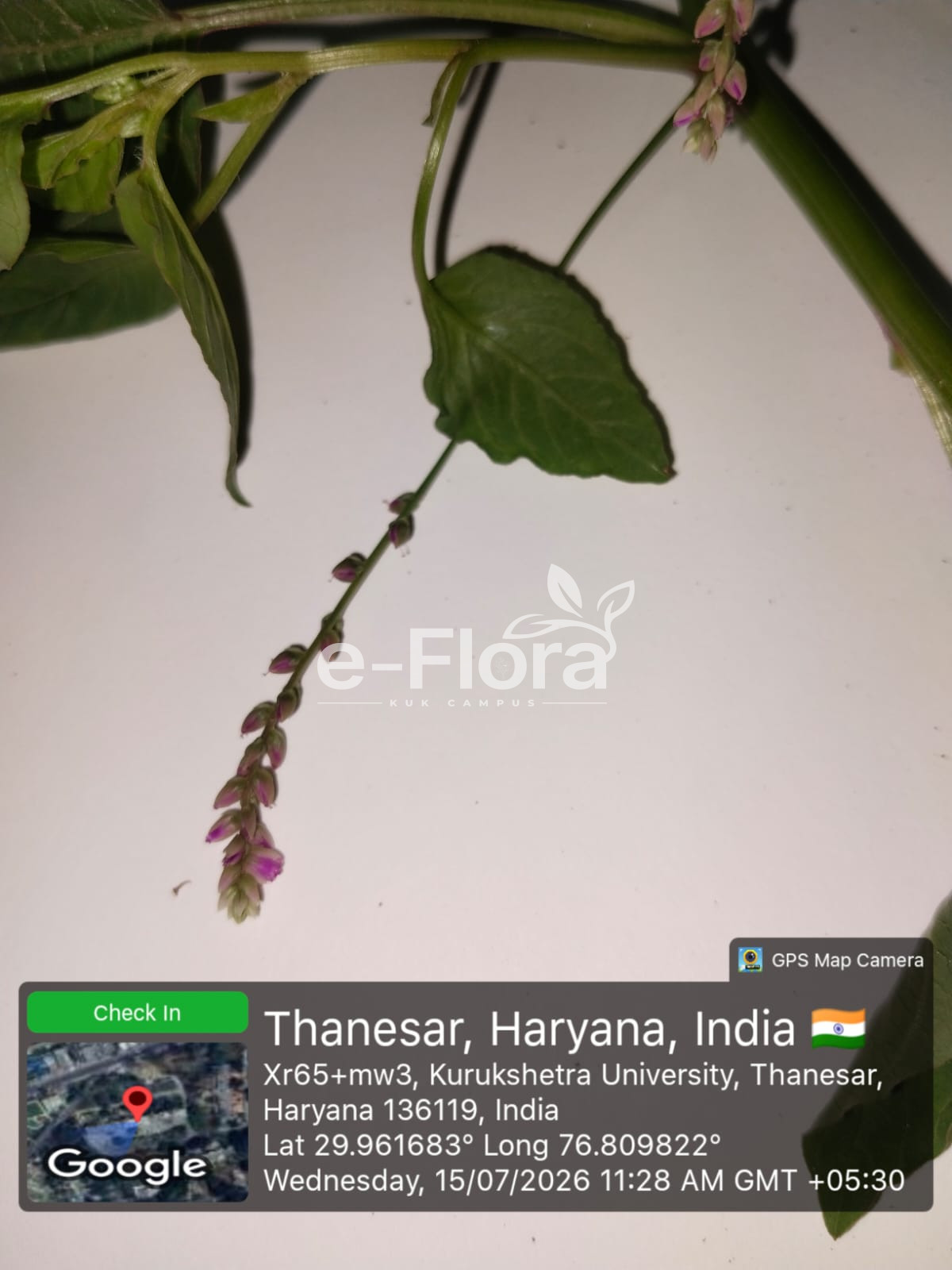
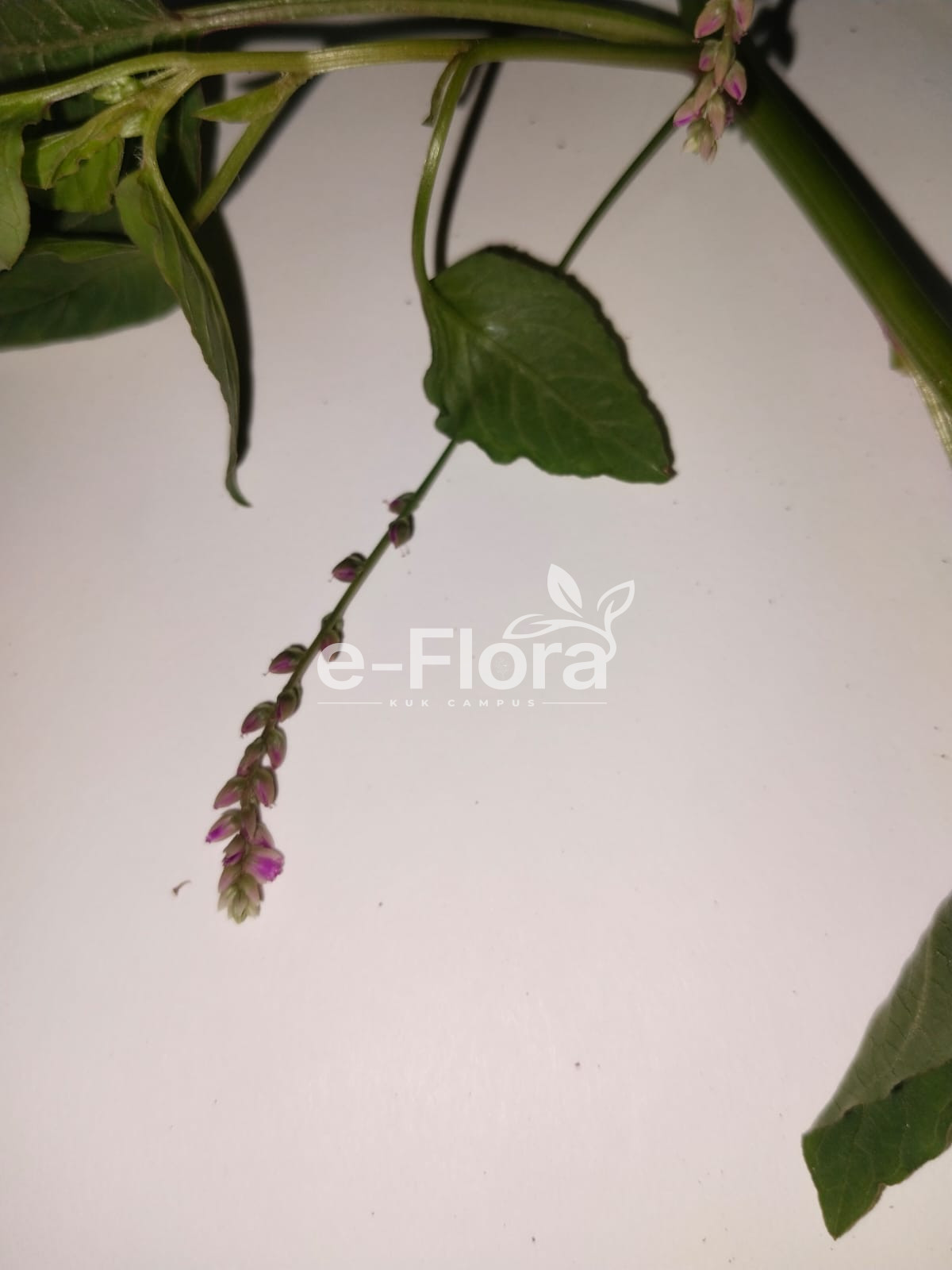
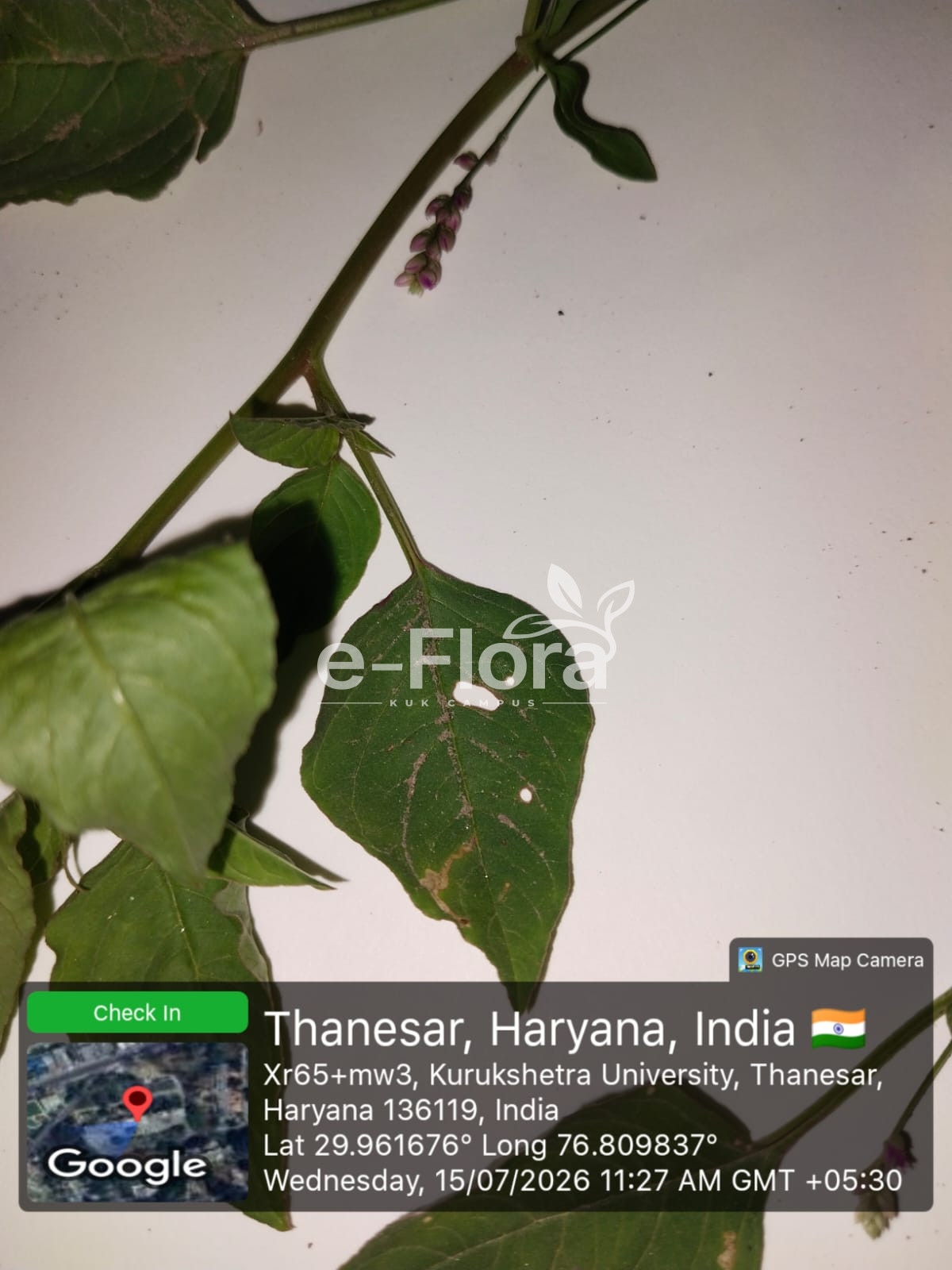
Digera muricata (L.) Mart.
Vernacular name: Latjira, False Amaranth (Hindi: लटजीरा)
Species Name: Digera muricata (L.) Mart.
Family: Amaranthaceae
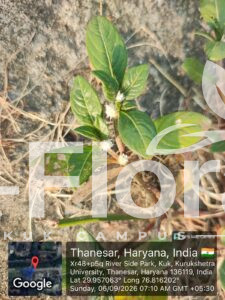
Habit: Annual erect herb.
Stem: Much-branched, green to reddish, cylindrical, glabrous to sparsely pubescent, 30–100 cm tall.
Leaf: Alternate, ovate to elliptic, 2–8 × 1–4 cm, entire, glabrous, long-petiolate.
Flowering: Rainy season–winter.
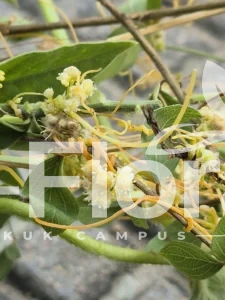
Flowers: Small, greenish-white, borne in slender terminal and axillary spikes; lower flowers fertile, upper flowers sterile; perianth 5-lobed; stamens 5; ovary superior, unilocular.
Fruit: Small utricle enclosed within a persistent, spiny (muricate) perianth; seed solitary, black, glossy.
Uses:
- Poultices of crushed leaves are applied tropically to soothe burns, skin irritations, inflammations and insect bites.
- In traditional practices, roots are boiled to make an infusion that helps nursing mothers to induce and improve lactations.
- Plant has astringent and laxative effects and used to soothe bowel ailments, digestive complaints, gastritis and acid reflux problems.
- Flowers, seeds and leaves extracts have diuretic properties and are used to manage and regulate urinary discharges, disorders, kidney stones and general renal issues.
- In Ayurveda, plant is used for its astringent properties as “Sheeta Virya” that helps in managing balance of Pitta and Kapha doshas.
- Plant contains flavonoids, saponins, triterpenes, Vitamin C and β-carotene that contributes to its antioxidant, anti-inflammatory, anti-microbial properties supporting eye health, skin integrity, boosting immunity, synthesizing collagen and lowering cholesterol levels.
- Young leaves, flower spikes and tender shoots are cooked to be consumed as a leafy vegetable in many parts of India during rainy seasons as plant provides essential vitamins and minerals such as potassium, magnesium, calcium and iron. It also serves as fodder for livestock.