Dieffenbachia seguine (Jacq.) Schott
Vernacular name: Dumb Cane, Dieffenbachia, Leopard Lily (ornamental trade names)
Species Name: Dieffenbachia seguine (Jacq.) Schott
Family: Araceae
Habit: Evergreen, erect perennial herb to subshrub, commonly cultivated as an indoor and garden ornamental. It is native to the Caribbean and tropical America and is cultivated widely elsewhere.
Stem: Fleshy, erect, green, usually unbranched or sparingly branched, with conspicuous annular leaf scars left after older leaves fall.
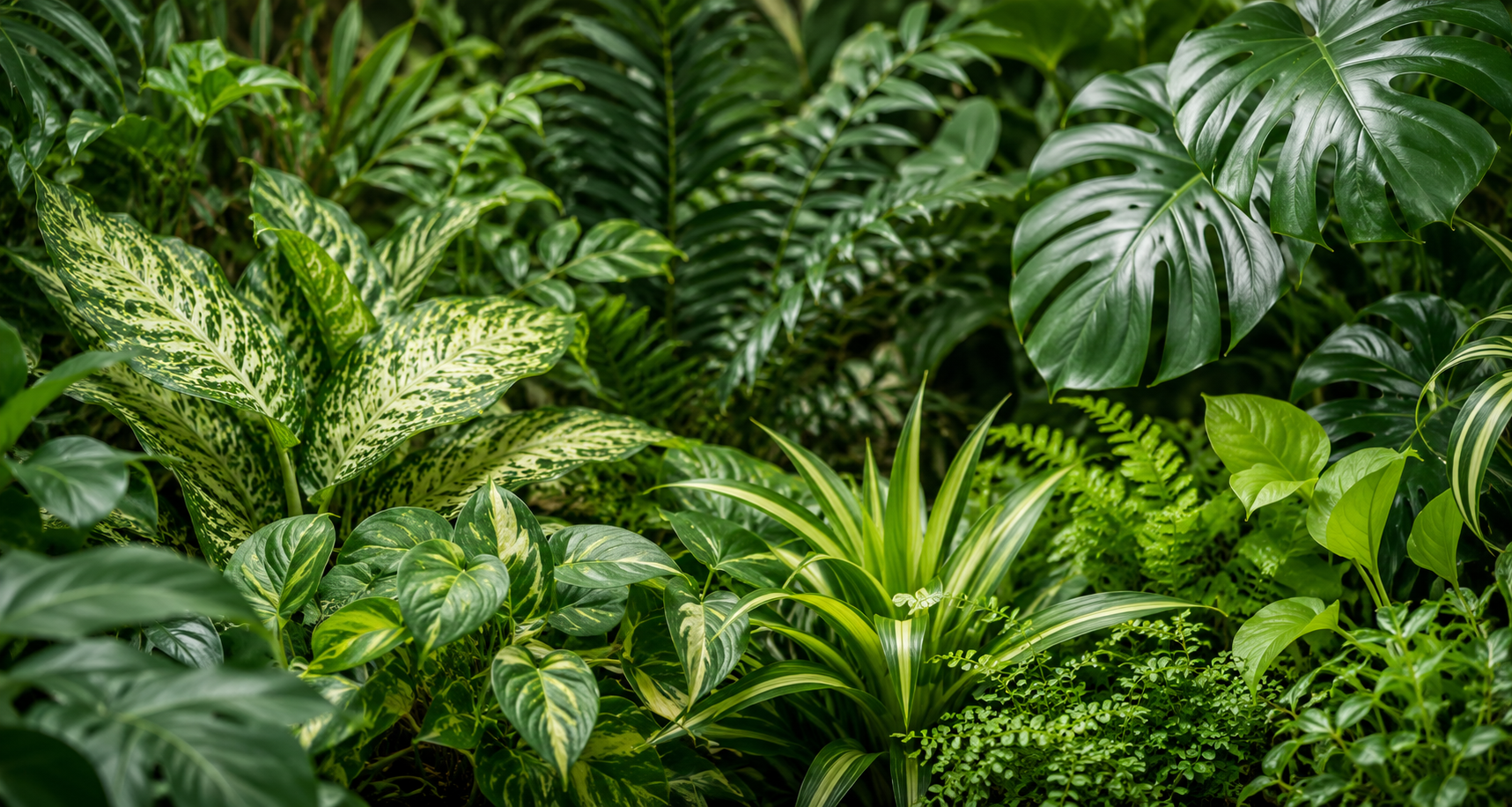
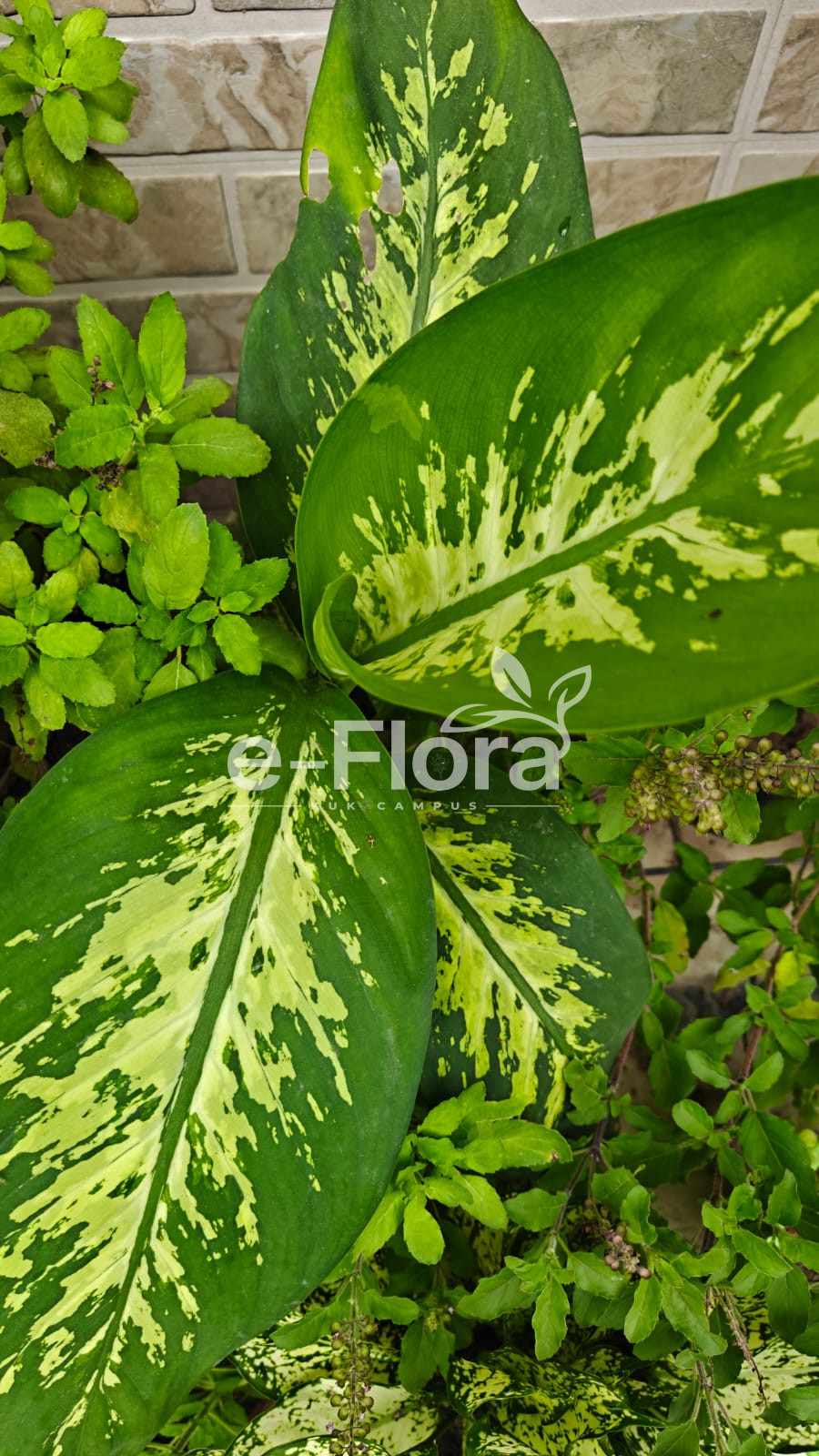
Leaf: Large, simple, alternate and concentrated toward the stem apex; blades broadly ovate to oblong-ovate, sometimes up to about 40 cm long and 15 cm wide. Leaves are commonly green with irregular white, cream or yellow variegated spots and blotches; apex acuminate and base cuneate to subcordate.
Flowering: Can flower and fruit throughout the year under suitable conditions.
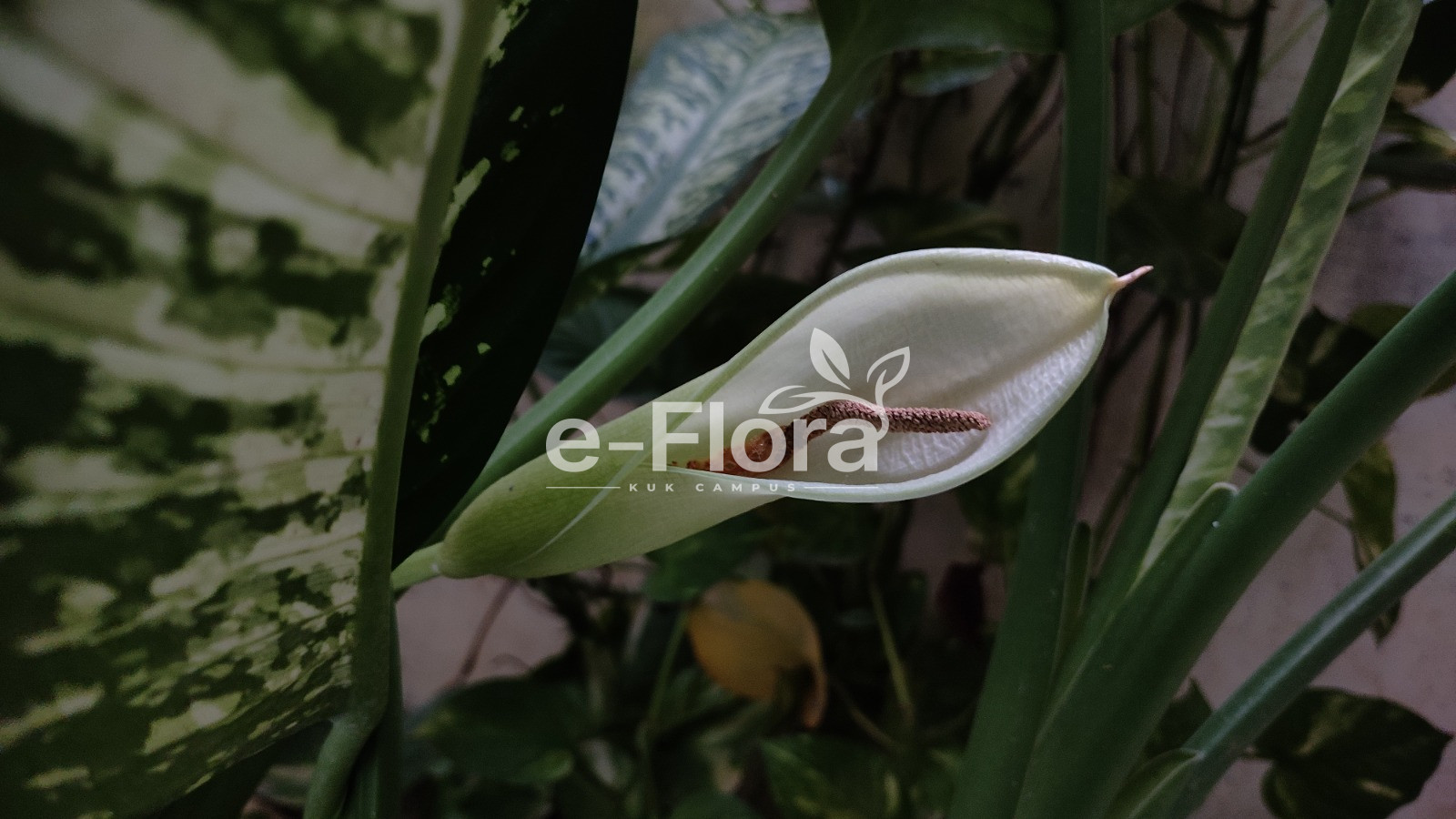
Flowers: Very small and unisexual, without a perianth. Male and female flowers occur on the same inflorescence. Female flowers possess characteristic sterile stamens (staminodes), while the stamens of the male flowers are united. Inflorescence a characteristic spadix enclosed by a green spathe. The spadix is partly fused to the spathe, with the female flowers toward the lower portion and the male flowers above; the upper staminate portion becomes partly exposed at anthesis.
Fruit: Fleshy berries, becoming bright red or orange when mature.
Peculiar features: The combination of large dramatically variegated leaves, a thick fleshy stem with ring-like leaf scars, and a spadix enclosed in a green spathe makes Dieffenbachia very distinctive. Its common name “Dumb Cane” refers to the strongly irritating sap, which can cause intense irritation and swelling of the mouth and throat if chewed or ingested.
Uses:
- In parts of tropical America and Brazil, traditional medicines uses a very controlled small amount of plant in external application to treat swelling, rheumatism and minor skin inflammations.
- Very popular indoor and garden ornamental foliage plant because of its attractive variegated leaves and ability to thrive in dim indoor corners. The sap is strongly irritant or vesicant, so the plant should be handled with care.
- NASA Clean Air Study listed plant as good air purifier as it removes indoor volatile organic compounds (VOCs) like toluene and xylene from air. Plant also absorbs carbon dioxide and through its transpiration maintain indoor humidity.
- Locals used indigenous sap applications to deter pests like cockroaches and rats due to its high toxicity.
- Plants contains calcium oxalate crystals and toxic proteins that if ingested can cause swellings, mouth numbness and temporary loss of speech.