Cordia dichotoma G.Forst.
Vernacular name: Lasora, Gunda, Bhokar, Indian Cherry, Fragrant Manjack (Hindi: लसोड़ा / गोंदा)
Species Name: Cordia dichotoma G.Forst.
Family: Boraginaceae
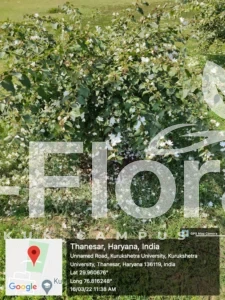
Habit: Small to medium-sized deciduous tree.
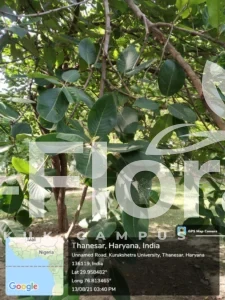
Stem: Short, often crooked trunk; bark grey to brown, becoming fissured; young branchlets minutely hairy.
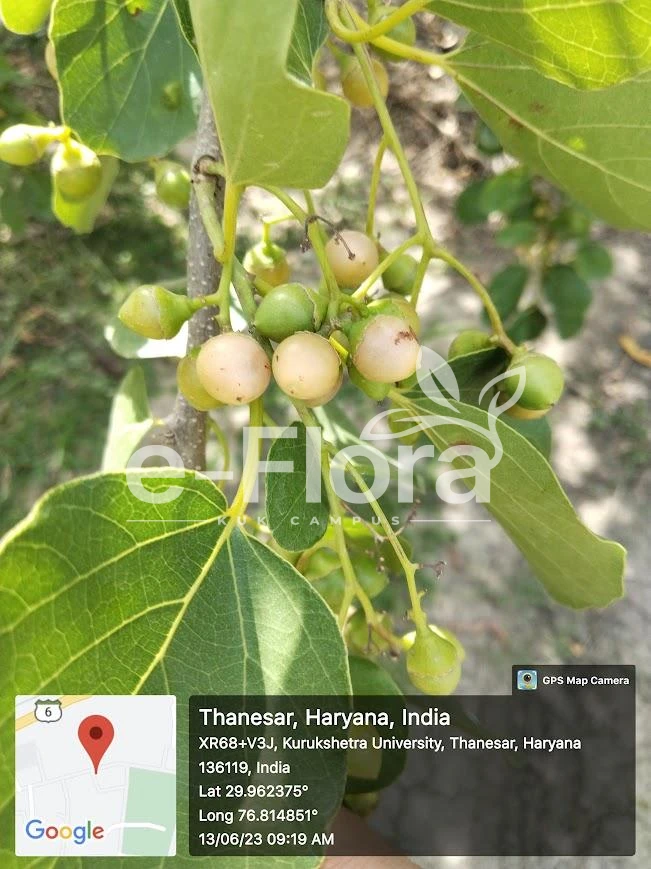
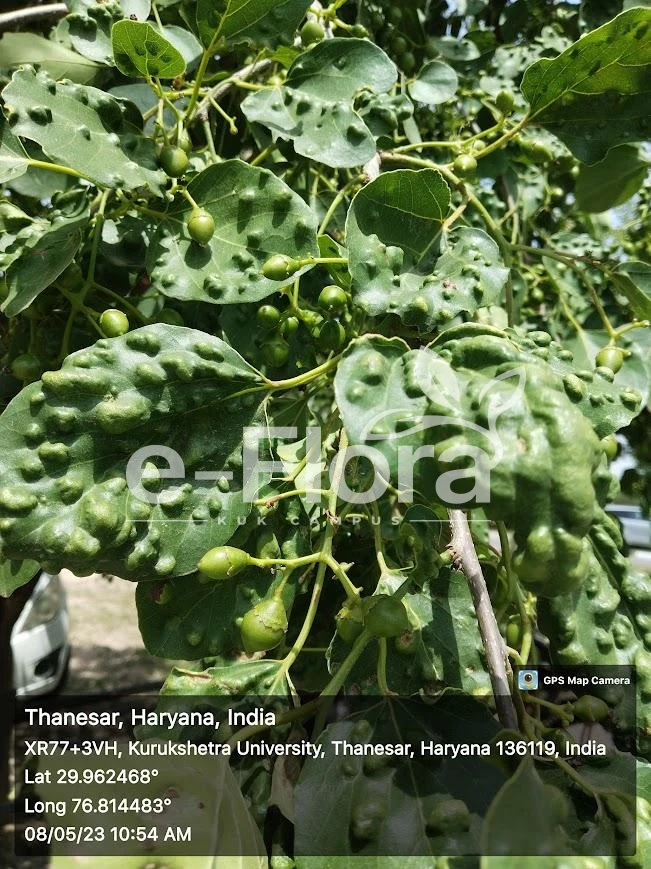
Leaf: Alternate, ovate to broadly ovate or elliptic, about 6–13 × 4–9 cm, simple, rounded to broadly cuneate at base, obtuse to shortly pointed at apex, margin entire to undulate-dentate; sparsely pubescent to nearly glabrous.
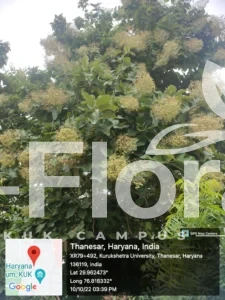
Flowering: Mainly February–April in many parts of its range.
Flowers: Small, white to creamy, fragrant, sessile or shortly stalked, borne in dichotomously branched corymbose cymes; flowers dimorphic, with bisexual and functionally male flowers; calyx campanulate and 5-lobed, becoming enlarged and persistent in fruit; corolla campanulate, 5-lobed; stamens 5.
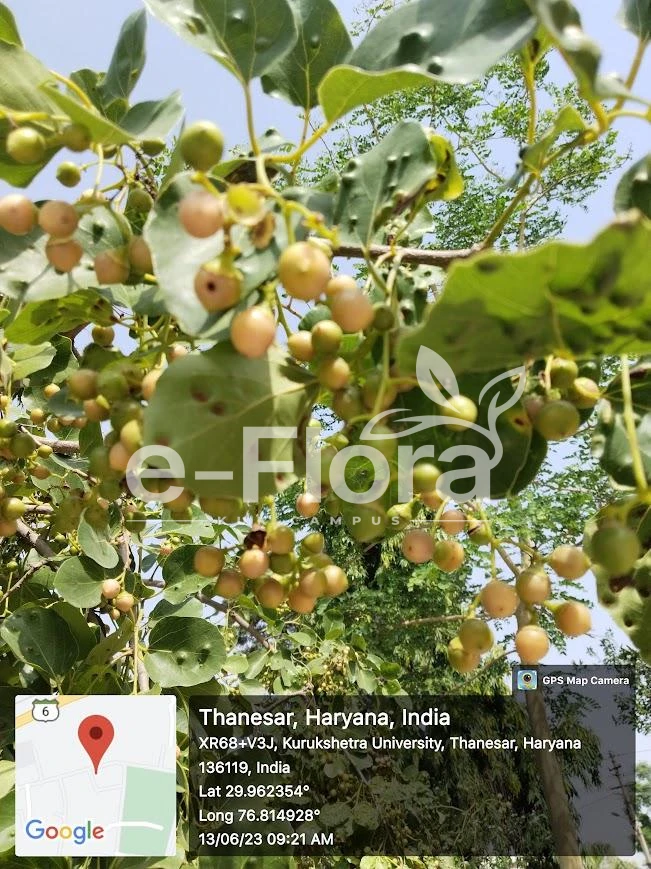
Fruit: Globose to ovoid yellowish to reddish drupe, about 1–1.5 cm across, surrounded by the persistent enlarged calyx; pulp mucilaginous and sticky, enclosing a hard stone.
Uses:
- The species is important in traditional medicine for respiratory, digestive, and urinary ailments.
- Fruit has demulcent property and is a main ingredient of traditional remedies like Joshanda (Ayurvedic formulations) that help to soothe cough, cold, asthma and sore throats.
- In Ayurveda, decoction of bark and leaves is useful in calming Irritable Bowel Syndrome (IBS), reduce fevers, treat joint pain, headaches, gastrointestinal ailments, dyspepsia and ulcers.
- Fruit and leaf paste helps with superficial wounds and skin condition with tropical application.
- Fruits are edible fresh when riped and commonly used fresh, pickled (lasode ka achar), or as vegetables when immature; they are rich in mucilage.
- Wood is used for light construction, agricultural implements, furniture (Sudan teak) and fuel.
- Mucilage extracted from sticky fruit is used as natural binding (adhesive) agent.
- A highly nutritious fodder for livestock.
- It helps with prevention of soil erosion and provide shade to both fauna and flora.
- Leaves are used as natural food wrappers, plates and cigar wrappers.