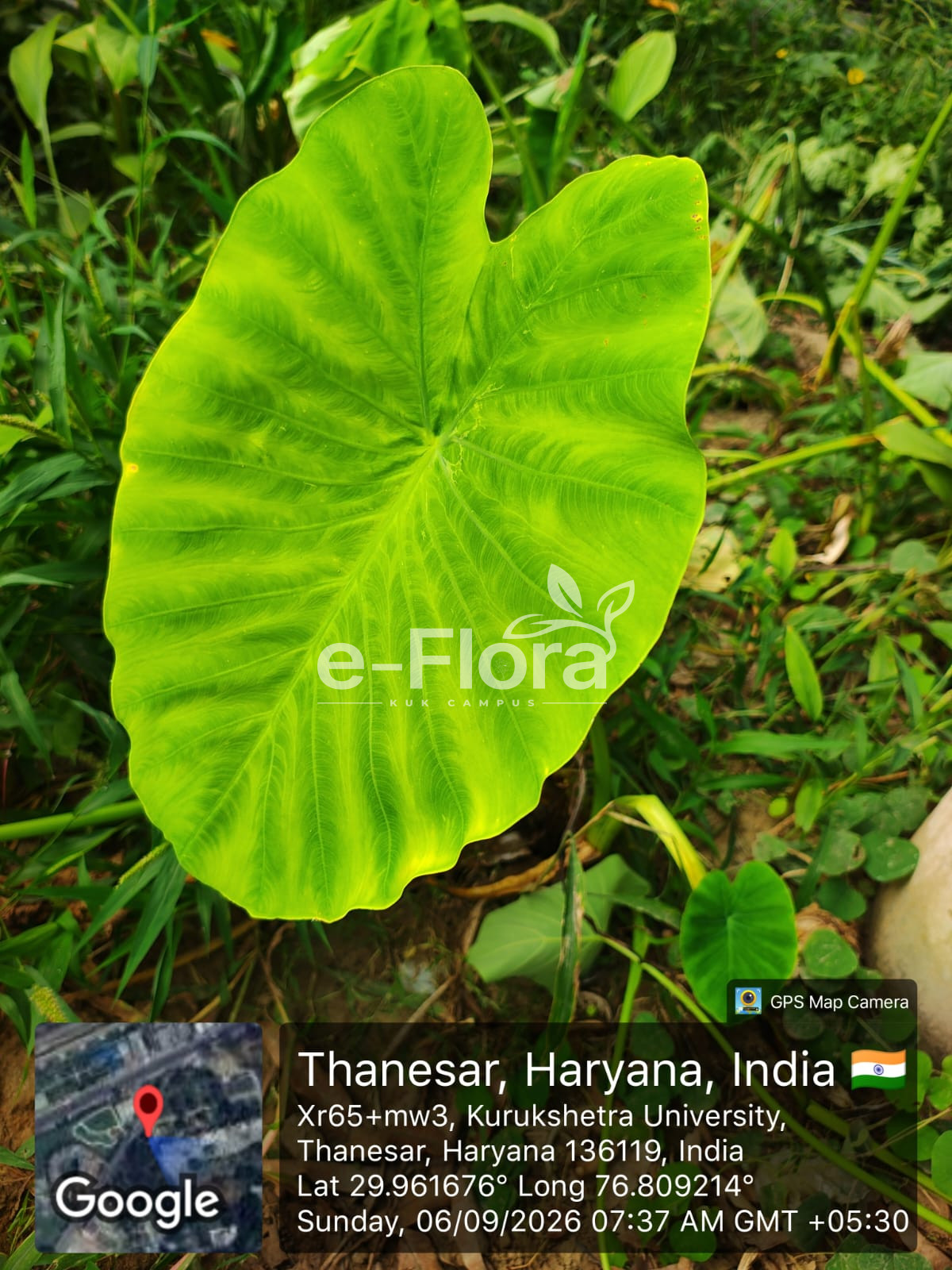
Colocasia esculenta (L.) Schott
Vernacular name: Taro, Arbi (Hindi: अरबी)
Species Name: Colocasia esculenta (L.) Schott
Family: Araceae
Habit: Perennial, tuberous herb.
Stem: Underground stem forming a large globose to cylindrical corm, often producing lateral cormels; aerial stem very short.
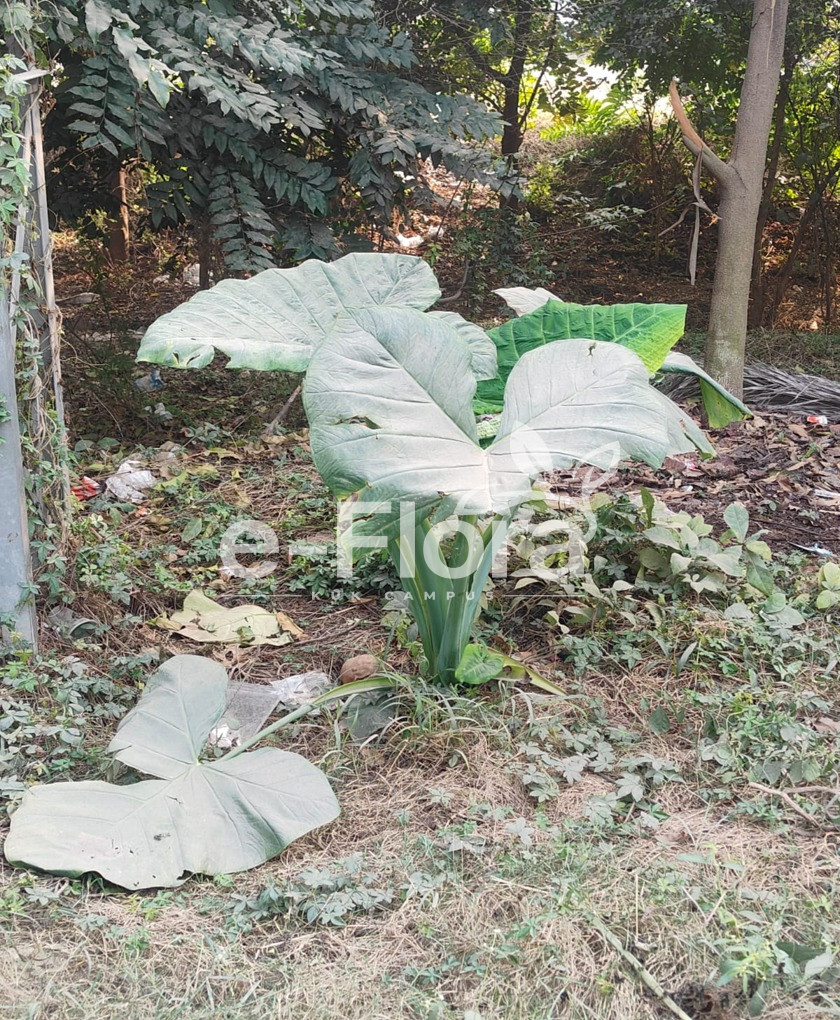
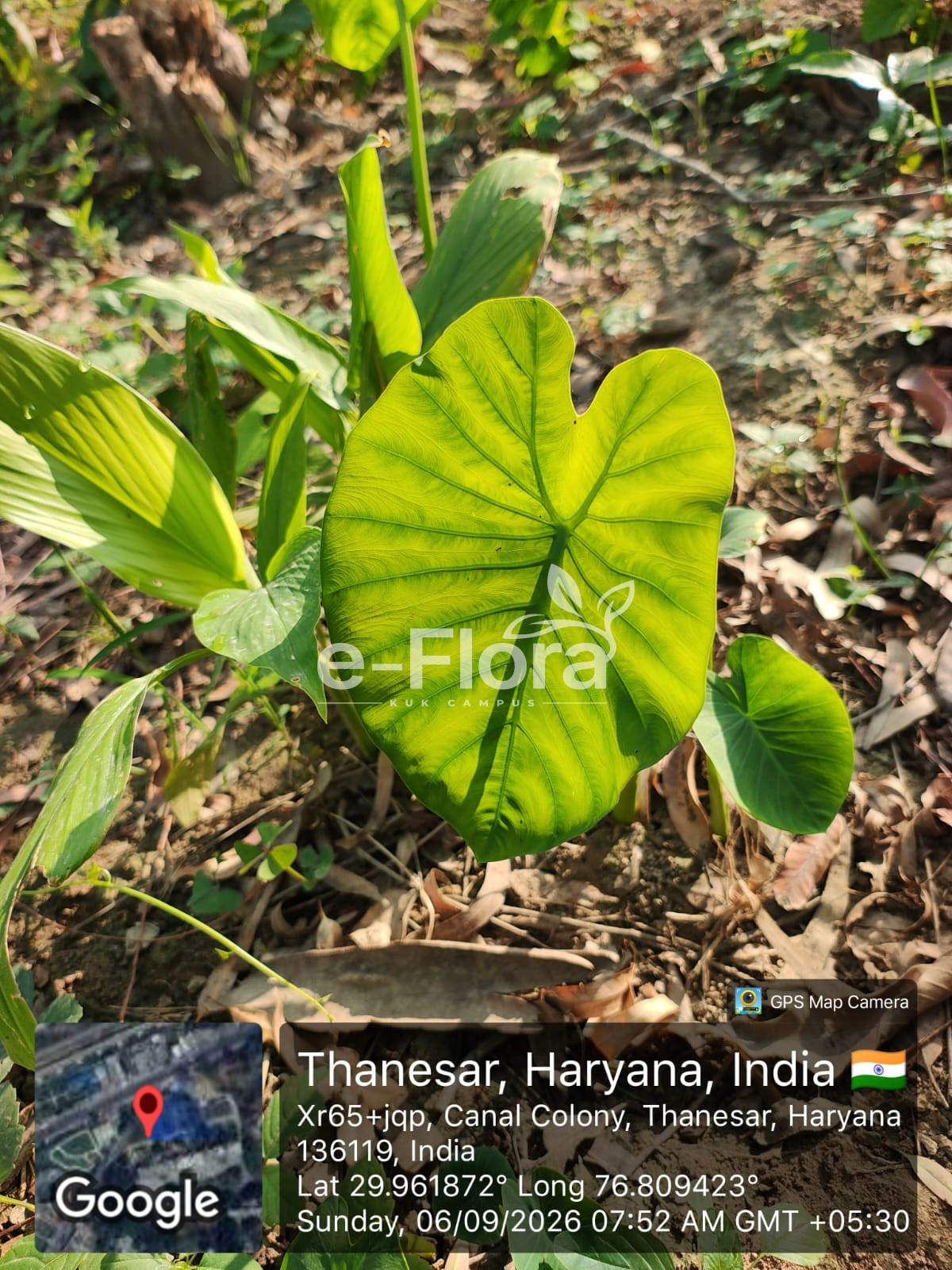
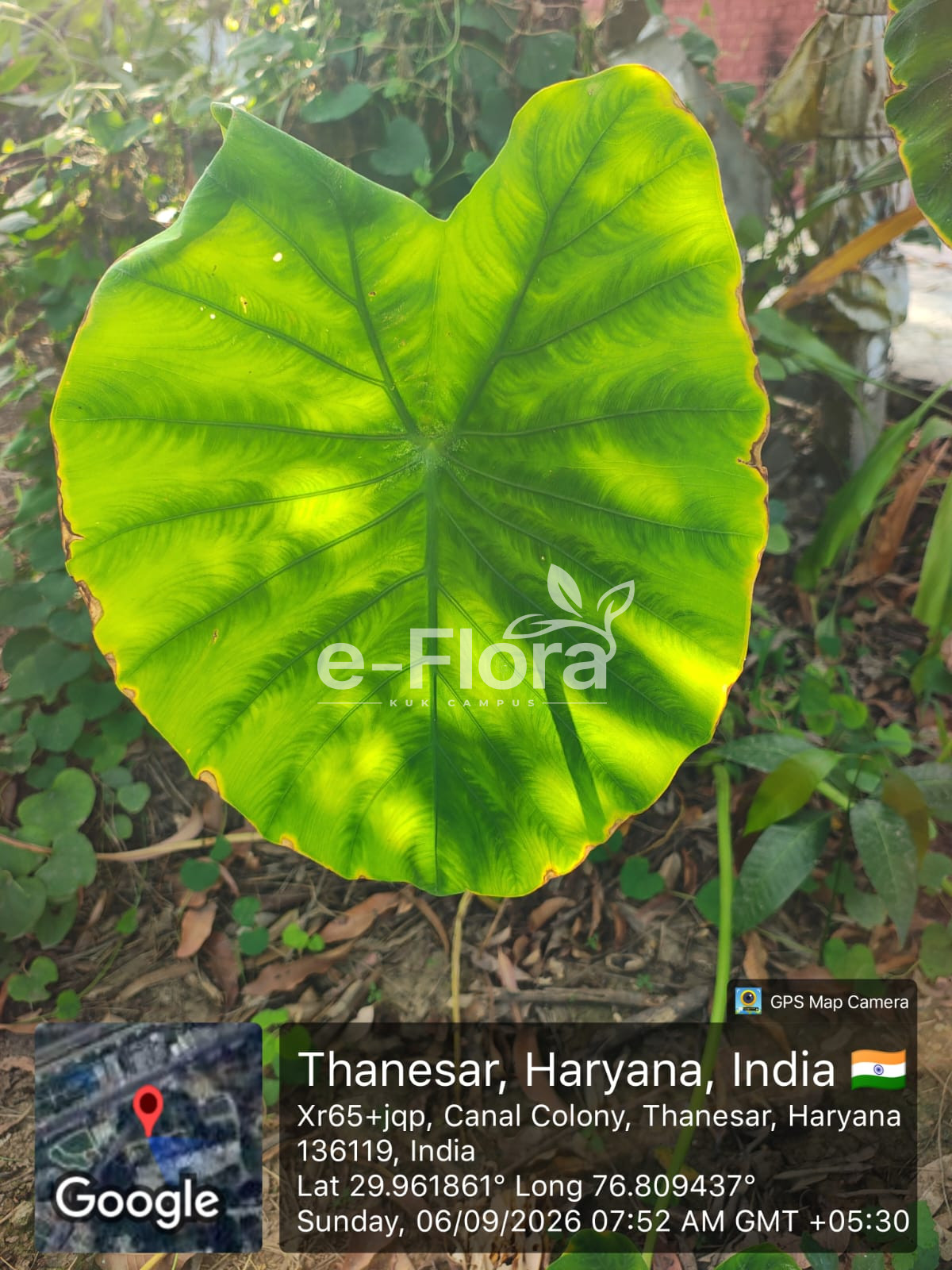
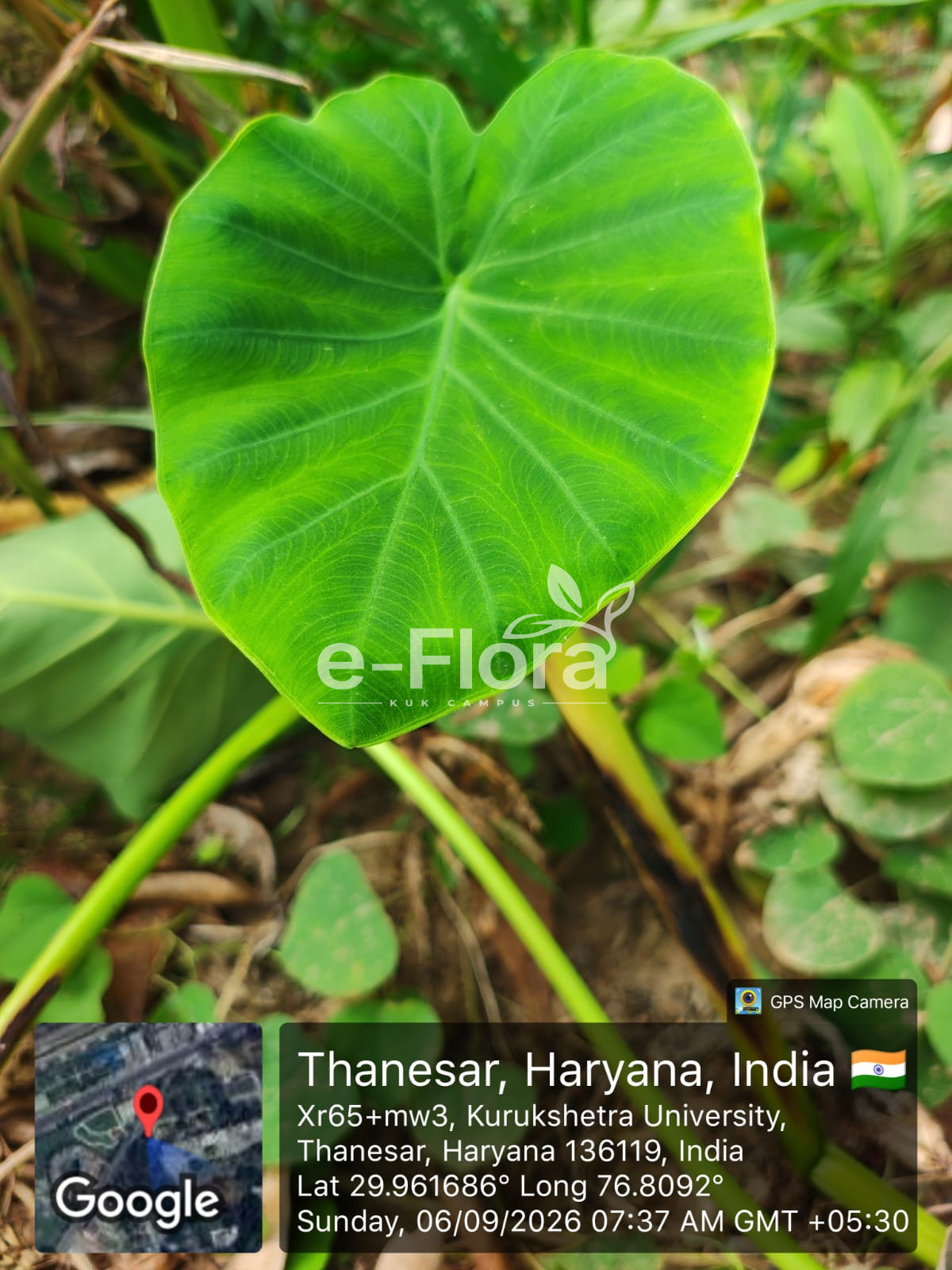
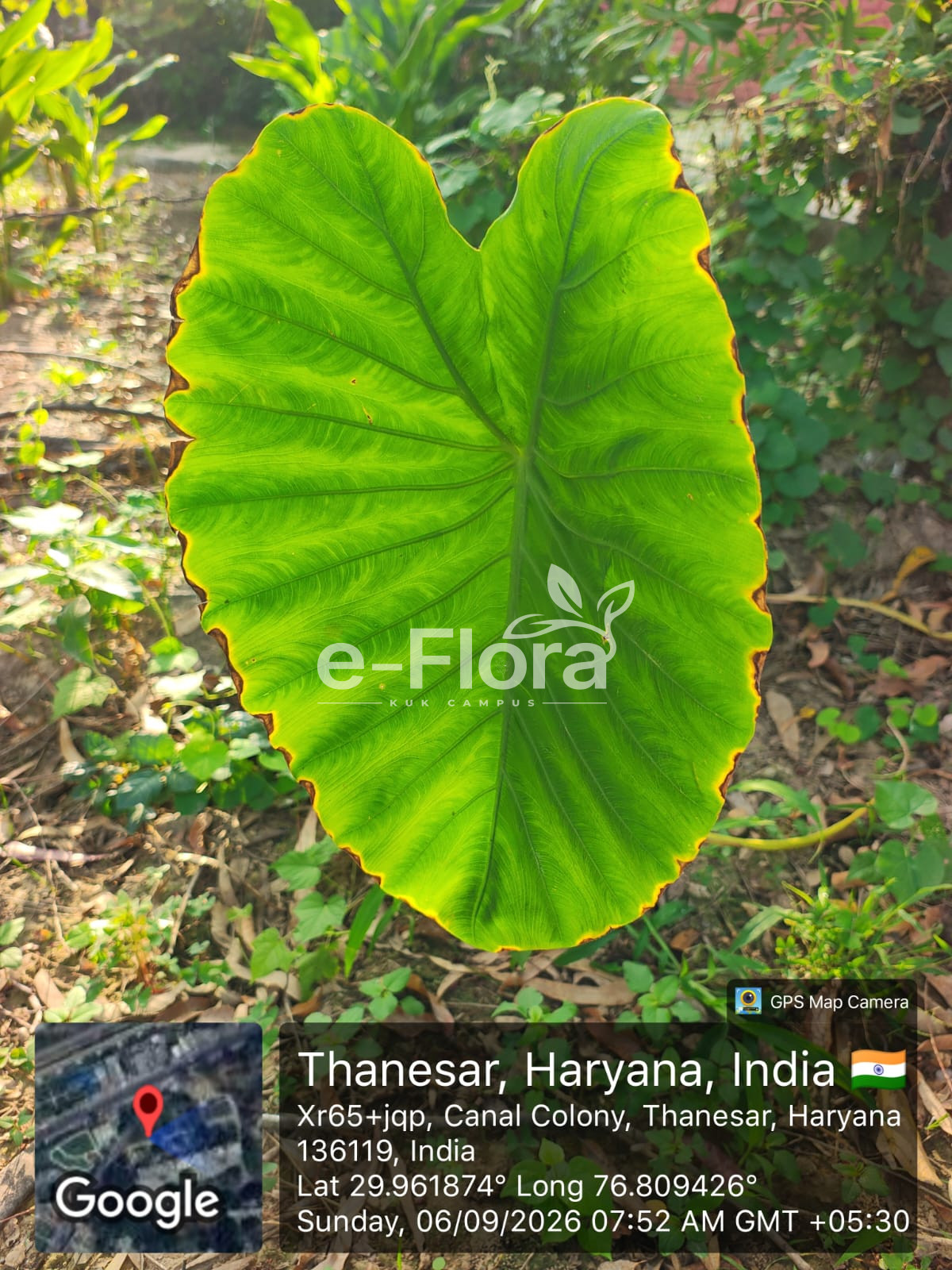
Leaf: Large, alternate, peltate to sagittate, 20–60 × 15–50 cm, entire, green, glabrous; petiole long, stout, sheathing at the base.
Flowering: Mainly during the rainy season.
Flowers: Inflorescence a spadix enclosed by a greenish-yellow spathe; flowers minute and unisexual, female flowers at the base, sterile zone in the middle, and male flowers above; ovary superior.
Fruit: Small berry, rarely produced in cultivated plants, containing several seeds.
Uses:
- Plant is known have a low glycemic index and complex carbs that helps with regulating and managing blood glucose levels.
- Plant is used to manage and support blood pressure and cardiovascular functions due to the presence of potassium and magnesium.
- Plant is rich Vitamin C and has antioxidant properties that helps in maintaining skin health, white blood cells and reduce oxidative stress.
- Traditional medicines uses plant to reduce inflammations, ease joint discomfort and manage various digestive issues.
- Plant contains high content of easily digestible starch (70-80% in dry corms) and dietary fibers that supports digestion. Plant is also a source of riboflavin, iron, thiamine, zinc, phosphorus, potassium and Vitamin C.
- The corms and young leaves are important food sources and are eaten after proper cooking. Leaves and corms contain calcium oxalate crystals, which can cause irritation if consumed raw. The plant is widely cultivated as a vegetable and is also used ornamentally for its large foliage.
- Corms are grounded into flour to be used as thickening agents for various food products.