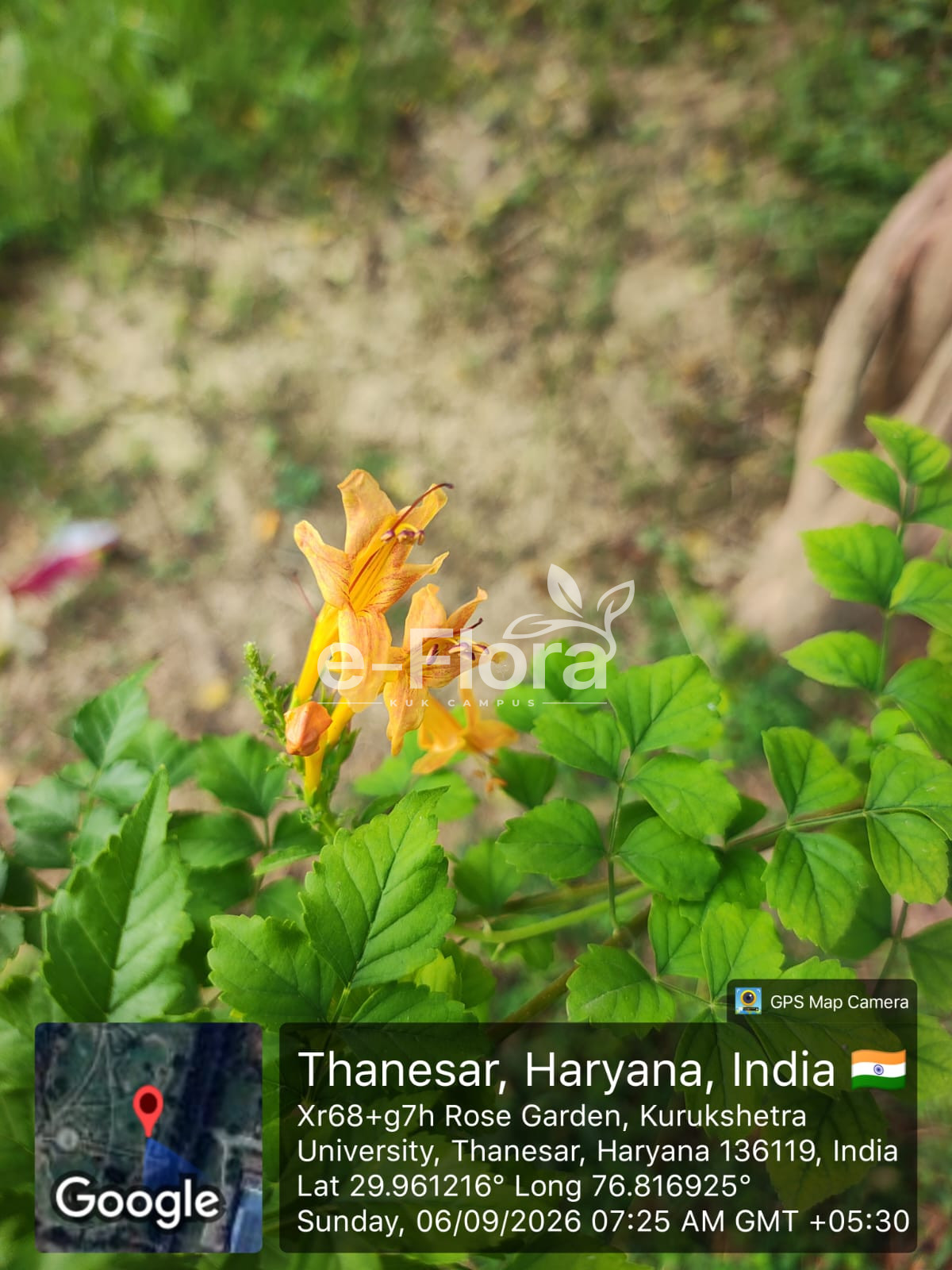
Campsis radicans (L.) Seem. ex Bureau
Vernacular name: Trumpet creeper, Trumpet vine, Scarlet trumpet vine
Species Name: Campsis radicans (L.) Seem. ex Bureau
Family: Bignoniaceae
Habit: Deciduous woody climber/liana, often climbing by aerial rootlets.
Stem: Woody, branched; young stems greenish and pubescent, older stems brown and rough.
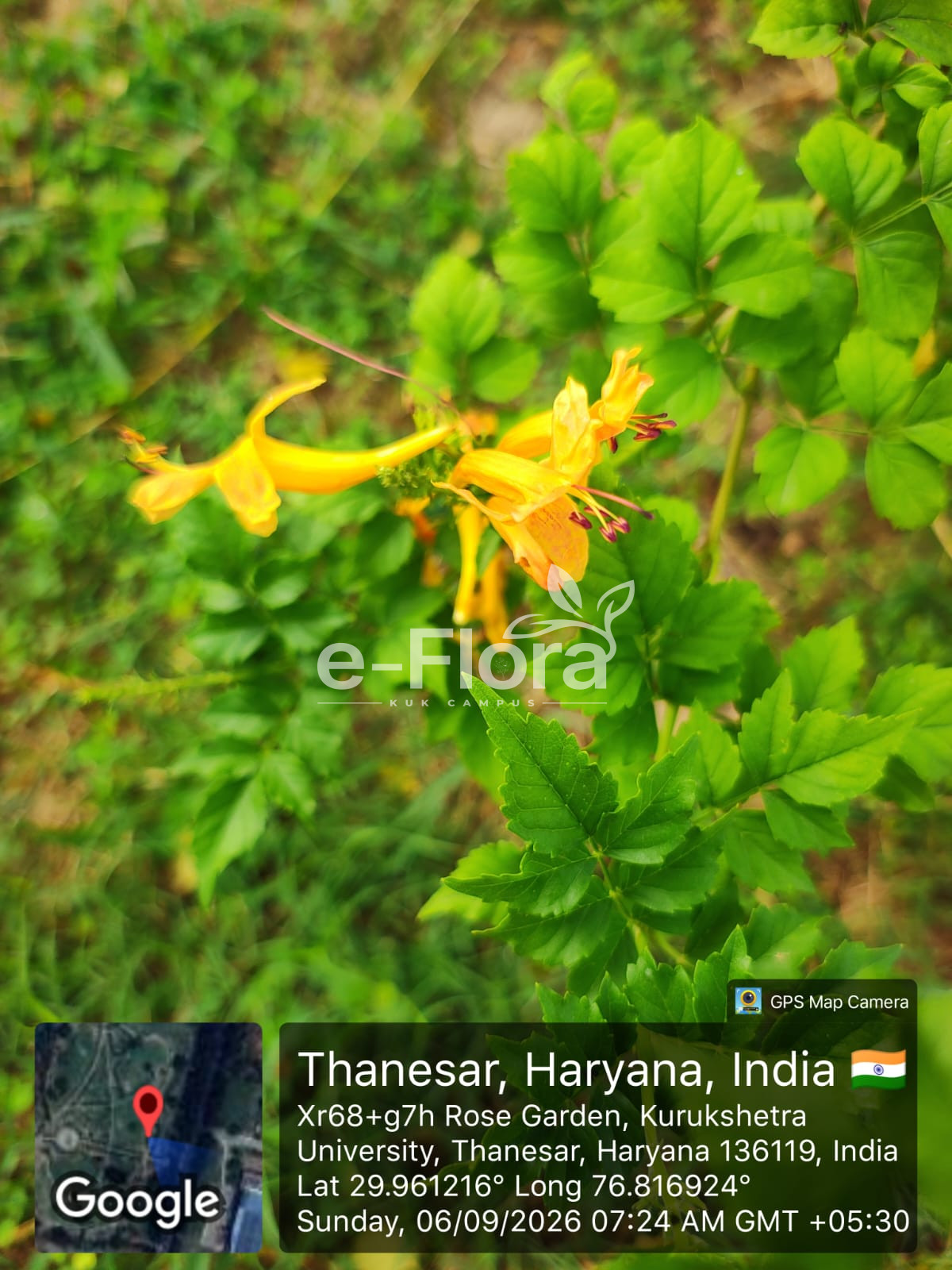
Leaf: Opposite, imparipinnate, 15–30 cm long; 7–11 ovate-lanceolate leaflets, serrate, dark green above and pubescent beneath.
Flowering: Summer–autumn, commonly June–September.
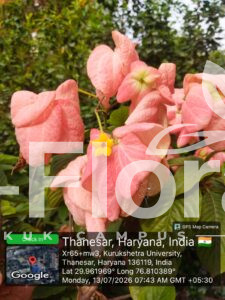
Flowers: Terminal/axillary cymes; showy orange to scarlet, tubular-funnel-shaped, 5-lobed; stamens 4, didynamous; ovary superior, bicarpellary.
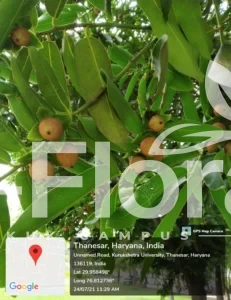
Fruit: Cylindric-oblong capsule, 7–12 cm long, keeled and beaked; numerous winged seeds.
Uses:
- In Chinese traditional practices, extracts of leaves and flowers (Ling Xiao Hua) are used to regulate and treat menstrual irregularities, joint pain and blood circulation.
- Plant extracts are found to have anti-inflammatory, antioxidant and wound healing properties.
- Roots of plant are diaphoretic and vulnerary.
- Precaution is needed as plant sap can cause skin irritation and is toxic if ingested.
- Primarily cultivated as an ornamental climber for its conspicuous trumpet-shaped flowers and used to decorate fences, arbors, trellises, walls and pergolas or can be planted along boarders to form dense green thickets or screen.
- Plant can grow on ground to cover large patches or banks or can be potted.
- Its aggressive root system and rapid growth helps it to prevent soil erosion.
- Flowers produces rich nectar that can attracts a no. of pollinators like bees, humming birds to gardens.